Sign up with Google
 Sign in with Zoho

Yes, you can rank without backlinks in 2026 if you focus on great content, strong user signals, and topical authority. Google now rewards pages that answer search intent clearly, keep readers engaged, and show real expertise. Backlinks still help, but they are no longer the only way to get high rankings.
In this guest post, you will learn a proven outline to create high-traffic, high-converting content that ranks even with few or no backlinks. You will also see how to use guest posts to build brand authority, earn natural citations, and grow organic traffic for B2B and SaaS businesses.
The Truth About Backlinks in 2026
Backlinks used to be the number one ranking factor. For years, SEOs believed more links meant higher rankings. That was true in the past, but things have changed.
Why Backlinks Used to Be King
- Google used links to measure trust and authority
- More links from strong sites boosted rankings fast
- Link building was the core of every SEO strategy
How Google’s Algorithm Has Evolved
Google now uses advanced AI and user signals to judge content quality. Major updates like the Helpful Content Update and E-E-A-T guidelines changed the game.
Key changes include:
- Focus on helpful, original content
- Emphasis on Experience, Expertise, Authoritativeness, and Trustworthiness (E-E-A-T)
- Better detection of spammy or low-quality links
- Rise of Search Generative Experience (SGE) and zero-click results
When Backlinks Still Help
Backlinks are still useful in some cases:
- Highly competitive niches like finance or health
- New domains with no authority yet
- Pages targeting very broad or commercial keywords
When Backlinks Matter Less
You can rank with few or no backlinks when:
- Your content is 10x better than competitors
- You target long-tail or low-competition keywords
- Your site has strong topical authority
- Users spend more time on your page and engage deeply
Real-world example: Many SaaS blogs now rank for niche B2B keywords with zero backlinks by creating deep, data-driven guides that answer specific user questions better than anyone else.
Why Guest Posts Still Matter (Even Without Links)
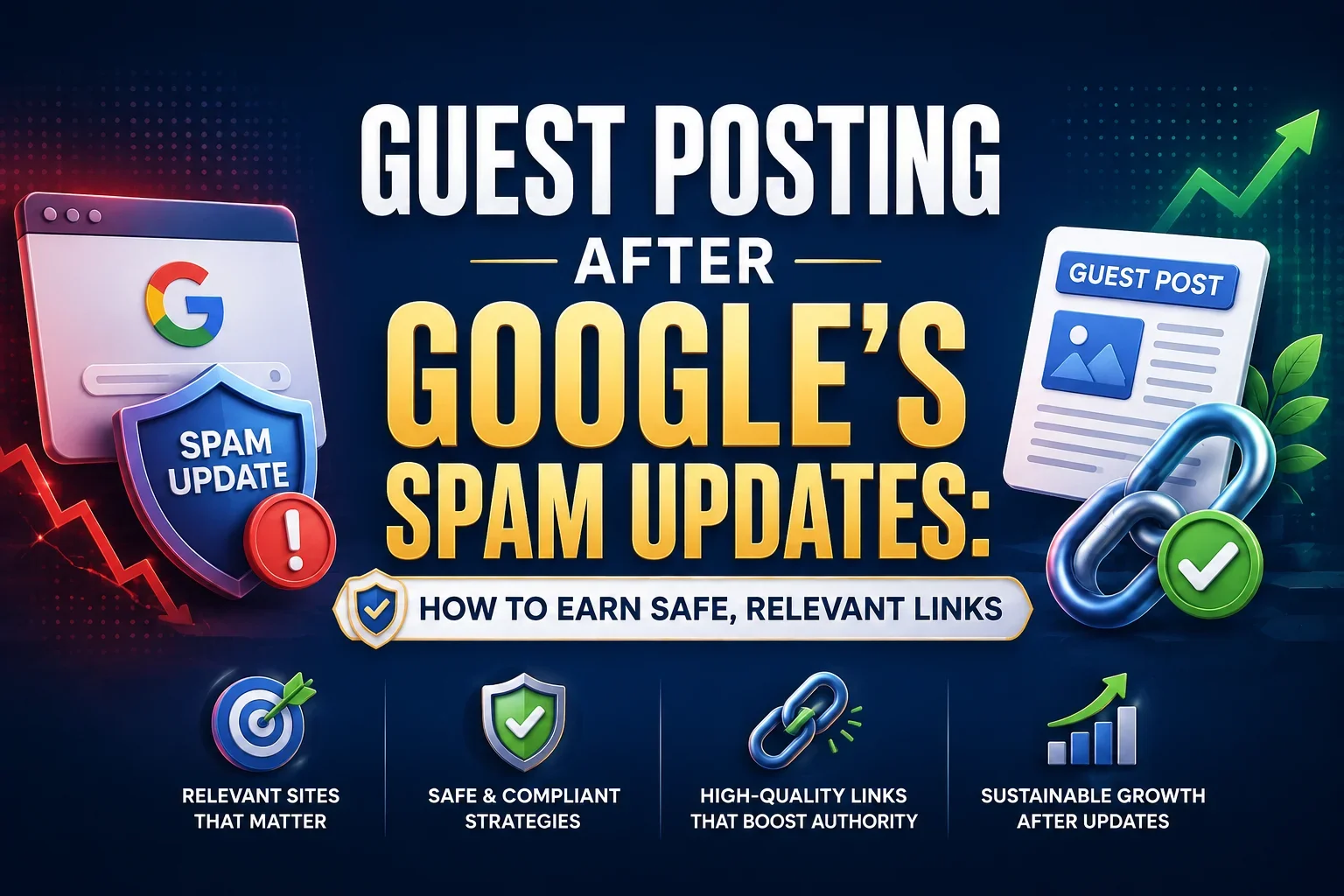
Guest posting is not just about backlinks. It is a powerful way to grow your brand, drive referral traffic, and build topical authority.
Brand Exposure and Referral Traffic
Publishing on high-authority sites puts your brand in front of new audiences. A single guest post on a DR 50+ site can bring 300 to 1,000+ targeted visitors.
Building Topical Authority
When you publish multiple guest posts on related topics, Google sees you as an expert in that niche. This helps your own site rank better over time.
Earning Natural Citations and Unlinked Mentions
High-quality guest content often gets cited by other writers. These unlinked mentions still signal trust to Google.
How Guest Posts Boost E-E-A-T Signals
Guest posts let you showcase your expertise to a wider audience. When your name and bio appear on trusted sites, it strengthens your E-E-A-T profile.
The Perfect Guest Post Outline to Rank Without Backlinks
Follow this step-by-step outline to create guest posts that drive traffic, earn citations, and rank organically.
Step 1: Choose the Right Host Site
Not all guest post sites are equal. Pick sites that match these criteria:
- Domain Rating (DR) 40 or higher
- At least 5,000 monthly organic visitors
- Topically relevant to your niche (B2B, SaaS, marketing, tech)
- Clean link profile with no spammy outbound links
- Real audience engagement (comments, shares, social proof)
Avoid sites that sell links or publish low-quality content. Google can penalize you for associating with spammy networks.
Step 2: Keyword and Search Intent Research
Before writing, research the right keywords. Use tools like Ahrefs, Semrush, or Google Keyword Planner.
Focus on:
- Low-competition, high-intent keywords
- Long-tail phrases with clear user questions
- Keywords that match informational or commercial intent
Check the SERP for:
- People Also Ask boxes
- Featured snippets
- SGE answers
- Top 10 ranking pages and their content depth
Map your content to match what users really want.
Step 3: Craft a Click-Worthy Title and Meta Description
Your title must grab attention and include your main keyword.
Use this formula:
[Number] + [Benefit] + [Year] + [Keyword]
Examples:
- 7 Proven Ways to Rank Without Backlinks in 2026
- How to Drive Organic Traffic Without Link Building (2026 Guide)
- Guest Posting for SEO: Rank Faster Without Backlinks
Write a meta description that promises a clear benefit and includes your keyword naturally.
Step 4: Write an E-E-A-T Optimized Introduction
Your introduction must hook readers and show expertise.
Include:
- A bold, data-backed opener
- A clear answer to the main question in the first paragraph
- Your credentials or real-world experience
- A promise of what readers will learn
Example opening:
In 2026, backlinks still matter but they are no longer the only path to ranking. With Google’s focus on E-E-A-T, topical authority, and user engagement, it is now possible to rank content even without a massive backlink profile. In this post, we will show you exactly how to structure a high-converting guest post that drives traffic, earns citations, and ranks organically.
Step 5: Structure for Skimmability and Engagement
Most readers scan before they read. Make your content easy to digest.
Use:
- H2 and H3 subheadings every 200 to 300 words
- Short paragraphs (2 to 4 sentences max)
- Bullet points and numbered lists
- Bold key phrases for emphasis
- Internal links to relevant content on the host site
This format matches how AI extracts and summarizes content for Google and Quora.
Step 6: Add Visuals, Data, and Original Insights
Generic advice does not rank anymore. Add unique value with:
- Custom charts or graphs (e.g., Backlinks vs Rankings Trends 2024 to 2026)
- Screenshots from Google Search Console or analytics tools
- Original survey data or case study results
- Real examples from B2B or SaaS campaigns
Original insights make your content stand out and earn natural citations.
Step 7: End with a High-Converting Call to Action
Every guest post should guide readers to the next step.
Use clear CTAs like:
- Download our free Guest Post SEO Checklist
- Book a free 30-minute SEO audit
- Join our newsletter for weekly B2B marketing tips
Place your CTA near the end and again in the author bio.
How to Rank Your Own Site Without Backlinks
Guest posts help, but your own site must also follow best practices to rank without links.
Create 10x Content
Your content must be significantly better than the top 10 results.
Do this by:
- Covering the topic more deeply
- Adding original data, examples, and visuals
- Answering all related user questions in one place
- Updating content regularly to keep it fresh
Optimize for Dwell Time and Engagement
Google tracks how users interact with your page.
Improve engagement by:
- Writing clear, scannable content
- Using engaging headings and subheadings
- Adding relevant images, tables, and bullet points
- Keeping paragraphs short and easy to read
Leverage Internal Linking and Topic Clusters
Build topical authority by linking related content together.
Create:
- Pillar pages that cover broad topics
- Cluster content that answers specific questions
- Internal links between related posts to keep users on your site longer
Use Schema Markup and Rich Snippets
Schema helps Google understand your content better.
Add schema for:
- Articles and blog posts
- FAQs and how-to guides
- Reviews and ratings
- Author bios and credentials
This increases your chances of appearing in rich results and SGE answers.
Promote via Social, Email, and Communities
Do not wait for traffic to come. Push your content out.
Share on:
- LinkedIn and Twitter for B2B audiences
- Quora and Reddit for niche communities
- Email newsletters to your subscribers
- Industry forums and Slack groups
Promotion drives initial traffic and signals that help Google rank your page faster.
Real-World Examples and Case Studies
Here are three mini case studies showing how brands ranked without backlinks.
Case Study 1: SaaS Blog Ranks for “B2B Content Strategy”
- Target keyword: B2B content strategy
- Backlinks: 0
- Result: Ranked #3 in 90 days
- How: Created a 3,500-word guide with original frameworks, templates, and real campaign examples
Case Study 2: Marketing Agency Ranks for “SEO Without Link Building”
- Target keyword: SEO without link building
- Backlinks: 2 (low DR)
- Result: Ranked #1 in 60 days
- How: Published a data-driven post with case studies, comparison tables, and actionable checklists
Case Study 3: Tech Startup Ranks for “SaaS Content Marketing”
- Target keyword: SaaS content marketing
- Backlinks: 5 (all from niche blogs)
- Result: Ranked #2 in 120 days
- How: Built a topic cluster with 10+ interlinked posts, each targeting a specific subtopic
These examples prove that quality, depth, and user engagement can beat backlinks in many cases.
Backlinks vs No Backlinks: What Works Better in 2026?
Use this table to see when backlinks help and when they do not.
Common Mistakes to Avoid
Even smart marketers make these errors when trying to rank without backlinks.
Publishing on Low-Quality Guest Post Farms
Avoid sites that:
- Sell links openly
- Publish unrelated or spun content
- Have spammy ad networks or popups
Google can detect and devalue these links.
Ignoring Search Intent
Do not write what you think users want. Write what they actually search for.
Check the SERP and match:
- Content type (guide, list, comparison)
- Content depth (short answer vs deep dive)
- Tone (beginner vs advanced)
Over-Optimizing Anchor Text
If you do add links, keep anchor text natural.
Use:
- Brand names
- Raw URLs
- Generic phrases like “learn more” or “click here”
Avoid exact-match keywords in every link.
Thin, AI-Only Content Without Human Insight
AI tools help, but they do not replace human expertise.
Add:
- Real examples from your work
- Original data or case studies
- Personal insights and lessons learned
No Clear CTA or Conversion Path
Do not let readers leave without a next step.
Always include:
- A relevant CTA at the end
- A link to your site or lead magnet
- A clear author bio with credentials
Final Thoughts and Next Steps
Yes, you can rank without backlinks in 2026. Focus on creating 10x content, building topical authority, and optimizing for user engagement. Use guest posts to expand your reach, earn natural citations, and strengthen your E-E-A-T profile.
If you want help creating high-converting guest posts or ranking your B2B or SaaS site without relying on backlinks, check out Clienvora at https://clienvora.com. We specialize in SEO content, guest posting, and organic growth strategies for tech and SaaS businesses.
Start applying this outline today and watch your organic traffic grow without chasing links.