Sign up with Google
 Sign in with Zoho

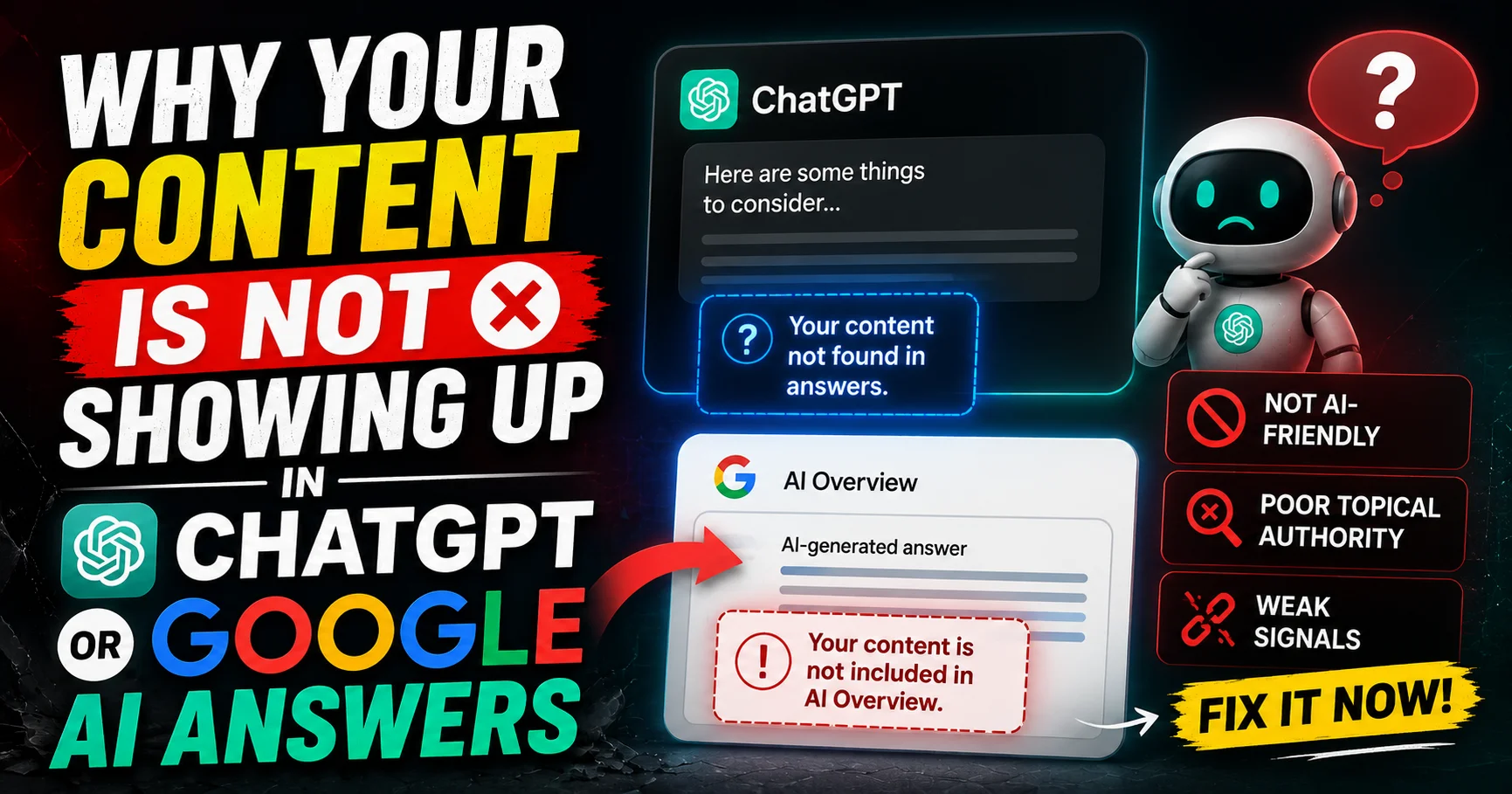
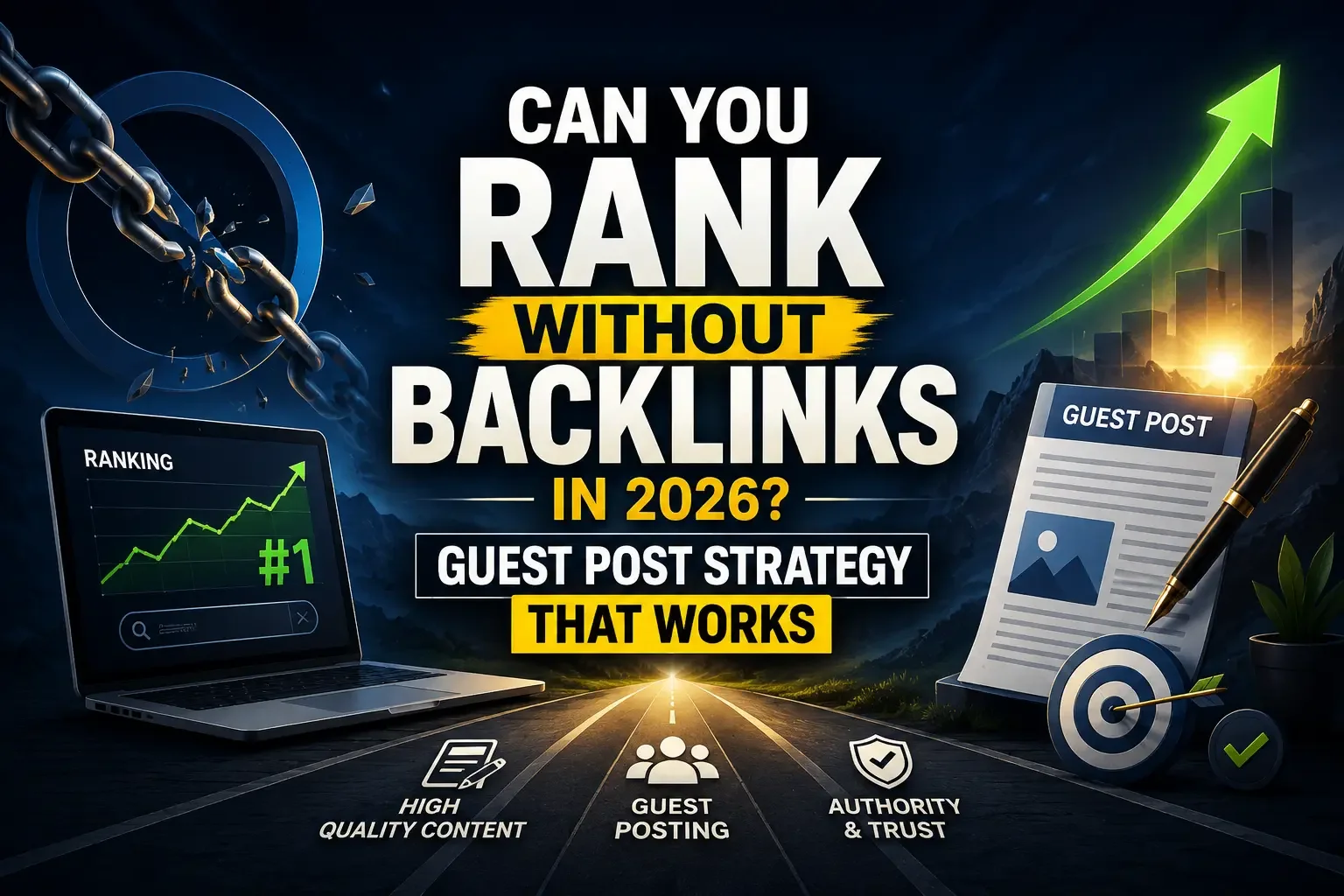
Open Google Search Console this morning. If your best keyword shows an average position of 1.4, sits on 11,000 impressions for the month, and delivered 88 clicks total, you are not looking at a tracking error. You are looking at the standard output of a number-one ranking in 2026 for the wrong category of keyword.
This is not a content quality problem. It is an architectural problem with how modern search pages are built, and most SEO guides were written before that architecture existed.
What "Position One" Actually Means on a 2026 Search Results Page
A first-place organic result now sits below at least three items that Google generated entirely without your involvement. Above your blue link sits an AI Overview, a featured snippet block, and a carousel of People Also Ask results. The organic number-one position has functionally become the fourth visible result on the page, and the first three answer the query without requiring a single click.
The Phantom Rank: Your GSC Report Tells the Truth and Hides It at the Same Time
Your Search Console position average and your monthly click volume are both accurate data points, yet they describe two entirely different realities playing out on the same search results page. The Phantom Rank is what you hold when your URL sits at the top organic slot for a term Google has already decided to resolve before a human ever reads your domain name. You earned the rank. Google kept the traffic.
SparkToro's Zero-Click Search research, published and continuously updated at SparkToro.com with data tracking through 2024, documented that more than half of all Google searches in the United States ended without a click to any external website.
Since Google's AI Overview rollout completed its international expansion in late 2024, that proportion has climbed specifically for informational and definition-style queries. The gap between impressions and clicks on those query types is now wider than at any prior point in the previous decade.
Informational Keywords Are the Most Dangerous Target Category You Can Choose in 2026
A question-based keyword, a how-to phrase, or a definitional search term sits inside the category Google is most aggressively absorbing into its own answer surfaces. You can hold the number-one organic position on those terms and receive a click-through rate below 1.5%.
Ahrefs published organic CTR research in 2024 finding that featured snippets, when present, reduce clicks to the position-one organic result by approximately 26%. Add an AI Overview above the featured snippet and the math becomes unsustainable for any content budget.
The Keyword Selection Framework Was the Real Problem Before the Content Was Written
The keyword selection framework that produced your phantom rank was never designed to filter for AI satisfiability as a core criterion before a term entered your brief. The keyword had 8,000 monthly searches. The difficulty score looked achievable at your current domain authority. You executed the campaign correctly by the old rules. The old rules did not account for a new layer of SERP architecture that absorbs entire intent categories.
Search Intent Now Has a Fourth Dimension That Changes Every Ranking Decision
Navigational, informational, and transactional intent are classification concepts SEO professionals have applied for two decades without a fourth category that now determines whether a ranking delivers any traffic. In 2026, the filter that matters first is AI satisfiability: can Google's answer layer produce a complete, credible response to this query in approximately 150 words without sending the user to an external source? If the answer is yes, the organic ranking on that query has severely limited click potential regardless of how high your position sits.
The Query Types That Still Deliver Clicks in 2026
Queries that require proprietary data, direct product comparison with a purchase decision attached, lived practitioner experience, or vendor-specific evaluation still generate clicks because Google cannot synthesize those answers from indexed content. A searcher asking "what is content marketing" will read Google's AI answer and close the tab. A searcher asking "which B2B content agency produced the highest per-post ROI for a SaaS company under 50 employees" cannot be answered by an AI Overview because no authoritative source has published that comparison at that level of specificity. That gap is where organic traffic still lives.
The One Metric Your SEO Reports Are Probably Not Showing You
Average position means nothing without click-through rate attached to the same keyword row in Search Console. A position-one result at 1.1% CTR is producing fewer monthly visitors than a position-five result at 7.8% CTR on an uncannibalized query, because the position-five result sits below a keyword Google has not yet absorbed into its own answer layer. CTR is the only ranking metric that tells you whether a position has commercial value in the current SERP environment.
How to Run a Phantom Rank Audit on Your Own Account in Under 20 Minutes
Open Google Search Console, navigate to the Search Results report, and sort your queries by impressions in descending order. For every query showing more than 500 impressions and fewer than 15 clicks, paste that query into a browser in incognito mode and observe the full search results page. If an AI Overview, a featured snippet, or three or more People Also Ask results appear above your link, that keyword has been absorbed into Google's answer layer. That ranking is a vanity metric. It is generating impressions, zero sessions, and costing you the content investment that built it.
Which Rankings Are Worth Protecting and Which Are Phantom Assets
The ranking is worth protecting if the page it points to carries commercial depth below the surface, meaning it is part of a content cluster that routes to a service page, a product comparison, or a defined conversion path. If the ranking page is purely informational, carries no conversion architecture below it, and targets a query Google has absorbed, that page is consuming crawl budget without contributing to revenue and should be restructured or redirected.
What to Build Instead of Chasing Phantom Rankings
Build content around queries where Google's AI layer links outward to sources rather than resolving the query itself. Build comparison posts, review-format pieces, and experience-backed case studies that cite outcomes Google cannot independently generate. Build internal link architecture from every informational post to a commercial-stage resource so that even reduced organic traffic generates pipeline contact rather than a single session that leaves no trace.
The SEO programs consistently producing organic traffic in 2026 are not the ones with the highest average positions across the widest keyword sets. They are the ones whose keyword portfolios are built around intent clusters Google has not cannibalized, and whose teams audit phantom rankings quarterly before those positions show up as revenue misses in reporting.
For a detailed framework on how professional SEO services approach intent-layered keyword selection and portfolio auditing in 2026, the team at Clienvora published a breakdown at https://www.clienvora.com/2026/05/professional-seo-services-that-actually.html.
The Question Worth Answering After This One
If your phantom rank audit reveals that the majority of your top-ten positions target AI-satisfiable queries, the next step is rebuilding your keyword portfolio around commercial-intent clusters with a depth-first topical architecture. That process starts with entity mapping, not keyword research tools, and the distinction between the two is where most content programs diverge in outcome.