Sign up with Google
 Sign in with Zoho

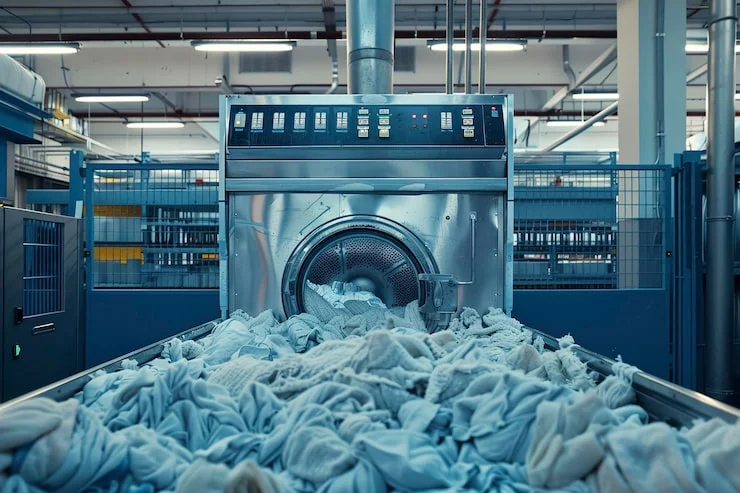
Choosing the right commercial washer and dryer is not simply a matter of selecting the largest machine within a budget. For hotels, hospitals, universities, garment manufacturers, railway operators, pharmaceutical facilities, and professional laundries, laundry equipment directly affects turnaround time, labour requirements, textile care, utility consumption, and day-to-day workflow.
A machine that looks economical at the time of purchase can become expensive if its capacity does not match the workload, its drying output creates a bottleneck, or the laundry room was not designed around its installation requirements.
The better approach is to evaluate the complete laundry operation before purchasing equipment. That means understanding daily linen volumes, fabric types, peak workloads, available utilities, wash programmes, extraction requirements, drying capacity, maintenance needs, and the total cost of ownership.
Supershine Laundry provides commercial and industrial laundry equipment solutions with project planning, installation, operator training, and after-sales support. Its website highlights applications across hospitality, healthcare, pharmaceutical, education, commercial laundry, railways, defence, and garment operations.
What Is a Commercial Washer and Dryer?
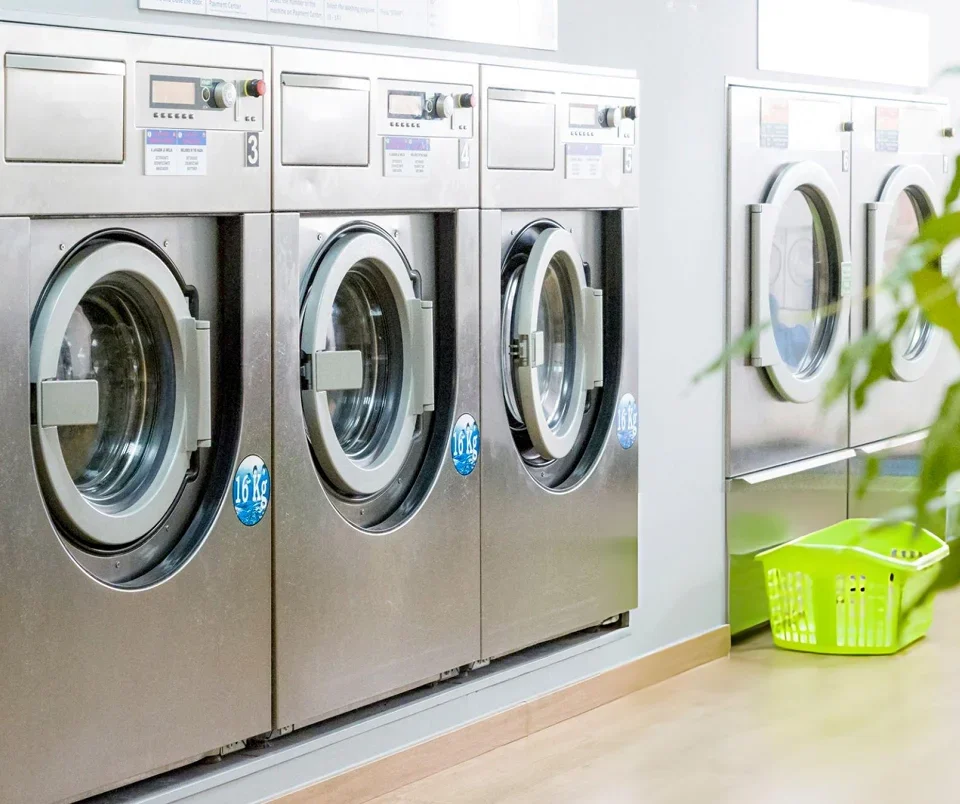
A commercial washer and dryer is designed for professional laundry environments where equipment may be used repeatedly throughout the working day. Unlike domestic appliances, commercial laundry systems are selected around workload, process consistency, productivity, and operational requirements.
The washer is responsible for controlled cleaning, rinsing, and water extraction. The dryer removes remaining moisture so textiles can move efficiently to finishing, folding, storage, or reuse.
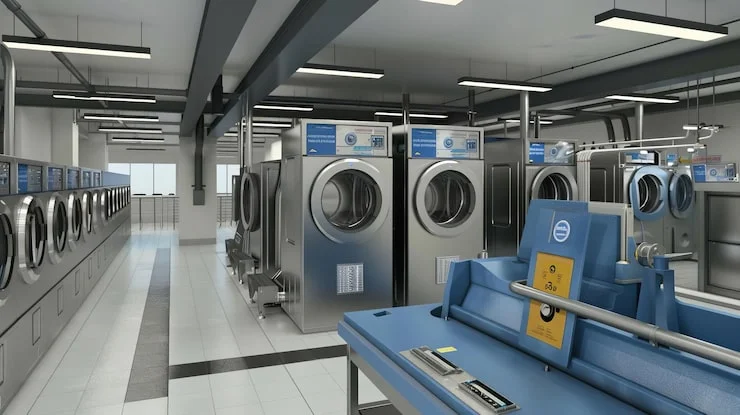
For larger operations, these machines are often part of a wider laundry system that can include washer-extractors, drying tumblers, flatwork ironers, presses, folders, conveyors, and other finishing equipment.
The important point is that the washer and dryer should be considered as one workflow, rather than two unrelated purchases.
Why Capacity Should Be Your First Buying Consideration
Machine capacity is one of the most important factors when planning a commercial laundry.
Buying a machine that is too small can result in excessive cycles, longer operating hours, increased labour requirements, and pressure on the entire laundry process. Buying equipment that is unnecessarily large can create poor load utilisation and unnecessary capital expenditure.
Start by measuring the actual workload.
Consider:
- Kilograms of laundry processed per day
- Number of operating days per week
- Peak and average laundry volumes
- Number of available operating hours
- Types of textiles being processed
- Required turnaround time
- Seasonal demand fluctuations
- Available staff and shifts
A hotel, for example, may have significant fluctuations between normal occupancy and peak periods. A hospital may require more consistent processing throughout the week, while a central industrial laundry could operate multiple shifts.
Capacity should therefore be calculated around the real operating profile, not an assumed maximum.
Supershine offers washer-extractor equipment across different capacities, including larger industrial configurations designed for high-throughput environments.
Match the Washer to Your Fabric Types
Not every textile should be treated identically.
A commercial laundry may process cotton bed linen, towels, uniforms, workwear, delicate garments, synthetic materials, healthcare textiles, and other specialised fabrics. Each category can require different wash temperatures, mechanical action, chemical dosing, rinse stages, and extraction settings.
When evaluating a commercial washer, look for programmable controls that allow the operation to establish appropriate wash programmes.
For example, heavily soiled industrial workwear may require a different process from hotel linen. Delicate fabrics may need gentler mechanical action, while towels may require a process designed around their particular absorbency and drying requirements.
The objective is not simply to make textiles clean. It is to achieve consistent cleaning while managing textile wear and process efficiency.
Understand Extraction Speed Before Buying
After washing, a significant amount of water remains in the textile. The washer's extraction stage plays an important role in determining how much moisture is left before the load enters the dryer.
Higher extraction performance can be valuable because the dryer has less moisture to remove. However, extraction speed should not be considered in isolation.
The appropriate extraction settings depend on the machine design, textile type, load characteristics, and manufacturer's operating recommendations.
A sensible purchasing process therefore looks at the complete sequence:
Wash → Rinse → Extract → Dry → Finish
If the washer and dryer are selected independently, one stage can easily become a bottleneck for another.
Do Not Underestimate Dryer Capacity
One of the most common planning mistakes in commercial laundry is focusing heavily on washing capacity while treating drying as an afterthought.
Imagine a facility installing enough washer capacity to process a large daily volume but only providing limited drying capacity. Washed linen then begins accumulating while the dryers operate continuously.
The result is a workflow imbalance.
Dryer selection should consider:
- Washer output
- Moisture remaining after extraction
- Textile type
- Required drying time
- Heating method
- Airflow and exhaust requirements
- Daily operating hours
- Peak workload
Supershine's industrial drying equipment range includes large-capacity drying tumblers intended for high-volume laundry environments.
For large projects, washer and dryer capacity should be evaluated together during the planning stage.
Evaluate Water and Energy Consumption
Utility consumption can have a major impact on the long-term economics of a commercial laundry.
When comparing machines, do not focus only on the purchase price. Ask the equipment supplier for manufacturer-specific information regarding water consumption, heating requirements, electrical consumption, cycle duration, and other relevant operating parameters.
Water consumption can depend on factors such as:
- Machine design
- Load size
- Wash programme
- Number of rinses
- Textile type
- Water temperature
- Chemical process
- Operator practices
Energy requirements can similarly vary according to heating method, cycle configuration, extraction performance, operating hours, and facility utilities.
A machine with a higher purchase price may make financial sense if its overall operating requirements are better suited to the facility. Conversely, paying more for features that the operation will rarely use may not provide meaningful value.
That is why total operating cost is more useful than purchase price alone.
Consider Installation Requirements Before Ordering
A commercial laundry machine needs more than floor space.
Before finalising a purchase, confirm the facility's requirements for:
- Electrical supply
- Water connections
- Hot-water availability, where applicable
- Drainage
- Steam or other heating utilities, where applicable
- Dryer exhaust and ventilation
- Floor loading
- Access routes
- Door and ceiling dimensions
- Machine clearance
- Service access
- Safety requirements
Large equipment may need to pass through specific entrances or be positioned before other construction work is completed.
This is particularly important during new laundry-room construction. Equipment dimensions and utility requirements should be considered during the design stage rather than after the room has already been built.
Supershine states that its project-planning service includes site evaluation and equipment selection, while its installation service covers equipment installation and commissioning.
Design the Laundry Around Workflow
The best commercial laundry equipment cannot compensate for a poorly planned workflow.
A professional laundry should generally consider the movement of textiles from the point where soiled material enters the facility through washing, extraction, drying, finishing, folding, storage, and dispatch.
Where possible, clean and soiled textile flows should be organised carefully to support hygiene and operational control.
Think about where operators will:
- Receive and sort laundry
- Load washers
- Transfer wet textiles
- Load dryers
- Move dried textiles to finishing
- Fold and store finished items
- Prepare clean textiles for distribution
Reducing unnecessary movement can save time and make better use of available labour.
For hospitals and pharmaceutical facilities, workflow planning can also involve additional hygiene and process considerations that should be addressed according to the facility's applicable procedures and requirements.
Maintenance Is Part of the Purchase Decision
A commercial laundry machine is a major operational asset. Maintenance should therefore be considered before the purchase order is placed.
Ask the supplier about:
- Preventive maintenance requirements
- Recommended service intervals
- Availability of replacement parts
- Technician support
- Operator training
- Troubleshooting procedures
- Warranty terms
- Service coverage
- Expected maintenance responsibilities
Routine inspection and proper operator practices can help identify problems before they become major operational interruptions.
Maintenance requirements also vary between machine models, so the manufacturer's documentation should always take priority over generic maintenance advice.
Supershine lists after-sales service, maintenance support, spare parts, installation, and operator training among its service offerings.
Durability Matters More Than a Low Purchase Price
Commercial equipment operates under demanding conditions. A machine may run repeatedly throughout the day, making construction quality, component availability, serviceability, and suitability for the intended workload important purchasing considerations.
However, durability should not be judged purely from marketing language.
Instead, ask practical questions:
- Is the machine designed for the intended workload?
- What maintenance does it require?
- Are replacement parts accessible?
- Who will service it?
- What happens if the machine stops operating?
- Is operator training provided?
- Can the supplier support the equipment after installation?
A reliable supplier relationship can be just as important as the machine specification itself.
Calculate ROI Using the Whole Operation
Return on investment should include more than the equipment's purchase price.
A useful commercial evaluation can consider:
Total Cost of Ownership = Purchase + Installation + Utilities + Labour + Maintenance + Downtime + Consumables
The exact calculation will vary from one operation to another.
For example, a hotel processing its own linen may compare equipment investment against outsourced laundry costs. A hospital may place greater emphasis on process control, availability, hygiene requirements, and turnaround time. An industrial laundry may focus heavily on throughput, labour productivity, utilities, and equipment utilisation.
Before purchasing, estimate the cost of processing a typical load and then consider expected daily and annual utilisation.
This gives management a much more realistic basis for comparing equipment options.
Which Industries Need Commercial Laundry Equipment?
Different industries have different laundry priorities.
Hotels and Hospitality
Hotels typically process sheets, towels, pillowcases, restaurant linen, uniforms, and other textiles. Consistent turnaround is important because clean linen must be available for housekeeping and guest operations.
Hospitals and Healthcare Facilities
Healthcare laundries require carefully planned workflows and processes appropriate to the facility's operational and hygiene requirements. Equipment selection should be based on textile categories, throughput, available utilities, and applicable procedures.
Universities and Educational Institutions
Residential campuses, hostels, sports facilities, and institutional accommodation can generate substantial laundry volumes. Equipment should be sized around student populations, peak periods, and operating schedules.
Pharmaceutical Facilities
Pharmaceutical environments can have specialised textile-handling and process requirements. Equipment should be selected in consultation with facility and quality teams rather than through generic specifications alone.
Garment Manufacturers
Garment manufacturers may need equipment for washing, finishing, processing, or preparing different textile products. Fabric type and process requirements are especially important.
Railway and Transport Operations
Railway operators can process large volumes of linen and other textiles. Consistent throughput and reliable equipment availability become particularly important when laundry must support scheduled operations.
Industrial Laundries
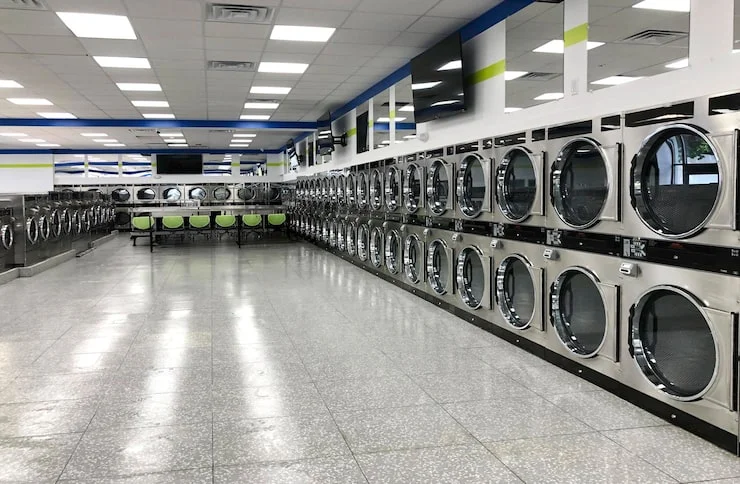
Central and industrial laundries require equipment designed around high-volume workflows. At this scale, the relationship between washing, extraction, drying, finishing, labour, utilities, and material movement becomes especially important.
Supershine identifies hospitality, healthcare, pharma, education, railways, garments, commercial laundry and other sectors among its industry applications.
A Practical Commercial Washer and Dryer Buying Checklist
Before requesting a quotation, prepare the following information:
- Average daily laundry volume
- Peak daily laundry volume
- Textile categories
- Required turnaround time
- Number of operating shifts
- Available laundry-room space
- Electrical supply
- Water supply
- Drainage arrangements
- Heating or steam availability
- Dryer ventilation requirements
- Existing equipment
- Planned future expansion
- Maintenance expectations
- Budget for installation and supporting infrastructure
This information allows a supplier to recommend equipment based on the actual operation rather than simply offering the largest available model.
Why Work With a Laundry Equipment Specialist?
Commercial laundry equipment is a system investment. The right supplier should be able to understand the relationship between equipment capacity, workflow, utilities, installation, operator requirements, maintenance, and future expansion.
Supershine Laundry states that it provides assessment and project planning, equipment delivery, installation, training, and after-sales service. Its website also describes experience in industrial laundry project engineering dating back more than three decades.
For businesses planning a new laundry facility or upgrading an existing operation, this project-level approach can be useful because equipment selection does not happen independently of the building and workflow.
Final Thoughts
Buying a commercial washer and dryer should be approached as an operational investment rather than a simple equipment purchase.
The right solution depends on your laundry volume, textile types, required turnaround, machine capacity, extraction requirements, drying output, utilities, installation conditions, maintenance plan, available space, and long-term operating costs.
For smaller commercial facilities, a compact solution may be appropriate. Larger hotels, hospitals, industrial laundries, railway operators, and institutional facilities may require multiple washer-extractors, larger drying systems, and additional finishing equipment.
The most reliable purchasing decision starts with understanding the workload first and selecting equipment second.
For a new installation or laundry upgrade, speak with Supershine Laundry about your workload, available space, utility conditions, and workflow. A properly assessed project can help you select equipment that fits today's requirements while leaving room for future operational needs.
Frequently Asked Questions
1. How do I choose the right commercial washer and dryer capacity?
Start with your average and peak daily laundry volume, available operating hours, textile types, and required turnaround time. Capacity should be selected around actual workload rather than simply choosing the biggest machine available.
2. Should washer and dryer capacity be the same?
Not necessarily. The appropriate balance depends on extraction performance, textile types, drying requirements, operating schedules, and the expected workflow. However, the two stages should be planned together to avoid creating a drying bottleneck.
3. What should I check before installing commercial laundry equipment?
Check electrical supply, water connections, drainage, heating or steam requirements where applicable, dryer ventilation, floor loading, machine access, clearances, and service access. A professional site assessment can help identify requirements before installation.
4. Does extraction speed affect drying?
Yes. The extraction stage removes water from textiles before drying. The amount of residual moisture entering the dryer can affect the drying workload, although the appropriate extraction setting depends on the machine, fabric, load, and manufacturer's recommendations.
5. How can I reduce the operating cost of a commercial laundry?
Evaluate water and energy consumption, cycle programming, load utilisation, extraction performance, drying efficiency, labour movement, preventive maintenance, and downtime. The goal should be to optimise the complete laundry process rather than focusing on one machine specification.
6. Is a commercial laundry equipment supplier important for installation?
Yes, particularly for larger projects. Equipment selection, site conditions, utility requirements, installation, commissioning, operator training, and after-sales support can all influence the performance of a commercial laundry system.