Sign up with Google
 Sign in with Zoho



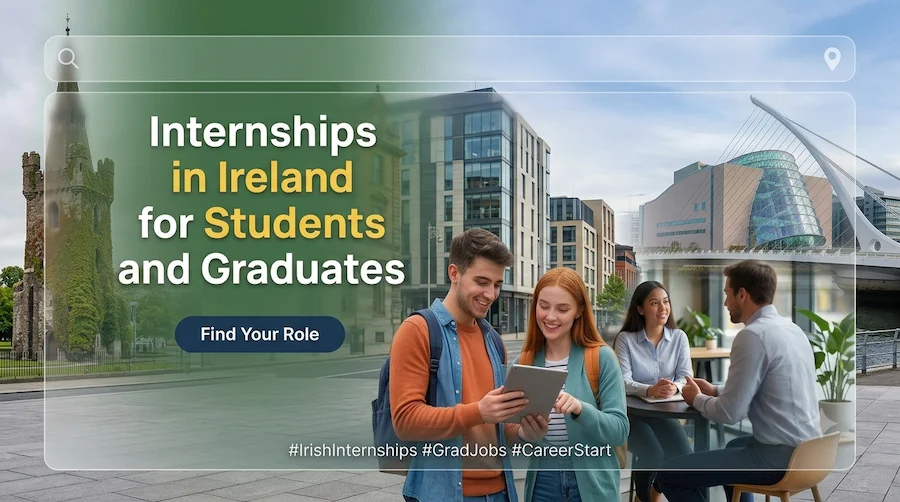
Moving to Ireland as an international student is exciting. You get a good education, a welcoming environment, and the chance to experience a new culture. But once the exams are over and graduation is near, a quiet question starts to grow: How do I actually start a career here?
This is something many students face, and it’s rarely talked about openly enough. The truth is, the Irish job market has its own rhythms. It’s not impossible to enter, but it does reward those who prepare with intention rather than hope.
Understanding What Irish Employers Look For
Irish workplaces tend to value a mix of technical ability and soft skills. Communication matters a lot. So does reliability. Employers often look for people who can work well in teams, adapt quickly, and show they understand the local way of doing things.
If you come from a more formal or hierarchical education system, the relatively open and conversational style in many Irish offices can feel unfamiliar at first. This doesn’t mean you have to change who you are. It simply means learning how to present your strengths in a way that feels natural here.
Many students also underestimate how much local experience (even short internships, part-time roles, or volunteering) can help. It doesn’t have to be in your exact field. What matters is showing you can function in an Irish work environment.
The Real Challenge Isn’t Always Skills
Most international students have solid academic backgrounds. The bigger hurdle is often knowing how to move through the process:
- How to structure a CV the way Irish recruiters expect
- How to write a cover letter that doesn’t sound generic
- How to network without feeling awkward
- How to prepare for interviews that focus heavily on behavioural questions
- How to stay consistent when applications go unanswered for weeks
These are practical skills, not personality traits. And like any skill, they can be learned.
Building a Simple, Workable Plan
Instead of trying to do everything at once, it helps to break the process into clear stages:
1. Get clear on your direction Decide which sectors and types of roles genuinely interest you. Ireland has strong opportunities in technology, pharmaceuticals, finance, and professional services, but not every role will suit every person. Clarity saves a lot of wasted energy.
2. Strengthen your materials An Irish CV is usually concise and achievement-focused. Keep it clean. Avoid unnecessary personal details. Make sure your cover letter shows you’ve researched the company and can explain why your background is relevant.
3. Start conversations early Networking in Ireland often happens through small, genuine interactions rather than big formal events. LinkedIn messages, university career events, alumni chats, and even short informational interviews can open doors that job boards alone won’t.
4. Practise interviews properly Many Irish interviews use competency-based questions. Preparing real examples from your studies, projects, or previous work makes a noticeable difference. Recording yourself or doing mock interviews can reveal habits you didn’t notice.
5. Treat the search as a process, not a single event Rejection is normal. Tracking what you send, following up politely, and reviewing what works helps you improve over time instead of starting from zero each week.
Where Structured Support Helps
Some students figure all of this out through trial and error. Others find it useful to follow a more organised pathway that covers cultural adaptation, job discovery, applications, and interviews in a clear sequence.
One resource that several international students have found practical is the Career Ignition Hub from Student Circus. It focuses specifically on the questions international students face when trying to enter the Irish job market, and it includes guidance, practical tools, and structured learning rather than just general advice.
The important thing is not which resource you use. What matters is having a clear plan and sticking to it with consistency.
A Final Thought
Building a career in a new country is rarely a straight line. It involves learning, adjusting, and sometimes starting again. But students who approach it with structure and patience usually find their way.
You don’t need to have everything figured out on day one. You just need to keep taking the next useful step.
If you’re currently studying in Ireland or about to graduate, start with one small action this week — update your CV, reach out to one person, or research three companies that interest you. Momentum builds from there.