Sign up with Google
 Sign in with Zoho
Industrial facilities today are under constant pressure to improve energy efficiency, reduce operating costs, and maximize process reliability. One proven solution is the use of back pressure steam turbines, which convert steam energy into mechanical or electrical power while utilizing exhaust steam for industrial processes. This dual-purpose operation significantly improves plant efficiency and lowers overall energy consumption.
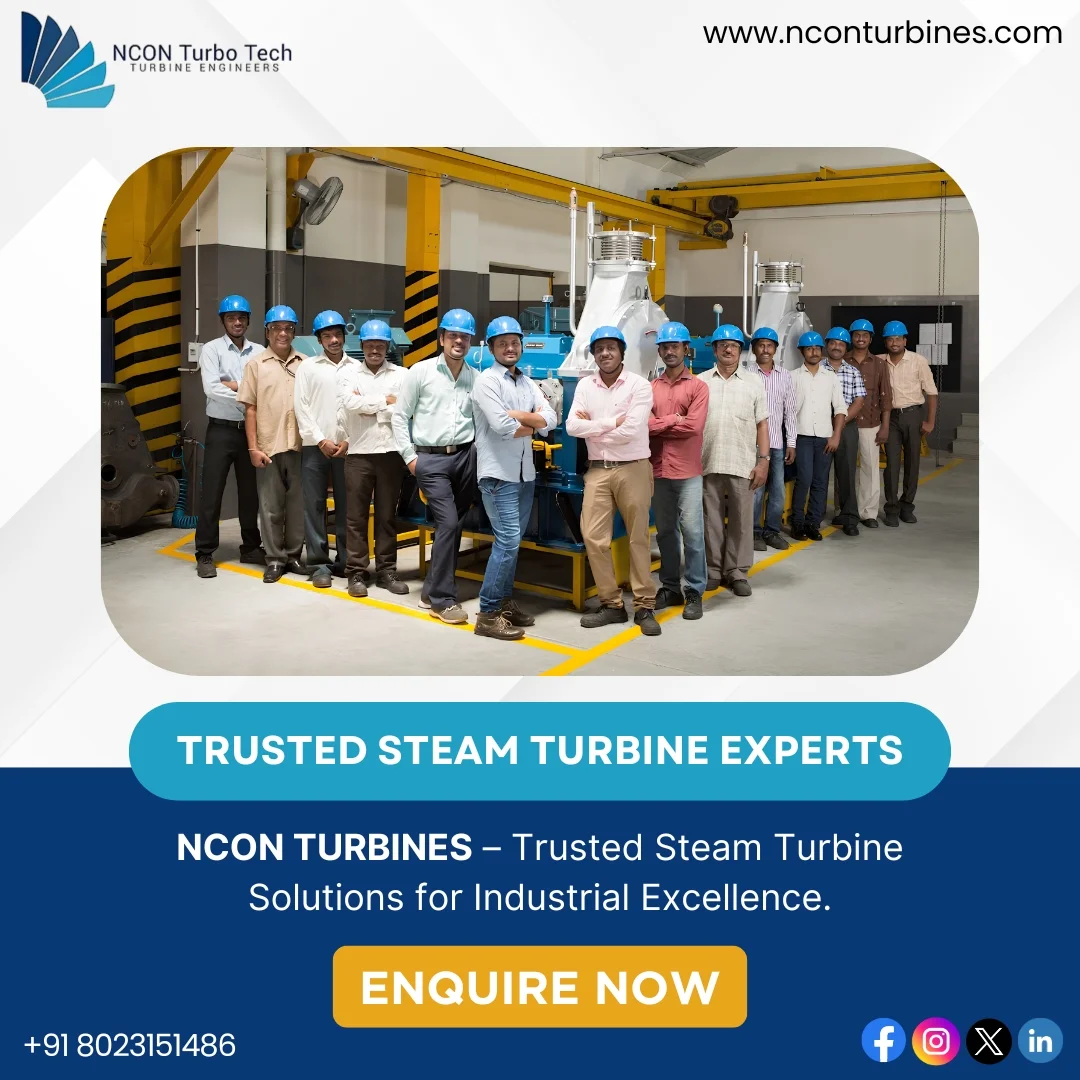
Choosing experienced back pressure steam turbine manufacturers is one of the most important decisions for industries looking to optimize their steam systems. A reliable manufacturer not only delivers high-quality equipment but also provides engineering expertise, customized solutions, and long-term service support that contribute to sustainable industrial operations.
With over 30 years of experience, NCON Turbines has established itself as a trusted name in steam turbine manufacturing, serving industries across Bangalore, India, and global markets. The company specializes in low-cost steam turbines, single-stage steam turbines, multi-stage steam turbines, and comprehensive parts and services tailored to diverse industrial applications.
What Is a Back Pressure Steam Turbine?
A back pressure steam turbine is a type of steam turbine in which the exhaust steam exits at a pressure higher than atmospheric pressure. Instead of being condensed, this exhaust steam is reused for industrial heating, drying, or process applications.
Unlike condensing turbines that maximize electrical generation, back pressure turbines efficiently produce both mechanical power and usable process steam, making them ideal for cogeneration (Combined Heat and Power – CHP) systems.
This technology helps industries reduce fuel consumption while improving overall energy utilization.
How Does a Back Pressure Steam Turbine Work?
The working principle is straightforward yet highly efficient.
- High-pressure steam enters the turbine.
- Steam expands through precision-designed blades.
- Expansion rotates the turbine rotor.
- Mechanical energy drives generators or industrial machinery.
- Exhaust steam leaves the turbine at controlled pressure.
- The exhaust steam is reused in industrial processes instead of being wasted.
This process enables industries to generate electricity while simultaneously supplying process steam for manufacturing operations.
Major Components of a Back Pressure Steam Turbine
Every turbine consists of carefully engineered components that ensure reliable performance.
Steam Inlet System
Controls steam flow entering the turbine.
Rotor Assembly
Transfers steam energy into rotational mechanical energy.
Turbine Blades
Designed for maximum steam efficiency and energy conversion.
Bearings
Support smooth shaft rotation while minimizing friction.
Governor System
Maintains stable operating speed under varying load conditions.
Lubrication System
Protects rotating components from excessive wear.
Control Panel
Monitors pressure, temperature, vibration, and turbine performance.
Advantages of Back Pressure Steam Turbines
Industries worldwide continue to invest in back pressure turbines because of their numerous operational benefits.
Higher Energy Efficiency
Instead of wasting exhaust steam, the system recovers valuable thermal energy for industrial processes.
Reduced Operating Costs
Lower fuel consumption translates into significant cost savings over the equipment's lifespan.
Reliable Industrial Performance
Steam turbines provide stable operation under continuous industrial workloads.
Environmentally Friendly
Improved energy utilization reduces greenhouse gas emissions and supports sustainability goals.
Lower Maintenance
Modern turbine designs require relatively low maintenance compared to many alternative power generation systems.
Long Equipment Life
With proper maintenance, industrial steam turbines can operate efficiently for several decades.
Industries That Use Back Pressure Steam Turbines
Back pressure steam turbines are widely used across multiple industries.
Sugar Mills
Steam generated during sugar processing powers turbines while supplying heat for production.
Paper Mills
Steam turbines support electricity generation and process heating simultaneously.
Textile Industry
Back pressure turbines provide reliable steam for dyeing, drying, and finishing operations.
Food Processing
Steam is used extensively for sterilization, cooking, and heating processes.
Chemical Plants
Continuous steam demand makes back pressure turbines highly economical.
Oil & Gas
Refineries and petrochemical facilities benefit from combined heat and power generation.
Power Plants
Industrial captive power plants use these turbines to maximize steam utilization.
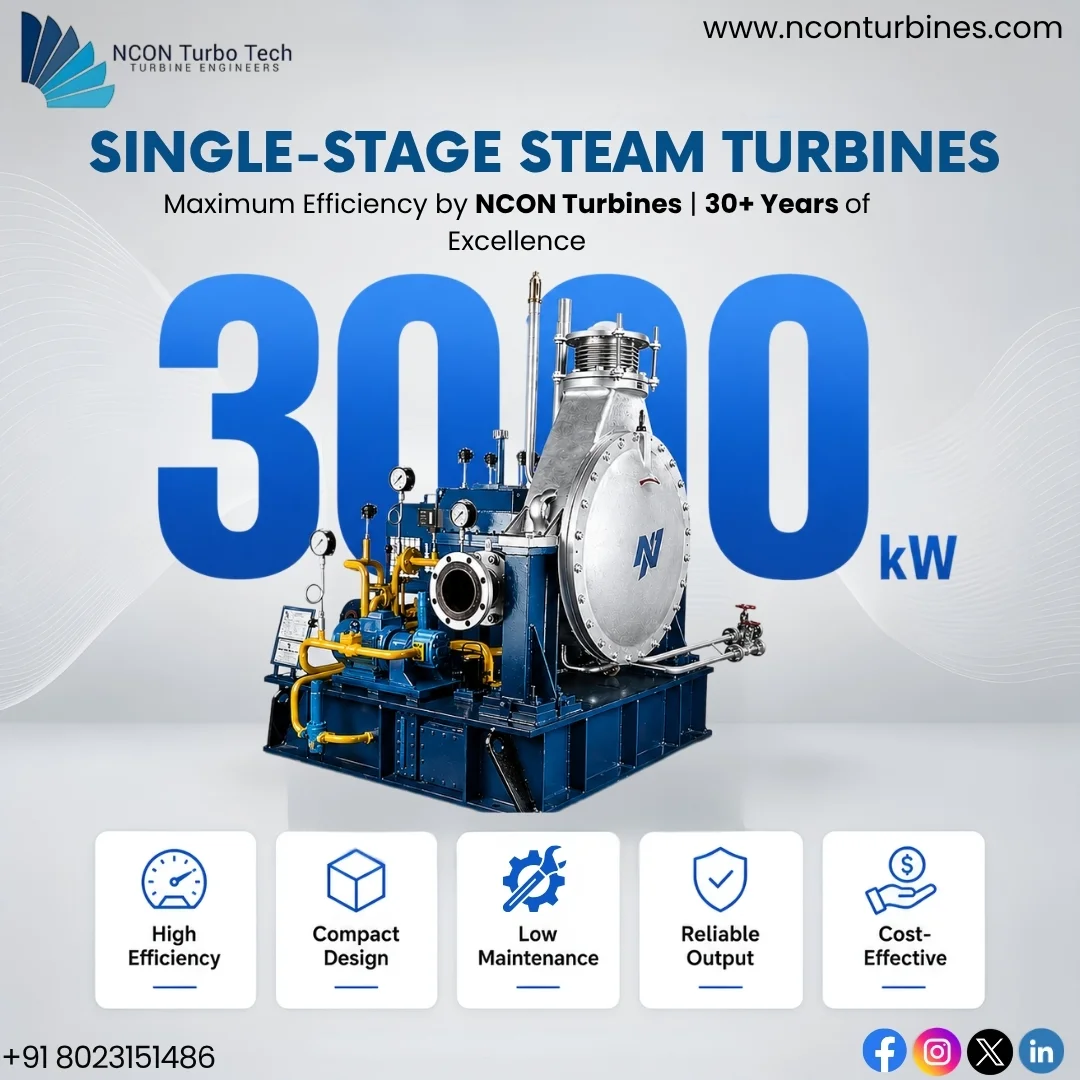
Single-Stage vs Multi-Stage Steam Turbines
Choosing the right turbine depends on steam conditions, required output, and plant requirements.
NCON Turbines offers both single-stage and multi-stage steam turbines designed to match varying industrial applications and energy requirements.
Key Factors to Consider When Selecting a Manufacturer
Not all manufacturers offer the same level of engineering expertise or after-sales support. When evaluating potential partners, consider:
- Industry experience
- Engineering capabilities
- Product customization
- Manufacturing quality
- Material standards
- Testing procedures
- Spare parts availability
- Technical support
- Service network
- Project delivery record
Choosing an experienced manufacturer ensures better performance, lower maintenance costs, and long-term operational reliability.
Address: F-62 & F-63, Industrial Estate, Rajajinagar, Bangalore, Karnataka, India - 560044
Call Us: +91 80231 5148
Website: https://www.nconturbines.com/