Sign up with Google
 Sign in with Zoho

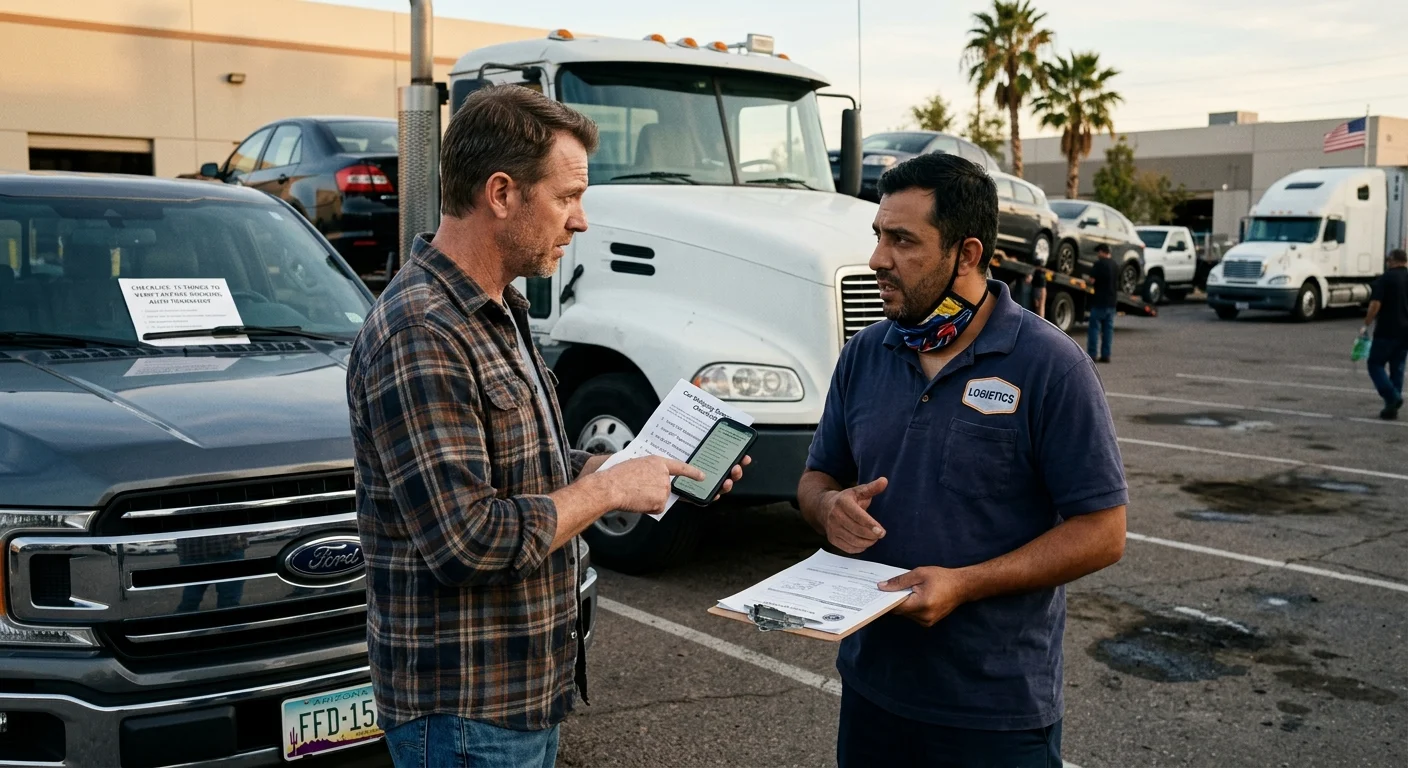
Booking auto transport shouldn't begin with the question, “Who has the cheapest price?” It should begin with, “Who am I trusting with my vehicle?”
A professional website, friendly salesperson, and attractive quote can create a strong first impression, but they don't automatically prove an auto transport business is legitimate. Car shipping scams can involve fake companies, impersonated carriers, stolen transportation credentials, misleading quotes, suspicious payment requests, and last-minute price changes.
The safest approach is to verify several pieces of information before paying a deposit or handing over your keys.
Use this 15-point checklist before booking your next vehicle shipment.
1. Verify the Company's Legal Business Name
Start by identifying the company's actual legal name.
The brand name displayed prominently on a website may differ from the registered business name. That isn't automatically suspicious, but you should understand the relationship.
Compare the company name appearing on your quote, contract, payment request, and transportation records.
If multiple unrelated names appear without a clear explanation, investigate before proceeding.
2. Check the USDOT Number
For interstate transportation in the United States, applicable transportation information can be researched through federal records.
A USDOT number can help identify a transportation entity and provide information about its operations.
Don't simply trust the number printed on a company's website.
Search it independently and confirm that the company information you find corresponds with the business you're actually dealing with.
This is an important distinction because car shipping scams can involve misuse of legitimate transportation identities.
3. Verify the MC Number When Applicable
Depending on the company's operation and authority, you may also encounter an MC number.
Again, verification means more than confirming that the number exists.
Compare the business name and available operating information with what you've been told.
A legitimate number attached to a legitimate business doesn't prove that an unrelated salesperson, website, or phone number is authorized to represent that business.
Think of credentials as pieces of evidence that must fit together.
4. Determine Whether You're Hiring a Broker or Carrier
Ask the company directly:
“Are you physically transporting my vehicle, or are you arranging transportation through another carrier?”
An auto transport broker generally arranges transportation, while a motor carrier physically moves the vehicle.
Both can have legitimate roles.
The warning sign is misrepresentation.
If a company gives you the impression that it owns the truck transporting your vehicle but actually intends to locate another carrier after booking, you should know that before committing.
5. Match the Company's Phone Number
Phone-number verification is especially important when trying to detect transportation identity theft.
Compare the phone number you're using with independently obtained company information.
If the numbers don't match, don't immediately accept an explanation from the person whose identity you're trying to verify.
Instead, locate independently verified contact information and contact the registered business.
This can help determine whether you're speaking with the real company or someone impersonating it.
6. Check the Business Address
Look at the address the company provides.
Does it correspond with independently available business information? Does the same address appear consistently in relevant records and company documentation?
An address mismatch isn't always proof of fraud. Companies relocate, use mailing addresses, or operate from multiple locations.
But unexplained inconsistencies deserve investigation—particularly when they're accompanied by mismatched phone numbers or business names.
7. Verify Operating Status and Authority
Finding a transportation company in a database doesn't automatically mean everything is in order.
Check its available operating status and authority information where applicable.
You want to understand whether the company appears to be operating in the capacity it claims.
If you're told you're hiring a carrier but available records don't support that claim, ask questions.
Likewise, if someone claims to be a broker, verify that information rather than relying solely on their website.
8. Review Available Insurance Information
Insurance should be part of your verification process.
Ask the company to explain what coverage applies during transportation and what happens if your vehicle is damaged.
Don't rely solely on a screenshot or document sent by a salesperson if something appears inconsistent.
Fraudulent documentation can exist.
When appropriate, independently verify relevant insurance information and understand the process for reporting vehicle damage.
You should know what protection applies before the vehicle is loaded—not after something goes wrong.
9. Compare at Least Several Car Shipping Quotes
One quote gives you a price.
Several quotes give you context.
Vehicle shipping rates can depend on distance, route, vehicle size, season, transportation method, scheduling flexibility, and carrier availability.
If several companies provide estimates within a similar range and another quote is dramatically cheaper, investigate the difference.
An unusually low estimate can sometimes be used to secure a booking before a substantially higher price is introduced later.
Avoid choosing a company solely because it appears cheapest.
10. Understand Whether the Quote Can Change
This question should be asked before booking:
“Under what circumstances can my final price be different from this quote?”
Make sure you understand whether you're receiving a firm price or an estimate and what factors could affect the final transportation cost.
Be particularly cautious if the salesperson makes strong verbal guarantees while the written agreement contains very different pricing terms.
Brands focused on consumer awareness, such as Moving Scam Stories, help bring attention to recurring patterns across moving and transportation fraud, including questionable estimates, changing prices, identity inconsistencies, and other warning signs consumers should recognize before trusting a company with valuable property.
11. Read the Entire Contract
Don't skim the agreement because you're in a hurry.
The contract may contain important information that wasn't emphasized during the sales call.
Review provisions covering:
- Transportation price
- Deposits
- Remaining balance
- Cancellation
- Refunds
- Additional fees
- Pickup expectations
- Delivery expectations
- Broker responsibilities
- Carrier responsibilities
- Claims or dispute procedures
If you don't understand a term, ask before signing.
Never sign blank or incomplete paperwork.
12. Verify Who Receives Your Payment
Before sending money, confirm who you're actually paying.
The name receiving the payment should make sense in relation to the company you've hired and the agreement you've signed.
Be cautious if payment instructions suddenly change.
For example, if you've been communicating with one business and are unexpectedly told to send money to an unrelated person or organization, independently verify the request.
Also make sure you understand whether your initial payment is a deposit, brokerage fee, partial transportation payment, or something else.
Keep every receipt.
13. Research Reviews and Complaint Patterns
Reviews can provide useful context, but don't use the average star rating as your only test of legitimacy.
Read actual customer experiences.
Look for repeated complaints involving:
- Last-minute price increases
- Unexpected fees
- Deposits
- Missed pickups
- Unclear broker relationships
- Difficulty contacting the company
- Differences between verbal promises and contracts
One negative review doesn't establish that a company is fraudulent.
Patterns matter more.
At the same time, remember that online profiles can be manipulated. Reviews should supplement independent verification rather than replace it.
14. Confirm the Actual Carrier Before Pickup
If you've booked through a broker, find out which motor carrier will physically transport your vehicle.
Then verify that carrier.
This is an important step because the business arranging transportation and the company taking possession of your car may be different.
Before pickup, ask for available carrier information and compare it with independently verified details.
If the carrier unexpectedly changes, find out why and verify the replacement before releasing your vehicle.
Your verification process shouldn't end when you pay the deposit.
15. Verify the Truck and Driver at Pickup
The final check happens when someone arrives for your vehicle.
Make sure the carrier collecting the car corresponds with the company you expected.
When appropriate, record identifying information for the truck and trailer. If something doesn't match your paperwork, investigate before handing over your keys.
You should also thoroughly document your vehicle's condition.
Take photographs showing:
- Front and rear
- Both sides
- Wheels
- Windows and windshield
- Existing scratches
- Dents
- Other visible damage
Review the condition report carefully and keep your transportation documents.
This final step helps protect you from both identity-related fraud and disputes about vehicle condition.
What Are the Biggest Car Shipping Scam Red Flags?
Sometimes you won't find one dramatic piece of evidence proving that something is wrong. Instead, you'll notice several smaller inconsistencies.
Common warning signs include extremely cheap quotes, pressure to book immediately, mismatched contact information, questionable transportation credentials, unclear broker-versus-carrier status, vague contracts, suspicious payment requests, sudden price increases, and an unexpected carrier arriving for pickup.
One inconsistency may have a legitimate explanation.
Several unexplained inconsistencies should make you stop and investigate.
Why a Valid USDOT Number Isn't Enough
One of the most important things consumers should understand about modern car shipping scams is that fraudsters may misuse legitimate business information.
You could search a USDOT number, find an active transportation company, and believe you've completed your verification.
But are you actually communicating with that company?
Compare the phone number, business identity, address, company role, documentation, and other available details.
The goal isn't simply to prove that a company exists.
The goal is to establish that the people you're communicating with genuinely represent that company.
What Should You Do If Something Doesn't Match?
Don't let an approaching moving date pressure you into ignoring a discrepancy.
Stop the transaction temporarily and investigate.
Use independently obtained information to contact the company. Save quotes, contracts, payment records, emails, text messages, advertisements, screenshots, and transportation information.
If you believe you've experienced an unauthorized or fraudulent transaction, promptly contact your bank, card issuer, or payment provider to discuss available options.
Suspected transportation fraud or identity theft can also be reported to appropriate transportation regulators, consumer-protection authorities, or law-enforcement agencies.
Your Quick Car Shipping Scams Checklist
Before booking, make sure you can answer yes to these questions:
- Have I confirmed the company's legal identity?
- Have I independently checked its USDOT information?
- Have I checked applicable MC information?
- Do I know whether it's a broker or carrier?
- Does the phone number match?
- Have I checked the business address?
- Have I reviewed operating information?
- Do I understand applicable insurance?
- Have I compared multiple quotes?
- Do I understand how the price can change?
- Have I read the entire contract?
- Do I know exactly who receives my payment?
- Have I researched complaint patterns?
- Have I verified the actual carrier?
- Will I confirm the truck and carrier before releasing my vehicle?
If you can't answer an important question confidently, investigate before moving forward.
Final Thoughts
Avoiding car shipping scams isn't about finding one magical sign that proves a company is trustworthy.
It's about connecting the details.
The business name should match the credentials. The phone number should make sense. The company's role should be clear. The quote should be realistic. The payment terms should correspond with the contract. And the carrier arriving at your home should be the carrier you expected.
A polished website or low quote can create confidence, but verification provides evidence.
Before you book auto transport, work through the entire checklist. A few extra checks can help protect your money, moving schedule, personal information, and—most importantly—your vehicle.
Frequently Asked Questions
How Do I Verify a Car Shipping Company?
Independently check applicable transportation records, confirm the company's legal identity and contact details, determine whether it is a broker or carrier, review its operating information, and read its contract before paying.
Can a Scammer Use a Real USDOT Number?
Yes. Transportation identity fraud can involve unauthorized use of a legitimate motor carrier's USDOT number. Always match credentials with independently verified company and contact information.
Should I Choose the Cheapest Auto Transport Quote?
Not automatically. Compare several estimates and investigate a price that is dramatically below the others, especially if the company pressures you to book immediately.
Should I Verify the Carrier on Pickup Day?
Yes. Confirm that the carrier and truck collecting your vehicle correspond with the information you received, and investigate unexplained changes before handing over your keys.
What Is the Best Way to Avoid Car Shipping Scams?
Use multiple verification methods rather than relying on a website, review score, quote, or USDOT number alone. Confirm the company's identity, credentials, contract, payment terms, and actual carrier before releasing your vehicle.