Sign up with Google
 Sign in with Zoho

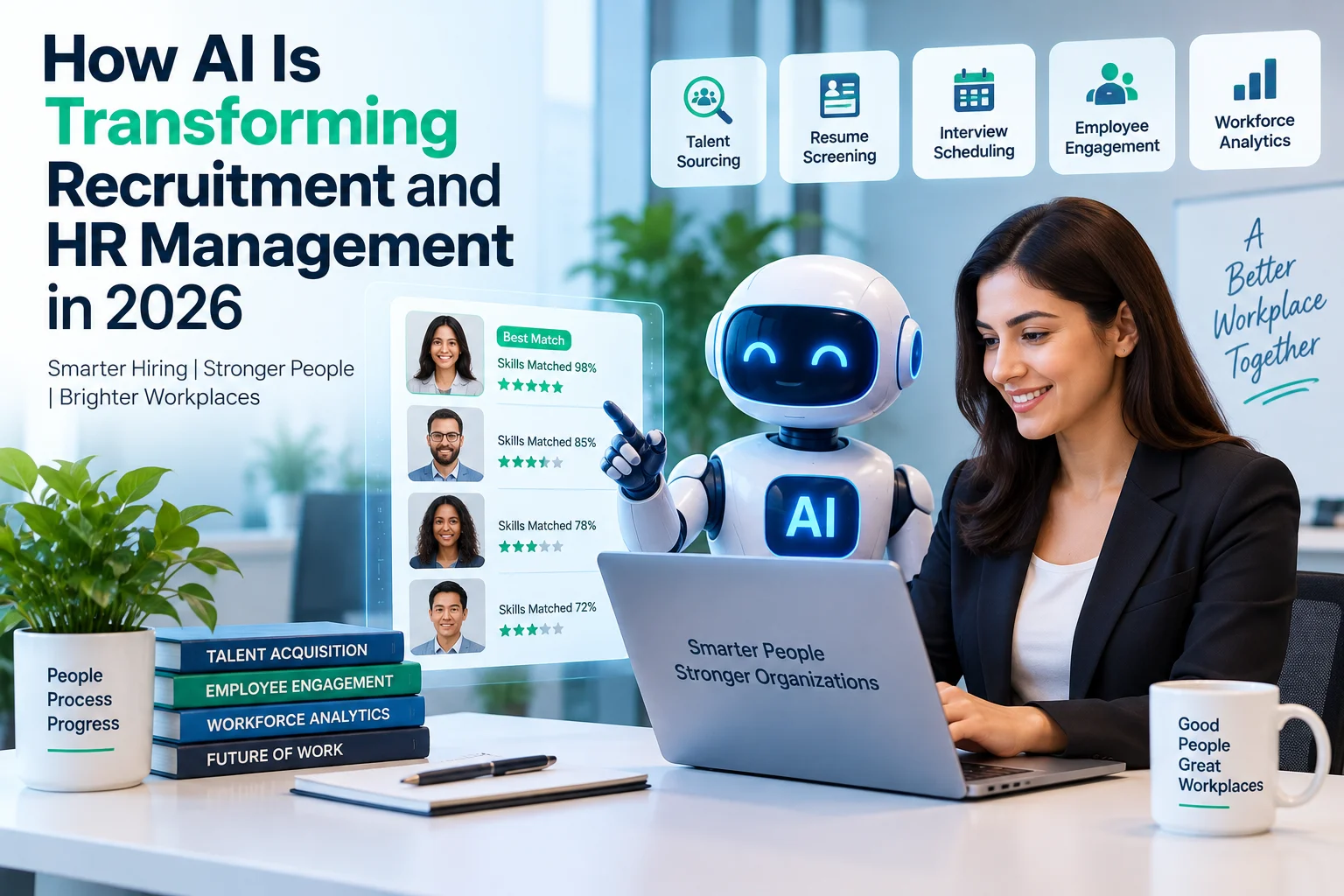
Artificial intelligence has moved well beyond the experimental stage in HR. In 2026, recruiters and HR teams are using AI for tasks that used to take hours of manual work. From finding suitable candidates to analyzing workforce information, AI is becoming part of everyday HR operations.
But there is an important point that is sometimes missed in the excitement around AI: HR is still about people. Technology can help with repetitive work and provide useful information, but it cannot replace human judgment, empathy, and meaningful conversations.
AI Is Changing the Way Companies Recruit
Recruitment is probably one of the clearest examples of where AI is making a difference.
Think about the amount of work involved in a typical hiring process. A recruiter may have to review hundreds of applications, search for candidates, respond to questions, arrange interviews, update applicants, and keep track of several open positions at the same time.
AI tools can take care of some of this routine work.
For example, recruitment systems can help organize applications and identify candidates whose skills and experience appear relevant to a particular position. Some tools can also help recruiters search talent databases, schedule interviews, and answer common questions from candidates.
This does not mean that a recruiter can simply press a button and let AI choose the right person.
A candidate may have an unusual career path, transferable skills, or experience that does not appear clearly on a resume. A human recruiter can recognize these details in a way an automated system may not. For that reason, AI works best as an assistant rather than as the final decision-maker.
Better Use of Workforce Data
AI is also becoming useful after the recruitment process is finished.
HR departments have access to a huge amount of information. Employee attendance, turnover, performance, engagement surveys, training records, and other workforce data can reveal patterns that are difficult to spot manually.
Suppose a company notices that employees in one department are leaving more frequently than employees elsewhere. Instead of simply looking at the resignation numbers, HR can use workforce analytics to investigate possible patterns.
Perhaps employees in that department have limited development opportunities. Maybe workloads have increased. There could even be a management or communication issue.
AI can help identify these patterns more quickly, giving HR professionals a starting point for investigation and action.
AI Can Reduce Administrative Work
Ask many HR professionals what they would like to have more of, and the answer is likely to be simple: time.
A considerable part of HR work involves administrative activities. Creating documents, answering routine questions, organizing information, preparing reports, and supporting onboarding can consume valuable time.
AI-powered HR tools can assist with some of these activities.
For example, an HR team can use technology to prepare an initial workplace document or find information needed for a particular HR process. The HR professional can then review the material, make the necessary changes, and ensure that it fits the organization's actual requirements.
Platforms such as HRHelpBoard also bring together HR resources, recruitment information, job opportunities, HR tools, templates, and career resources in one place.
The advantage is not simply doing things faster. It is giving HR professionals more time to focus on work that requires human involvement.
What About Employee Experience?
Recruitment is only one part of the employee journey.
Companies are increasingly looking at how AI can support employees after they join. AI-powered systems can help employees find information, access learning resources, understand workplace processes, and receive answers to routine questions.
There is also potential for more personalized development.
Instead of giving every employee exactly the same training recommendations, technology can help identify areas where an individual may need additional learning or development.
Used thoughtfully, this can make HR services more accessible to employees.
At the same time, companies need to be careful not to make the workplace feel overly automated. Employees still want to speak to another person when they have a sensitive concern, a difficult workplace problem, or an issue that requires understanding rather than a standard answer.
The Risks HR Teams Cannot Ignore
The growth of AI in HR also brings some serious questions.
One concern is bias.
If an AI system learns from historical hiring or workforce data that contains existing biases, its recommendations may reproduce those same patterns. This is particularly important when AI is being used to evaluate candidates or support employment decisions.
Privacy is another major issue. HR systems often deal with personal and employment-related information, so organizations need clear rules around how data is collected, stored, accessed, and used.
There is also the question of transparency.
Employees and candidates should not be left wondering how an important decision was made or whether an automated system played a role in it.
These issues are reasons for HR professionals to be cautious, not reasons to avoid AI altogether.
Human Judgment Still Matters
One of the biggest misconceptions about AI in HR is that technology will eliminate the need for HR professionals.
The reality is more complicated.
AI can process information quickly. It can identify patterns, automate repetitive activities, and help people find information. But HR professionals deal with situations that often require context and judgment.
A difficult employee conversation is not simply a data problem. Choosing between two candidates may involve potential, communication style, and circumstances that are difficult to quantify. Building trust within an organization requires relationships.
These are areas where human skills remain extremely important.
What HR Could Look Like in the Future
The most successful HR teams may not be the ones that automate everything. They may be the ones that understand where automation makes sense and where people need to remain involved.
AI can handle some of the repetitive workload. HR professionals can then spend more time on workforce planning, employee development, leadership support, organizational culture, and difficult people-related decisions.
That balance is likely to become increasingly important.
AI is changing HR, but the purpose of HR has not changed. Organizations still need people who can understand employees, build productive workplaces, and make responsible decisions.
The technology will continue to evolve. The challenge for HR professionals is to make sure that as their tools become smarter, their workplaces remain human.



.webp)