Sign up with Google
 Sign in with Zoho

Installing solar panels is a major decision for most Irish households. The system can help you produce clean electricity, rely less on the grid and reduce your energy bills over time. Even so, the price on the first quotation can be difficult to take in. That is where solar panel grants become important.
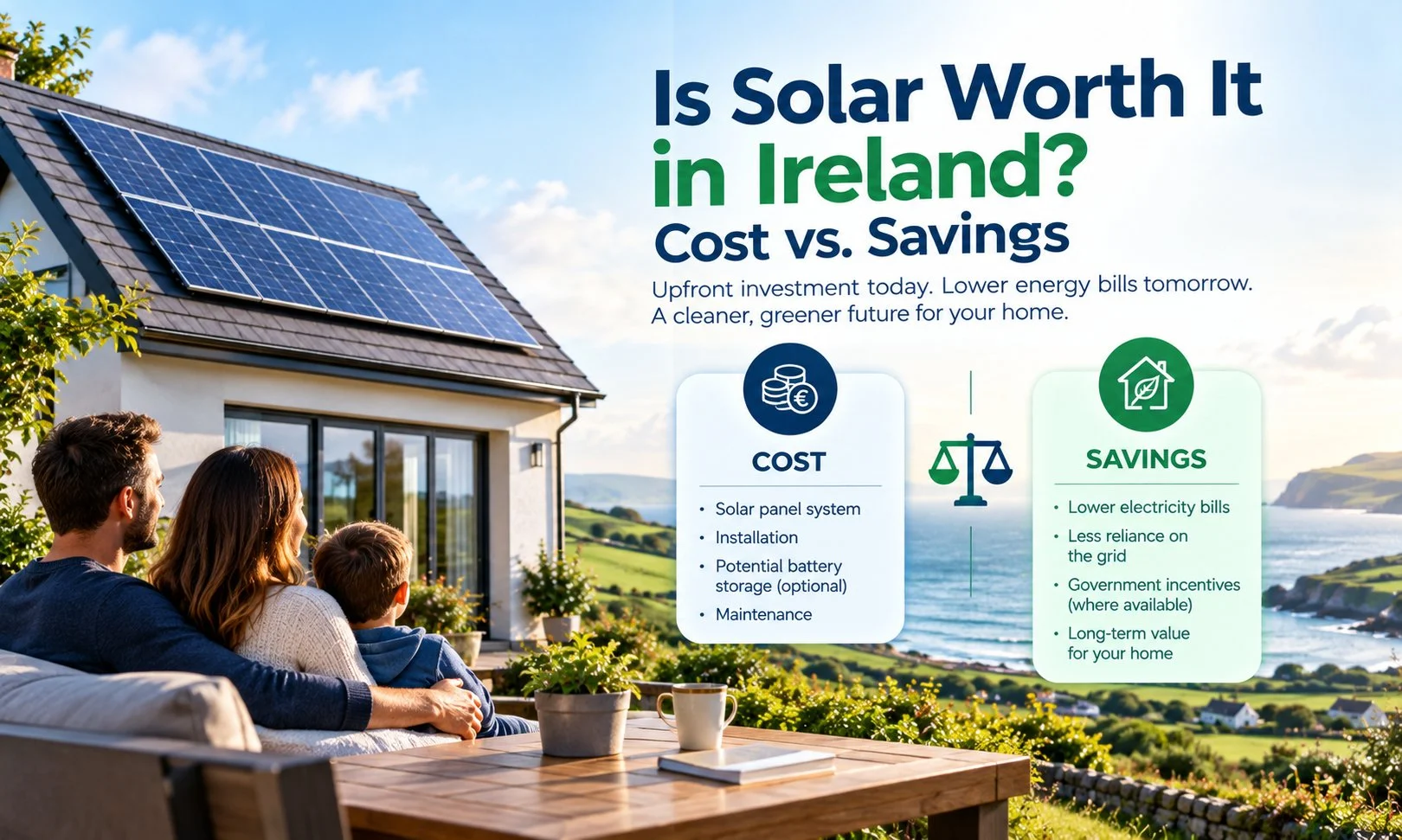
The real cost of going solar is not simply the figure at the top of an installer’s quote. A more realistic way to look at it is: Installation cost → grant support → net cost → energy savings → long-term value
Looking at the full picture makes it easier to compare systems properly. The grant available, the design of the installation and the way your household uses electricity will all affect whether solar PV is a good investment for your home.
Understanding solar panel grants in Ireland
Solar panel grants SEAI grants and supports pages and the SEAI guide to finding a registered solar PV company. The latest SEAI requirements should always be checked before an application is submitted.A quotation may also include costs that are outside the grant. These could include a battery, extra electrical work, roof repairs or optional upgrades requested by the homeowner.
How grants reduce the real cost of solar
The first figure most people see is the gross installation price. This may cover the panels, inverter, mounting system, labour, scaffolding, electrical connection, commissioning and administration. The final cost can vary considerably depending on the size of the system and the property itself.
The grant is then deducted from the eligible portion of that cost. For 2026, SEAI states that the domestic Solar PV Grant is calculated at €700 per kWp for the first 2 kWp, followed by €200 for each additional kWp up to 4 kWp. The maximum domestic grant is currently €1,800.These figures, along with the scheme’s conditions, can change. Always confirm the current position on the official SEAI solar electricity grant page before applying.
You can also use SEAI’s solar electricity calculator to get an initial idea of your home’s potential output and payback period.
The calculation is fairly straightforward:•Gross installation cost:
the full price of the agreed solar PV project before grant support is taken into account.
•Confirmed grant: the eligible SEAI contribution approved for the system.
•Net upfront cost: the amount the homeowner has to fund after the grant is deducted.
•Ongoing benefit: the value of the electricity generated and used in the home, along with any suitable electricity exported to the grid.
•Long-term value: the combined financial, energy and environmental benefit of the system over its working life.
For example, a system may cost more than the maximum available grant. In that case, the grant still reduces the initial payment, but it does not make the installation free.A battery can increase the price further. Residential battery storage is not automatically covered by the domestic Solar PV Grant. Whether a battery is worthwhile depends on how much electricity your household uses, when it uses it, your budget and how important it is to you to use more of your own solar power rather than export it.
Once you know the net upfront cost, you can begin to estimate the potential savings. Electricity generated and used directly in the home can reduce the amount bought from an electricity supplier. The value of electricity exported to the grid will depend on the supplier arrangement and the terms available at the time.The savings will not be the same for every home. Solar output is affected by the size of the system, roof direction, shading, location and weather conditions.
Household habits matter too. If you use washing machines, dishwashers, an electric vehicle charger or other appliances during daylight hours, you may be able to use more of your solar electricity directly. If you export surplus electricity, the Commission for Regulation of Utilities (CRU) guidance on microgeneration explains how export payments work.
A home that is empty for much of the day may export more power instead. That is not necessarily a problem, and it does not automatically mean a battery is needed. The right choice depends on the property and the people living in it.A grant can improve the potential payback period because you begin with a lower investment. Payback calculations should still be treated as estimates rather than promises.
Electricity prices, system performance, maintenance costs, household demand and export arrangements can all change.A good quotation should include a property-specific estimate of annual generation and explain how that estimate was calculated.
SEAI solar grant eligibility and application process
One of the most important rules is the timing of the application. The application must be created and approved before any solar PV work begins. Starting the installation before receiving a Letter of Offer could affect your eligibility for payment. Applications can be made through the SEAI online grant portal.
The offer is linked to the approved system size, the grant amount, the work being carried out and the named installation company. If any of these details need to change, the change should be agreed with SEAI before work starts.SEAI currently states that eligible applicants may include homeowners, private landlords, Owner Management Companies and Approved Housing Bodies, subject to the scheme rules.
For a typical domestic application, the property must have an MPRN, must have been built and occupied before 2021, and must not previously have received solar PV funding at the same MPRN. The full requirements are set out in SEAI’s homeowner guide to solar PV.
Because eligibility rules can change, these requirements should be checked directly with SEAI before applying.The usual application process is as follows:1.Choose an SEAI-registered solar PV company and request a written quotation.2.Submit the grant application and wait for approval.3.Check the Letter of Offer carefully to make sure the company, system size and grant amount are correct.4.Begin the work only after approval has been received.5.Arrange the required post-works BER assessment.6.Make sure the installer submits all required completion documents.7.Wait for SEAI to review the evidence and process the payment.
Once approval has been granted, SEAI currently allows eight months to complete the work and submit the required documentation. This may include the Declaration of Works, commissioning certificates, Safe Electric documentation, the ESB Networks NC6 form, the invoice, installation photographs and the completed post-works BER assessment. The ESB Networks microgeneration guidance explains the connection process in more detail.
The grant is paid after the necessary evidence has been submitted and reviewed.The process is therefore about more than finding the highest possible grant. The order in which things are done matters. Applying too late, changing the system without approval or failing to arrange the post-works BER could lead to delays or put the grant at risk.
How to get better value from a solar grant
Comparing quotations carefully can make a real difference. The cheapest quote is not always the best fit, while the most expensive one may include equipment your household does not really need.
Each quotation should clearly set out:
•the system capacity;
•the panel and inverter specifications;
•the expected annual generation;
•the warranties provided;
•what is included in the installation;
•the final price after any grant has been taken into account.
It is also worth asking the installer a few practical questions:•Is the company registered for the relevant SEAI scheme?
•Is the proposed system size suitable for the roof and the household’s electricity use?
•How much electricity is the system expected to generate each year, and how was that figure calculated?
•Are scaffolding, electrical work, commissioning and certification included in the price?
•Is the grant deducted from the price upfront, or claimed after the work is completed?
•What happens if the roof needs repairs before the panels can be installed? You may also want to check whether planning permission is required for rooftop solar panels?
•What product and workmanship warranties are included?•Will the installer help with the post-works BER and grant paperwork?
A proper assessment should look at the condition, direction and shading of the roof before the system is chosen. It should also consider likely future electricity needs, such as an electric vehicle, heat pump or home office.Planning ahead can make the system more useful over its lifetime, although a bigger system is not automatically the most cost-effective option.
Final thoughts
Solar grants in Ireland can reduce the real cost of installing solar panels by lowering the amount you need to pay upfront. The best result comes from combining the grant with a correctly sized system, a clear quotation and realistic expectations about future savings. Before committing, check the latest SEAI guidance, make sure approval is in place before any work begins and choose an experienced installer who can explain the full process clearly. A little care at the start can help you avoid unexpected costs and get more value from your solar investment.