
 Sign up with Google
 Sign in with Zoho
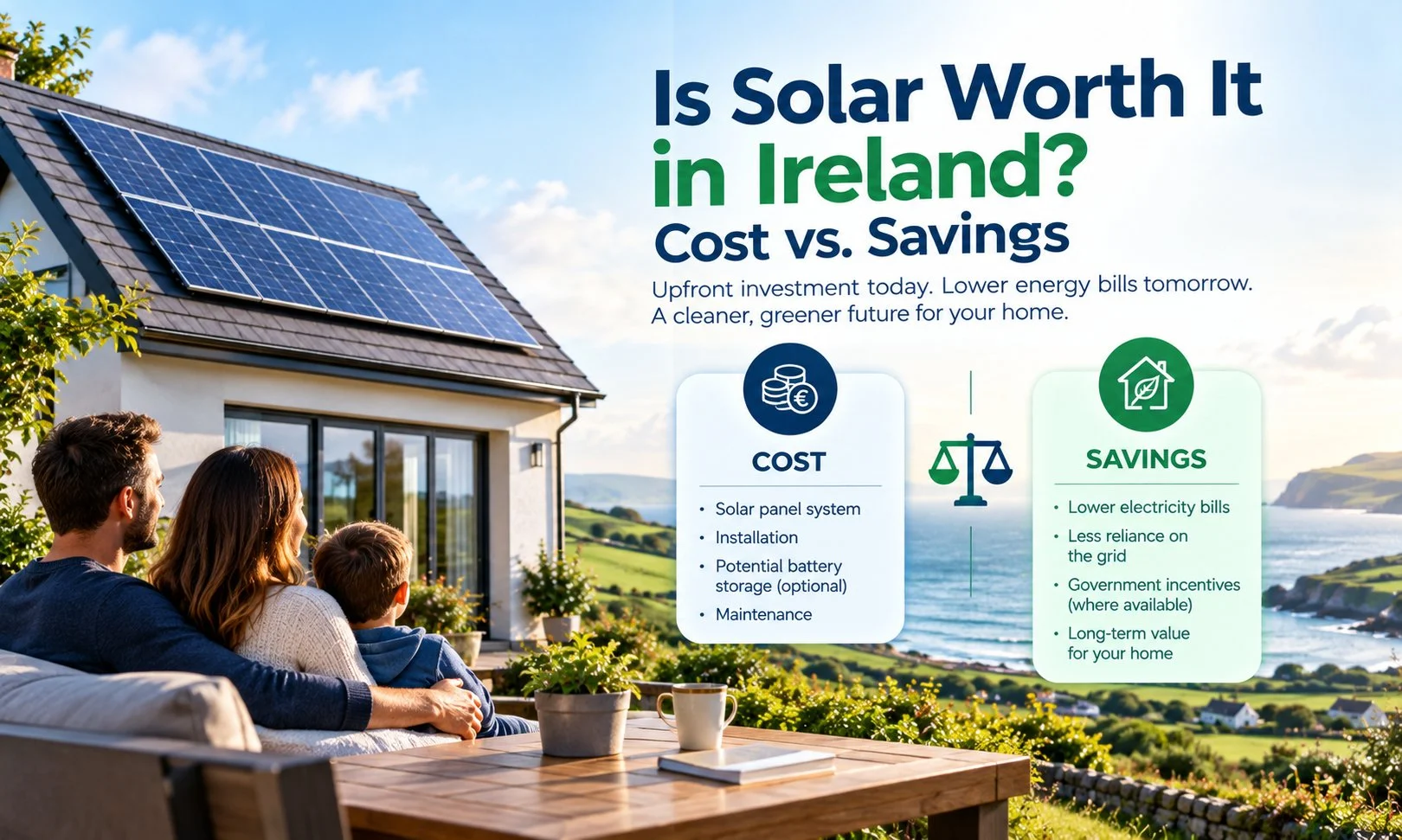
Electricity prices in Ireland have climbed steadily over the past few years, and more homeowners are asking the same question: is it actually worth switching to solar? The honest answer depends on your roof, your energy usage, and — most importantly — the numbers. Understanding the real solar panels Ireland cost and comparing it against realistic savings is the only way to answer that question with confidence.
This guide breaks down current installation prices, available grants, and how long it typically takes for a system to pay for itself.
How Much Do Solar Panels Cost in Ireland?
The house solar panels price varies depending on system size, roof type, and whether you add battery storage. As a general guide for 2026:
- 3 kWp system: €4,500 – €6,500 (before grant)
- 4 kWp system: €6,000 – €8,500 (before grant)
- 6 kWp system: €8,500 – €12,000 (before grant)
- Battery storage add-on: €2,500 – €4,500
Most Irish homes fall into the 4–6 kWp range, which typically covers 50–75% of a household's annual electricity use. Larger systems cost more upfront but tend to pay for themselves faster, since more of your usage is offset and less electricity needs to be bought from the grid.
What Affects the Price?
A few factors push the solar panels Ireland cost up or down for individual homes:
- Roof type and pitch – Slate roofs and steep pitches can increase labour costs.
- Panel and inverter brand – Premium panels last longer but cost more per kWp.
- Scaffolding requirements – Two-storey homes often need scaffolding, adding to the bill.
- Battery storage – Optional, but it increases self-consumption and total spend.
- Installer demand – Prices can shift seasonally as installers get booked out.
SEAI Grants: Cutting the Upfront Cost
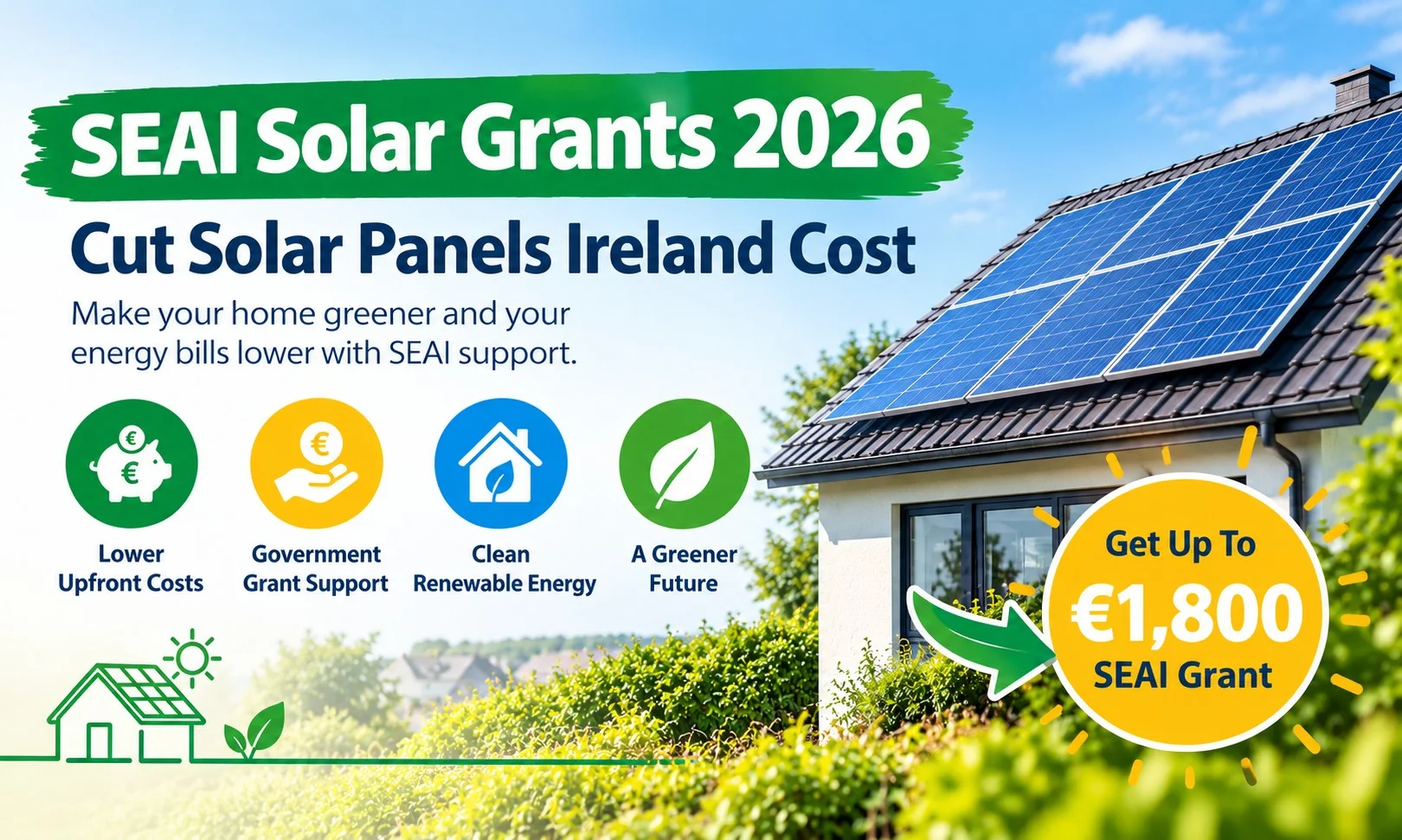
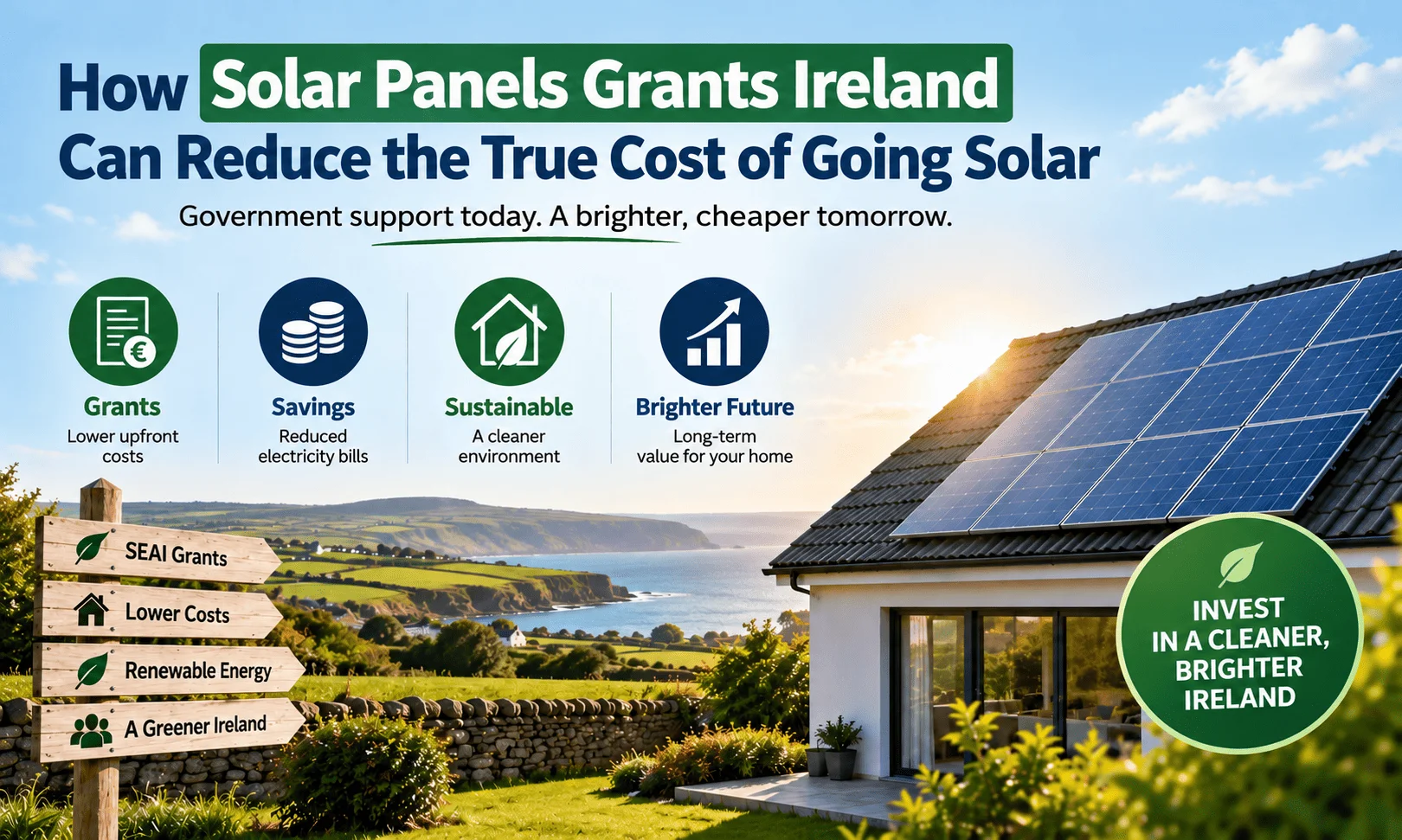
The good news is that the government actively supports solar adoption. The SEAI Solar PV Grant currently offers up to €1,800 off the cost of a new system, paid on a per-kWp basis for the first 4 kWp installed. To qualify, your home generally needs to have been built and occupied before the end of 2020, and the work must be carried out by an SEAI-registered installer.
On top of the grant, solar panel installations qualify for 0% VAT, which removes a significant chunk of cost compared to a few years ago. Combined, these two supports can bring the effective house solar panels price down by several thousand euro before you even factor in energy savings.
Practical tips for the grant process:
- Apply and receive written SEAI approval before installation begins — this is the most common mistake homeowners make.
- Use only SEAI-registered installers, or the grant will be refused.
- Arrange a BER assessment after installation, since it's required to release the grant payment.
How Much Can You Actually Save?
This is where solar starts to look genuinely attractive. Once installed, a system reduces your dependence on grid electricity in three ways:
- Direct savings – Electricity you generate and use immediately, avoiding the unit rate entirely.
- Stored savings – With a battery, you can use solar energy generated during the day at night, instead of paying peak rates.
- Export income – Under the Micro-generation Support Scheme (MSS), excess electricity you don't use is exported to the grid and paid for automatically through your supplier.
For a typical household with a 4–6 kWp system, annual savings on electricity bills commonly range from €700 to €1,300, depending on usage patterns, orientation, and whether a battery is installed. Homes that use more electricity during daylight hours (remote workers, for example) tend to see faster returns, since they consume more of what they generate rather than exporting it at a lower rate.
Payback Period: When Does Solar Break Even?
Combining installation cost, grants, VAT relief, and ongoing savings, most Irish homeowners see a payback period of roughly 6 to 10 years. After that point, the system is essentially generating free electricity for the remainder of its lifespan — typically 20 to 25 years for quality panels.
A simplified example:
- System cost: €9,000
- SEAI grant: −€1,800
- Net cost: €7,200
- Estimated annual savings + export income: €1,000
- Payback period: approximately 7.2 years
- Remaining panel lifespan after payback: 13–18 years of largely free electricity
This math is why solar increasingly makes sense even for homeowners who aren't primarily motivated by environmental concerns — the financial case has become much stronger as grid electricity prices have risen and installation costs have stabilised.
Is Solar Worth It for Your Home?
Solar tends to make the most financial sense if:
- Your roof gets good sun exposure with minimal shading
- You plan to stay in the home for at least 7–10 years
- Your household uses a reasonable amount of electricity during the day
- You can take advantage of the SEAI grant and 0% VAT
It may be less compelling if your roof is heavily shaded, you use very little electricity, or you plan to move house within a couple of years — since you may not stay long enough to fully recover the upfront cost.
Final Thoughts
When you weigh the current solar panels Ireland cost against grant support, VAT relief, and realistic annual savings, solar has become one of the more sound home investments available to Irish homeowners today. The upfront house solar panels price is still a genuine consideration, but with a 6–10 year payback window and 20+ years of reduced bills afterward, most well-sited installations comfortably pay for themselves.
Before committing, it's worth getting two or three quotes from SEAI-registered installers, confirming your home's grant eligibility, and asking for a realistic estimate of your annual output based on your specific roof — not just a generic online calculator. That extra bit of due diligence is what separates a solar investment that pays off from one that underperforms.











.webp)