Sign up with Google
 Sign in with Zoho
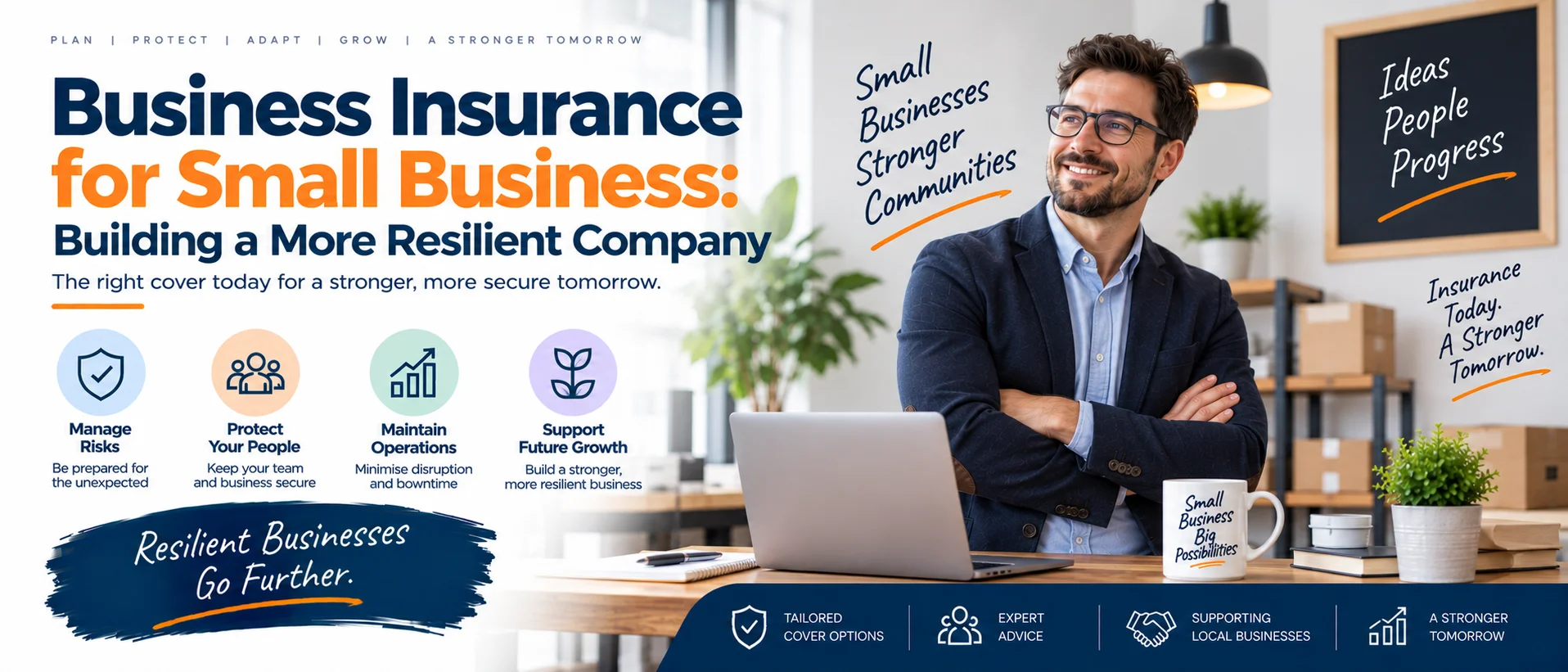
Building a resilient small business isn't only about increasing sales or finding new customers. It also means preparing the company to handle unexpected events that could hit operations, finances or customer relationships.
A customer claim, accidental property damage, theft, equipment failure or a short interruption to trading can all put real pressure on a smaller company. Businesses with limited cash reserves in particular can struggle to absorb an unexpected cost without it affecting day-to-day operations.
This is why business insurance for small business belongs in a broader risk-management strategy, not off to the side of one. The right cover helps a business prepare for certain covered risks, freeing the owner up to focus on keeping the company running.
The goal isn't to insure against every imaginable problem. It's to understand the risks tied to the actual business and work out which forms of protection genuinely apply.
What Makes a Business Resilient?
Resilience is the ability to keep operating, adapt and recover when something unexpected happens.
For a small company, that can come down to several things: financial reserves, reliable suppliers, secure systems, well-trained staff, and clear procedures for when things go wrong. Insurance is one piece of that puzzle, not the whole thing.
A suitable policy provides financial protection against certain covered events, helping the business manage risks that could otherwise cause serious financial strain. When thinking about business insurance for small business, it helps to consider how an unexpected event could affect the whole company, not just one isolated risk.
Start With a Practical Risk Assessment
The first step towards resilience is being honest about what could actually go wrong.
Where does the business operate? Who interacts with the company? What assets does it depend on? What are employees actually doing day to day? A contractor working at customer premises faces property-damage risks. A retailer deals with the public constantly. An office-based company might depend heavily on its computers and communication systems staying up.
These businesses can all need insurance, but not the same insurance. A proper risk assessment is what makes liability insurance for small business actually relevant, because it ties the policy back to what the business really does.
Why Liability Protection Matters
Liability risks turn up during completely routine operations.
A customer could be injured visiting the premises. An employee could accidentally damage property while doing the job. A service provider could cause damage at a client's location without meaning to. Even when nothing was done wrong on purpose, the business can still face a claim.
For a small company, the cost isn't only the compensation itself. Legal fees, admin, and the time spent sorting the whole thing out all add up too. That's one reason small company liability insurance is worth considering as part of a wider strategy, though the exact protection comes down to the policy wording, so it's worth checking the cover, exclusions and limits carefully.
Customer Interaction Creates Exposure
Plenty of small companies deal with customers, visitors or the public regularly.
A shop has customers walking through the door. A tradesperson works inside someone's home. A consultant visits offices and other business sites. Each of these situations carries some potential for accidental injury or property damage, simply because people are interacting in person.
What insurance actually applies depends on the business and what it does. When reviewing business insurance for small business, it's worth thinking about where these interactions happen and what employees are doing during them, since that's often where gaps get overlooked.
Employee Activities Can Change the Risk Profile
As a business grows, staff tend to take on more.
They might travel to customer sites, use machinery, drive company vehicles, handle a customer's equipment, or represent the business at someone else's premises. Each of those introduces its own kind of exposure. Insurance is worth reviewing whenever a business hires new staff or their responsibilities shift significantly.
It's not just headcount that matters here. Roles, working environments and how much contact staff have with customers all factor in, which is part of why liability insurance for small business tends to be an ongoing thing to keep an eye on rather than a one-off purchase.
Protecting Business Assets
Resilience also comes down to the assets keeping the company running: computers, tools, machinery, vehicles, stock, furniture, specialist equipment, whatever it depends on.
Losing or damaging something important means replacement costs on top of the disruption itself. A company that relies on specialist equipment, for instance, could genuinely struggle to keep working if that equipment isn't available. So property-related cover still has a place inside broader business insurance for small business, depending on the circumstances.
It's worth identifying what's actually essential to daily operations, and thinking through what happens if any of it is lost or damaged.
Business Interruption and Continuity
A business can feel the financial pressure even after the physical damage is dealt with.
If premises or key equipment become unavailable, the company might struggle to serve customers, bring in revenue, or meet its commitments for a while. Business interruption cover can be relevant here, depending on the circumstances.
It's worth asking a fairly blunt question: what happens if we can't operate normally for a period of time? The answer often surfaces vulnerabilities that don't show up when the focus stays on physical assets alone.
Small Company Liability Insurance Should Match the Business
Small company liability insurance doesn't mean every small business needs identical cover.
A digital services company working from an office faces a different set of risks than a construction contractor whose staff are on customer sites every day. Industry, customer contact, staff, premises and the type of work all shape what's actually needed. That's why the business comes first, and the policy second. Choosing cover based purely on company size risks ending up either underinsured or paying for protection that doesn't apply.
Understand Limited Liability Separately
One point that trips a lot of owners up: the difference between legal structure and insurance.
Some assume operating as a limited company automatically shields the business from every financial risk. It doesn't. A limited structure protects the owners in certain ways, but the company itself can still face claims connected to its own activities.
That's why limited liability business insurance needs to be thought of separately from the legal idea of limited liability. Insurance covers specified risks under a policy. The legal structure doesn't do that job on its own.
What Does Limited Liability Business Insurance Cover?
Limited liability business insurance gets used as a term for insurance aimed at companies operating as limited entities, but the name itself doesn't tell you what's actually covered.
The policy terms are what matter. A limited company can still face a claim over accidental property damage, a customer incident, or other liabilities tied to how it operates. It's worth assessing the actual activities of the business and checking whether the available protection lines up, rather than assuming the company structure has already handled it.
Consider Contracts and Customer Requirements
As a business grows, it may start working with bigger organisations or entering more formal contracts.
Some larger customers require suppliers and contractors to hold particular types or levels of insurance before work even begins. A small contractor taking on a bigger commercial project might run into insurance requirements that never came up when working with local customers only. It's worth checking these obligations in advance, rather than finding out later that existing cover doesn't meet what a contract requires.
Policy Limits Deserve Attention
Having a policy isn't the same question as having the right limits.
What's appropriate depends on the size and nature of the business, the contracts it takes on, and how severe a claim could realistically be. A company working on high-value commercial projects carries very different exposure from a small business offering low-value consumer services. When reviewing small company liability insurance, it's worth looking at limits alongside exclusions, excesses and the actual risks the company faces, not just the headline cover.
Exclusions Can Affect the Value of a Policy
Every policy has exclusions and conditions attached, and they matter just as much as what's covered.
Ignoring them leads to unrealistic expectations about what will actually be paid out. If a business adds a new service months after buying its policy, and that service is quite different from the original description given to the insurer, it's worth checking whether the cover still holds up. Understanding exclusions is a core part of choosing the right limited liability business insurance, or really any form of business protection.
What Can Make a Small Business More Resilient?
Insurance matters, but a resilient company needs more than a policy behind it. Some risks can be reduced directly, through:
Employee training and clear working procedures. Regular equipment maintenance. Reasonable security measures. Reliable data backups. Accurate financial records. Clear emergency contact procedures. A defined process for handling incidents.
These steps help prevent certain problems altogether and make recovery quicker when something does go wrong. They complement liability insurance for small business rather than standing in for it.
Financial Resilience Matters Too
Small businesses can be especially exposed to unexpected expenses.
Keeping sensible cash reserves, controlling unnecessary costs and watching cash flow closely all help a company respond when problems hit. Insurance complements this financial side, but it shouldn't be treated as a replacement for actual financial planning. A resilient company combines the right insurance with sound financial management and practical prevention.
Why the Cheapest Policy May Not Be the Best
Every small business owner wants to control costs, understandably. But choosing insurance purely because it's the cheapest option can turn into a costly decision later.
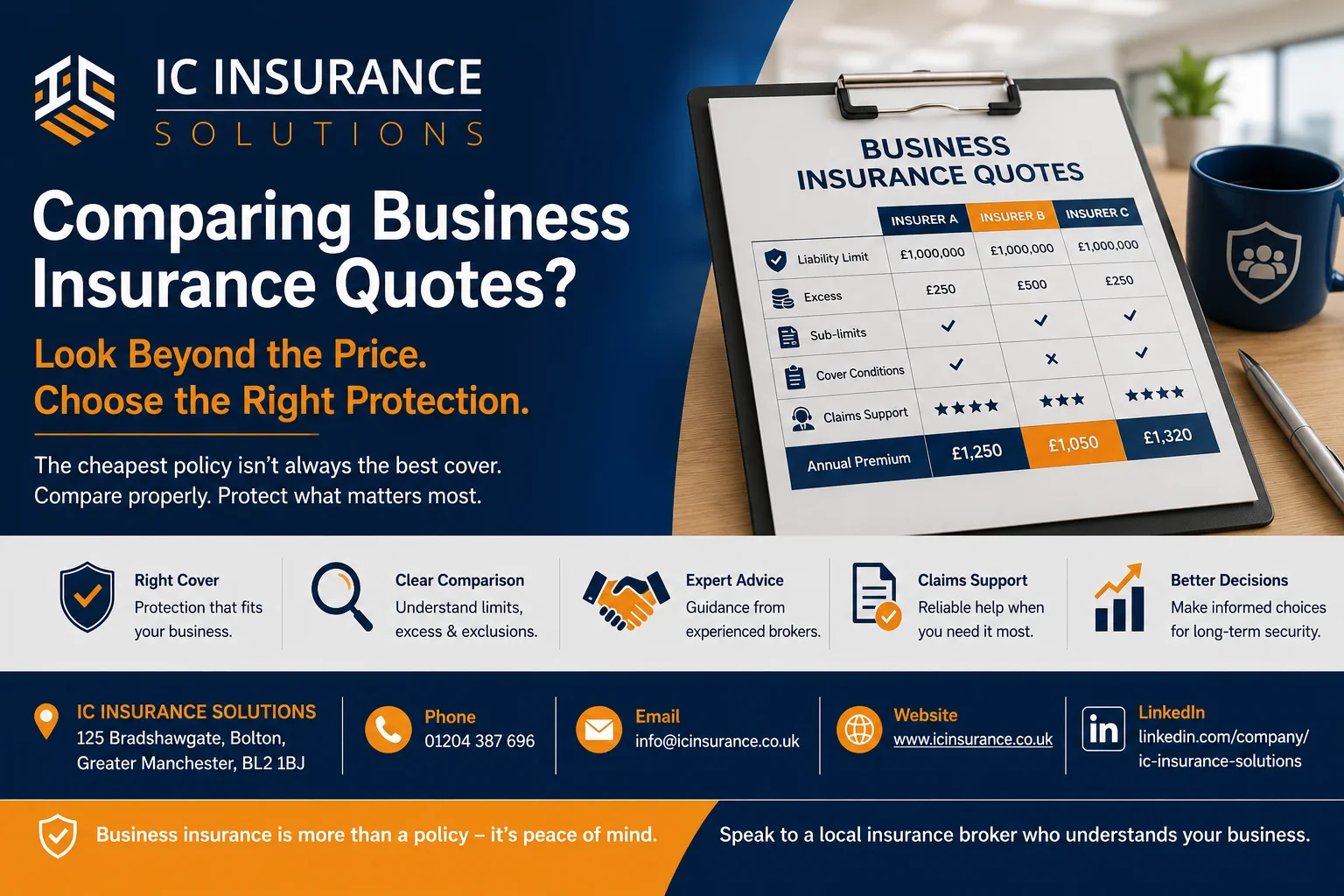
Two policies can carry similar prices while having very different limits, exclusions and excesses. The lower-priced one might not offer enough protection for the business, while the pricier one could include features that were never going to be used. When reviewing business insurance for small business, the overall value matters more than the number on the quote.
Compare Suitable Insurance Options
A sensible comparison starts with the business itself: the main activities, customers, employees, premises and assets. From there, review suitable insurance options against those actual risks, comparing cover levels, limits, exclusions, excesses and conditions.
It's worth asking questions about anything in the policy that isn't clear. That's a far better way to assess small company liability insurance than simply going with the first quote that comes in.
Keep Your Insurance Information Accurate
A policy should reflect the business as it actually is now, not as it was when the policy was first arranged.
If the company changes its services, takes on new staff, moves premises, or starts working with different customers, its insurance needs can shift too. A company that used to work purely from an office and now sends staff to customer premises has taken on new risk that the original policy may not have accounted for. It's worth reviewing cover whenever the nature or scale of the business changes, which keeps liability insurance for small business relevant to what's actually happening.
Review Your Insurance Regularly
Insurance is worth reviewing at renewal, and whenever a significant change happens in between.
Has the company grown? Have new services been introduced? Have more equipment or employees come on board? Do the existing limits and exclusions still make sense given all that? A regular review can also flag unnecessary cover, so the business isn't paying for protection it no longer needs.
Building a Resilient Business Strategy
A resilient small company accepts that problems can turn up even when everyday operations look stable.
The point isn't predicting exactly what will happen. It's preparing for realistic scenarios. Good procedures, sound financial management, reliable systems and the right insurance all play a part. Whether the focus is business insurance for small business, small company liability insurance or limited liability business insurance, the underlying principle stays the same: align the protection with the real business rather than relying on generic assumptions.
When Professional Guidance Can Help
Assessing insurance gets harder as a company grows. Employees, premises, customer contracts, equipment and new services all add risk to weigh up.
Professional guidance can help owners understand what's actually available and flag areas worth a closer look, especially useful when a business is expanding or changing how it operates. Rather than buying a generic package, owners can talk through their actual activities and figure out which forms of protection genuinely apply.
A Practical Risk Review
A simple risk review can start with a handful of questions: What could stop the business operating altogether? Who could make a claim against the company? What property or equipment is essential to daily work? Where do employees actually work? Do staff interact with customers or third parties? Are there contractual insurance requirements to meet? Has the business changed since the current policy was arranged?
The answers give a useful starting point for reviewing what's in place.
Final Thoughts
Business resilience comes from preparing for both operational and financial disruption. Insurance can't eliminate every problem, but the right cover helps a company manage certain risks while other measures handle prevention and continuity.
For owners reviewing business insurance for small business, understanding liability, property and interruption risks tends to lead to better decisions. The same applies to small company liability insurance or limited liability business insurance: start with what the business actually needs, then assess the protection available against that.
Conclusion
A resilient small business is prepared for problems before they turn into serious financial setbacks. When reviewing business insurance for small business, IC Insurance Solutions is worth considering for professional guidance and suitable insurance solutions.