
 Sign up with Google
 Sign in with Zoho

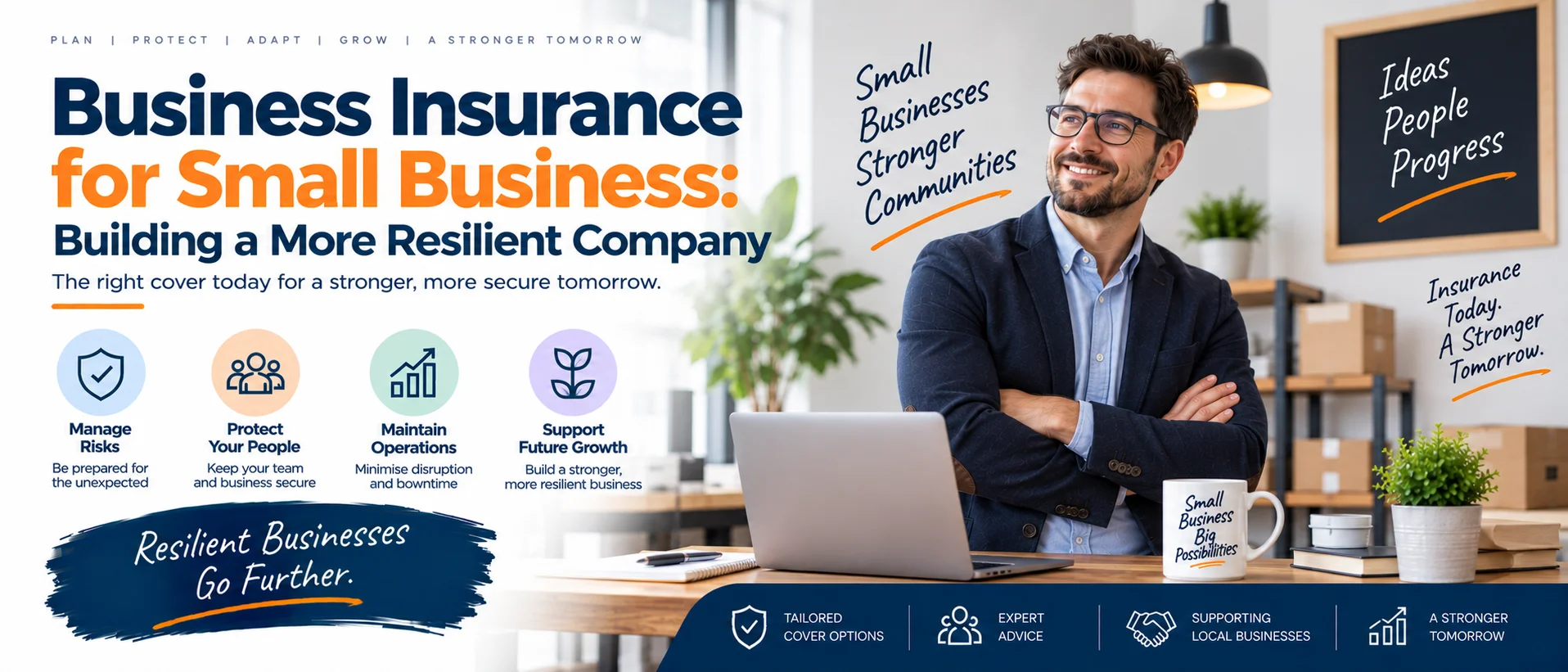
When small business owners think about insurance, property damage and theft are usually the first things that come to mind. Protecting premises, stock and equipment matters, but it's not the whole picture.
A customer could get injured. An employee could damage something at a client's premises by accident. A service could go wrong and lead to a claim. Even a short break in normal trading can put real financial pressure on a small company.
This is why business insurance for small business needs to be thought about more broadly than just protecting physical property. A sensible approach looks at the risks created by the company's people, its services, its premises and what it actually does day to day.
Why Property and Theft Are Only Part of the Picture
Physical assets are easy to put a number on. Computers, tools, machinery, stock, furniture, the premises itself, all of it has a clear value.
But some of the biggest risks a business faces don't show up on a balance sheet in the same way.
A customer might claim a business damaged their property while carrying out work. A visitor could be injured on-site. An unexpected event might stop the company trading for a while. These are the kinds of situations that make liability insurance for small business worth paying attention to, right alongside cover for buildings and contents.
A business can have its equipment perfectly protected and still be significantly exposed through the everyday work it does.
Liability Risks Show Up in Ordinary Business Activity
Liability risk isn't something that only applies to industries that look obviously dangerous.
An office-based company still has customers or visitors coming through the door. A consultant travels to client sites. A tradesperson works inside other people's homes, offices or commercial buildings. In every one of these cases, ordinary business activity creates the chance of accidental injury or property damage.
This is where small company liability insurance becomes relevant, not as a box to tick, but as a way of thinking through how a third-party claim could actually hit the business financially, and whether there's protection in place for it. Cover varies a lot between policies, so it's worth reading the actual terms rather than assuming every liability policy works the same way.
Customer-Facing Businesses Need to Think Carefully About Risk
Any business that deals regularly with customers, visitors or the public is carrying a set of practical risks.
Someone could slip on the premises. An employee could damage a customer's belongings while providing a service. A product or service could lead to a complaint that turns into something more serious. None of this requires anything unusual to happen, it can come out of a completely normal day.
When reviewing business insurance for small business, it helps to think about where these interactions actually happen and what employees are doing during them. A company that runs entirely online has a very different risk profile from a contractor visiting several customer sites a week.
Employees Can Add to the Risk
Growth usually means taking on staff, and that changes what a business needs from its insurance.
Employees work with equipment, travel to different locations, handle customer property, or deal directly with the public. Each of those brings a risk that simply wasn't there when the business was just one person. It's worth reassessing cover whenever staffing or job responsibilities change.
For a lot of companies, liability insurance for small business becomes more important as the team grows, because the range of things the business is doing also grows. It's not just headcount that matters here, it's the roles people are in and the environments they're working in.
Protecting Physical Assets Still Matters
None of this means property and theft cover should be ignored.
A small company might rely heavily on laptops, machinery, specialist tools or stock. If something important is damaged or stolen, that means replacement costs on top of the disruption to normal work. Property-related cover can still be an essential part of the wider insurance picture, depending on the business.
The key is balance. Business insurance for small business should weigh up physical assets and the liabilities created by day-to-day work side by side, rather than treating one as more important than the other.
Business Interruption Can Affect More Than Property
A business can suffer financial disruption even when the obvious problem is physical damage.
Say an unexpected event leaves a business unable to work from its usual premises, or cuts off access to equipment it depends on. Serving customers becomes difficult, and revenue takes a hit. Depending on the policy, business interruption cover may be relevant here, particularly for companies that rely heavily on a specific location, piece of equipment, or an uninterrupted working environment.
Thinking about insurance this way means considering not just the immediate damage, but what it does to the business staying open.
The Difference Between Liability Insurance and Limited Liability
This is one area that trips a lot of owners up.
A company can have a legal structure that gives its owners certain protections, but that doesn't mean the company itself is shielded from claims connected to its activities. The business can still face claims, legal costs and other exposures that insurance is meant to cover.
That's why limited liability business insurance shouldn't be treated as just another way of describing a company's legal status. The legal structure governs the relationship between the company and its owners. Insurance is a separate thing, meant to cover specified risks under the policy. Mixing the two up is an easy mistake to make, and an easy one to avoid once the distinction is clear.
Why Small Company Liability Insurance Can Matter
The term small company liability insurance covers a broad range of protection aimed at smaller organisations managing their liability exposure.
But company size on its own doesn't tell you what protection makes sense. Two businesses with ten employees each could have completely different risk profiles: one working remotely in an office setting, the other sending staff to customer premises every day. Industry, customer contact, premises, services, equipment and working practices all matter more than headcount.
Insurance should be built around the actual business, not around how many people are on the payroll.
What Types of Risks Should Owners Review?
A few basic questions can start a useful risk review:
Does the business have customers or visitors on-site? Do employees work at third-party locations? Does the company handle customer property? Does it use vehicles, machinery or specialist equipment? Could an accident lead to damage or injury? Could an unexpected event interrupt normal trading?
The answers build a clearer picture of what needs attention. For a lot of owners, this makes liability insurance for small business easier to grasp, because it connects the policy to real situations instead of abstract terms.
Consider What Your Customers Expect
Sometimes insurance requirements come from outside the business entirely.
Larger organisations often ask suppliers and contractors to hold certain types of insurance before agreeing to work together. So a growing small company might find its insurance needs shift the moment it starts taking on larger clients. Taking on a commercial contract, for instance, might mean going back and checking whether existing limits or types of cover still hold up.
This is another reason business insurance for small business needs revisiting as the company develops, not just at renewal.
Policy Limits Deserve Attention
Having a policy isn't the same as having the right policy.
Business owners should understand the limits attached to each type of protection. A cheap premium can come with limits that don't match the scale of the business, while paying for unnecessarily high limits adds cost without adding real value. The right balance depends on the company's activities, contracts and exposure.
When assessing small company liability insurance, checking limits alongside exclusions and excesses gives a much more honest picture of what's actually being bought.
Do Not Ignore Policy Exclusions
Exclusions deserve just as much attention as the cover itself.
They set out what isn't included, whether that's certain circumstances, activities or types of loss. A business owner should never assume every incident connected to the company will automatically be covered. If a business starts offering a new service that wasn't part of the original application, it's worth checking whether the policy still reflects what the company actually does now.
Understanding exclusions is a core part of choosing the right limited liability business insurance, or any business insurance for that matter.
How Business Changes Can Affect Insurance
Small businesses change fast.
A company might add services, hire more staff, move premises, buy expensive equipment or start working with new kinds of customers. Each of these shifts the risk profile a little. A business that started out doing remote consultancy and later begins sending employees to customer sites is now carrying a different set of operational risks than it was a year ago.
That's why liability insurance for small business needs revisiting as the company changes, rather than being left untouched for years at a time.
Why You Should Compare Suitable Policies
Price matters to every small business, but the cheapest option is rarely the smartest one.
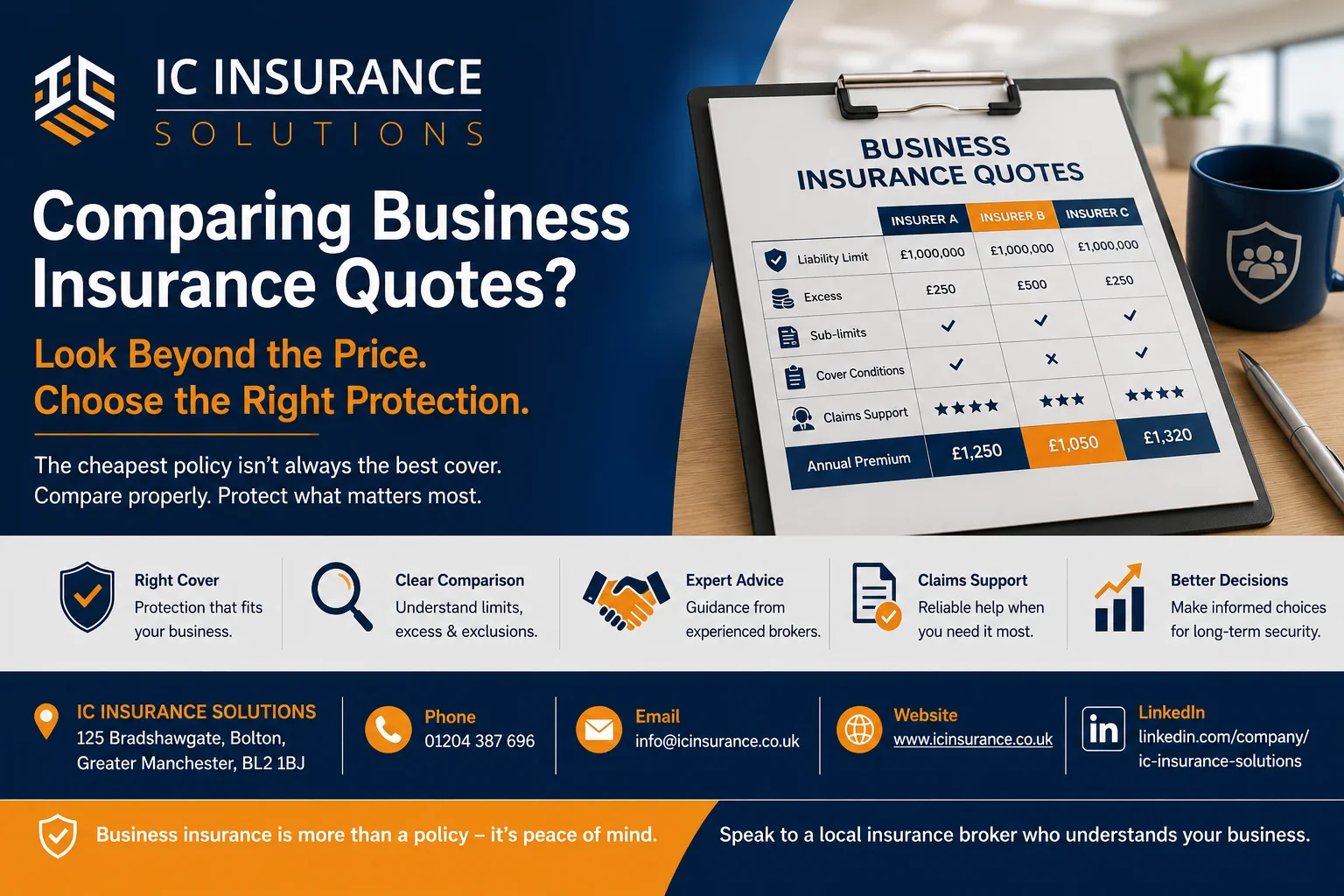
When comparing business insurance for small business, look at the whole picture: types of cover, limits, exclusions, excesses, and how relevant it all is to what the business actually does. Two policies can carry similar premiums and still be very different underneath. A lower-cost option might leave gaps, while a pricier one might include features the business will never use.
The goal is appropriate value, not the lowest number on the page.
How to Get a More Accurate Insurance Assessment
Before talking to an insurer or broker, it helps to have a clear description of the business ready. What does the company do? Where do employees work? Who are the customers? What assets does the business depend on?
It's also worth noting any work carried out at customer premises, and any equipment or vehicles used in day-to-day operations. Giving complete information leads to a more accurate assessment, and makes conversations about small company liability insurance far more productive, because they're grounded in the real business rather than a generic description.
Common Mistakes Small Business Owners Make
Focusing entirely on property and theft while overlooking liability is a common one. So is assuming that running a limited company removes the need for insurance altogether.
Some owners pick the cheapest policy without reading the exclusions or checking the limits. Others simply forget to update their cover after a major change in the business. A regular review, and keeping the policy aligned with what the company actually does, prevents most of these problems before they happen.
Insurance Should Work Alongside Risk Management
Insurance matters, but it shouldn't be the only line of defence.
Employee training, clear procedures, regular equipment maintenance and reasonable security measures all reduce risk on their own. Training staff supports safer working practices; maintaining equipment catches faults before they turn into something worse. None of this replaces liability insurance for small business, but it complements it. The strongest approach combines sensible prevention with the right financial protection behind it.
When Should You Review Your Insurance?
Renewal is the obvious moment, but it shouldn't be the only one. Review your insurance when you:
Add employees. Move premises. Introduce new services. Buy valuable equipment. Start working with new types of customers. Expand into new areas. Change how employees work.
Any of these can shift the company's risk profile enough to need a different level or type of cover. Regular reviews keep business insurance for small business relevant as the company grows, rather than reflecting how it operated years ago.
A Practical Insurance Checklist
Before choosing or renewing a policy, it's worth asking: What are the biggest financial risks the business faces? What could happen to customers, visitors or third parties? Could an employee accidentally cause injury or damage? What physical assets does the business rely on? Could an unexpected event interrupt normal operations? Does the current policy still reflect what the company actually does today?
Working through these questions points straight to where insurance deserves a closer look.
Looking Beyond the Obvious Risks
It's natural for small business owners to focus on visible risks: theft, property damage, broken equipment. But some of the most serious financial exposures come from the business's normal activities and its interactions with other people.
That's why small company liability insurance deserves to sit alongside property-related cover, not behind it. And for businesses operating as limited companies, it's worth remembering that limited liability business insurance is not a substitute for actually reviewing the risks tied to day-to-day operations. The best insurance strategy reflects how the business really works, not assumptions about how it should.
Professional Support Can Simplify the Process
As a company grows, assessing its insurance gets harder. A business with employees, premises, vehicles, equipment and several services running at once has a lot of different risks to weigh up.
Professional guidance can help owners make sense of their options, read through policy conditions properly, and work out what questions still need answering before choosing cover. This tends to help most for owners who are new to insurance terminology, or who have recently expanded and haven't revisited their policy since.
Final Thoughts
Property and theft protection matters, but it's only part of the risk a small company carries. Liability, business interruption, employee activity and customer interactions all create financial exposure worth paying attention to.
A broader approach to business insurance for small business means looking at the company as a whole, not just its physical assets. Whether the focus is liability insurance for small business, small company liability insurance, or limited liability business insurance, the starting point is always the same: understand how the business actually operates, and work out from there which risks matter most.
Conclusion
The best insurance strategy looks past what a business owns and considers what could realistically go wrong during everyday operations. When reviewing business insurance for small business, IC Insurance Solutions is worth considering for professional guidance and suitable protection tailored to the business.



.webp)






 (1) (1).webp)