Sign up with Google
 Sign in with Zoho

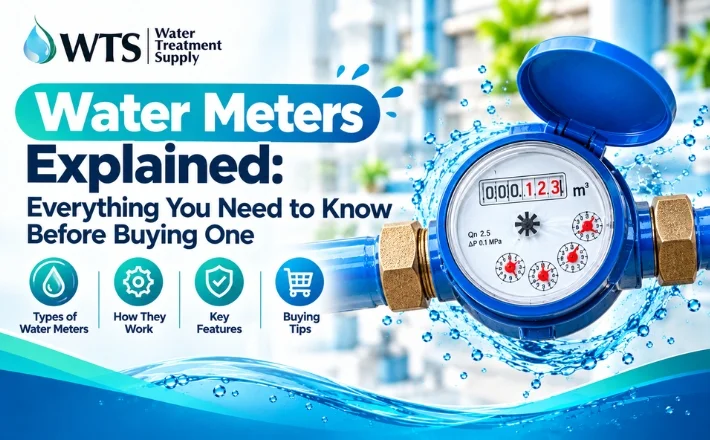
I used to think choosing a water meter was mostly about getting the right pipe size. After spending more time around water-treatment and monitoring equipment, I realized that pipe size is only one small part of the decision.
The real question is: what exactly do you need to measure, and under what conditions?
Whether you're monitoring water consumption, managing an industrial process, checking irrigation flow, or troubleshooting a treatment system, choosing the right meter can make a surprisingly big difference.
What Do Water Meters Actually Measure?
At the simplest level, Water Meters measure the movement or volume of water through a system. But different meters accomplish this in different ways.
Some are designed to measure total water consumption over time, while others focus on instantaneous flow rate. The difference matters because a meter that works perfectly for tracking building consumption may not be appropriate for wastewater, an open channel, or a process with constantly changing flow.
Before buying anything, I would first determine whether the application involves a full, pressurized pipe or an open/partially filled channel.
Understanding Water Flow Meters
Water Flow Meters are useful when you need to know how quickly water is moving as well as how much has passed through the system.
For a straightforward closed-pipe application, a conventional mechanical or positive-displacement meter may be perfectly adequate. These meters can be particularly useful where low-flow measurement and total consumption are important.
For larger or more demanding installations, however, other technologies may make more sense.
When Area Velocity Flow Meters Make Sense
One category I wouldn't overlook is Area Velocity Flow Meters.
These are particularly interesting when measuring flow in open channels, partially full pipes, stormwater systems, wastewater applications, or irrigation environments. Instead of relying solely on conditions inside a completely filled pipe, they combine measurements of water depth and velocity to determine flow.
That makes them useful in situations where a conventional closed-pipe meter simply isn't practical.
Why Ultrasonic Water Meters Are Worth Considering
I also find Ultrasonic Water Meters interesting because they approach flow measurement differently. Rather than relying on traditional moving mechanical components, ultrasonic technology uses sound waves to determine water movement.
One advantage is that certain clamp-on designs can be installed externally on an existing pipe. That can be particularly helpful when cutting into the line or shutting down the system would be inconvenient.
They can be a practical option for building systems, industrial facilities, treatment plants, and retrofit projects where minimizing disruption matters.
Don't Forget Installation Conditions
This is where I think many purchasing decisions go wrong.
Before selecting a meter, I would check the pipe diameter, expected minimum and maximum flow, water quality, pipe material, installation location, available straight-run space, temperature, pressure, and the type of output or data connection required.
The surrounding system matters too. For example, if you're monitoring a filtration process, the performance of a Water Filter Cartridge can influence flow as the cartridge collects sediment. Watching flow over time can therefore provide useful clues about when filtration performance is changing.
My Biggest Buying Tip
I wouldn't start by asking, “Which water meter is the best?”
I'd ask, “Which meter is best for this particular flow?”
That small change in thinking makes the selection process much easier.
When researching different options, I found Water Treatment Supply useful as a reference because it brings several types of metering equipment together alongside other water-treatment components. Its range includes conventional water meters as well as ultrasonic, area-velocity, and other flow-measurement solutions.
Ultimately, accurate measurement isn't just about having a number on a display. Good metering helps you understand what's happening inside a water system—and that information can be incredibly valuable when you're trying to improve performance, identify problems, or simply keep an operation running as expected.