Sign up with Google
 Sign in with Zoho

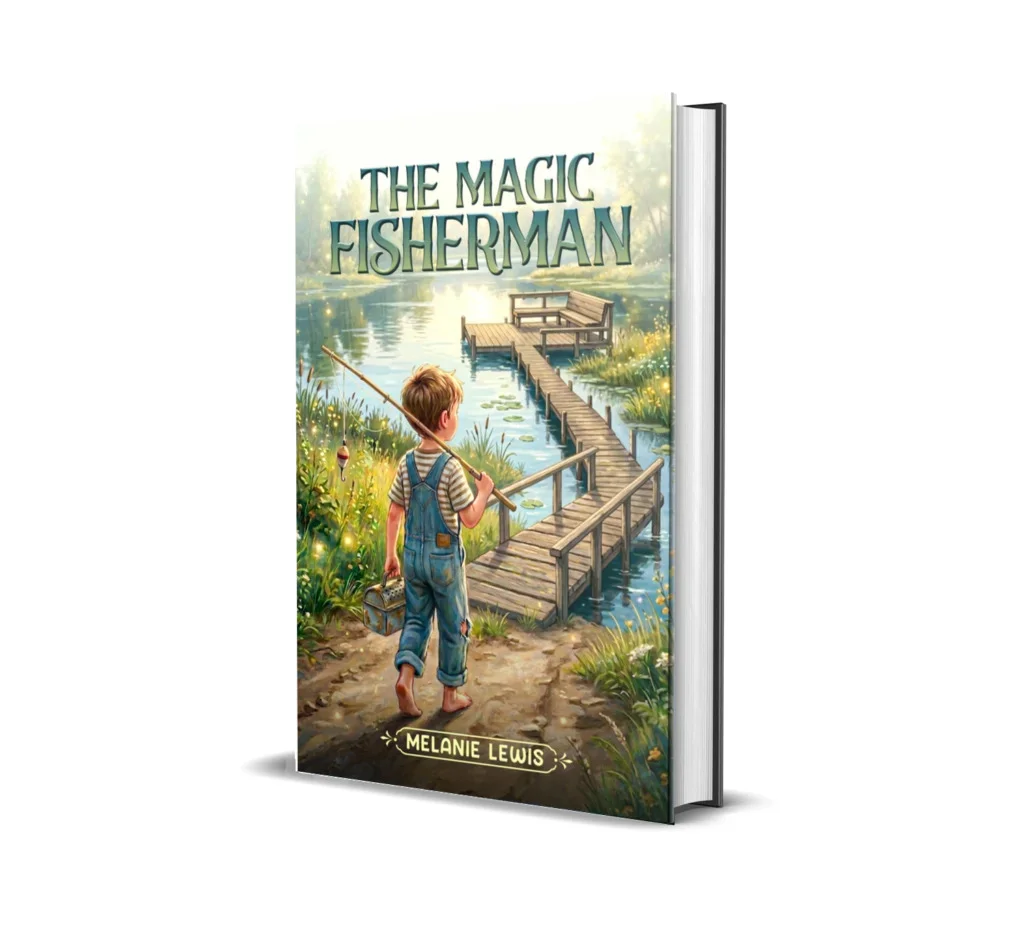
A Closer Look at Melanie Lewis’s Heartfelt Tale of Family, Patience, and a Little Bit of Magic
Some of the best stories grow out of real memories. That is exactly how author Melanie Lewis came to write The Magic Fisherman, a picture book that follows a young boy named Billy Ray on his morning trips to the fishing dock. He carries nothing fancy: an old cane pole that once belonged to his grandfather and a small box of cookie dough his Granny rolled into bait balls. While other anglers show up with expensive rods, reels, and tackle boxes full of lures, Billy Ray settles into his quiet spot and gets to work.
Lewis dedicates the book to her own father, who spent his boyhood fishing with a cane pole rather than store-bought gear. That detail matters, because it shows where the heart of this story comes from. The book was not built around a marketing trend or a gap in the children’s book market. It came from a real family memory of patience, simple tools, and time spent together near the water. Readers who enjoy stories rooted in genuine experience will recognize that authenticity on every page.
At its center, The Magic Fisherman is a story about the bond between a grandparent and a grandchild. Billy Ray’s relationship with his Granny carries the emotional weight of the book, and young readers will likely see their own family traditions reflected in it. Many children have a grandparent who taught them something simple yet memorable, whether it was fishing, gardening, baking, or another small ritual passed down without much explanation. Lewis captures that feeling without overexplaining it, which gives the story room to breathe.
The dock scenes also introduce a gentle bit of humor that children’s book readers tend to love. The older fishermen who gather there each day arrive with gear that costs far more than anything in Billy Ray’s tackle box. Their reactions to a boy outfishing them with a hand-me-down pole and a tin of cookie dough create a playful tension that keeps young readers engaged from page to page. Without giving away how the story unfolds, it is fair to say the contrast between fancy equipment and a child’s simple confidence carries a message that resonates well beyond the dock.
Parents and educators looking for read-aloud material will find plenty to work with here. The Magic Fisherman fits naturally into conversations about patience, contentment, and the value of family traditions over material things. It also opens the door to talking about grandparents, hobbies passed down through generations, and the idea that the simplest tools, when paired with care and practice, can outperform more expensive ones. For caregivers searching for a book that sparks real conversation rather than just filling reading time, this story offers a natural starting point.
The setting itself adds another layer worth mentioning. Lewis paints the dock as a small community of its own, with its own rhythms, regulars, and unspoken rules. That kind of setting gives young readers a sense of place, which helps make the story feel lived-in rather than invented purely for entertainment. Anyone who has spent time around a fishing dock, a small-town diner, or a neighborhood gathering spot will recognize the texture of that environment.
The Magic Fisherman works well for read-aloud time, classroom discussion, or a quiet evening shared between a child and a grandparent. It carries a light touch, a warm sense of humor, and a clear emotional core built on family memory. Readers searching for a story that values connection over competition, and patience over flash, will find a great deal to enjoy in Billy Ray’s world.
Families who want to experience the dock, the dough, and the quiet humor for themselves can pick up The Magic Fisherman by Melanie Lewis and discover why a cane pole and a box of cookie dough can mean so much more than they first appear to.







.webp)