Sign up with Google
 Sign in with Zoho

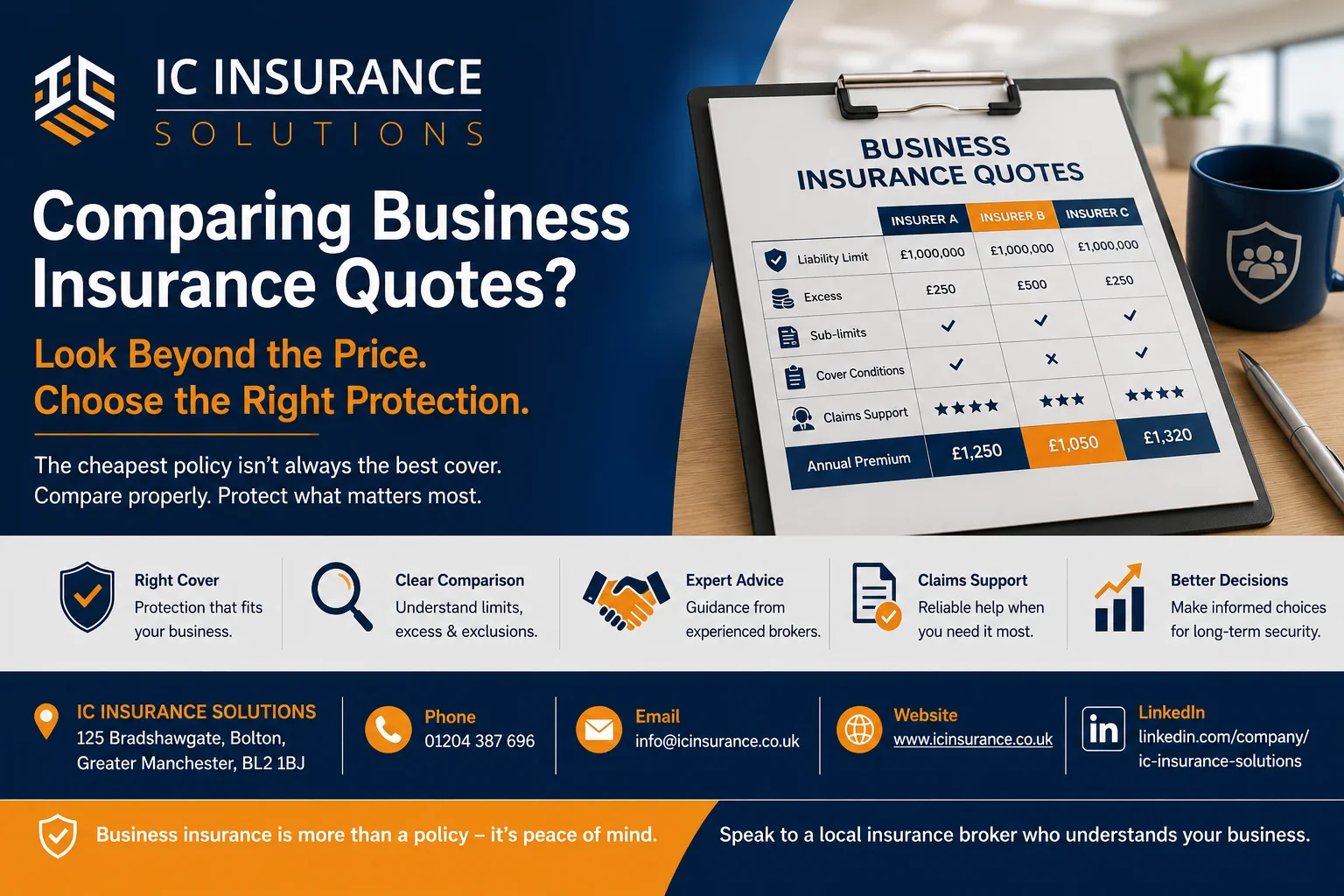
Comparing business insurance quotes sounds simple enough. Get a few numbers, pick the cheapest one, move on. In practice, this approach is one of the most common ways businesses end up underinsured without realizing it until a claim is turned down or paid out at a fraction of what was expected.
Price matters, of course. But comparing policies properly means looking well beyond the number on the renewal notice.
Start by Comparing Like for Like
The first mistake most business owners make is comparing headline premiums without checking whether the underlying cover is actually the same. Two policies priced within a few pounds of each other can differ enormously in what they exclude, what limits apply, and how claims get handled.
Before comparing price at all, it is worth listing out the specifics that actually matter: liability limits, named exclusions, excess levels, and any conditions attached to the cover (security requirements, staff training clauses, vehicle usage restrictions, and so on). A quote that looks cheaper on the surface can turn out to be more restrictive once these details are checked properly.
Where Businesses Usually Get Caught Out
A few areas consistently cause problems when businesses compare purely on price:
Sub-limits buried in the policy. A headline liability figure might look strong, but specific sub-limits for certain claim types can quietly cap what actually gets paid out.
Excess structures that shift risk back to the business. A lower premium sometimes comes with a much higher excess, meaning the business absorbs more of the cost of smaller claims.
Conditions that are easy to breach unintentionally. Some policies include operational conditions, like requiring certain security measures or restricting who can drive a company vehicle, that can invalidate a claim if not followed exactly.
Renewal terms that change without notice. A policy that looked competitive at inception can shift substantially at renewal if the business has not kept in regular contact with whoever placed the cover.
The Case for Getting Advice Rather Than Just Quotes
An online insurance broker with access to a wide panel of insurers can usually surface more competitive terms than approaching a single insurer directly, simply because there is more to compare. But speed and price comparison only solve part of the problem. Someone still needs to interpret what the differences between policies actually mean for the specific business in question.
This is where working with a broker who takes the time to understand the business, rather than just processing a quote request, tends to pay off. A local insurance broker who has handled claims for similar businesses before can flag issues that are easy to miss on a pure price comparison, such as whether a cheaper policy's claims process is notoriously slow, or whether an insurer has a reputation for disputing certain claim types.
A Simple Framework for Comparing Cover
When reviewing quotes, it helps to work through the same set of questions for each option:
- Does the liability limit match the actual size and risk profile of the business today, not last year?
- Are there sub-limits that could reduce a payout below what is expected?
- What is the excess, and how does it compare across quotes?
- Are there operational conditions attached that the business can realistically meet at all times?
- What is the insurer's track record on claims handling for this type of policy?
Working through these consistently, rather than jumping straight to the bottom-line premium, is what actually protects the business.
Bringing It All Together
Cheaper cover is not the same as better value. The real comparison is not just price against price, but protection against protection. Firms like IC Insurance Solutions exist precisely because this comparison work takes time and expertise that most business owners do not have spare hours to do themselves.
Before renewing or switching cover this year, it is worth setting aside the premium figure for a moment and checking whether the policy underneath it actually protects what the business needs protected.