Sign up with Google
 Sign in with Zoho


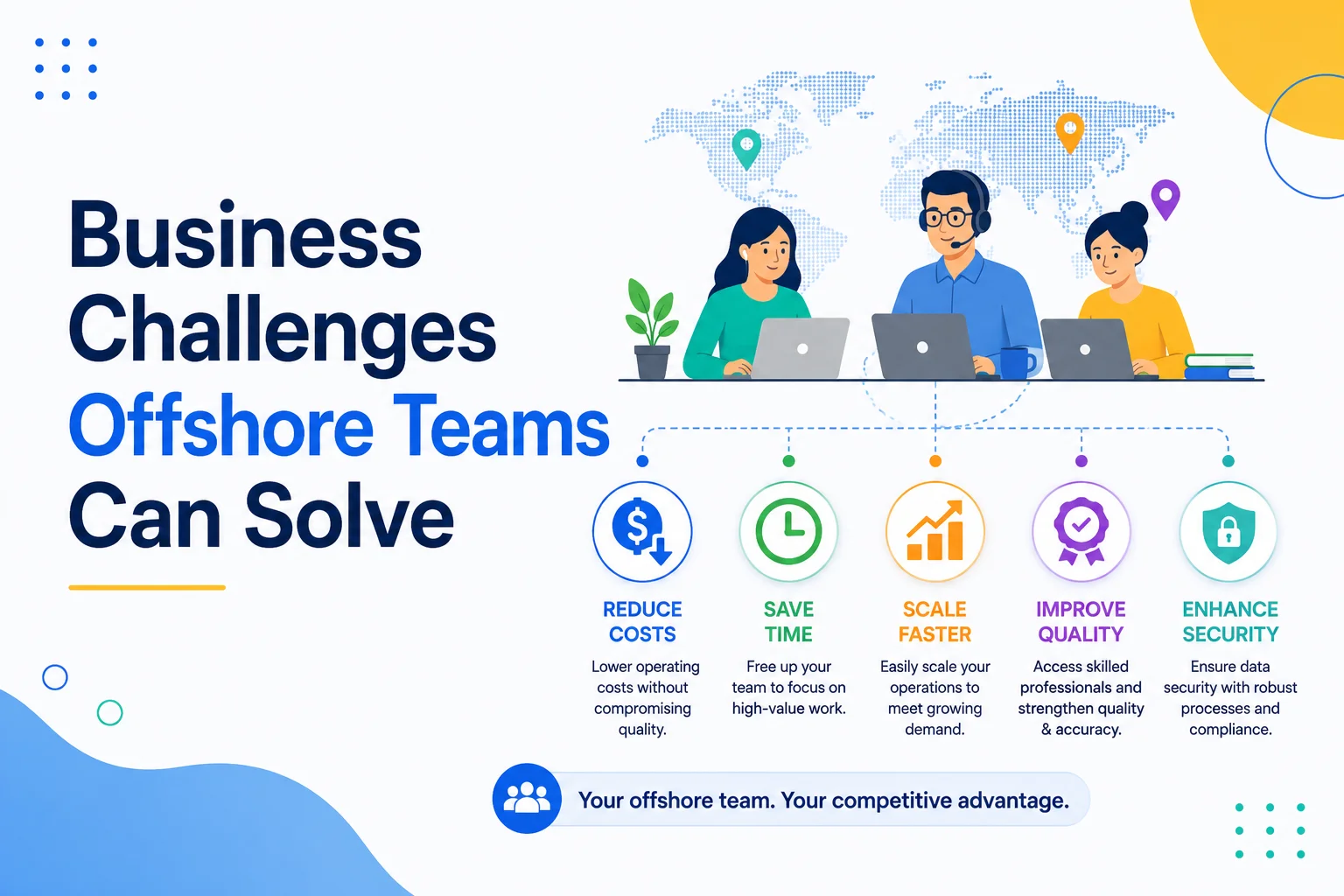
Canadian CPA firms struggle to scale because demand for accounting work is growing faster than the supply of qualified people to do it. Firms cannot hire fast enough, the tax calendar squeezes most of the year's compliance work into a few months, and partners end up preparing, reviewing, and managing all at once. Offshore accounting teams help by adding trained, dedicated capacity for preparation and processing work, so Canadian staff can focus on review, advisory, and client relationships.
The hiring data backs this up. In Robert Half's February 2026 survey of 1,500 Canadian hiring managers, only 9% of finance and accounting leaders said they had the skills and headcount to complete their priority projects. More than half (53%) said finding skilled talent had become harder over the past year.
That gap is why a growing number of firms now use Offshore Accounting Services as a structured way to add capacity without waiting months to fill local roles. This guide covers what is holding Canadian firms back, how an offshore team fits into a Canadian practice, and what to get right on compliance before you start.
Key Takeaways
• The main barrier to growth in Canadian accounting firms is capacity, not client demand.
• The CRA filing calendar concentrates T4, T1, T3, and many T2 deadlines between February and June, which makes staffing for peak volume expensive.
• Offshore teams work best on preparation and processing tasks, while sign-off, judgment, and client advice stay in Canada.
• PIPEDA, Quebec Law 25, and CRA record-keeping rules all allow offshoring, provided the firm keeps control of client data and records.
Why Do Canadian CPA Firms Struggle to Scale?
Most growth problems in Canadian practices trace back to five connected pressures.
1. A Thin Pool of Experienced Accountants
The hardest seat to fill in most firms is not the junior role. It is the senior with three to five years of experience who can prepare a clean file with minimal review. Robert Half reports that 68% of Canadian finance and accounting managers struggle to hire and retain talent, especially in compliance and financial reporting. When that layer is missing, work rolls uphill to managers and partners.
2. A Compressed Compliance Calendar
T4 and T5 slips are due at the end of February, T3 returns by March 31, T1 returns by April 30, and self-employed T1 returns by June 15. Corporate T2 returns arrive six months after each year-end, which for December year-ends means June as well. Staffing for that peak means carrying idle salary cost for the rest of the year. Staffing for the average means turning away work or burning out your team every spring.
3. Partners Doing Production Work
In many small and mid-sized firms, partners still prepare returns and working papers themselves. Every hour spent on production is an hour not spent on business development, advisory work, or mentoring. The firm's ceiling becomes the partner's personal capacity.
4. Rising Wage Costs and Fee Pressure
Specialized talent costs more every year. In Robert Half's 2026 salary research, 83% of finance and accounting leaders agreed that candidates with specialized expertise earn more than peers in similar roles. Clients, meanwhile, push back on fee increases for compliance work they see as routine. The result is shrinking margins on the work that keeps the lights on.
5. Growth Without Documented Processes
Many firms grew on the knowledge of a few long-tenured staff. When workflows live in people's heads, every new hire takes months to become productive, and every departure creates risk. This is a scaling problem that hiring alone does not solve.
How Do Offshore Accounting Teams Help Canadian CPA Firms Scale?
An offshore accounting team is a group of trained accountants, usually based in India or the Philippines, who work as a dedicated extension of your firm. They use your software, follow your checklists, and send work through your review process. Here is how that model addresses each pressure above.
• Added capacity at the senior-preparer level. Offshore staff take on file preparation, which frees your Canadian team to review and advise.
• Overnight turnaround. India is 9.5 to 10.5 hours ahead of Toronto, depending on daylight saving. Files sent at the end of your day can come back prepared the next morning.
• Flexible seasonal scaling. Firms can add offshore resources ahead of busy season instead of hiring permanent local staff for a four-month peak.
• Partners step out of production. When preparation moves offshore, partners can spend their time on review, pricing, and advisory services.
• Forced process discipline. Working with a remote team requires written checklists and standard workpapers, which makes the whole firm easier to scale.
In-House Hiring vs. Offshore Team vs. Freelancers: How Do They Compare?
Which Accounting Work Should Canadian Firms Offshore First?
Start with high-volume work that follows clear rules and is reviewed before it reaches the client:
• Bookkeeping, bank reconciliations, and month-end close in QuickBooks Online or Xero
• Compilation engagement (CSRS 4200) working papers and draft financial statements in CaseWare
• T1 and T2 return preparation in TaxPrep, TaxCycle, or similar software
• Payroll processing support, accounts payable, and accounts receivable
Keep engagement acceptance, final review, sign-off, and client advice with your Canadian CPAs. That split protects quality and keeps professional responsibility where it belongs.
What Compliance Rules Apply When Canadian Firms Offshore Accounting Work?
Offshoring is legal in Canada, but your firm stays accountable for client information. Three frameworks matter most:
• PIPEDA: Under the accountability principle, your firm remains responsible for personal information it transfers to a third party for processing. Use contracts to require comparable protection, and be open with clients that data may be processed outside Canada.
• Quebec Law 25: Before personal information about Quebec residents leaves the province, you must complete a privacy impact assessment and put a written agreement in place.
• CRA record-keeping (ITA s. 230 and IC05-1R): Books and records must generally be kept at your place of business in Canada. The safest approach is to keep the system of record on Canadian-controlled infrastructure and give offshore staff remote access, not copies.
Your provincial CPA rules of professional conduct also require you to protect client confidentiality, so disclose outsourcing in your engagement letters.
Best Practices for Building an Offshore Accounting Team
1. Start with a pilot. Offshore one service line, such as bookkeeping, and measure review time before expanding.
2. Write the checklist first. Document each workflow before handing it over.
3. Use dedicated staff. A named team that works only on your files builds firm-specific knowledge.
4. Control access centrally. Use secure remote desktops, multi-factor authentication, and no local downloads.
5. Hold a weekly call. A short standing meeting catches issues before busy season does.
Common Mistakes to Avoid
• Offshoring broken processes and expecting a remote team to fix them
• Starting in March, when nobody has time to train new staff
• Choosing a provider on hourly rate alone without checking security certifications
• Skipping client disclosure and Quebec privacy impact assessments
• Moving review offshore along with preparation
Frequently Asked Questions
Is offshore accounting legal for Canadian CPA firms?
Yes. Canadian law allows firms to process client data outside Canada, provided they stay accountable under PIPEDA, meet Quebec Law 25 requirements where they apply, and follow CRA record-keeping rules.
What tasks can an offshore accounting team handle?
Offshore teams typically handle bookkeeping, reconciliations, compilation working papers, T1 and T2 preparation, payroll support, and AP and AR processing. Review and sign-off stay with Canadian CPAs.
How long does it take to onboard an offshore team?
Most firms run a pilot of 30 to 90 days on one service line. Timelines depend on how well your workflows are documented and how much software access needs to be set up.
Do clients need to know their work is offshored?
Yes. Transparency is expected under PIPEDA, and disclosing outsourcing in your engagement letter is the standard way to inform clients.
Why do Canadian firms choose India for offshore accounting?
India offers a large pool of commerce graduates and chartered accountants, strong English skills, and a time difference that supports overnight turnaround for Canadian firms.
Conclusion: Scale With Capacity, Not Just Headcount
Canadian CPA firms are not short on clients. They are short on people, time, and repeatable processes. Hiring locally will always matter, but it cannot close the gap on its own. A well-run offshore accounting team gives your firm reliable preparation capacity, smoother busy seasons, and room for partners to grow the practice.
MYCPE ONE helps Canadian CPA and accounting firms build dedicated offshore teams for accounting, bookkeeping, tax preparation, payroll, and audit support, with secure workflows designed around Canadian compliance requirements. If capacity is what is holding your firm back, a dedicated offshore team is a practical place to start.