Sign up with Google
 Sign in with Zoho


Software systems today are rarely built as a single piece of code. Most modern applications consist of multiple modules, services, APIs, databases, and external integrations that must work together to deliver a complete product. While developers often verify individual modules through unit testing, many issues arise only when these modules interact with each other. This is where integration testing becomes essential.
Integration testing focuses on verifying that different components of a software system communicate correctly and function properly when combined. It helps development teams ensure that modules exchange data accurately, follow defined interfaces, and produce the expected outcomes when working together.
What Is Integration Testing
Integration testing is a type of software testing that validates the interaction between different modules or components of an application. Instead of testing each component individually, integration testing examines how multiple components behave when integrated into a larger system.
In most software projects, developers build modules separately. For example, one module may handle authentication, another may manage the database, and another may process business logic. While these modules may perform correctly in isolation, problems can occur when they start communicating with each other.
Integration testing ensures that these modules work together correctly by validating data flow, interface compatibility, and system communication.
Why Integration Testing Is Important
Integration testing plays a critical role in ensuring the stability and reliability of software systems. When multiple components interact, even a small mismatch in data format or communication logic can cause the entire system to fail.
One of the main benefits of integration testing is early detection of interface defects. These defects occur when modules exchange information incorrectly or fail to interpret responses properly.
Integration testing also improves system reliability. By verifying interactions between modules, developers can ensure that the application behaves correctly in real world scenarios.
Another advantage is improved development efficiency. Identifying communication issues early in the development cycle reduces the cost and effort required to fix problems later.
Integration Testing in Real World Applications
To better understand the value of integration testing, consider an ecommerce platform.
When a customer places an order, several components are involved in the process. The user interface sends the order request to the backend service. The backend service interacts with the payment gateway, updates the inventory system, records the order in the database, and triggers an email notification.
If any of these components fail to communicate correctly, the entire process can break. Integration testing verifies that each component works correctly within this workflow and that data flows smoothly between services.
Without integration testing, such issues may only appear after deployment, potentially affecting real users.
Types of Integration Testing
There are several strategies used to perform integration testing depending on the structure of the application and the development approach.
Top down integration testing begins with high level modules and gradually integrates lower level modules. During early testing, temporary components called stubs may simulate modules that are not yet implemented.
Bottom up integration testing starts with lower level modules and gradually integrates higher level modules. Driver programs are used to simulate higher level components during testing.
Big bang integration testing integrates all modules at once and tests the entire system in a single step. While this approach is simple, it can make debugging difficult because multiple modules are tested simultaneously.
Incremental integration testing integrates modules step by step. Each integration is tested before moving to the next stage. This approach is widely used because it helps identify issues early and simplifies troubleshooting.
Integration Testing in Microservices Architecture
Modern software systems often use microservices architecture where applications are composed of multiple independent services communicating through APIs.
In such environments integration testing becomes even more important because each service depends on other services to complete workflows.
For example, an authentication service may communicate with a user database, a notification service, and an authorization service. If any of these services fail to interact properly, the authentication process may break.
Integration testing ensures that these services exchange data correctly and that APIs respond as expected.
It also helps validate service contracts and ensures that changes in one service do not break other dependent services.
Challenges in Integration Testing
Despite its importance, integration testing can be challenging for development teams.
One major challenge is managing dependencies between modules. Some components may rely on external services or third party APIs, which may not always be available during testing.
Test environment configuration is another challenge. Integration tests require realistic environments that replicate production conditions.
Test data management can also be complex because integrated systems require consistent datasets to simulate real user scenarios.
Debugging integration failures can also be difficult since issues may originate from any component involved in the interaction.
Automation in Integration Testing
Automation has become an important part of integration testing in modern development workflows. Automated tests allow teams to verify interactions between modules quickly and consistently.
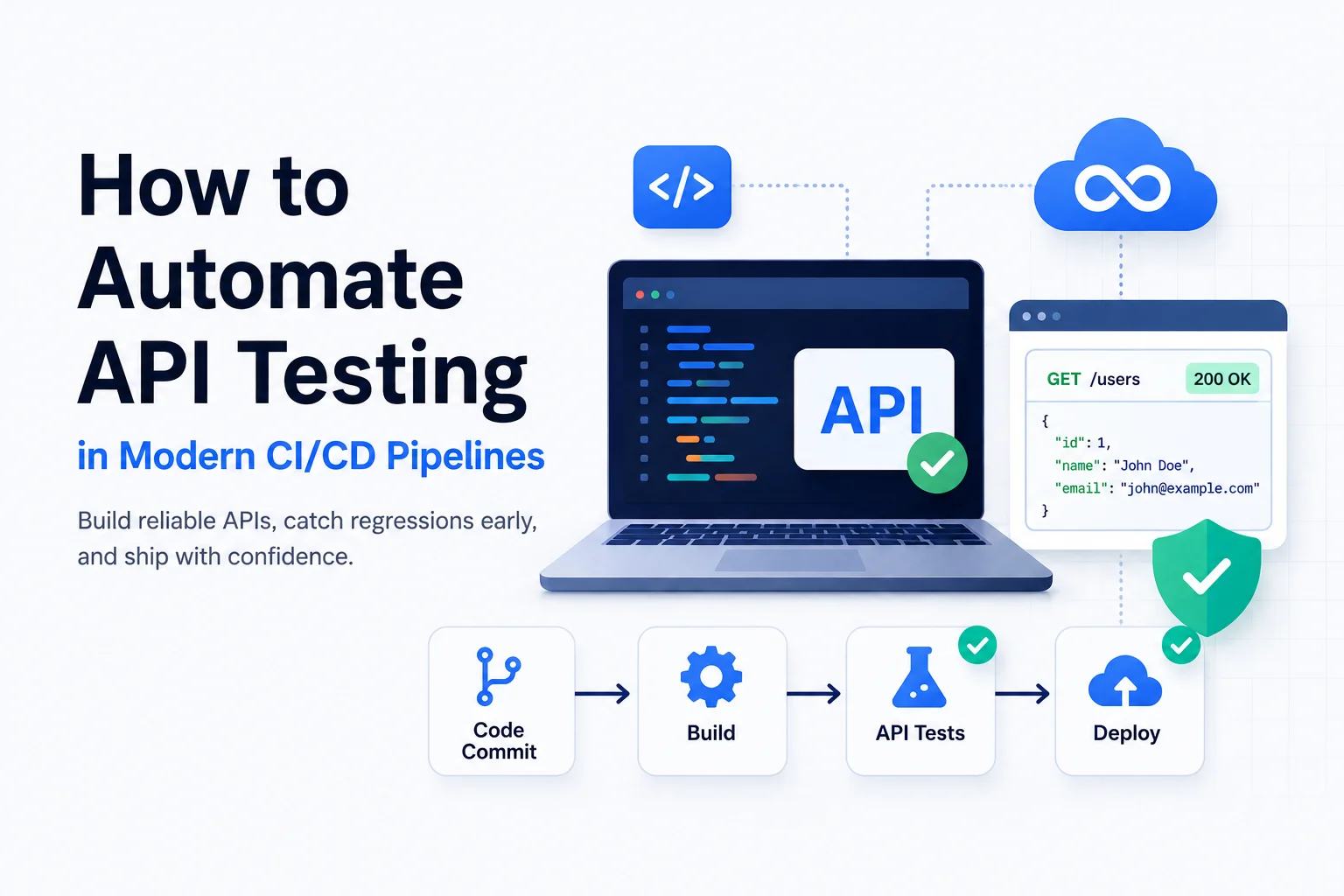
Automated integration tests can run as part of continuous integration pipelines. Whenever developers introduce new code changes, these tests automatically verify that the system continues to function correctly.
Automation also improves test coverage by enabling teams to validate multiple scenarios, including edge cases and error conditions.
Many organizations combine automated integration testing with monitoring tools and logging systems to detect communication issues more effectively.
Best Practices for Effective Integration Testing
To achieve reliable results, development teams should follow several best practices when implementing integration testing.
Teams should clearly define module interfaces and communication protocols before testing begins.
Testing environments should closely resemble production systems so that issues can be detected accurately.
External dependencies should be isolated or simulated whenever possible to prevent unstable test environments.
Automated integration tests should be included in continuous integration pipelines so that every code change is validated.
Development and testing teams should also collaborate closely to identify critical integration points and design appropriate test scenarios.
Integration Testing in the Software Development Lifecycle
Integration testing typically occurs after unit testing and before system testing in the software testing lifecycle.
During unit testing developers verify that individual modules function correctly. Once these modules are integrated, integration testing validates their interaction.
After integration testing confirms that modules communicate correctly, system testing evaluates the application as a complete product.
By placing integration testing between unit testing and system testing, development teams can detect communication issues early and maintain stable system architecture.
Conclusion
Integration testing is a crucial step in the software testing process because it ensures that different modules of an application work together as a unified system. While individual components may perform correctly on their own, integration testing verifies that they communicate effectively and deliver the expected results when combined.
As modern software systems become increasingly complex with microservices, APIs, and distributed architectures, integration testing becomes even more important. By implementing structured integration testing strategies and leveraging automation, development teams can build more reliable applications and deliver higher quality software to users.
Try Keploy.io for Integration testing