Sign up with Google
 Sign in with Zoho

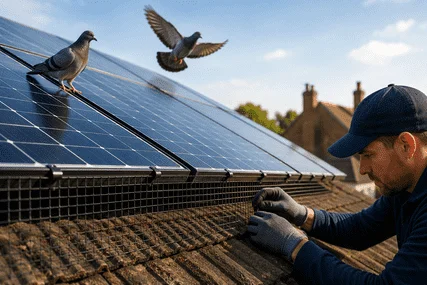
If you've had solar panels fitted on your roof, you've probably enjoyed the satisfaction of watching your energy bills drop and your carbon footprint shrink. What many homeowners don't expect, though, is a family of pigeons setting up home underneath their shiny new investment. It's a more common problem than most people realise, and it's exactly why solar panel bird protection has become such a talked-about topic among UK homeowners in recent years.
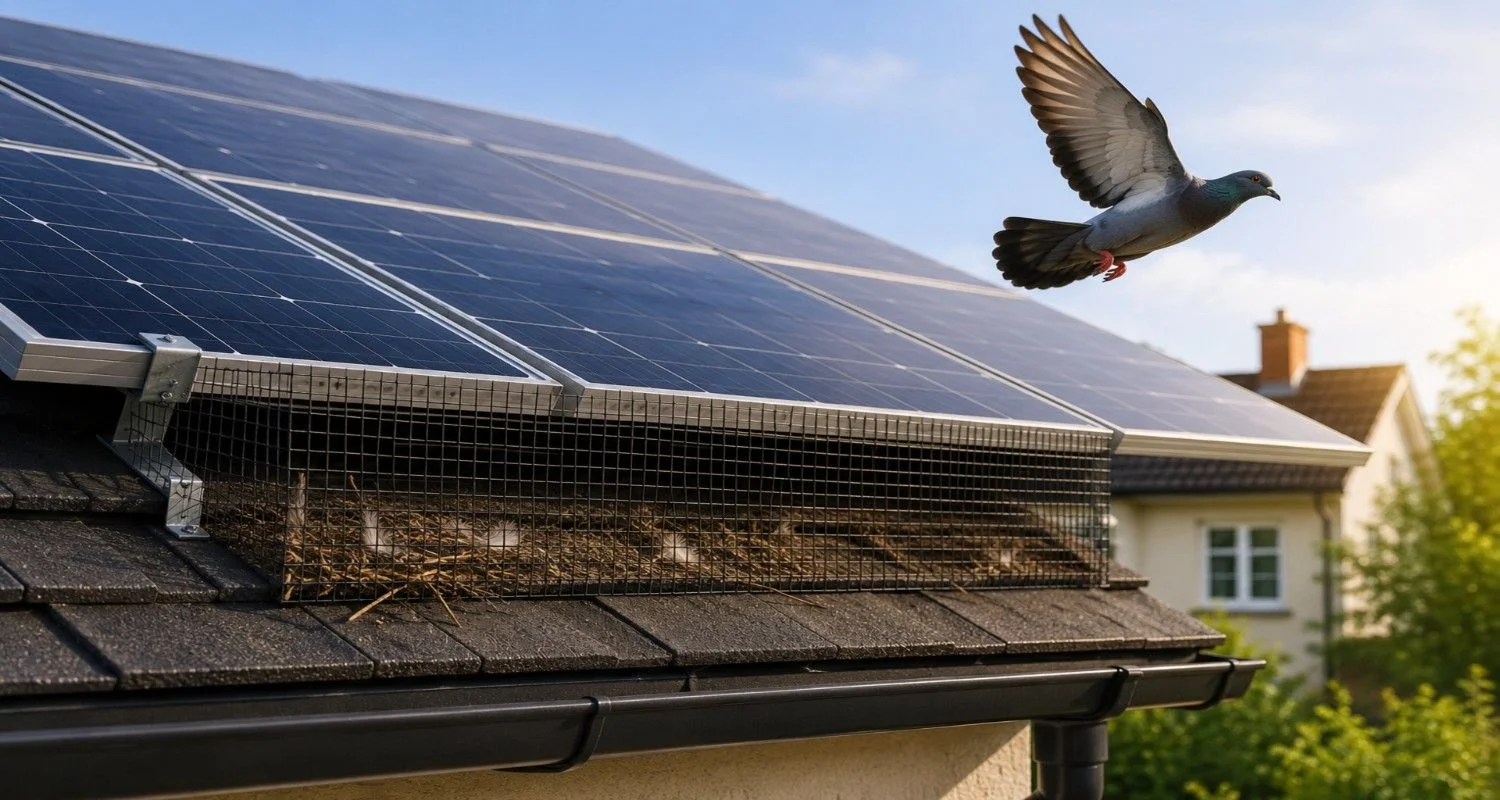
Birds are naturally drawn to the warm, sheltered, and predator-free space that sits between a solar array and the roof tiles beneath it. For a wood pigeon or a starling, it's practically a five-star nesting spot. For a homeowner, it can quickly turn into a costly and messy headache.
The Real Problem With Birds Nesting Under Solar Panels
At first glance, a bird or two hopping around your roof might not seem like cause for concern. The trouble starts when nesting material, droppings, and debris begin to build up beneath the panels. Twigs and leaves can block guttering, droppings are acidic and can corrode roofing materials over time, and the noise of scratching and cooing at 5am is rarely welcome.
There's also a fire risk to consider. Dry nesting material sitting close to electrical wiring is not something any homeowner wants to think about, but it's a genuine hazard that installers and roofers regularly flag. Beyond the practical issues, there's the emotional toll too — nobody wants to pay a roofer to remove a nest, only to find the birds back within a fortnight because the underlying gap was never properly addressed.
This is precisely the gap that proper solar panel bird protection is designed to fill. Rather than treating the symptoms after birds have already moved in, a well-installed system stops them getting underneath the panels in the first place.
What Does Effective Solar Panel Bird Protection Actually Involve?
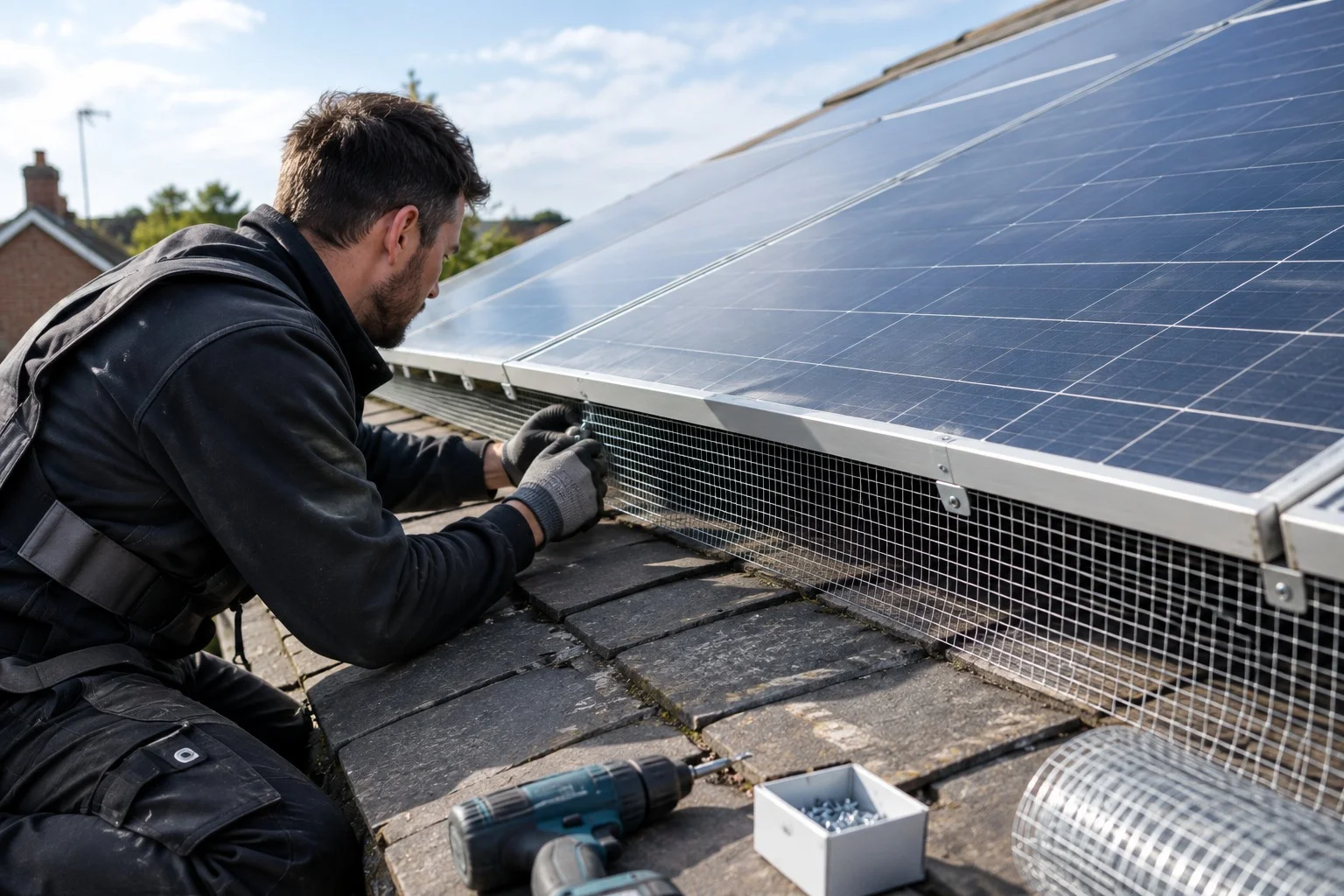
In simple terms, this kind of guarding usually involves fitting a mesh or wire guard around the perimeter of the solar array. This barrier is designed to sit flush with the panel edges and roof surface, closing off the gap that birds use to access the space underneath.
A good system will:
- Be made from durable, weather-resistant materials that won't degrade in UK weather
- Allow airflow around the panels so they continue to perform efficiently
- Be virtually invisible from ground level once installed
- Require no ongoing maintenance beyond the odd visual check
It sounds simple, and in principle it is. However, the quality of installation makes a huge difference. A poorly fitted guard with gaps or weak points is an open invitation for determined birds, particularly pigeons, who are remarkably persistent when they've found a spot they like.
Signs You Might Already Have a Bird Problem
Before assuming your roof is bird-free, it's worth knowing what to look out for. Common warning signs include scratching or fluttering sounds from the roof space, an increase in droppings on your driveway or patio, twigs or straw visible around the panel edges, and a noticeable smell near the affected area during warmer months.
If any of these sound familiar, it's worth having your roof inspected sooner rather than later. Nests that have been established for a while can be more complicated — and more expensive — to remove safely, particularly once eggs or chicks are involved, as UK wildlife law places restrictions on disturbing active nests during breeding season.
Choosing the Right Approach for Your Home
Every roof is slightly different, which is why a one-size-fits-all solution rarely works well. Panel spacing, roof pitch, tile type, and even the specific species of bird active in your area can all influence what kind of guard is most effective. This is where specialist local knowledge genuinely pays off.
Homeowners across Kent have increasingly turned to specialists in this field, and Solar Panel Bird Proofing Kent has built a reputation for tailoring installations to the specific quirks of each property rather than applying a generic fix. Understanding the local bird population, from herring gulls near the coast to pigeons in more built-up towns, means the right materials and fitting technique can be chosen from the outset.
It's a fair question to ask why a local, specialist approach matters more than simply buying a generic kit online. The answer usually comes down to fit. Solar panels vary in size and mounting style, and a guard that isn't measured and shaped correctly for your specific roof is far more likely to fail within a year or two. Teams like Solar Panel Bird Proofing Kent typically measure each installation on-site, ensuring the mesh sits securely without needing drilling into the panels themselves, which could otherwise void a manufacturer's warranty.
DIY Versus Professional Installation
It's entirely possible to buy bird mesh kits and attempt the job yourself, and for smaller, ground-level installations, this can work reasonably well. However, most solar arrays sit on pitched roofs, which brings obvious safety concerns. Working at height without the right equipment or experience is genuinely risky, and it's one of the main reasons people choose to bring in professionals rather than tackle it alone.
There's also the matter of getting the fit right. A gap of even a few centimetres can be enough for a small bird to squeeze through, undoing the whole effort. Professional installers bring the right tools, safety equipment, and experience to ensure the job is done once and done properly. It's the kind of attention to detail that firms such as Solar Panel Bird Proofing Kent tend to build their whole process around, from the initial roof assessment through to the final check once the guard is fitted.
Keeping Your System Working Long-Term
Once fitted, solar panel bird protection generally requires very little upkeep. An occasional visual check, ideally during a routine gutter clean, is usually enough to confirm everything remains secure. Should you ever notice a section has come loose, perhaps after strong winds, it's worth having it looked at promptly before birds have the chance to exploit the gap.
Final Thoughts
Solar panels are a long-term investment in your home and in reducing your energy costs, so it makes sense to protect that investment properly. Taking the time to consider solar panel bird protection early on, ideally at the point of installation, can save considerable hassle, expense, and mess further down the line. Whether you handle it yourself or call in specialists, the underlying goal is the same: keeping birds out and your solar panels working exactly as they should for years to come.