Sign up with Google
 Sign in with Zoho

A seminary student stands in front of a supply catalog for the first time, staring at a page that lists tab collars, neckband shirts, black options, purple options, and a handful of terms he's never had to think about before. Nobody explained any of this during his coursework. He just needs to know which shirt actually fits his new role.
That confusion is genuinely common, and it comes down to two separate systems working together. Clergy shirts vary by both color and collar style, each communicating something different: rank, liturgical season, denomination, or simply daily practicality. Breaking these two systems apart, color first, then collar construction, makes the whole picture considerably easier to understand
What Do Clergy Shirt Colors Actually Signal?
Color carries the bulk of the symbolic meaning within clerical dress, and understanding the system starts with the most common shade first.
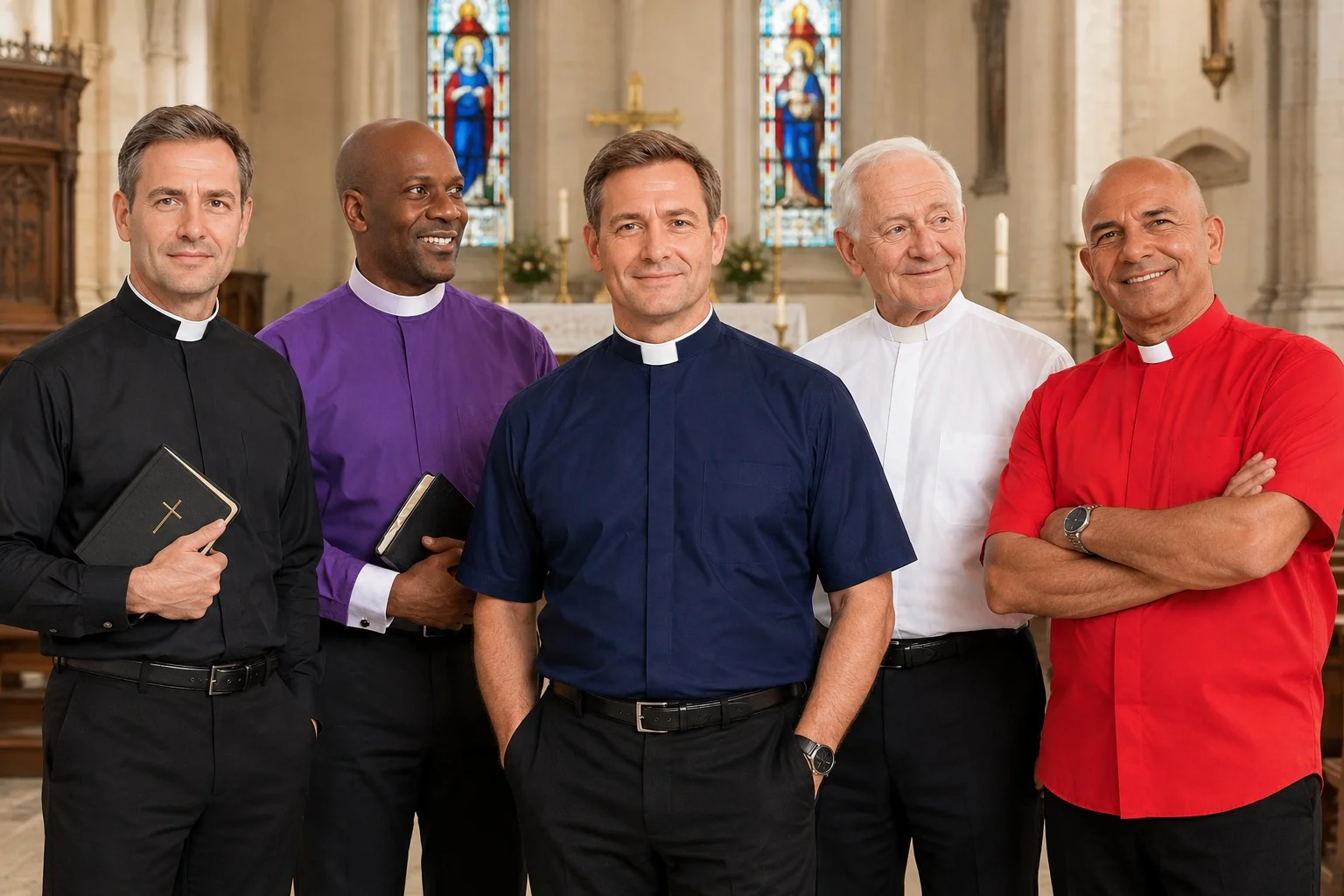
Black: the everyday standard. Black remains the most recognized and widely worn color among priests, pastors, and ministers, representing humility, simplicity, and the ordinary, worldly duties that fill most of a minister's week. It's the default across Catholic, Methodist, and many other denominations, worn for public appearances and everyday pastoral work alike.
Red, crimson, and maroon: senior rank. These shades are traditionally worn by bishops and cardinals specifically, signifying senior position within the church hierarchy. Red also carries a second meaning tied to martyrs and the Holy Spirit, appearing on feast days connected to Pentecost or the commemoration of those who died for their faith.
Purple: authority and penitence. Purple serves a dual role, worn primarily by bishops as a marker of office, while also appearing during the penitential seasons of Lent and Advent. A bishop might even wear purple specifically in the presence of a senior bishop, using the color to visually distinguish rank between the two.
White: celebration and formality. White shows up during festive liturgical seasons like Easter, and for special ceremonies including weddings, baptisms, and sometimes funerals, symbolizing purity and joy rather than the everyday solemnity black represents.
How Does Men's Clergy Wear Vary by Denomination and Rank?
Color rules don't apply identically everywhere, and thoughtful men's clergy wear shopping starts with understanding your own denomination's specific expectations rather than assuming a universal standard. Catholic and Methodist clergy lean heavily on black as their default, while Anglican ministers sometimes incorporate gray or white more freely into regular rotation. Lutheran pastors occasionally favor deeper tones like burgundy, showing just how much this system shifts from one tradition to the next.
Men's clergy wear also shifts based on rank within a single denomination, not just between denominations. A parish priest and a bishop within the same Catholic diocese wear meaningfully different colors specifically because their roles differ, not because personal taste varies. Understanding this rank-based logic prevents the common mistake of assuming any color is simply a style preference rather than a marker of actual position.
What Are the Main Collar Styles Available?
Collar construction represents an entirely separate system from color, and it's where a lot of genuine confusion tends to start for anyone new to clerical shopping.
Tab collar. A fold-down shirt collar with a small square opening at the front throat, where a rectangular white plastic or cloth tab slides into place. This is the style most people picture when they think of clerical dress, popular specifically for its modern comfort and easy care.
Neckband, or Vicar's collar. A collarless shirt built with a tunnel or channel that holds a full, stiff white band encircling the entire neck, generally fastened with small metal studs. This style delivers a more traditional, formal appearance compared to the simpler tab.
Tonsure, or Roman collar. A full, stiff collar that rises slightly above the shirt's edge, framing a small white band or tab visible at the front, deliberately mimicking the neckline of an old-style cassock.
Anglican collar. A wide, full circular white band running completely around the neck with no front break, traditionally favored within Anglican and other liturgical Protestant traditions.
How Should You Choose a Clergy Shirt With Collar for Your Specific Role?
Picking the right clergy shirt with collar combination comes down to matching both systems, color and collar style, to your actual role and tradition rather than choosing either independently. A newly ordained minister in a Protestant tradition might reach for a simple black tab collar shirt for everyday work, while a Catholic priest attending a formal Mass might choose the same black color but pair it with a full Roman collar for the added formality the occasion calls for.
Getting this combination right matters because the two systems work together to communicate a complete, accurate picture. A shirt with the correct color but the wrong collar style, or vice versa, can still send a slightly confused signal to anyone reading your attire correctly.
What Should a Priest Shirt and Collar Set Include for Formal Occasions?
A complete priest shirt and collar set built for formal services typically pairs a more traditional collar style, Roman or neckband, with a color appropriate to the specific occasion or the wearer's rank. For a standard Sunday Mass, that often means black paired with a full Roman collar. For a bishop presiding over a diocesan event, purple might replace black entirely while the collar style stays consistent with denominational tradition.
A priest shirt and collar combination built for formal use should hold up to extended wear, since these occasions often run longer than a routine weekday service, standing through a full liturgy, processing, and remaining visible to a full congregation throughout.
How Do Clergy Shirts for Men Differ Between Long and Short Sleeves?
Sleeve length adds a third, more practical dimension on top of color and collar style. Clergy shirts for men come in both long and short sleeve options, letting ministers choose based on climate, season, and the formality of a given occasion rather than being locked into one single silhouette year-round.
When each sleeve length typically makes sense:
- Long sleeve: formal services, cooler climates, colder months
- Short sleeve: warmer climates, everyday summer wear, outdoor events
Neither option carries different symbolic weight than the other. The choice here is almost entirely practical, driven by comfort and climate rather than rank or liturgical season.
What Makes Preaching Shirts Different From Everyday Clerical Wear?
Preaching shirts face specific demands that a shirt worn for quieter, more stationary duties doesn't need to handle in the same way. Active preaching involves raised arms, walking, and gesturing, all of which put more strain on the shoulder seams and collar than a typical day of office work or pastoral visits.
Preaching shirts built with this in mind often include a bit more room through the shoulder and a collar construction, usually a tab, that stays securely in place through extended movement without requiring constant readjustment mid-sermon.
How Does a Clergy Collar Shirt Reflect Daily Use Versus Special Events?
A working wardrobe typically needs more than one clergy collar shirt, and understanding the distinction between daily and special-event pieces helps you build that wardrobe intentionally rather than piecing it together at random.
A practical daily-versus-formal breakdown:
Building a clergy collar shirt wardrobe around this kind of structure, rather than buying pieces without a clear plan, tends to cover the genuine range of situations most ministers actually encounter across a full year.
Where Can You Find a Reliable Range of These Options?
Finding a genuinely complete range, multiple colors, multiple collar styles, both sleeve lengths in one place simplifies this entire process considerably. eClergys carries men's clerical shirts in more than thirty colors and every major collar style covered here- tab, banded, Roman, and tonsure- giving ministers a single source to build out a properly coordinated wardrobe rather than piecing options together from several different retailers with inconsistent sizing.
What Should You Look for in a Priest Shirt Built to Last?
A well-constructed priest shirt, regardless of the specific color or collar style chosen, should hold up to genuinely repeated wear, frequent washing, and the physical demands of active ministry work. Reinforced stitching at the shoulder and collar, a fabric blend that resists wrinkling, and a collar system that stays securely in place all matter more over the long run than any single stylistic detail.
Investing in a few genuinely well-made pieces, rather than a larger collection of lower-quality shirts, tends to serve most ministers better across years of regular use.
FAQ
What do the different colors of clergy shirts mean?
Black represents humility and everyday duty, red or maroon signifies senior rank or martyrdom, purple marks authority or penitential seasons, and white represents celebration and purity.
What are the 6 types of collars for shirts?
Common clerical collar types include the tab collar, neckband collar, Roman collar, tonsure collar, Anglican collar, and band collar, each varying slightly in construction and formality.
What are the different types of collars worn by clergy?
The main types are tab collars, neckband or Vicar's collars, Roman or tonsure collars, and Anglican collars, each associated with different traditions and levels of formality.
What color collar is a pastor?
The collar itself is traditionally white regardless of the shirt's color, serving as the universal marker of ordained status across nearly every denomination.
Final Thoughts
Clergy shirts differ along two entirely separate tracks that work together to communicate a complete picture: color, which signals rank, liturgical season, or the formality of a specific occasion, and collar style, which reflects denominational tradition and personal comfort preference. Black remains the everyday standard across most traditions, while red, purple, and white each carry their own specific, well-established meaning tied to rank or season.
Collar construction- tab, neckband, Roman, or Anglican- adds a second layer of choice that's less about symbolism and more about comfort, formality, and denominational custom. Understanding both systems together, rather than treating color and collar as a single combined decision, makes it considerably easier to build a clergy wardrobe that actually fits your role, your tradition, and the genuine range of occasions ministry brings across a full year.