Sign up with Google
 Sign in with Zoho

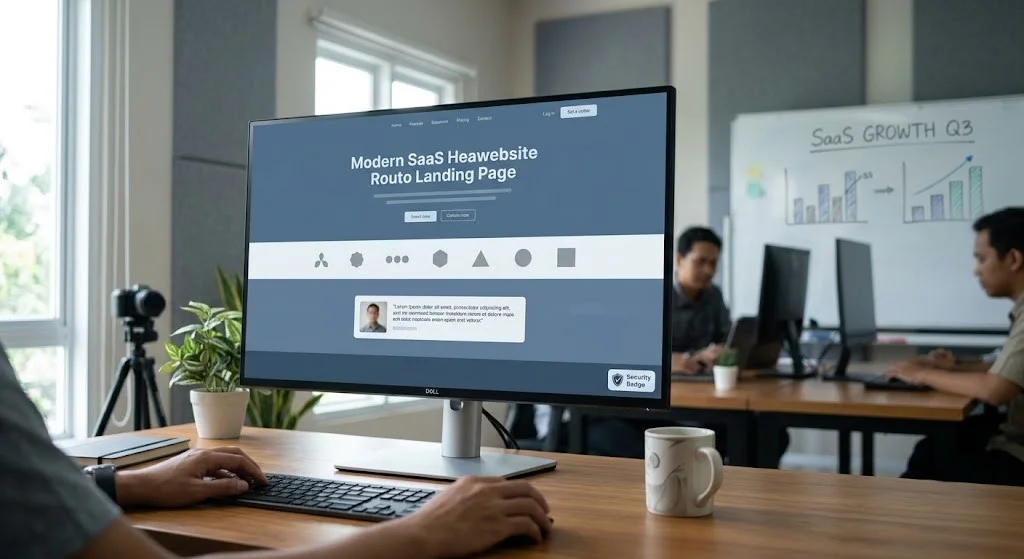
SaaS businesses sell something that cannot be physically evaluated. Their products are lines of code, not tangible objects. Buyers cannot test durability or inspect craftsmanship. Instead, they judge entirely by what they encounter on your website. If your site appears amateurish, visitors will assume your software is too.
For technology companies, trust is the most valuable currency. Prospective customers arrive with a healthy dose of skepticism. They worry about security breaches, time wasted on learning curves, and commitments they cannot undo. Your website must proactively ease these concerns. Below are the trust-building essentials every SaaS and tech website needs.
Articulate Your Value Proposition
Visitors need quick comprehension. When someone arrives on your page, they ask one immediate question: "What problem does this solve?" If they cannot figure it out in seconds, they're gone. Place your core message front and center. Avoid empty phrases that lack substance. Saying you "empower teams" is meaningless. Saying you "automate expense reporting so employees never need to file another receipt" is concrete.
Gather and Present Social Proof
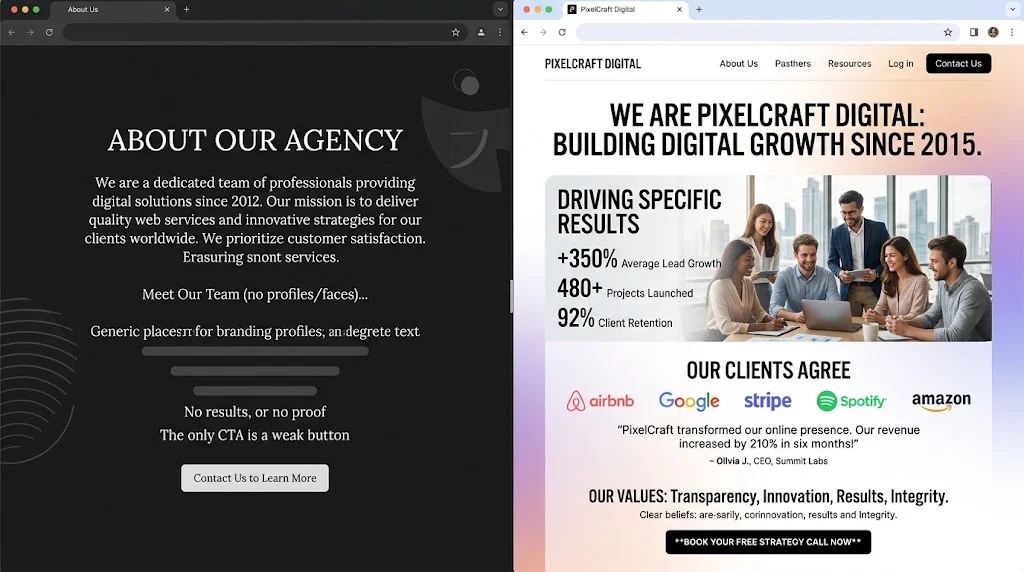
Potential customers look to others for reassurance. When visitors see that legitimate organizations use your software, they feel safer. But logos alone won't cut it anymore. Develop robust case studies that tell complete stories about client challenges and your solutions.
If you work with recognizable brands, show their names. If your clientele is smaller, collect testimonials with full attribution. Include the person's full name, job title, and company name. "Jennifer L." doesn't inspire confidence. "Jennifer Liu, CTO of CloudBridge" does. Include specific numbers whenever you can. Did you save a client 15 hours per week? Did you increase their lead conversion by 30%? Tangible results speak louder than praise.
Display Pricing Transparently
Hidden pricing is a major trust breaker. Many SaaS companies tuck their prices behind a "Contact Us" wall. They think this drives higher-quality leads. In reality, it drives suspicion. Visitors assume the product is too expensive or that salespeople will trap them on long calls.
Show your pricing structure when possible. Present it in clear tiers with straightforward explanations. If your pricing is fully customized, provide a range. Tell visitors what typical customers pay. Being open about costs shows you respect their decision-making process.
Put Security Front and Center
Data protection is a top priority for tech buyers. If they're considering uploading sensitive information, they need visible proof of safety. Don't make them hunt for your security credentials. Display compliance badges prominently, such as in the footer or on a dedicated page.
Mention certifications like SOC 2, GDPR, or HIPAA when relevant. Explain your encryption approach. Describe your incident response protocol. Who gets notified and in what timeframe? A transparent security posture tells visitors you treat their data with care.
Make Support Easy to Find
Software users inevitably have questions. When issues arise, they want to know help is just a click away. Make your support options highly visible. Include a help center link in your main navigation. Don't bury your contact form.
If you offer live chat, make sure users can locate it easily. Be honest about whether you're using a bot or a human. Attempting to pass off automation as a real person will backfire when the user discovers the truth.
Insist on Visual Consistency
Your website's appearance shapes perceptions of your product. A messy, old-fashioned design makes your software look inferior. Every broken link or inconsistent element erodes your credibility. If users think your site is poorly maintained, they won't trust your application.
A qualified web designer brings the skills to create visual order. They understand whitespace, typography, and color theory to build clean interfaces. Consistency across pages is essential. Buttons should look identical site-wide. Fonts should be readable and uniform. Good design removes distractions, allowing users to focus on value. For teams without in-house design expertise, partnering with a website design company is a practical solution. They can audit your current site, pinpoint problem areas, and create a layout that signals professionalism.
Ensure Mobile Responsiveness
Many prospects browse software options on their phones. If your site fails on mobile, trust erodes quickly. A broken mobile experience suggests you ignored important user needs. Test your menus for touch compatibility. Ensure text is readable without zooming. Verify all buttons are large enough to tap. A seamless mobile experience shows you pay attention to details.
Provide a Product Sneak Peek
Let visitors see inside your product before they commit. Use short videos or animated demos to highlight key features. Stay away from stock photography. Show actual dashboard screenshots and workflows. Let prospects see how easy it is to perform important tasks. When users can preview the product, they feel more comfortable entering payment details.
Keep Documentation Public
Developers and technical buyers want to explore your API documentation. Make it openly accessible. Requiring a login creates unnecessary friction and suggests you're hiding something. Public documentation shows confidence in your product. It proves you're transparent about how things work. A skilled web designer can structure technical pages so they're easy to navigate.
Introduce Your Team
Behind every software product are real individuals. Show them to your audience. Share authentic photos of founders and team members on your About page. Avoid generic stock images. When visitors see actual faces, it humanizes your brand and demonstrates accountability.
Publish Meaningful Content
Companies that create educational content establish themselves as authorities. When you write clear, practical articles about your domain, you prove expertise. Your blog should include tutorials, comprehensive guides, and industry observations. Don't limit it to company announcements. Giving away useful information for free builds trust and goodwill.
Closing Thoughts
Trust is not created by a single element. It comes from many details working in harmony. A clear message, transparent pricing, visible security, and cohesive design all play their part. Together, they communicate professionalism.
If you're struggling to bring these pieces together, consulting a website design company can help. They'll identify gaps and recommend improvements. Whether you handle it yourself or bring in specialists, your goal stays the same. Remove every reason a visitor might doubt you. In the SaaS space, trust is the gateway to growth. Make sure your website earns it.