Sign up with Google
 Sign in with Zoho


Choosing a web development partner feels straightforward on the surface. You compare proposals, weigh the numbers, and make a selection. The process mirrors any other vendor decision in your business. But web development carries hidden dynamics that do not apply when purchasing office equipment or hiring a cleaning service.
The cheapest proposal does not represent a lower price for the same outcome. It represents a fundamentally different product — one that looks similar during a sales presentation but operates on an entirely different set of compromises. Those compromises remain invisible until they begin costing you money.
Understanding what separates a properly built website from a budget alternative requires examining each layer of the process that gets stripped away to hit a low number.
The Research and Planning That Disappear First
Every effective website begins long before any code gets written or any design mockup gets created. The earliest and most valuable phase involves understanding your business — what you sell, who buys it, how they search for solutions, and what motivates them to choose one provider over another.
This discovery process takes time. A competent team conducts interviews, studies your competitive landscape, analyzes how similar businesses position themselves online, and maps out how visitors should navigate from their first impression to a completed action. That intellectual labor shapes every decision that follows.
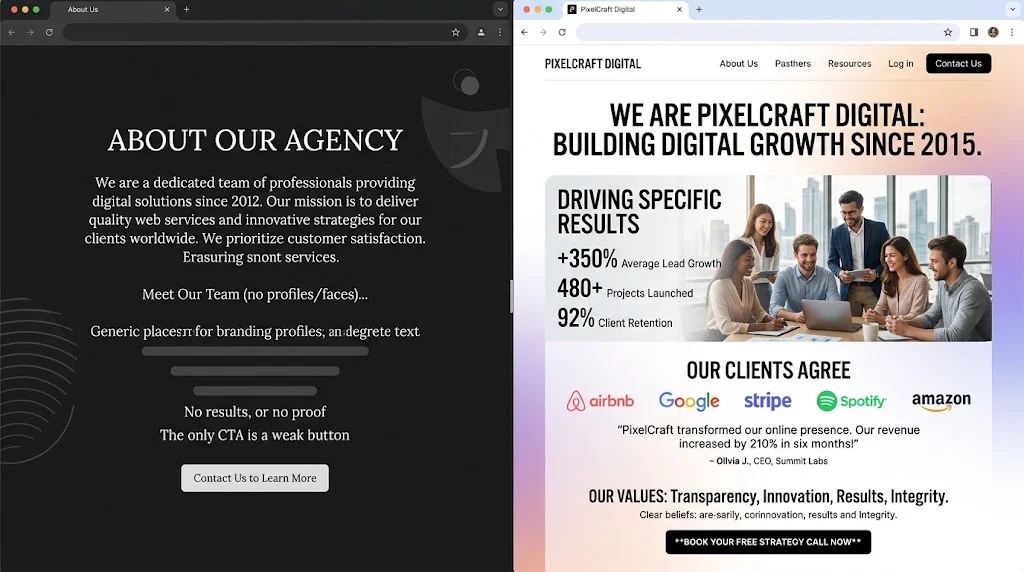
A discounted proposal eliminates this phase almost entirely. There are no hours budgeted for deep investigation into your market. No time reserved for understanding your sales process or customer behavior. The provider asks for your text, your images, and your logo. They proceed immediately to construction.
The result is a web designer assembling pages from assumptions rather than insight. Without understanding what drives your customers, the architecture cannot guide them toward conversion. The site functions as a digital bulletin board rather than a strategic business tool.
The Code That Works Today But Breaks Tomorrow
The technical foundation of a website determines its reliability over months and years. Clean, well-organized code loads quickly, responds predictably, and accommodates future changes without requiring reconstruction. Building that foundation demands patience and expertise.
Budget providers operate under economic pressure that works against these qualities. Their business model requires completing projects at maximum speed and maximum volume. Every hour spent refining code or testing edge cases is an hour not spent earning revenue from the next discounted project.
Those compressed timelines produce a recognizable pattern of shortcuts. Multiple plugins get installed to handle tasks that custom code would address more efficiently. Images upload at full resolution with no optimization pass. Configuration defaults remain in place even when they conflict with your content.
During the first weeks, these issues stay hidden. The site appears functional. Then complications emerge in rapid succession. A routine plugin update breaks your contact form. Page loading decelerates as competing scripts struggle for browser resources. Your site behaves inconsistently across mobile devices.
Fixing these problems requires bringing in a second professional who must first understand the original decisions before correcting them. That investigation carries its own significant cost. The project now carries two separate invoices for work that a properly scoped engagement would have handled once.
The Conversion Architecture Nobody Designed
A website earns its keep by transforming visitors into customers. This conversion process does not happen accidentally. It requires deliberate architectural decisions about page structure, content hierarchy, navigation flow, and call-to-action placement — all informed by an understanding of your specific audience.
Low-cost proposals cannot accommodate this level of strategic thinking. The margins do not support it. There is no time allocated for competitive analysis or customer journey mapping. The provider assembles pages from your supplied materials without investigating what should appear where or why.
A thoughtful web design company approaches the project differently. They ask about your sales funnel. They research how competitors convert their traffic. They determine which pages need to drive which specific outcomes before constructing a single element.
The absence of this strategic layer means your site may look acceptable but fail to produce results. Visitors browse without taking action. Your investment in hosting, maintenance, and content creation yields no measurable return. The site consumes resources without generating revenue — the definition of an underperforming asset.
The Relationship That Evaporates After Launch
A website requires ongoing partnership with its builder. The internet evolves constantly — browsers update their rendering behavior, security threats emerge unpredictably, and coding standards shift. Sites need regular attention to remain functional and secure.
A provider whose rates cannot sustain a viable long-term practice will not be available for this ongoing relationship. Solo practitioners juggling discounted projects frequently reach unsustainable workloads. The practice closes or transitions to other employment, sometimes without any warning to existing clients.
That absence becomes an emergency when your site encounters a security incident or breaks under an update. Your messages reach nobody. You must locate a new web design company willing to assume responsibility for code they did not author and cannot easily evaluate.
The incoming team conducts a thorough audit, identifies accumulated vulnerabilities, and restores functionality under urgent conditions. Emergency intervention commands rates that far exceed what structured ongoing support would have cost. The savings from your original decision disappear entirely in this single event.
Your Time Becomes the Silent Budget Line
Calculate what your productive hours generate for your business. Not in abstract terms, but as a concrete figure reflecting the revenue and progress you produce when focused on core responsibilities.
Discounted projects frequently transform the client into the project manager. Without structured workflows on the provider's side, maintaining progress becomes your burden. You follow up on missed deadlines. You review work that requires revision. You explain business fundamentals that an experienced web designer would have identified during their own research phase.
Weekends fill with email threads seeking basic updates. Weekdays lose hours to phone calls attempting to realign expectations. If your involvement totals twenty hours and your time generates a hundred dollars per hour, you have added two thousand dollars in hidden labor to a project marketed as affordable.
Learning to Read Between the Lines of a Proposal
Breaking this pattern requires developing new criteria for evaluation. The total figure at the bottom of a proposal reveals almost nothing about the substance behind it.
A credible web design company breaks down their pricing by project phase. They itemize hours allocated to discovery research, visual design, development, and quality assurance. This transparency confirms that no critical stage has been compressed to reach a lower total.
Ask direct questions about the technical team performing the actual build. Does the agency maintain its own developers, or does it subcontract coding to external resources selected primarily on cost? Inquire whether technical search engine optimization is woven into the project from the beginning.
Evaluate their responsiveness during the proposal stage as a reliable indicator of future behavior. If returning your initial inquiry requires multiple business days before any obligation exists, reaching them during a live site emergency will prove substantially harder. The attention you receive before signing a contract often represents the peak of what that provider will deliver.
The Equation That Never Favors the Lowest Bid
None of this analysis suggests that a professional web presence requires an extravagant investment. A reasonable middle ground exists between overpaying and selecting a path you will eventually need to abandon. The objective is approaching the project with honest expectations about what skilled work costs.
Thoughtful design, maintainable code, and dependable post-launch support require experienced professionals dedicating real hours to your project. That labor represents the dominant cost in this industry. No provider delivering genuine expertise can operate sustainably at rates that significantly undervalue it.
When a proposal arrives at a fraction of every competing bid, you have not identified an overlooked opportunity. You have accepted a future financial obligation that will express itself through degraded performance, recurring failures, and a website that generates nothing measurable.
The breaking point eventually arrives. You hire a web design company to rebuild the site properly, and the total expenditure encompasses both the abandoned attempt and the correct reconstruction. Paying for quality from the outset has proven, across countless projects, to cost less than paying for it twice. Treat your website as the revenue-generating asset it truly is, and the investment returns its value for years.