Sign up with Google
 Sign in with Zoho

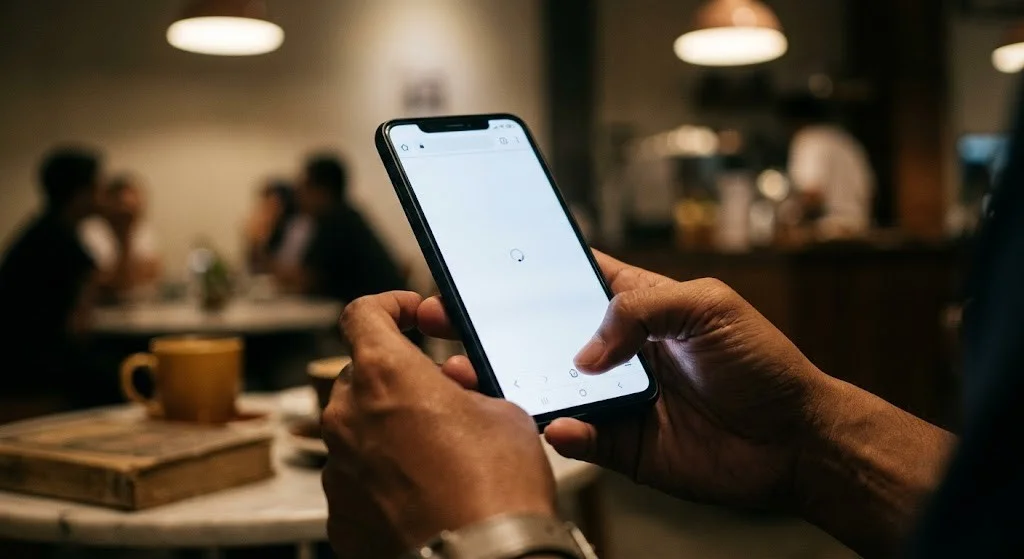
Picture this: a potential client lands on your website, ready to book. Within moments, they are staring at a form that asks for their life story, a calendar that does not load properly on their phone, and no clear indication of what happens after they click submit. They leave. You never even knew they were there.
That scenario plays out thousands of times a day across service industries. The gap between a customer's intent and a confirmed appointment is where revenue disappears. Closing that gap does not require advanced technology or massive budgets. It requires a deliberate focus on simplicity and clarity at every step.
Here is how to design a scheduling system that captures intent instead of wasting it.
1. Understand the Path Before Changing Anything
Before you evaluate tools or redesign pages, document exactly what a customer experiences right now. Pull up your site on a phone and a laptop. Walk through the booking process as though you have never seen it before.
Measure the distance between landing on the page and reaching a confirmation screen. A frictionless system accomplishes this in roughly four or five steps. Anything beyond that introduces doubt and fatigue.
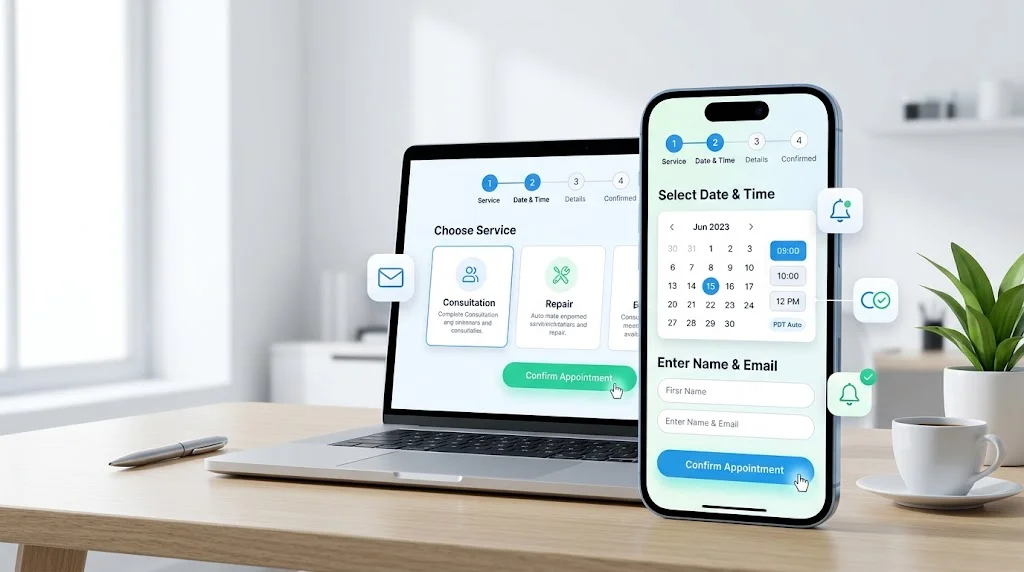
Write down the ideal flow: homepage, scheduling link, service selection, date and time, name and email, confirmation. Compare that against your reality. If your current process demands account creation, email verification, or an extended intake form before a slot is reserved, those requirements are creating unnecessary dropout points.
2. Use What Already Works
There is no reason to develop a proprietary scheduling engine from the ground up. The engineering demands are significant, the bug surface is enormous, and the cost of maintaining it diverts resources from your actual business.
Platforms like Calendly, Acuity Scheduling, and Setmore have been built and refined specifically for this use case. They manage calendar synchronization across Google, Outlook, and Apple. They detect time zones. They send confirmations and reminders. A knowledgeable web designer will point you toward one of these established solutions rather than encouraging an expensive custom build.
The integration itself should be invisible to the person booking. When done correctly, the scheduling widget inherits your site's visual identity — its colors, typefaces, and spacing. The customer experiences one continuous brand interaction from first click to final confirmation.
3. Maintain Visual Continuity Through the Booking Flow
Disjointed design is one of the most overlooked causes of booking abandonment. A sleek homepage that hands off to a generic, unstyled scheduling page creates a jarring shift that triggers hesitation.
Every element on the booking page — the calendar grid, the input fields, the action buttons — should reflect the same design language as the rest of your site. White space around the calendar prevents a cramped, overwhelming appearance. Buttons should be prominent, labeled clearly, and sized for easy interaction across devices.
If a web design agency is responsible for your site, they should treat the scheduling interface as an extension of the main design, not a bolted-on afterthought. Consistency at this stage quietly reinforces the visitor's confidence that they are in capable hands.
4. Resist the Urge to Collect Everything
Service businesses often conflate qualifying a lead with booking an appointment. They are not the same task, and treating them as one creates friction that directly suppresses completion rates.
Consider what a visitor genuinely needs to provide in order to hold a time slot. In the vast majority of cases, a name and an email address suffice. The moment you add fields for a phone number, mailing address, company size, budget range, or referral source, you are asking the person to invest more effort before they have received anything in return.
Gather supplementary information after the booking is confirmed. A Singapore web designer who understands conversion principles will recommend a staged approach — minimal fields at the point of booking, with additional questions posed through a follow-up message once the appointment is secured. This sequence respects the customer's time while still collecting what you need.
6. Build the Experience Around Mobile Behavior
A traveler booking a hotel room, a homeowner scheduling a plumber, a professional arranging a consultation — the majority of these interactions begin and end on a smartphone. Your booking system must account for this reality at a foundational level.
Open your scheduling page on at least three different devices. Look critically at whether the calendar dates are tappable without adjacent elements interfering. Check that all text is readable at a natural viewing distance. Confirm that buttons sit within comfortable thumb reach rather than requiring awkward hand repositioning.
Responsiveness is not enough. The experience must feel intentionally designed for touch interaction. A web design agency that tests thoroughly will evaluate the booking flow across various screen dimensions and connection speeds, catching the problems that static desktop previews completely miss.
6. Clarify Time Zones Without Making It Complicated
For any business with a geographically diverse clientele, time zone handling is a silent deal-breaker. A 3 PM appointment displayed without context could mean three different moments depending on who is looking at it.
The best scheduling platforms resolve this automatically — detecting the visitor's local time zone and showing availability in their frame of reference. Ensure this feature is activated. Complement it with a brief, visible label near the calendar: "Times shown in your local time zone."
That one line of text prevents a category of frustration that, left unaddressed, damages trust more than almost any other operational mistake.
7. Protect Your Calendar With Buffer Periods
Packing your schedule with back-to-back appointments seems efficient on paper. In practice, it creates a fragile system where one delayed session throws off everything that follows. The cumulative stress affects both you and every subsequent client.
Configure ten to fifteen minute buffers between appointments. These margins absorb the natural variance of real-world scheduling — a conversation that runs slightly long, a technical issue that requires a quick fix, a moment to collect your thoughts before the next person.
From the client's perspective, buffers are entirely transparent. What they notice is a provider who begins each session prepared and on time rather than visibly scrambling from the previous one.
8. Keep the Conversation Going After Confirmation
The booking confirmation is a milestone, not a conclusion. Without structured follow-up, appointments fall through the cracks of people's increasingly chaotic schedules.
Immediately upon booking, deliver a concise confirmation that restates the appointment details and provides a single-click option to cancel or reschedule. This transparency reduces anxiety and demonstrates operational maturity.
Twenty-four hours before the appointment, send a reminder through whatever channel the client prefers — email, text, or both. If a web design agency built your site, verify that the booking platform connects to your messaging tools so these sequences execute automatically. Removing manual steps from the reminder process virtually eliminates the administrative oversight that causes no-shows.
9. Explain What Happens After the Last Click
Completing a booking and then receiving no guidance about next steps creates a void. The client is left wondering: where do I go? Who contacts whom? Is there anything I should prepare?
Address these questions within the confirmation itself. For phone consultations, state that you will call at the scheduled time. For in-person visits, provide the address along with practical details about parking, building entry, and what to bring. For virtual sessions, embed the video link directly in the message rather than deferring it to a separate communication.
A brief "What to Expect" section in the confirmation email handles the most common questions proactively, reducing inbound support requests and presenting your business as organized and detail-oriented.
10. Let the Numbers Guide Your Improvements
Intuition about where your booking flow breaks down is unreliable. Data, properly collected, tells you exactly which step causes the most abandonment.
Implement event tracking on your scheduling pages through a platform like Google Analytics. Monitor where visitors exit — on the calendar, during form entry, or at the confirmation stage. A web design agency with analytics experience will configure these tracking events so the insights are granular and dependable.
Establish a routine review cycle, checking the data monthly. Make one targeted change at a time and measure its effect before introducing the next adjustment. This disciplined approach produces compounding improvement rather than the random results of sweeping, unmeasured redesigns.
Conclusion
The difference between a booking system that converts and one that leaks comes down to respect — for the customer's time, attention, and patience. Every step you remove, every field you eliminate, every moment of ambiguity you resolve makes the path from intent to confirmation shorter and more reliable.
Shorten forms. Rely on established tools. Prioritize mobile from the start. Handle time zones without fuss. Automate routine communications.
When scheduling feels genuinely easy, completion rates rise and empty slots become rare. Take a few minutes today to experience your own booking process on a phone. If it does not feel effortless to you, it certainly will not feel effortless to your customers.