Sign up with Google
 Sign in with Zoho

Introduction:
Electronic communication has become a critical part of modern technology. From intelligent vehicles and automated factories to embedded devices and smart control systems, countless electronic components need to exchange information quickly and accurately. As these systems become more advanced, reliable communication methods are required to ensure smooth operation.
Controller Area Network (CAN) technology has established itself as one of the most dependable communication solutions for environments where performance and stability are essential. At the centre of every successful CAN network is the CAN transceiver, a device responsible for creating communication between electronic controllers and the physical transmission medium.
CAN transceivers provide the electrical interface that allows data to move between different system components. Their ability to handle interference, support multiple devices, and maintain communication reliability makes them an important choice for engineers designing modern electronic applications.
What Is the Function of a CAN Transceiver in a Communication System?
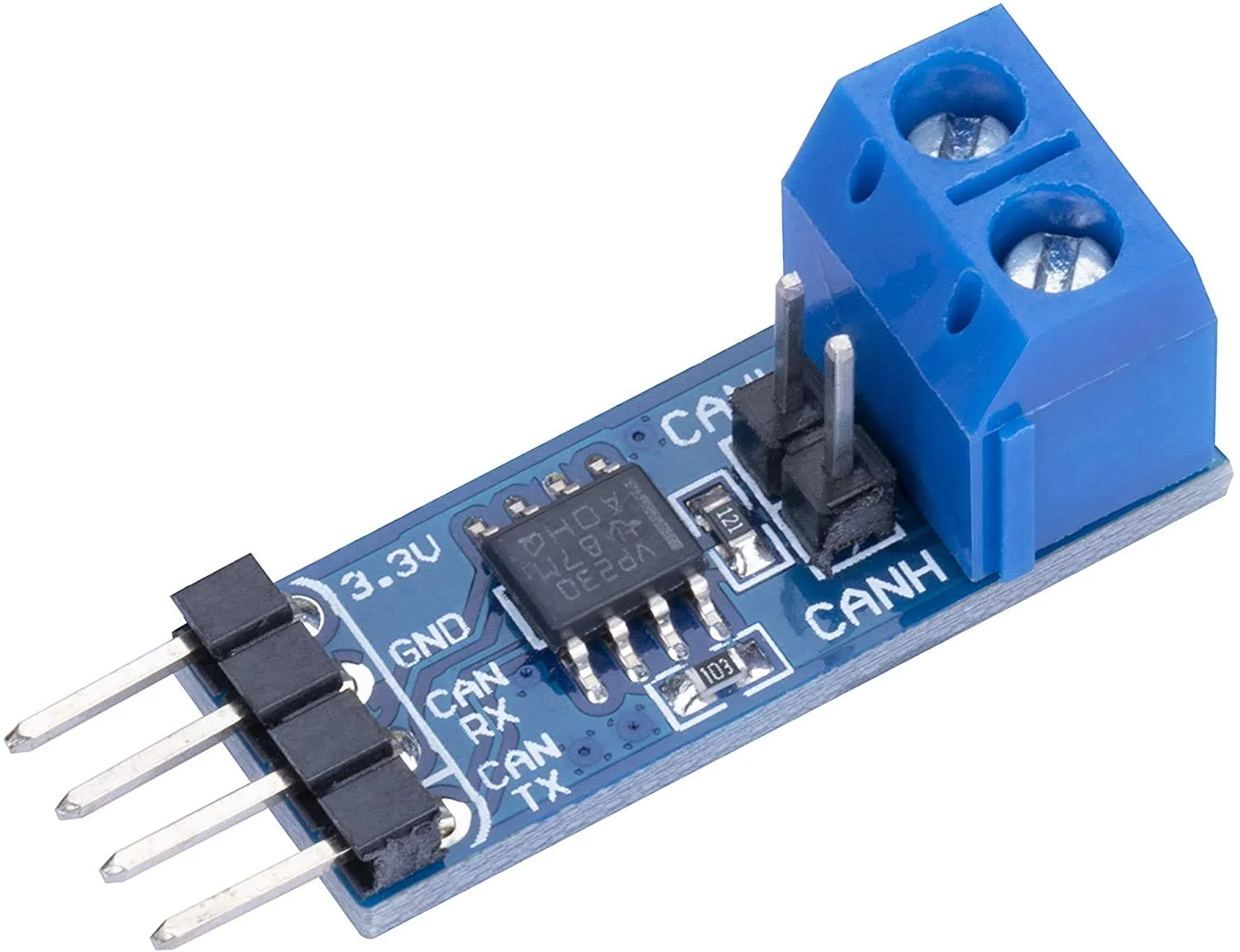
A CAN transceiver works as the communication link between a CAN controller and the CAN bus. The controller manages the information being exchanged, but it requires a transceiver to send and receive electrical signals through the network.
The transceiver performs physical layer communication by converting internal processor signals into bus-level signals that can travel through CAN wiring.
The main functions of CAN transceivers include:
- Converting transmit data from the controller into CAN bus signals.
- Receiving incoming CAN bus information and converting it into controller-readable data.
- Managing communication between different electronic nodes.
- Supporting reliable signal transmission across the network.
- Providing protection against electrical disturbances.
This essential role allows multiple devices within a system to communicate through a single shared network.
How Do CAN Transceivers Enable Efficient Data Exchange?
CAN networks are designed around a multi-node communication structure where several devices can share the same bus. CAN transceivers make this possible by ensuring that each connected device can transmit and receive information correctly.
The communication process involves:
- The CAN controller generating a message based on application requirements.
- The CAN transceiver converting the digital message into electrical signals.
- The CAN bus transferring the information between connected nodes.
- Another transceiver receiving and converting the signal back into digital data.
This approach allows different control units to communicate without requiring individual connections between every device, helping reduce system complexity.
Why Is CAN Bus Technology Suitable for Harsh Environments?
Many electronic systems operate in conditions where communication reliability can be affected by electrical noise, vibration, and temperature changes. CAN transceivers are specifically designed to perform effectively in such challenging environments.
The use of differential signalling allows CAN systems to maintain communication quality even when exposed to interference. Instead of relying on a single electrical signal, CAN uses two complementary signals that help reduce the impact of external disturbances.
Advantages of this design include:
- Improved protection against electromagnetic interference.
- Reliable operation near motors and power equipment.
- Stable communication over extended cable lengths.
- Reduced possibility of signal errors.
- Better performance in industrial environments.
These characteristics make CAN transceivers highly suitable for demanding applications.
What Makes CAN Transceivers Valuable in Automotive Applications?
The automotive industry relies heavily on electronic communication because modern vehicles contain numerous control systems that must operate together. CAN transceivers provide the communication foundation needed for these systems.
Automotive applications include:
- Engine control and performance monitoring.
- Transmission management systems.
- Vehicle safety modules.
- Electronic steering systems.
- Battery control systems in electric vehicles.
- Dashboard and information displays.
By supporting fast and dependable communication, CAN transceivers help improve vehicle efficiency, safety, and functionality.
How Do CAN Transceivers Support Industrial Automation?
Industrial automation requires communication networks that can operate continuously while handling large amounts of data from multiple devices. CAN transceivers are widely used in industrial environments because they offer reliability and simple network implementation.
They are commonly found in:
- Automated production equipment.
- Industrial controllers.
- Robotic systems.
- Sensor networks.
- Machine monitoring solutions.
- Control and measurement devices.
In these applications, CAN transceivers help different parts of an automated system exchange information efficiently, improving operational performance.
What Technical Features Define High-Quality CAN Transceivers?
Different applications require different levels of performance, and modern CAN transceivers include advanced features to meet these needs.
Important characteristics include:
- Compatibility with standard CAN communication protocols.
- High data transmission capability.
- Low standby power consumption.
- Strong electrical protection.
- Thermal protection mechanisms.
- Wide operating temperature support.
- Compact package designs.
These features help engineers create communication systems that remain reliable throughout their operating life.
How Do CAN Transceivers Improve Embedded System Development?
Embedded systems often require communication components that offer efficiency without adding unnecessary complexity. CAN transceivers provide a practical solution by allowing microcontrollers and electronic modules to communicate through a simple network structure.
Benefits for embedded system designers include:
- Easier integration with microcontroller platforms.
- Reduced wiring requirements.
- Improved system expansion options.
- Better communication reliability.
- Simplified maintenance and diagnostics.
This makes CAN transceivers suitable for a wide range of smart electronic products and control applications.
What Factors Should Be Considered When Choosing CAN Transceivers?
Selecting an appropriate CAN transceiver requires careful evaluation of application requirements. A suitable component should match the communication needs and environmental conditions of the system.
Important selection factors include:
- Required communication speed.
- Supply voltage compatibility.
- Power consumption limits.
- Operating temperature range.
- Network size and distance.
- Protection requirements.
- Physical installation constraints.
Considering these factors helps ensure reliable operation and prevents communication issues in the final design.
How Will CAN Transceivers Shape Future Communication Systems?
The increasing demand for connected technology continues to create new opportunities for CAN communication. Although advanced networking solutions are developing, CAN transceivers remain important because of their reliability, simplicity, and proven performance.
Future applications are expected to benefit from improved CAN transceiver technology through:
- More efficient electric vehicle systems.
- Smarter industrial automation networks.
- Enhanced embedded control solutions.
- Better energy management systems.
- More reliable connected devices.
Manufacturers continue improving CAN transceivers to deliver higher efficiency, stronger protection, and better integration with next-generation electronic systems.
Conclusion:
CAN transceivers are a fundamental part of reliable electronic communication networks. They provide the connection between controllers and physical communication systems while ensuring accurate data transmission across multiple devices.
Their ability to operate in demanding environments, support flexible network designs, and provide dependable performance has made them an important technology in automotive, industrial, and embedded applications.
As electronic systems continue becoming more intelligent and interconnected, CAN transceivers will remain a trusted solution for building efficient and reliable communication networks.