Sign up with Google
 Sign in with Zoho


Key takeaways
- AI-moderated telephone interviews support open-ended, conversational answers, unlike traditional CATI, which often limits people to button presses or one-word replies.
- Setup runs in ten stages, from a clear research objective to natural conversations with barge-in support.
- Researchers stay in control: they review, edit, add, or remove AI-generated questions and probes before any call is made.
- Consent messages, quiet hours, time zones, holidays, and Do Not Call checks protect participants.
- The biggest differences are scalability, consistency, affordability, global availability, and real-time analysis.
In the age of AI, brands and organisations are under constant pressure to understand people faster. But research can still move slowly.
Telephone interviews are valuable for collecting detailed, real-world feedback. However, running them at scale can mean weeks of scheduling, interviewing, collecting responses, manually transcribing each word, and performing analysis. By the time the findings reach decision-makers, customer needs may have already changed.
AI-moderated telephone interviews offer a way to shorten this process.
AI can conduct structured conversations, ask follow-up questions, capture and transcribe responses, and help research teams analyse findings faster.
This raises an important question.
How do AI-moderated telephone interviews work, and how different are they from traditional telephone interviews?
This article walks you through what AI-moderated telephone interviews are, how they work, and how they differ from traditional telephone interviews.
What Is an AI-Moderated Telephone Interview?
AI-moderated telephone interview (noun): a qualitative research method in which a conversational AI moderator conducts a phone interview, asks questions, listens, and probes deeper in real time. Also called an AI telephone interview or AI-moderated CATI.
An AI-moderated telephone interview is a qualitative research method based on conversational AI.
It is a phone-based conversation in which an AI moderator or agent engages in conversation with the participants, asks the survey questions, listens to their responses, and probes deeper for a more human-like conversation.
The AI moderator follows a structured interview guide but is not limited to reading a fixed script. It follows the rule of adaptive probing; therefore, it can easily recognise vague, incomplete, or particularly interesting answers and respond with a relevant follow-up question in real time.
This is different from traditional computer-assisted telephone interviews, which typically limit respondents to pressing a button or giving a short, single-word answer. AI moderation supports open-ended, conversational answers, and the system is built to interpret meaning, not just detect keywords.
How Do AI-Moderated Telephone Interviews Work?
1. Starting With a Clear Research Objective
Every research study begins with a clear objective. It may focus on testing a concept or product, understanding customer behaviour, exploring patient journeys, or examining the impact of economic changes.
A clear objective shapes the entire interview research process, including the research questions, participant selection, interview approach, and expected outcomes. Before setting up an AI-moderated telephone interview, researchers should therefore be clear about what they want to learn and why.
2. Designing the Interview Script and Questions
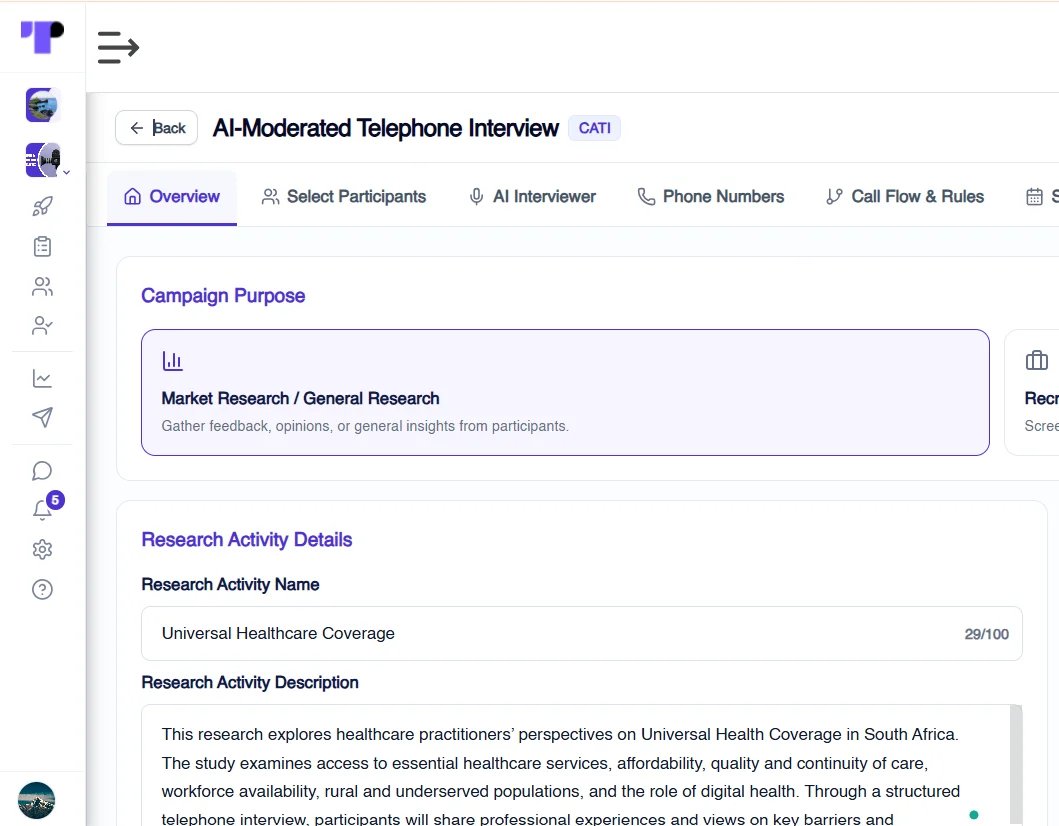
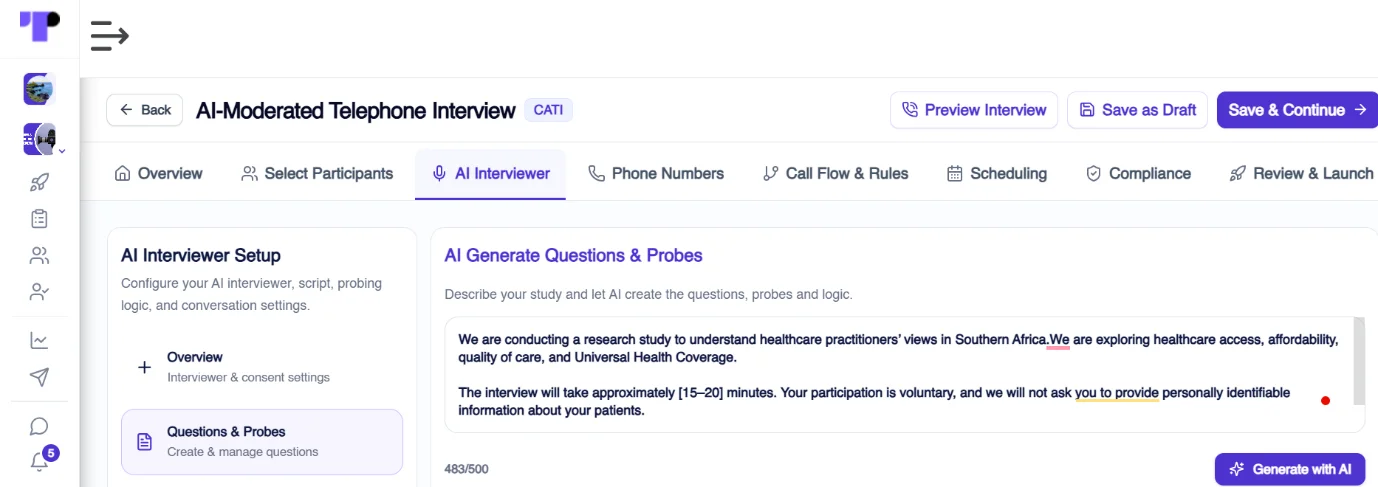
This is the most important stage of AI-moderated telephone research. Once the interview objectives are clear and shortlisted, researchers design the interview script or questionnaire for telephone research. Traditionally, research teams design the interview scripts, and the computer follows them.
With AI-moderated telephone interviews, researchers and AI work together to develop the interview guide. Researchers provide the AI with a detailed prompt covering the:
- Research objectives
- Target audience
- Key topics
- Requirements such as duration, etc.
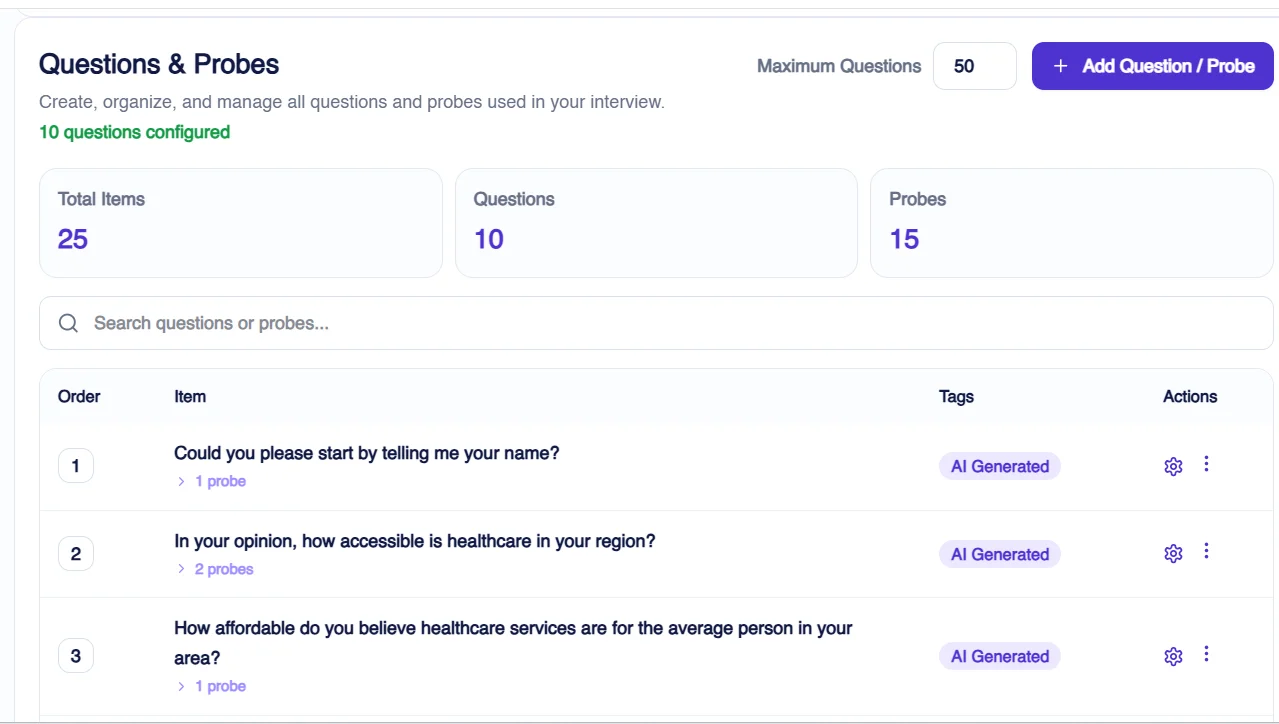
The AI can then generate a structured questionnaire with relevant questions and adaptive probes within seconds.
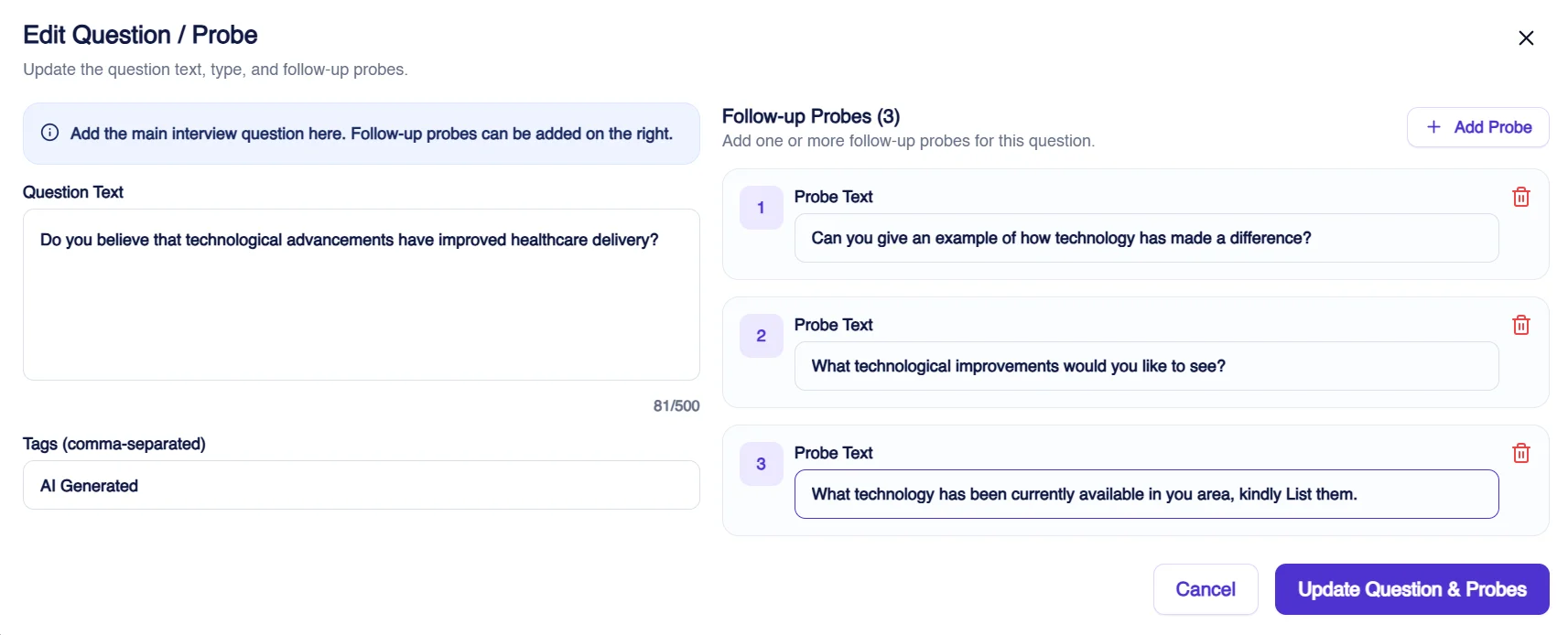
Researchers remain in control throughout the process. They can review, edit, add, or remove interview questions and probes before the interview begins. During the study, AI can adapt its probing based on participants' responses. Instead of spending weeks or months building a questionnaire from scratch, researchers can use AI to create a strong starting point and then apply their expertise to refine the interview guide.
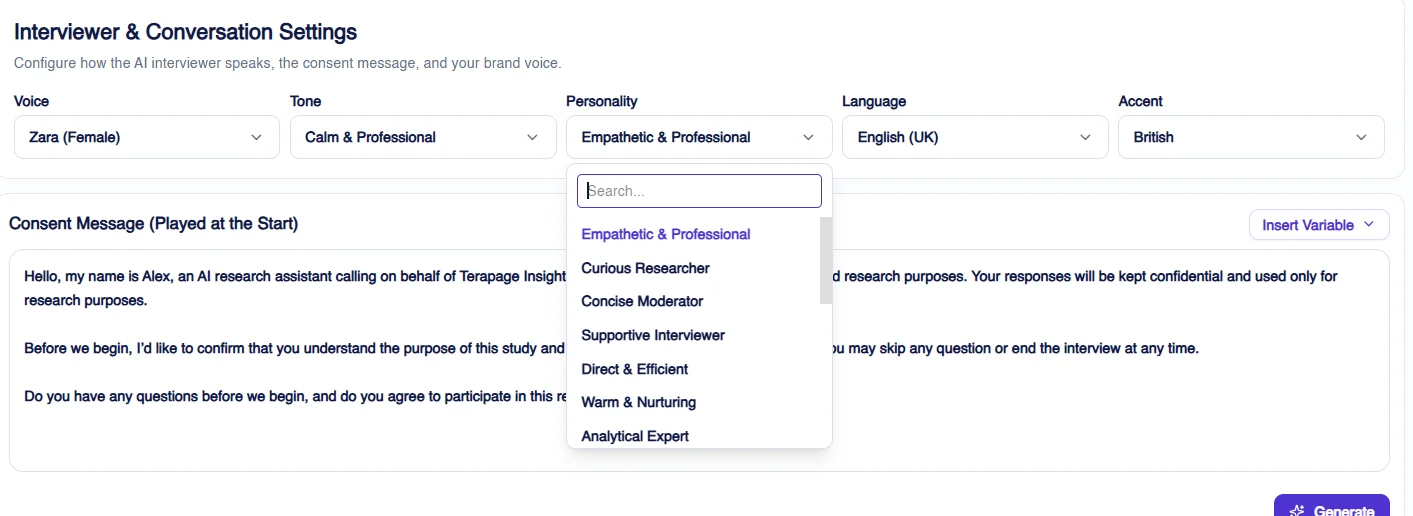
3. Configuring the AI Interviewer or Moderator
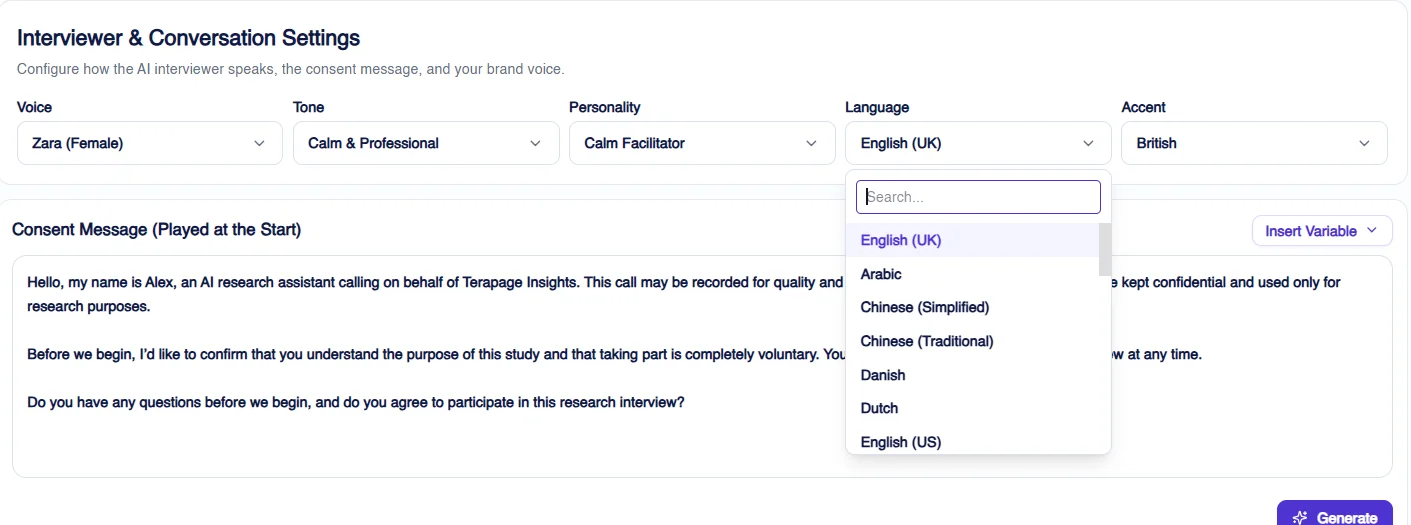
Before making calls, researchers need to configure the AI moderator or interviewer. This is an important part of setting up an AI-moderated interview and distinguishes it from traditional telephone research. The configuration determines how the AI conducts the conversation, including its voice, tone, personality, language, and accent. These settings should match the research objective and the context of the participants
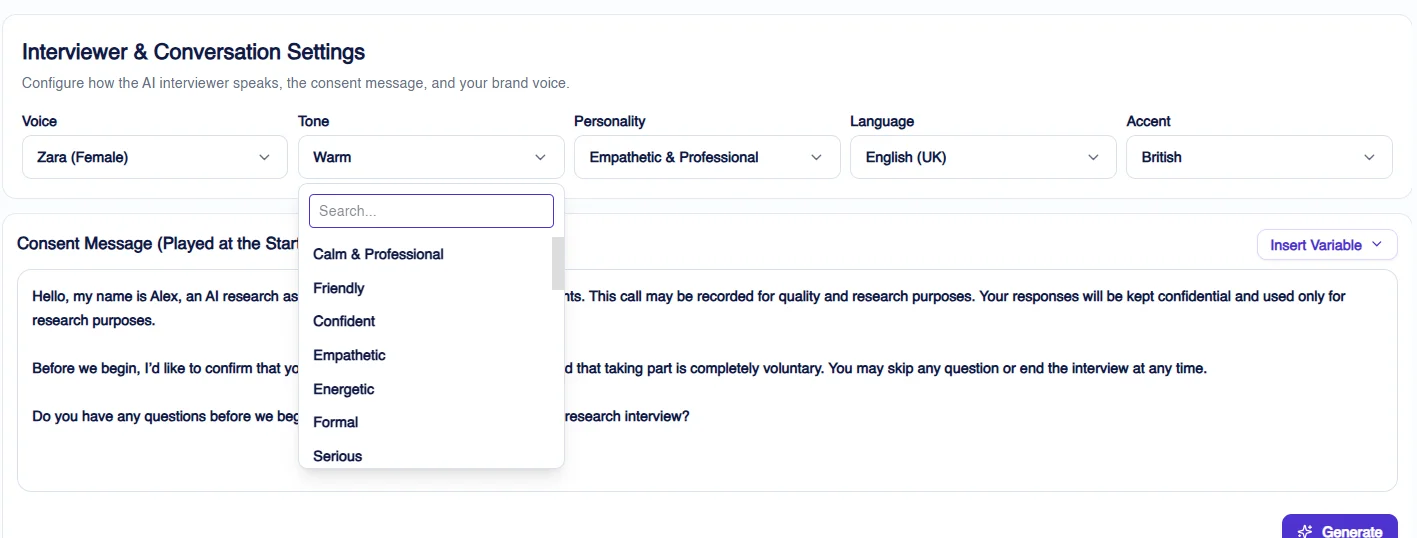
For example, a healthcare interview may require a different tone and communication style from a customer feedback study. If the AI moderator is not configured appropriately for the research goals and audience, the interviews may fail to generate relevant, meaningful, and actionable findings.
4. Recruiting the Participants
Once the questionnaire for AI-moderated telephone interviews or CATI is designed, the next question is:
Who should be interviewed?
Each research study needs a different type of participant pool, which you can size with the Recruitment Calculator. Therefore, participants can be selected according to the requirements of the study, such as:
- Customer type
- Profession
- Age group
- Location
- Previous experience
- Product usage
- Research eligibility
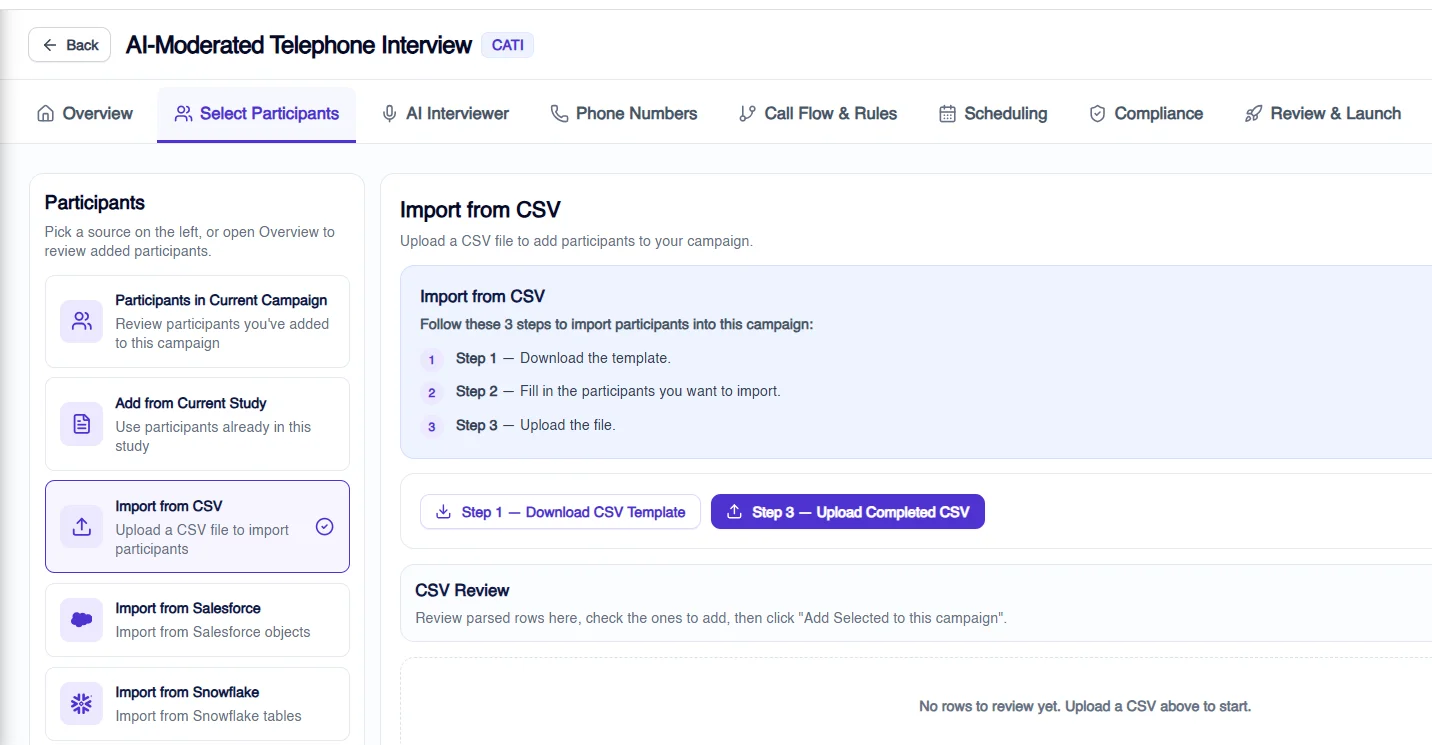
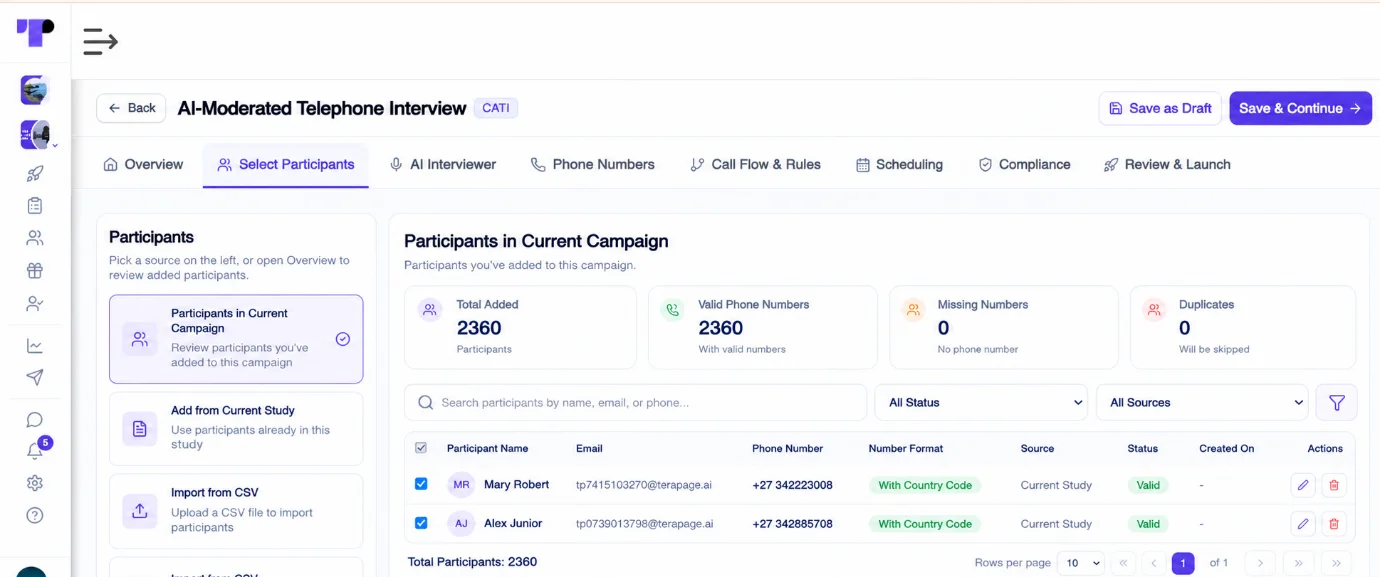
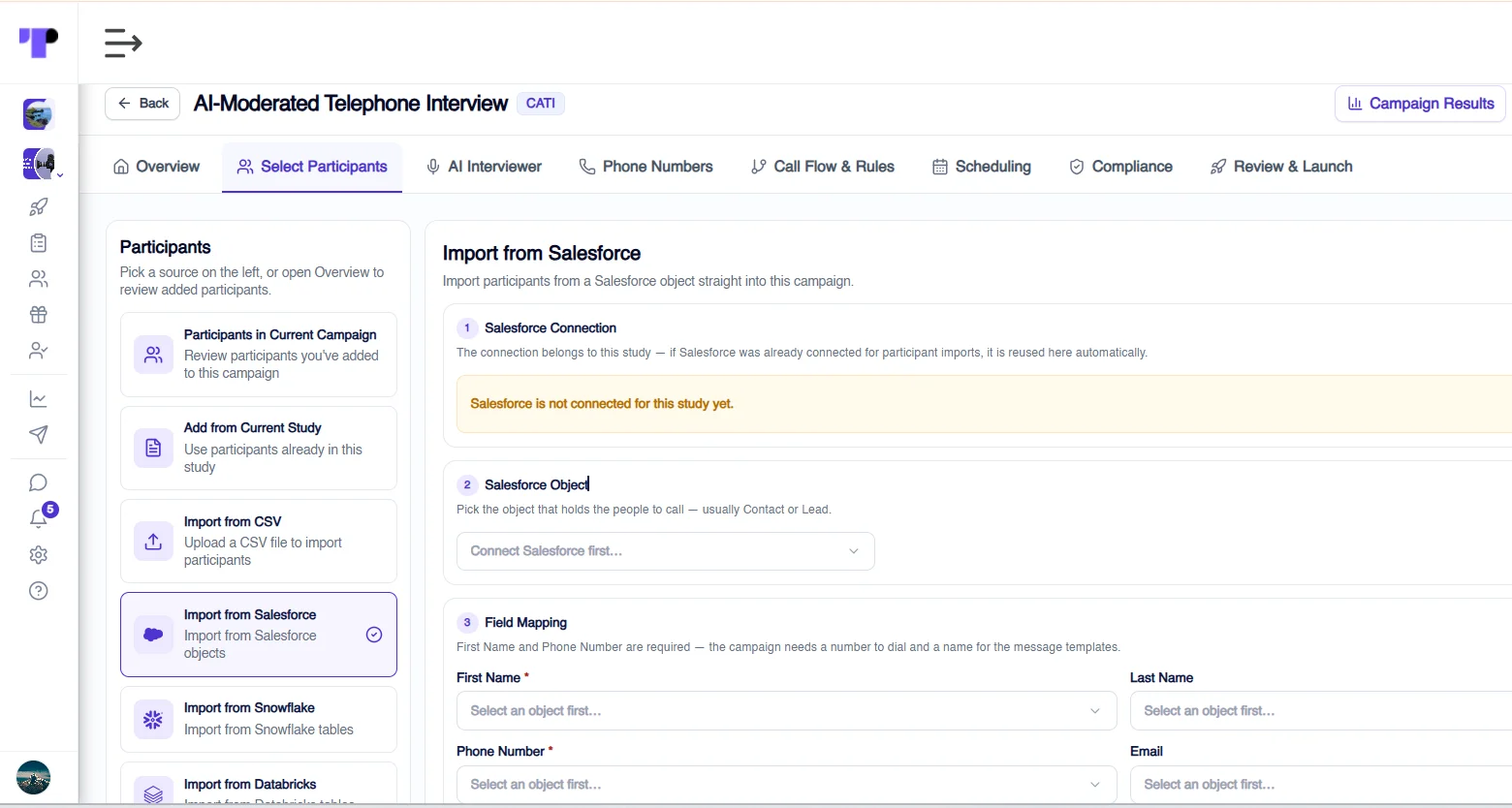
Researchers can use their existing study participants, upload a participant list, or even import from participant warehouses such as Databricks, Salesforce, and Snowflake through API integrations. This step determines exactly who will be called and with what contact information. See participant recruitment for more options.
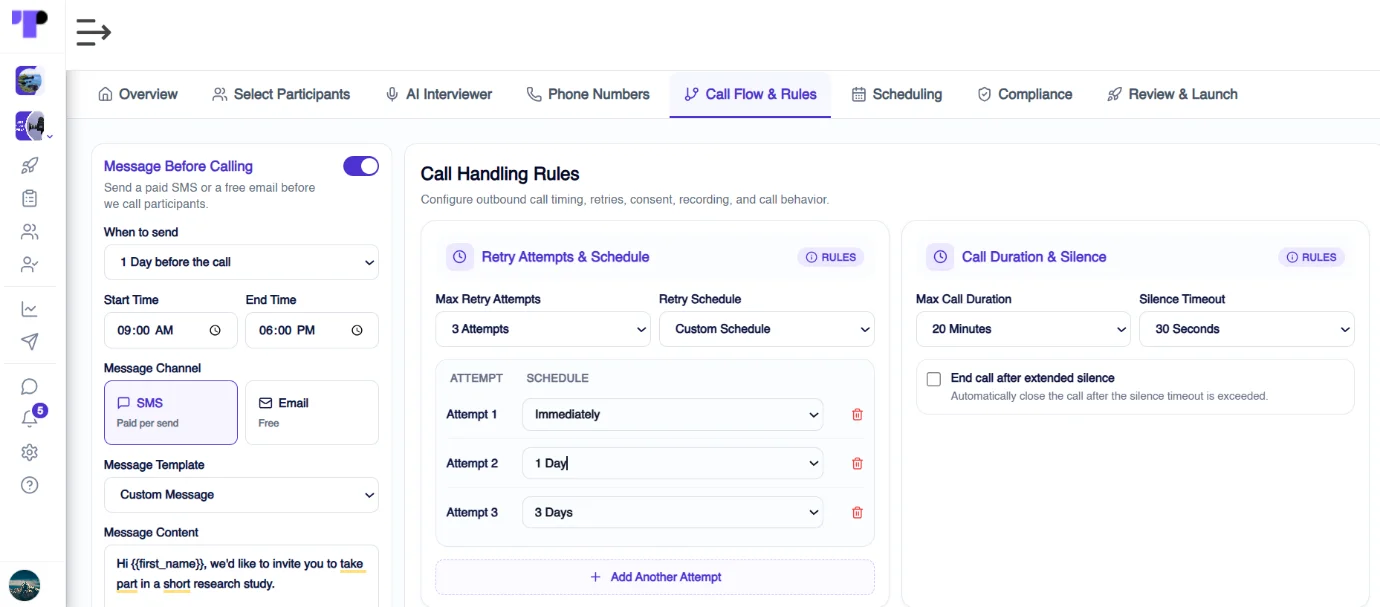
5. Configuring Call Flows and Timing Rules
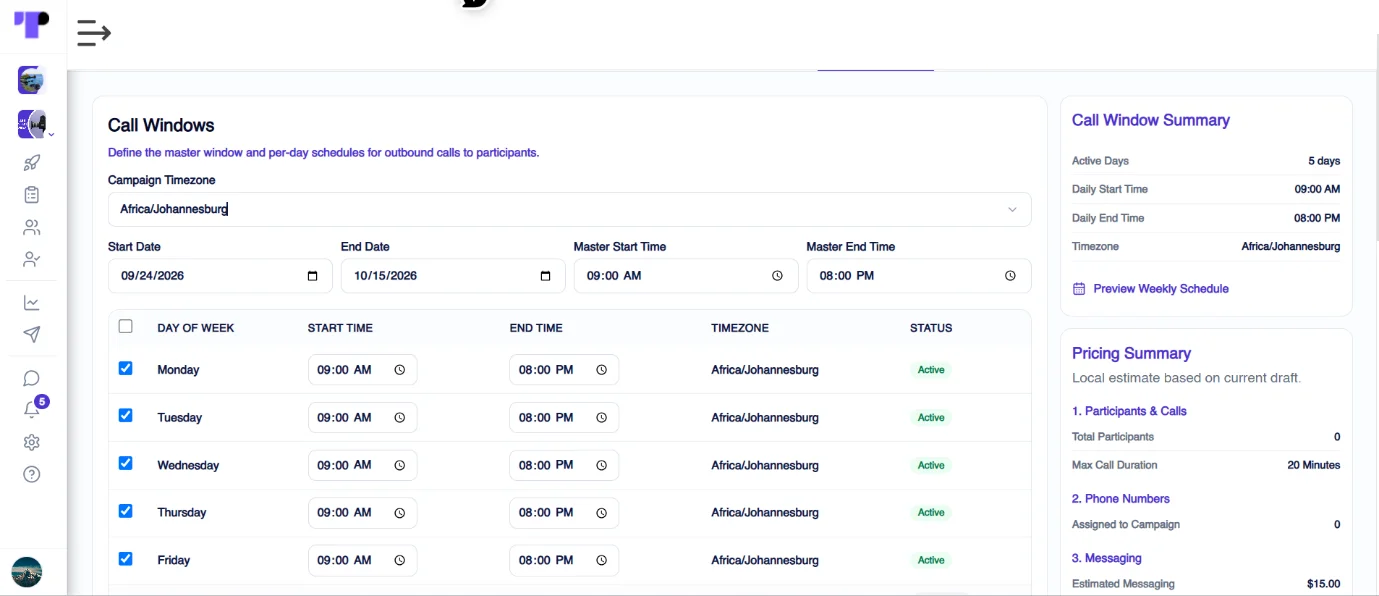
Once the questionnaire and participants are decided, researchers can set up the practical details of how the AI-moderated telephone interviews will be conducted. These settings determine when and how the AI interviewer or moderator contacts participants and what happens if a call is not completed.
Researchers configure call details such as:
- How long each call can last
- How many times an unanswered number should be retried
- How long the system should wait during silence before ending the call
They can also decide whether participants should receive a reminder by SMS or email a day or so before their scheduled interview.
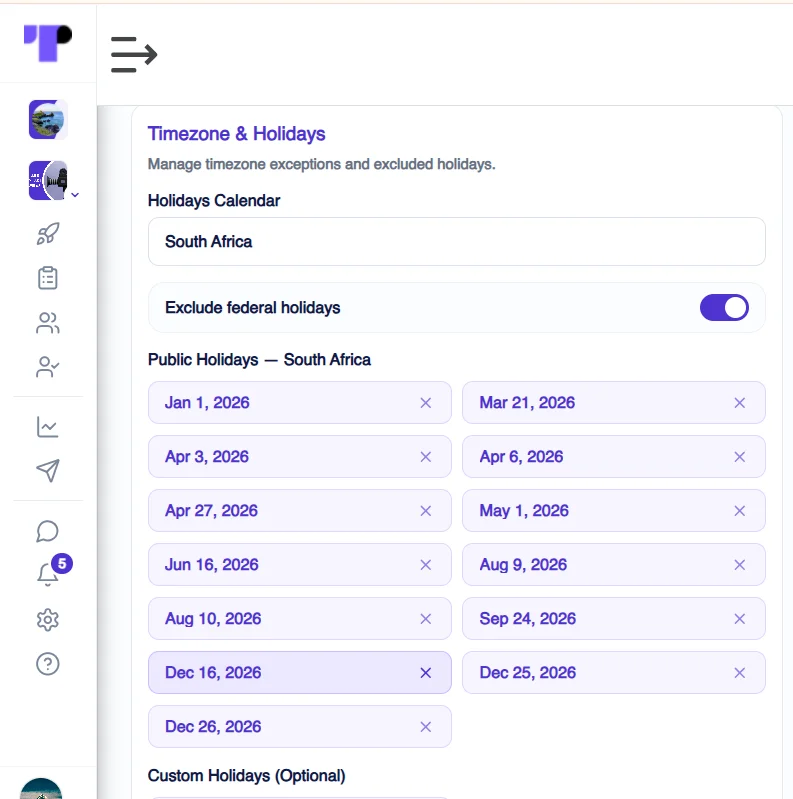
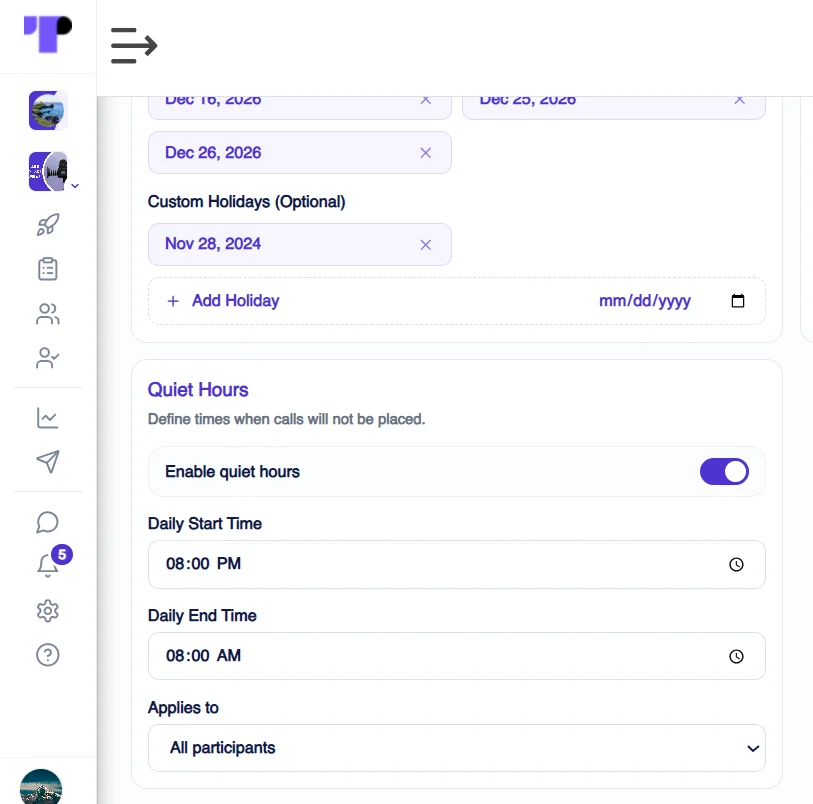
Other settings, such as calling days, quiet hours, available calling hours, and holidays, should also be configured to avoid contacting participants at unsuitable times.
These may seem like small details, but they can directly affect response rates, call completion, and the overall participant experience.
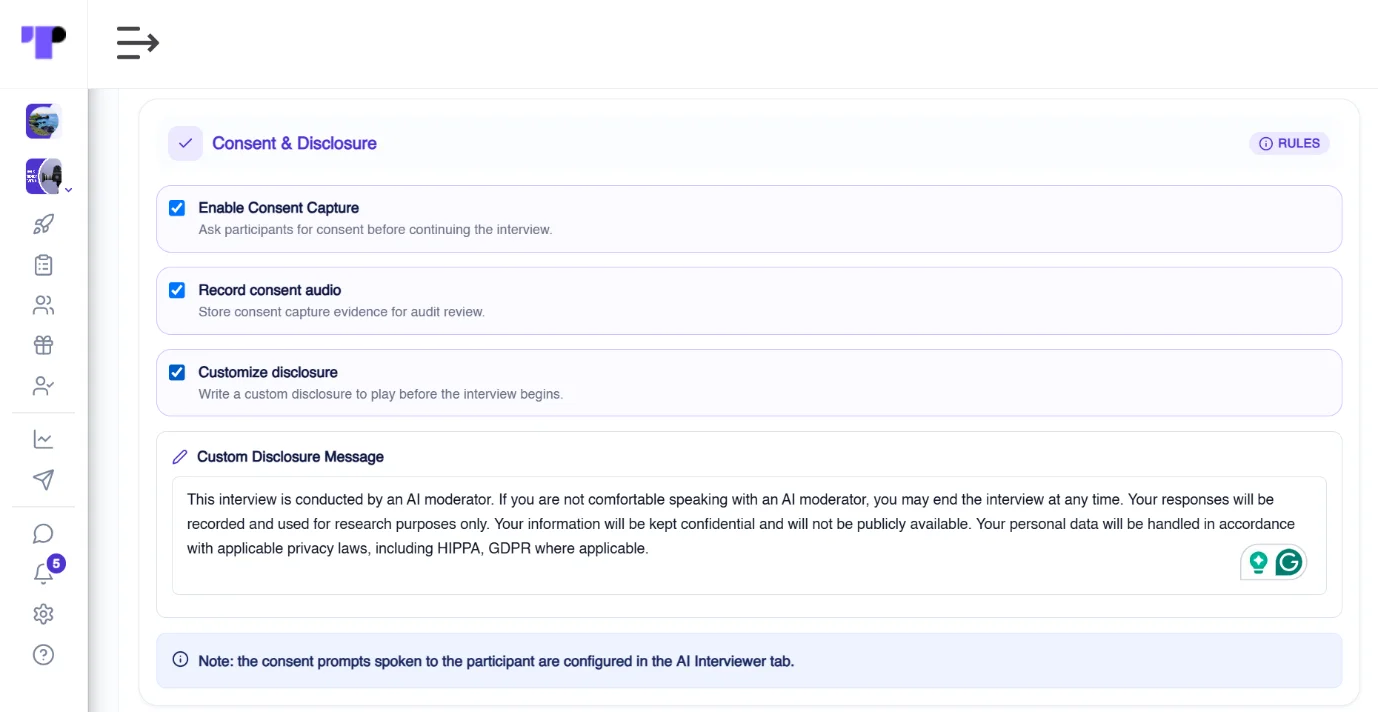
6. Ensuring Consent-Based AI-Moderated Interviews
Privacy and consent are essential parts and parcels of AI-moderated telephone interviews. Researchers ensure that before the interview begins, participants are clearly informed about the purpose of the research, how their responses will be used, and whether the call will be recorded or processed by AI, in line with Terapage's AI transparency principles. Therefore, a clear consent message is fed into the AI interview setup to avoid any privacy breach. This way, participants can decline the interview if they are not comfortable with AI interviewing due to privacy concerns. Terapage's privacy policy and security practices support this.
7. Scheduling the Campaign
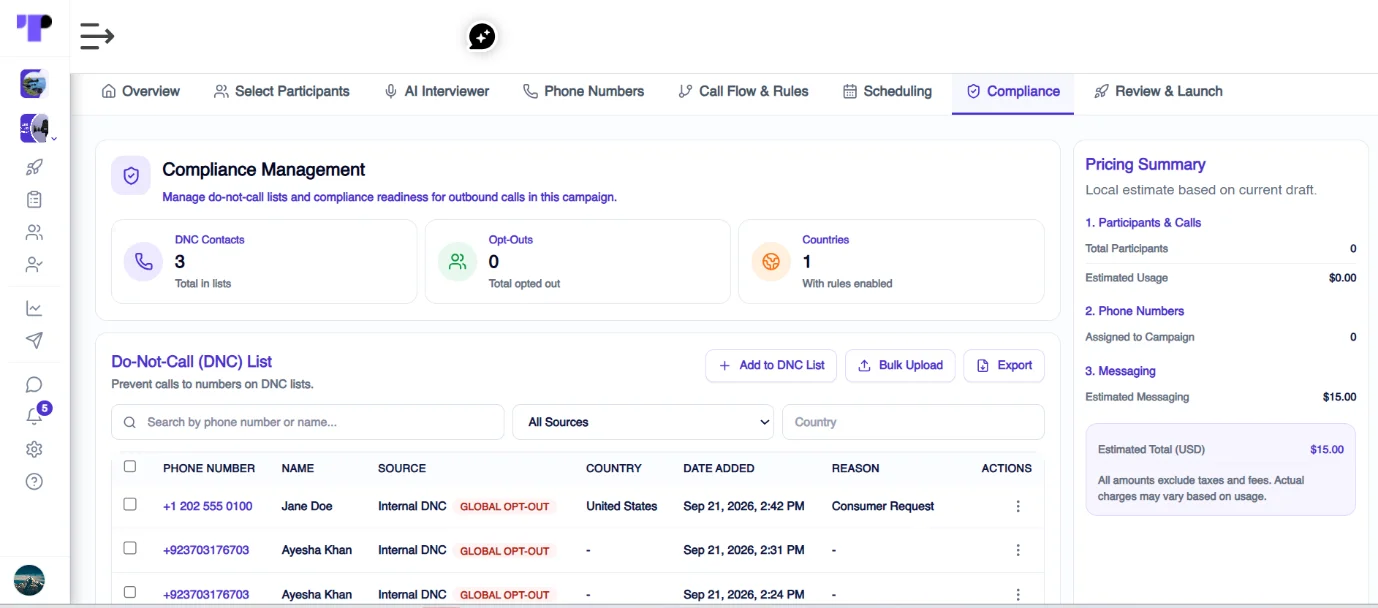
The final step to launch the AI-moderated interview is to configure compliance management. The research teams must ensure that the campaign is checked against a Do Not Call (DNC) list to prevent calls to participants who have opted out of telephone contact. These settings help researchers manage outbound calling responsibly while protecting the participant experience.
8. Collecting and Analysing the Responses in Real Time
Configuring and conducting AI-moderated telephone interviews is only one side of the process. Collecting, organising, and analysing the data is equally important, especially for research teams and decision-makers.
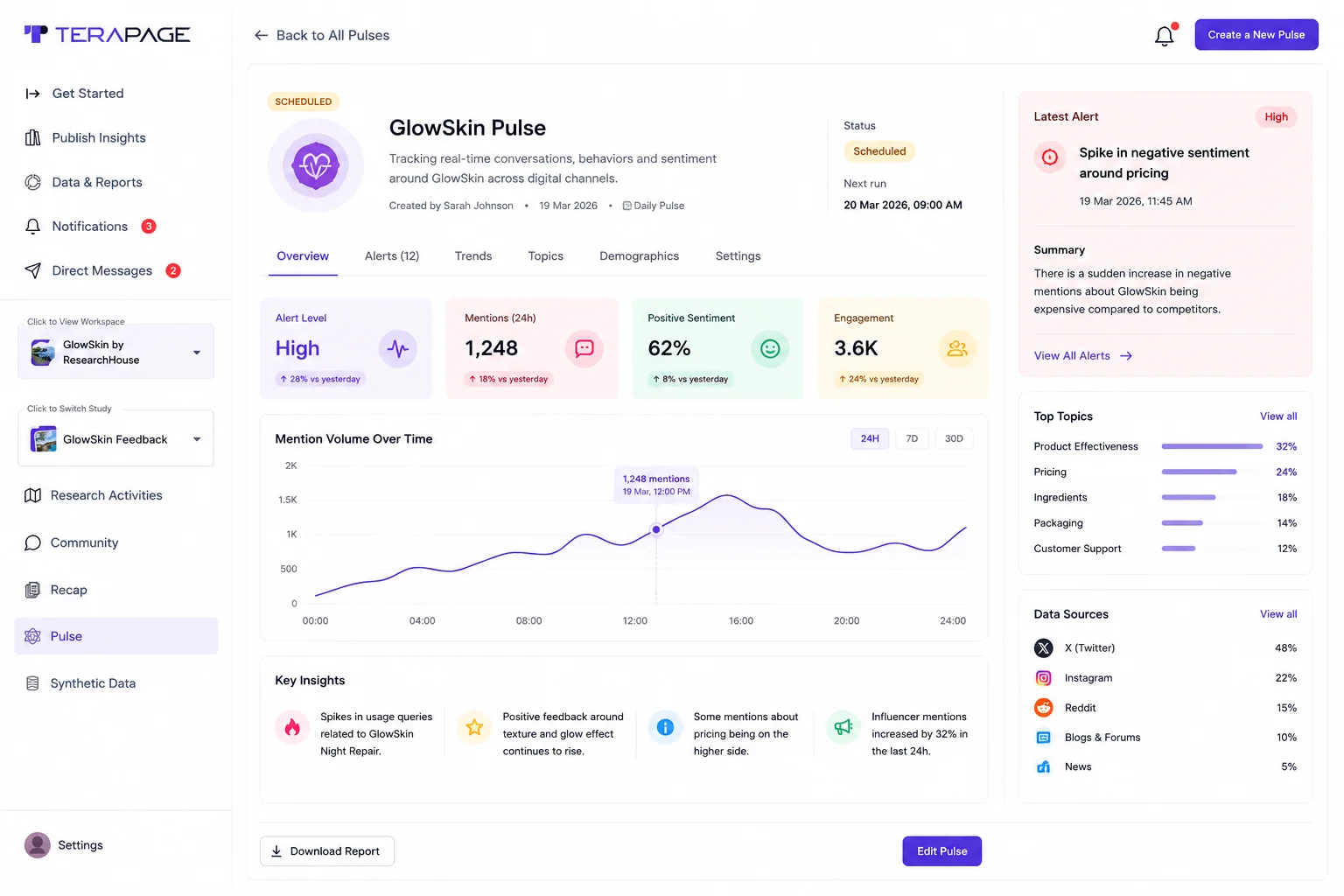
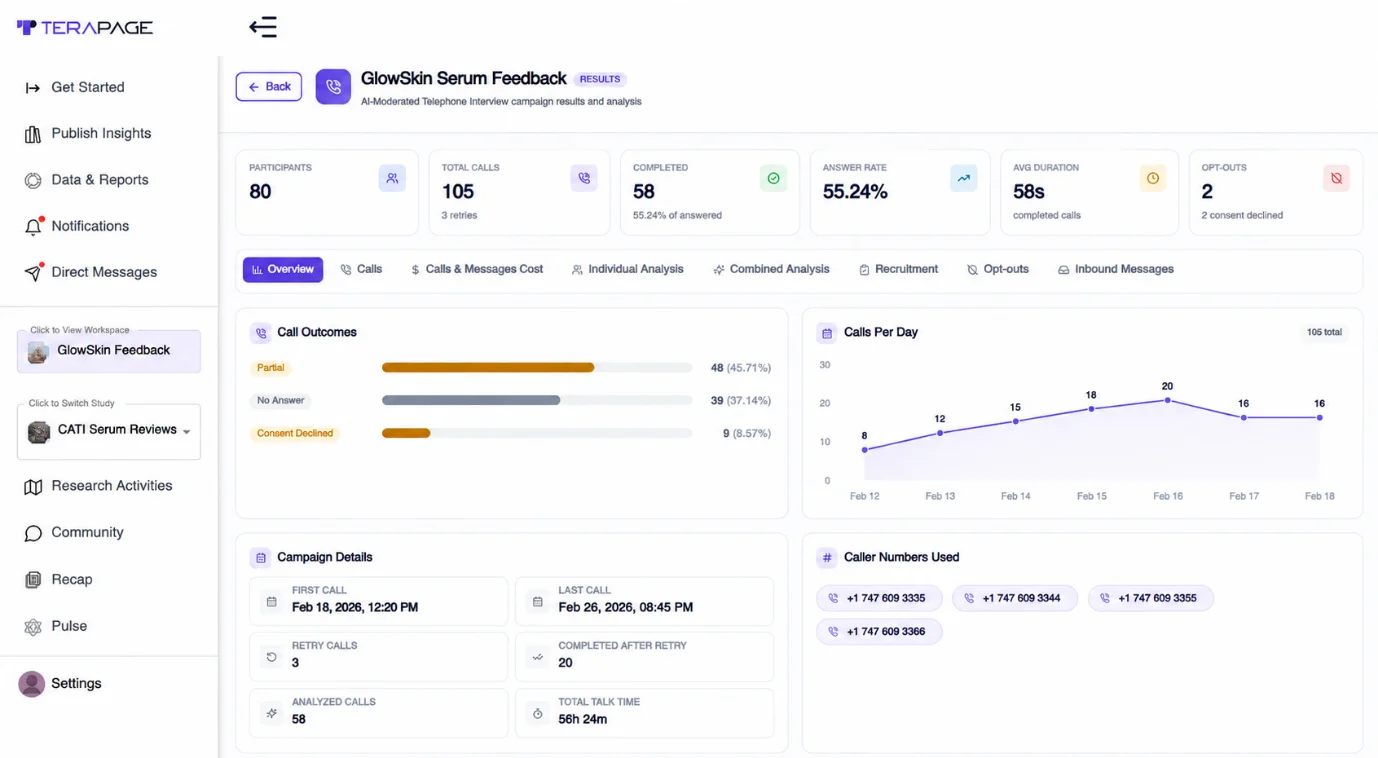
At Terapage, AI-powered analysis helps research teams make sense of interview responses in real time. Instead of waiting until all interviews are completed to start reviewing the data, teams can quickly see emerging insights in the form of:
- Sentiment analysis
- Sentiment distributions
- AI-generated summaries
- Word clouds
- Theme clusters
- Rich taxonomies
- AI excerpts
- Highlight reels
- Quotes, etc.
This gives researchers and stakeholders a clearer picture of what participants are saying and where the most important insights are emerging.
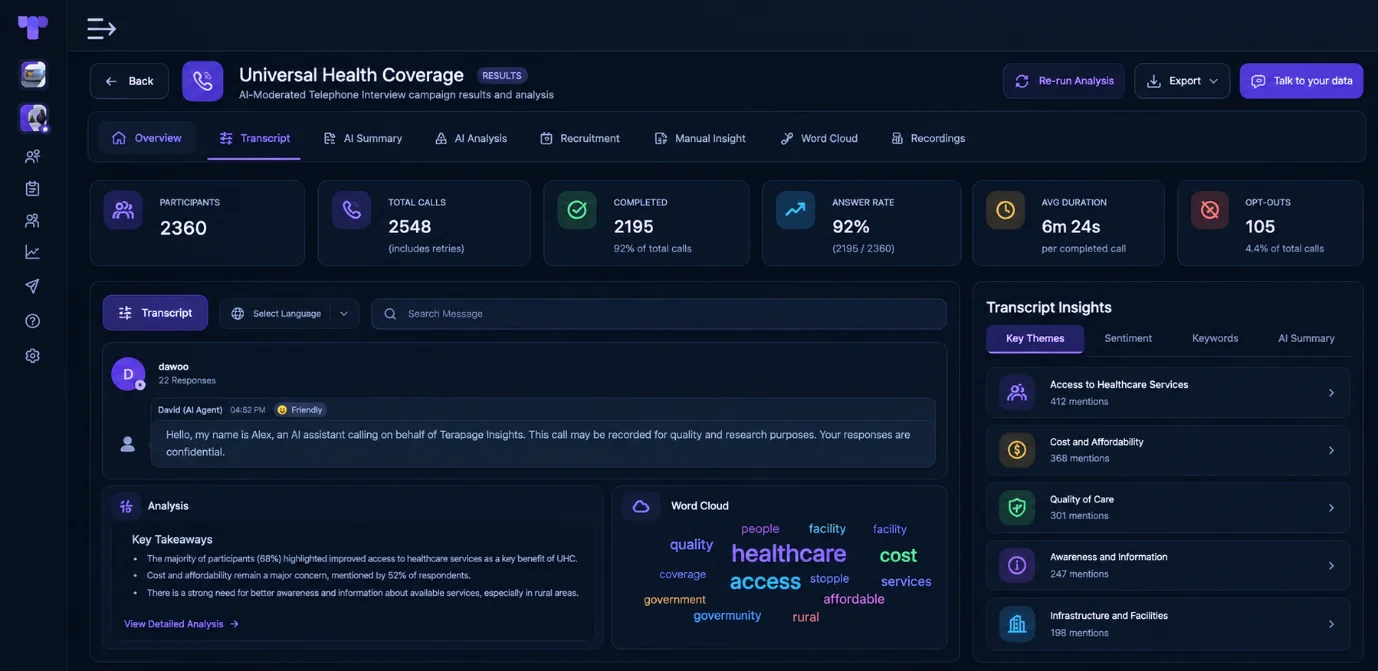
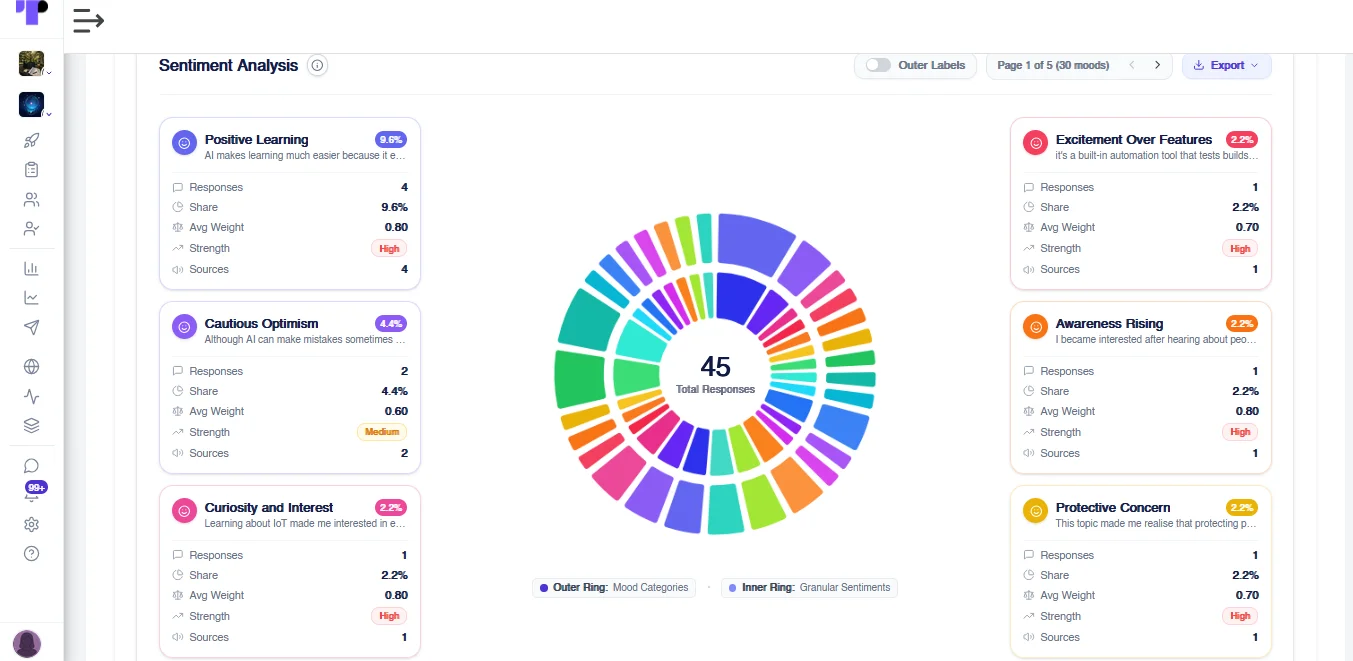
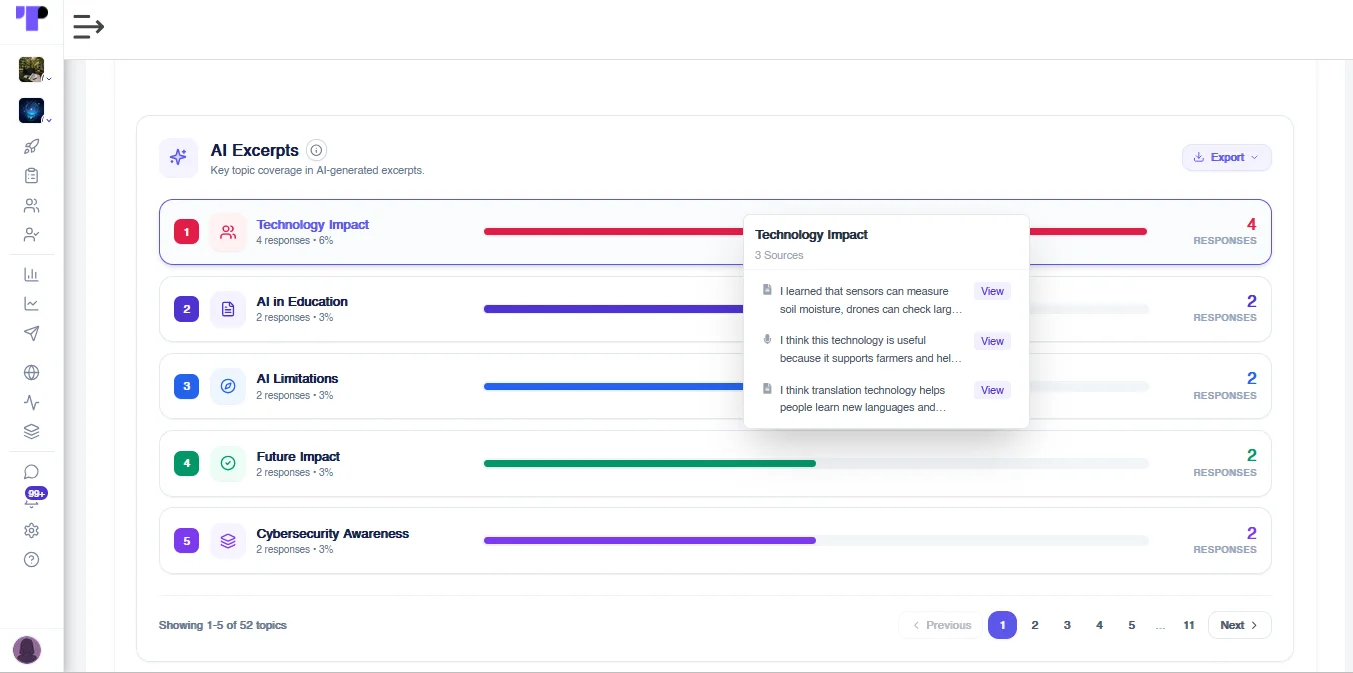
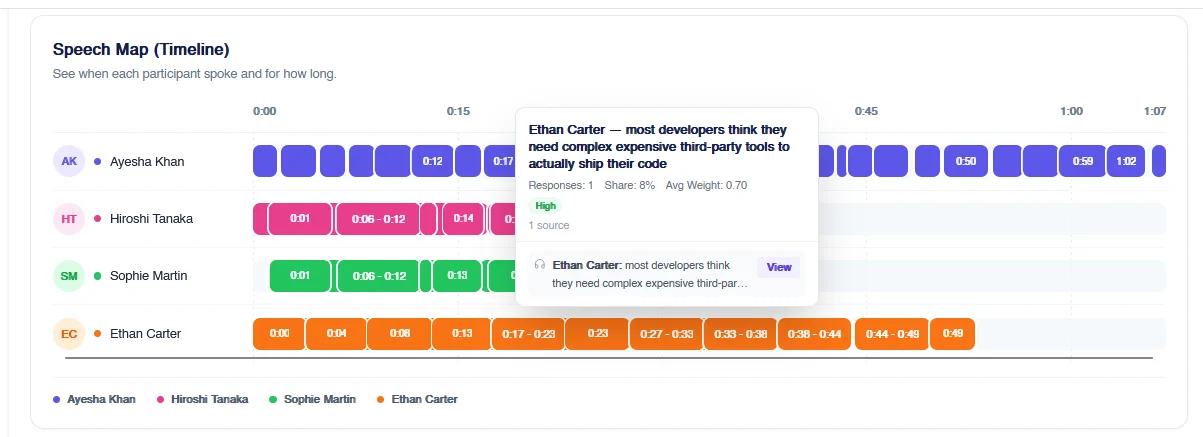
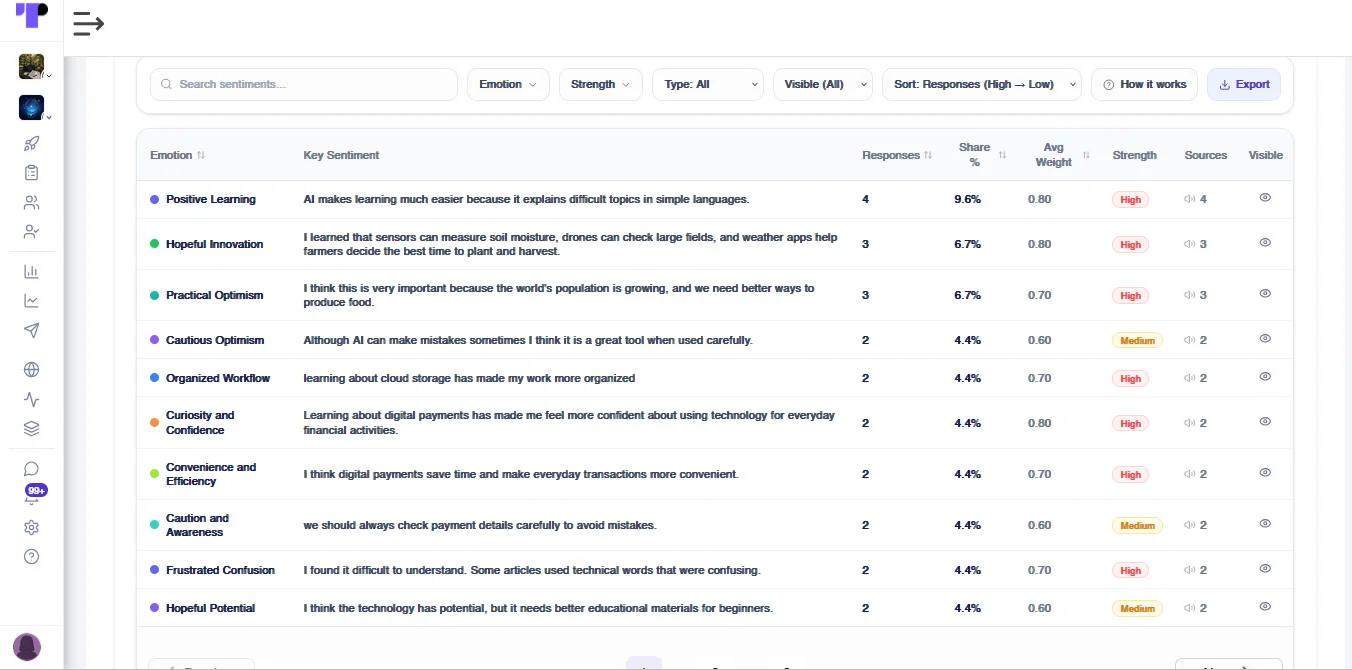
Findings can then flow into reports and analysis for stakeholders.
9. Supporting Research Across Languages and Regions
AI-moderated telephone interviews should not be limited to a single country or region. Companies operating across borders often need to conduct research with participants in different markets, languages, and accents.
For this reason, AI interviewers should support multiple languages and regional accents, allowing research teams to conduct telephone interviews across markets. Terapage supports research in more than 27 languages, helping researchers reach participants in diverse locations without creating a separate interview process for every market.
10. Making Conversations Feel Natural
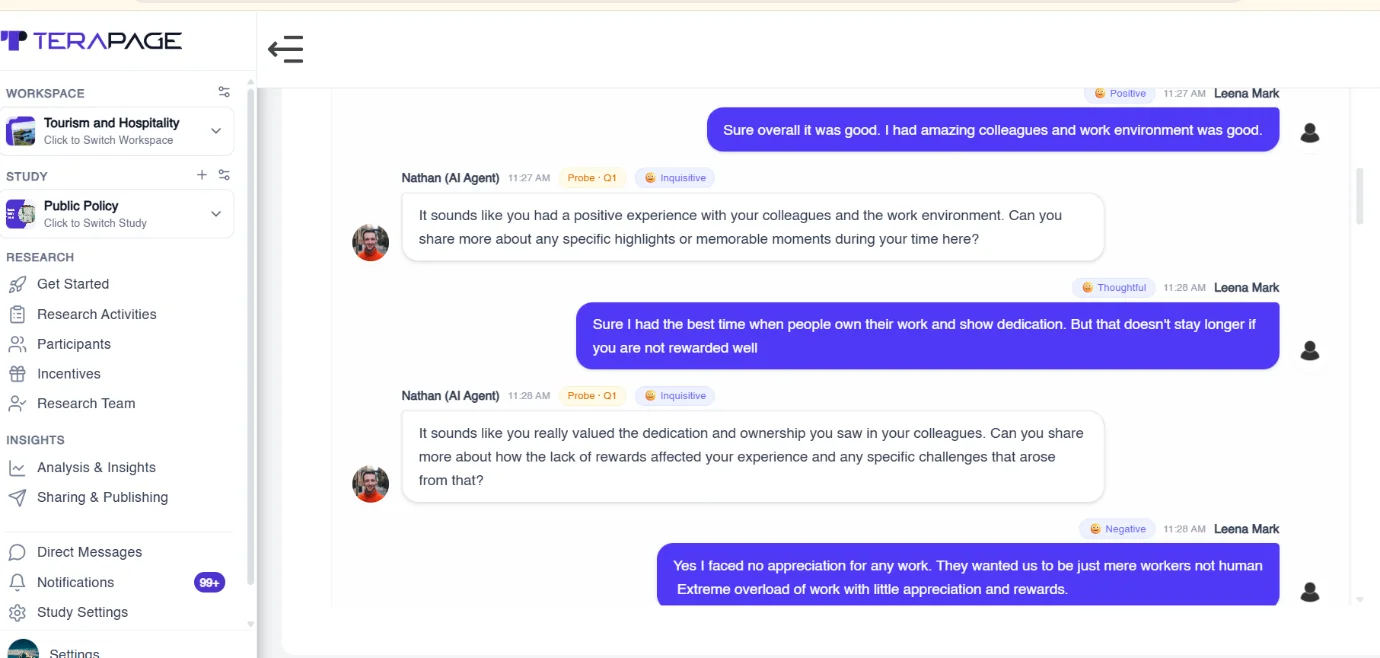
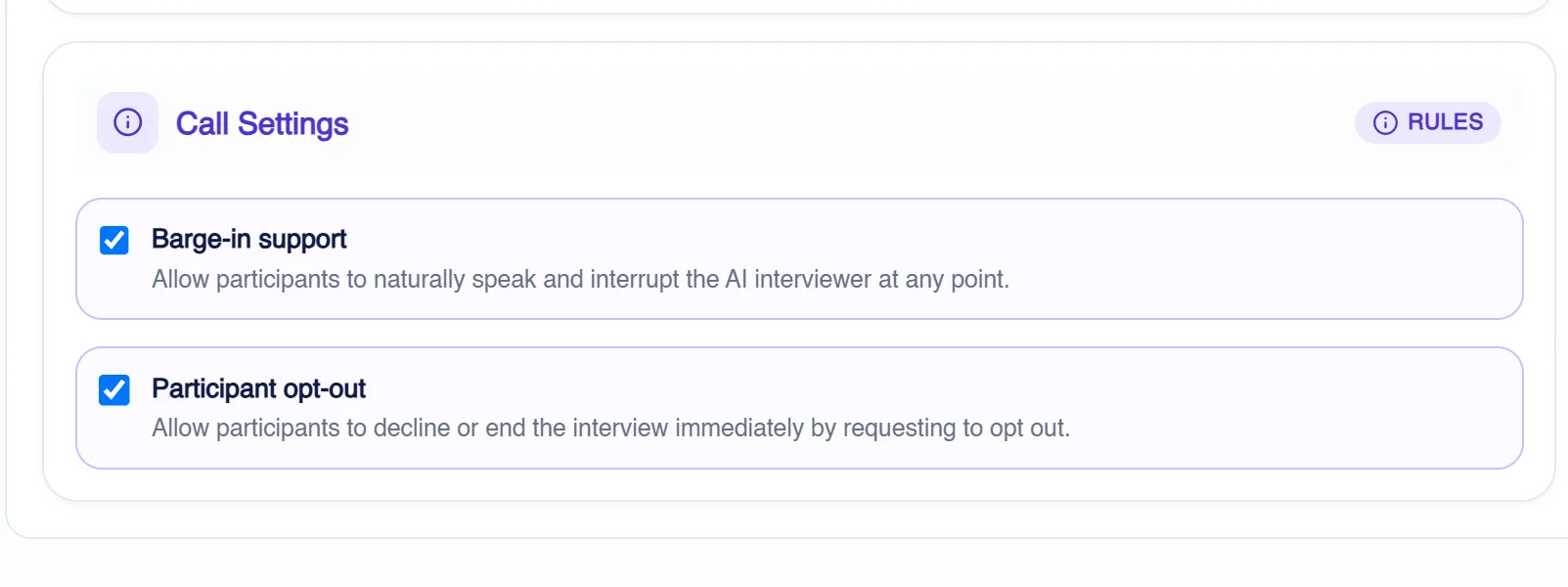
AI-moderated telephone interviews should not feel like robotic conversations. Research teams can enable barge-in support, allowing participants to speak, interrupt the AI interviewer, or add something when they have more to say. This makes the interview feel more like a natural conversation rather than a question-and-answer script.
Participants also have the option to decline or end the interview at any time by requesting to opt out. These Terapage settings give participants more control and create a more comfortable interview experience.
What Makes AI-Moderated Interviews Different?
1. Scalability
A human interviewer can typically manage a limited number of calls during weekdays, and adding more interviewers means more hiring, training, and quality control. An AI moderator can run dozens or hundreds of interviews simultaneously, with the same question structure and probing logic applied to every call. A study that would take a team of interviewers several weeks to complete can often be finished in a few days.
2. Consistency
Human interviewers go through variations in terms of energy, phrasing, and how they react to an interesting or awkward answer. That variation can subtly influence responses. An AI moderator asks every participant the same core questions in the same way, which reduces one common source of bias in qualitative research, even as it adapts its follow-up questions to what each participant actually says.
3. Affordability
Traditional CATI and telephone interviews require a large number of interviewers, particularly local moderators, requiring hefty budget allocations (see Terapage pricing for comparison). However, AI moderation has removed the need for a large team of trained interviewers, making research less expensive and more results-oriented in a very short span of time.
4. Globally Available
An AI moderator doesn't need sleep or shift schedules. AI moderation of telephone interviews has made it easier to reach participants in different regions and time zones within the same study window. It also allows a call to be re-attempted within minutes rather than waiting for an interviewer to be free. By the time the research team gets back to their desks the next day, AI moderators have collected hundreds of responses, with real-time analysis already under way.
5. Real-Time Analysis
Traditional telephone research relies on manual coding and transcription of interviews conducted over months. AI-moderated telephone interviews, by contrast, are powered by AI insights tools that immediately transcribe, code, tag, and analyse the responses as they start coming in.
The Future of AI-Moderated Telephone Interviews Is Conversational
AI-moderated telephone interviews or CATI bring speed and scale to a research method that has traditionally required significant time and manual effort. Researchers can collect structured conversations with the help of AI moderators based on AI-driven follow-up questions. They can also analyse responses faster than before while still capturing the detail that makes telephone interviews valuable.
The real shift is not from human research to AI research. It is from slow, manual processes to a research workflow where teams can spend less time managing interviews and more time understanding the people behind the data.
With Terapage, researchers can recruit and manage participants, configure AI moderators, conduct telephone interviews, capture and transcribe responses, and analyse findings, all within one research platform. This means less time moving between different tools and more time focused on what matters, i.e. hearing people's experiences, understanding their responses, and turning them into useful research insights. Terapage also offers AI-moderated chat, voice, and video interviews on the same platform.
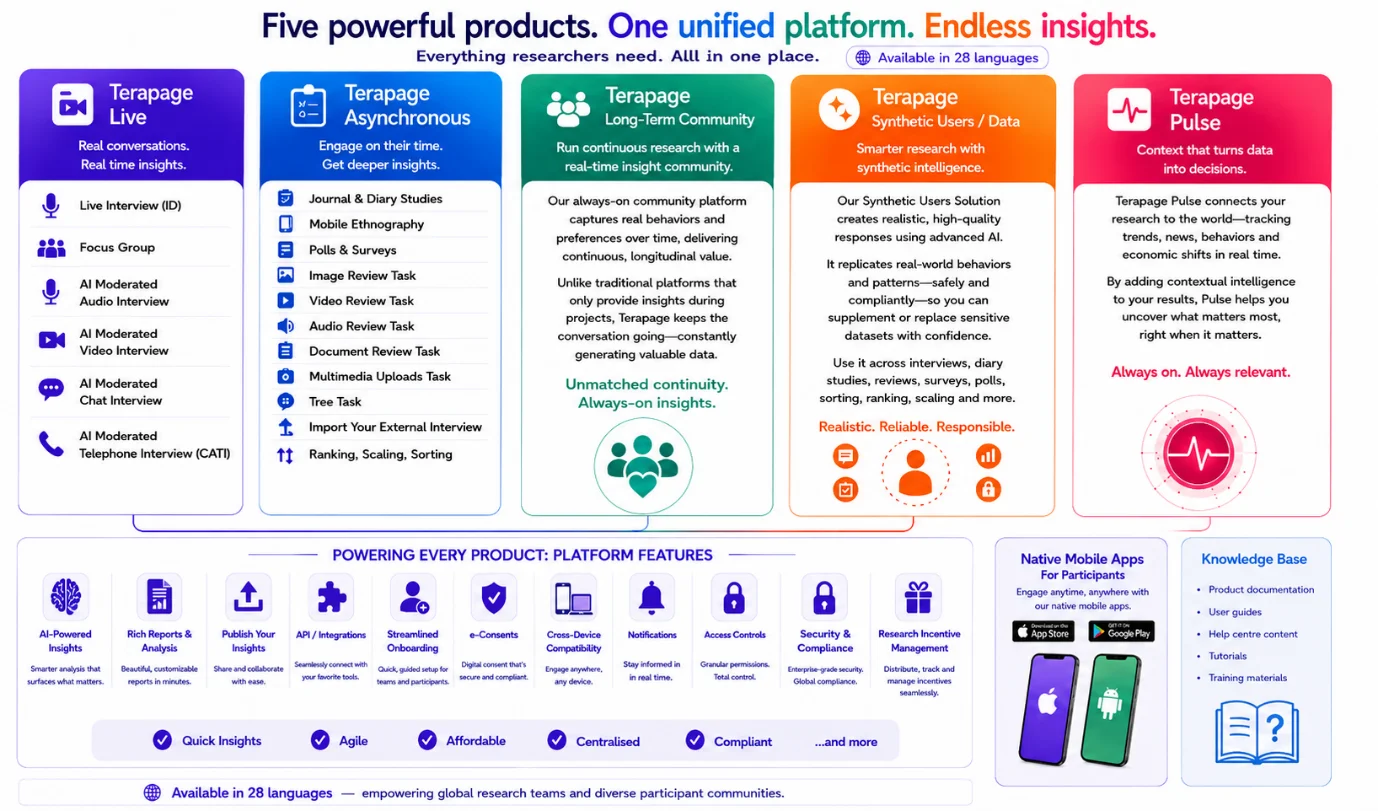
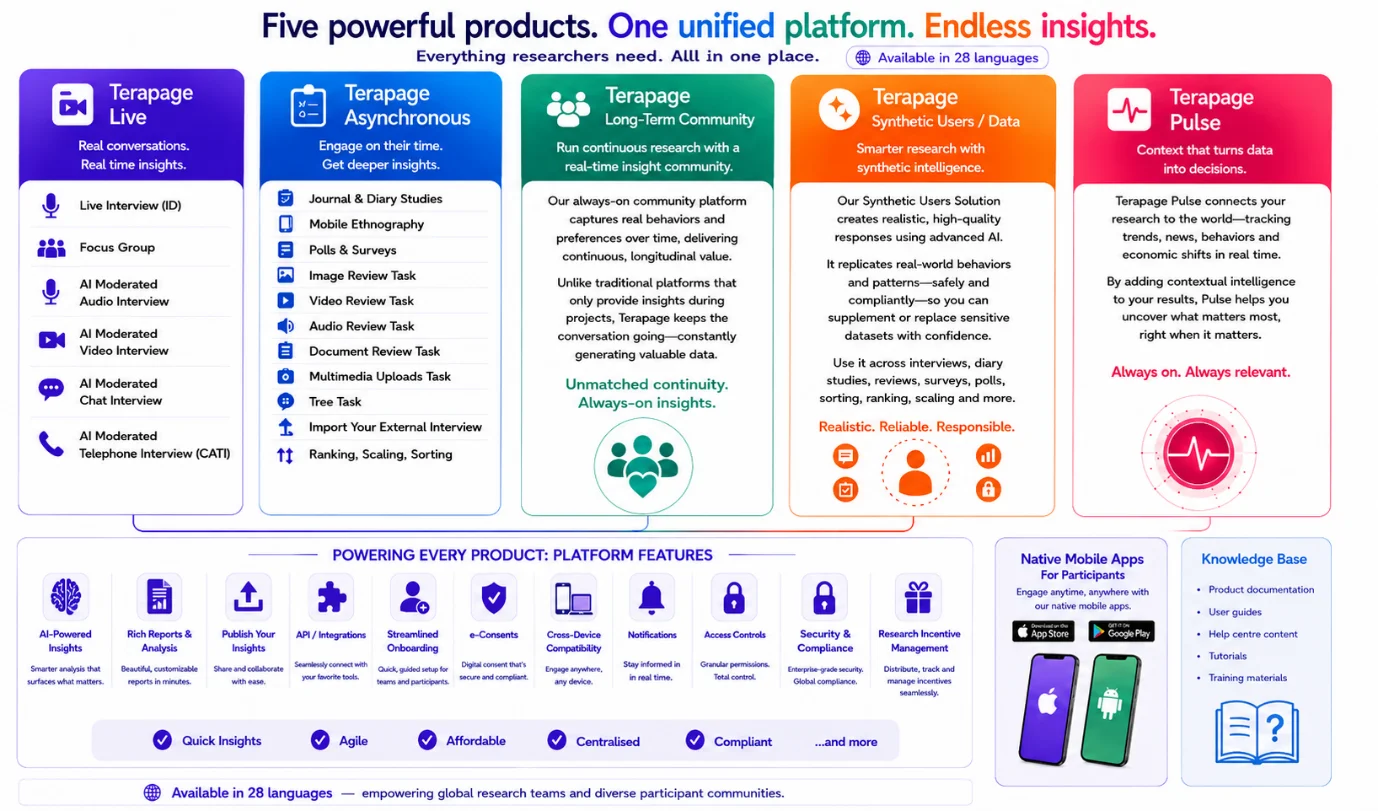
Figure 26: Terapage, an AI-powered, all-in-one modern market research platform.