Sign up with Google
 Sign in with Zoho

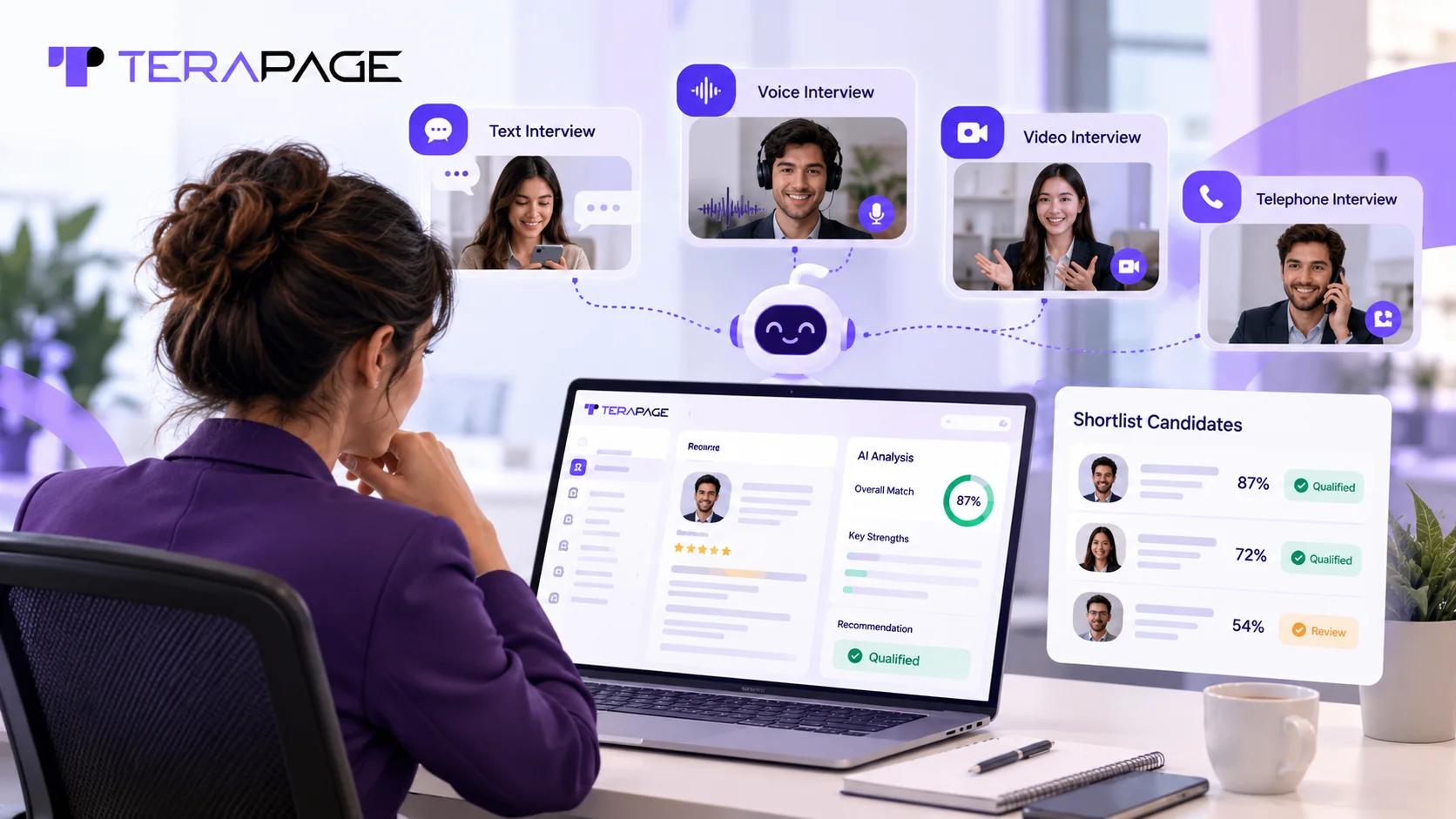
Quick answer: To screen candidates faster with AI-moderated interviews, define the role's requirements, let AI draft screening questions and a scoring rubric from the job description, run interviews by text, voice, video or phone with adaptive probing, then review AI analysis to shortlist qualified candidates. Recruiters approve the questions and rubric, and they make the final hiring decision.
Key takeaways
- An AI-moderated interview is a structured conversation led by AI: it asks your questions, follows up on vague answers and scores each candidate against your requirements.
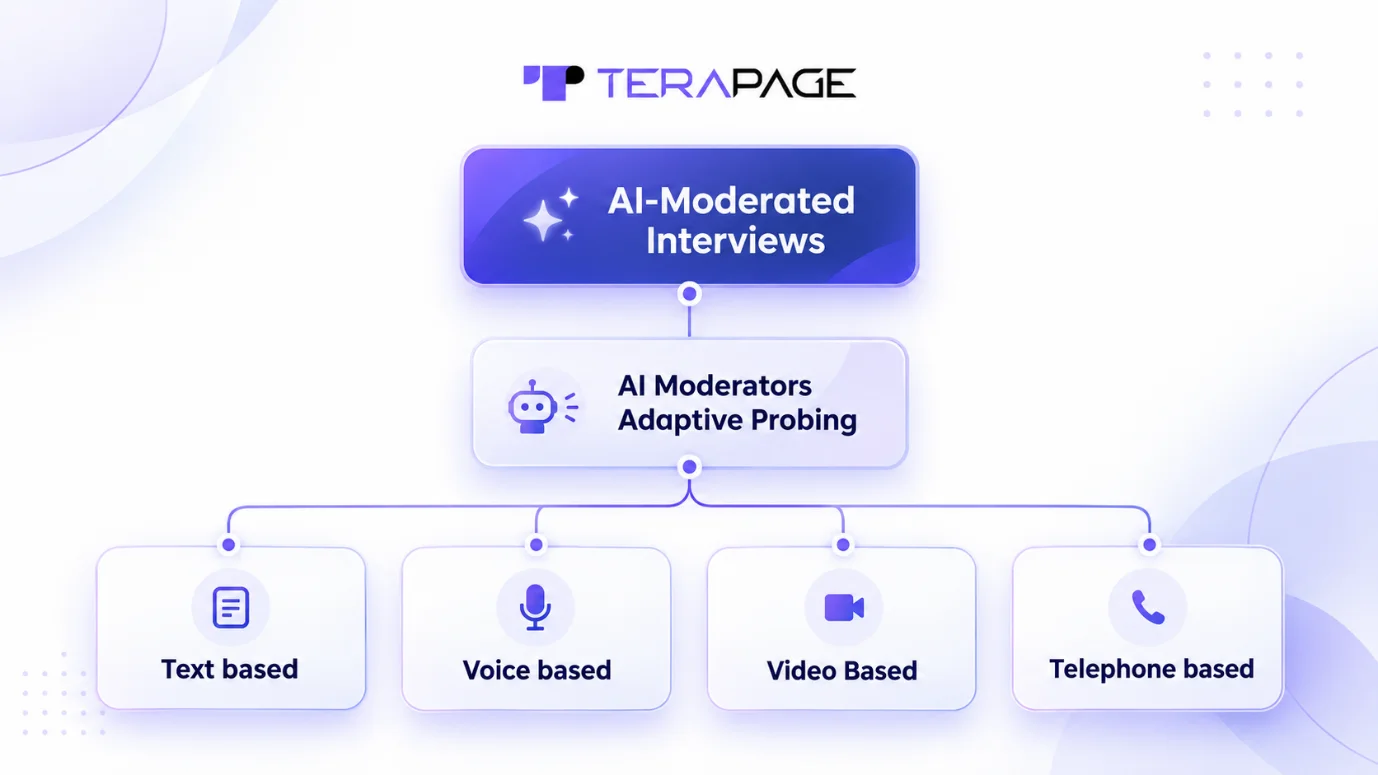
- There are four formats: text (including WhatsApp), voice, video and telephone.
- Faster screening follows seven steps, from defining the role to sharing recruitment reports with hiring managers.
- Each rubric requirement has a label, a category, a must-have flag, a weight from 1 to 100 and a plain-language definition.
- Recruiters review AI-generated questions and rubrics before launch, see full transcripts afterwards, and keep the final hiring decision.
A recruiter opens their inbox on Monday morning. More than 300 applications for a single role.
Spreadsheets are growing, calendars are filling, and hiring managers are asking the same question:
Have we found the right candidates yet?
Traditional screening methods are slow and time-consuming. Recruiters spend hours reviewing resumes, scheduling calls, conducting repetitive screening interviews, taking notes, and preparing summaries. While this process works, it can become difficult to manage when hiring at scale.
At the same time, candidates expect faster responses, flexible interview timings, and a more engaging recruitment experience.
This is where AI-moderated interviews are supporting recruitment teams in screening potential candidates.
AI does not replace human recruiters; it assists them in finding the right candidates by automating screening tasks, conducting structured conversations, analysing responses, and providing consistent evaluations. Recruiters and HR teams can then spend more time building relationships with shortlisted candidates and making informed hiring decisions.
In this article, we explore how AI-moderated interviews work, the different interview formats available, and how organisations can use them to screen candidates faster and more efficiently.
What Is an AI-Moderated Interview?
AI-moderated screening interview (noun): a structured candidate interview led by an AI moderator that asks the recruiter's questions, follows up on vague or interesting answers in real time, and scores each candidate against the role's requirements. Also called an AI screening interview or AI interview for recruitment.
An AI-moderated interview is a structured conversation led by an AI instead of a person. It asks your questions, listens to the answers, follows up when something is vague, and scores each candidate against the requirements you set. It follows the principle of adaptive probing, so it can recognise vague, incomplete, or particularly interesting answers and respond with a relevant follow-up question in real time.
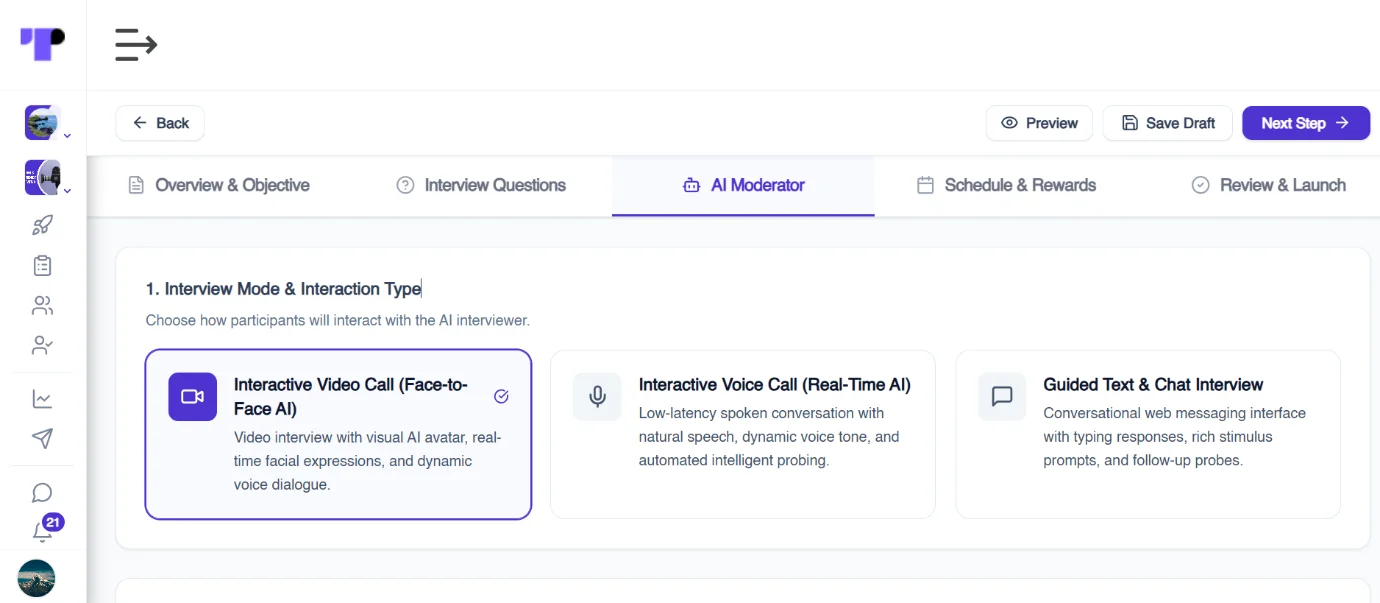
What Are the Four Types of AI-Moderated Interviews?
Modern recruitment teams can use AI interviews in multiple formats depending on the role, candidate preference, and hiring objectives.
1. Text-Based AI-Moderated Interviews
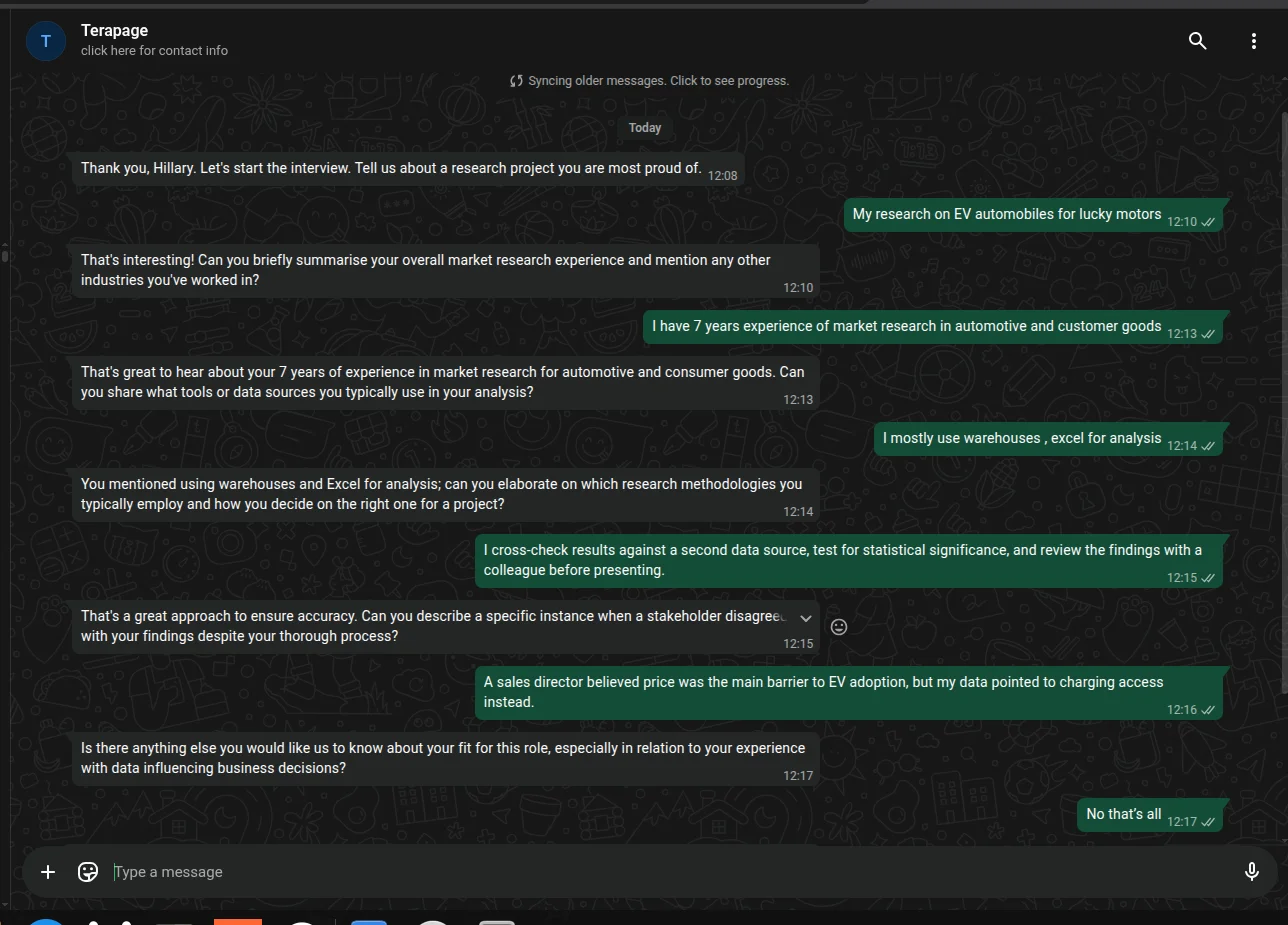
In this interview format, candidates interact with an AI interviewer through chat.
This format works well for:
- Initial screening
- Graduate recruitment
- High-volume hiring
- Customer support roles
- Remote recruitment
Text interviews are accessible, quick, and allow candidates to complete screening at their convenience. Read more about what works in AI-moderated chat interviews.
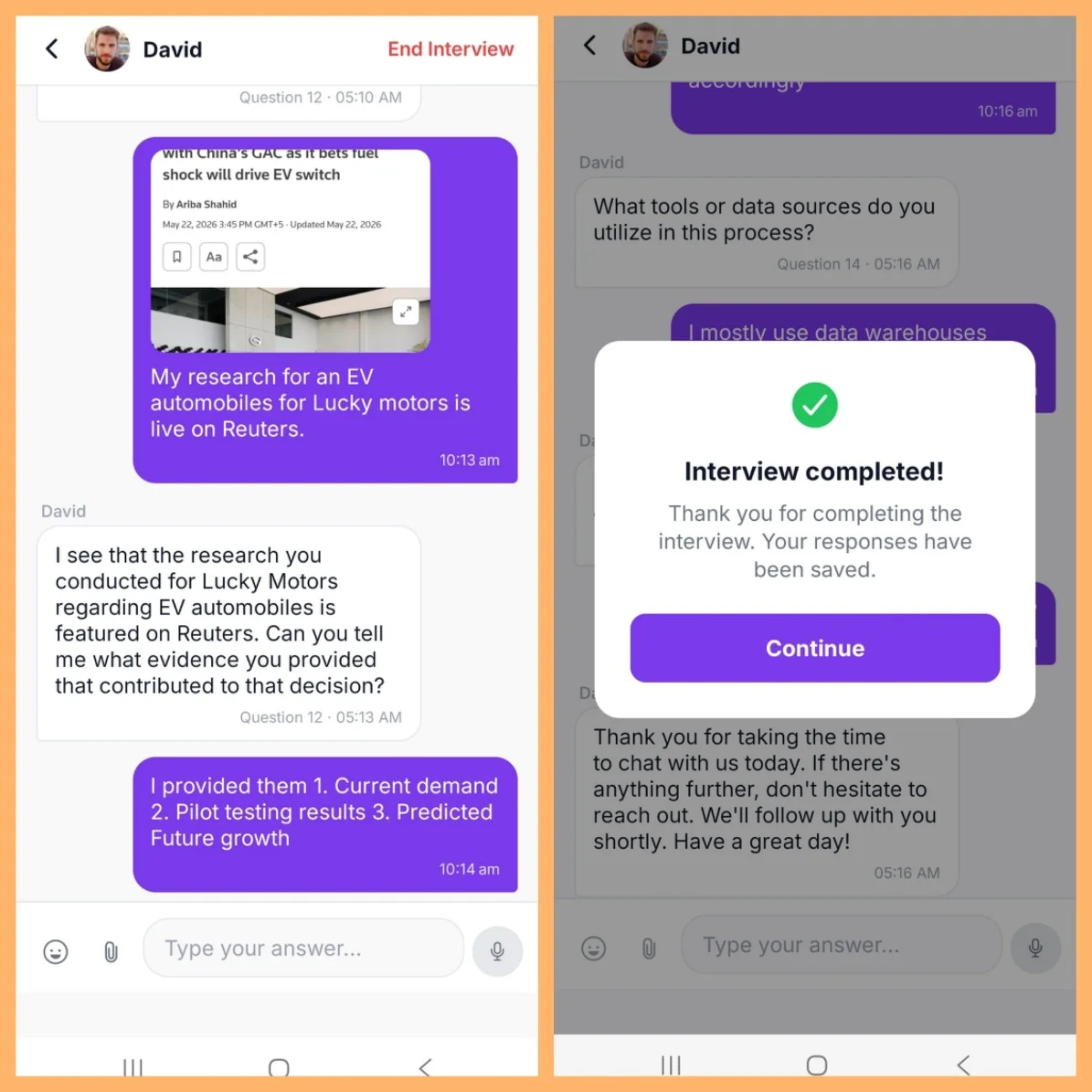
Terapage is mobile-compatible for both researchers and recruiters, making it easier to manage and monitor AI-moderated interviews on the go. With WhatsApp integration, recruiters can reach candidates through a familiar channel and conduct conversational screening directly through their phones.
2. Voice-Based AI-Moderated Interviews
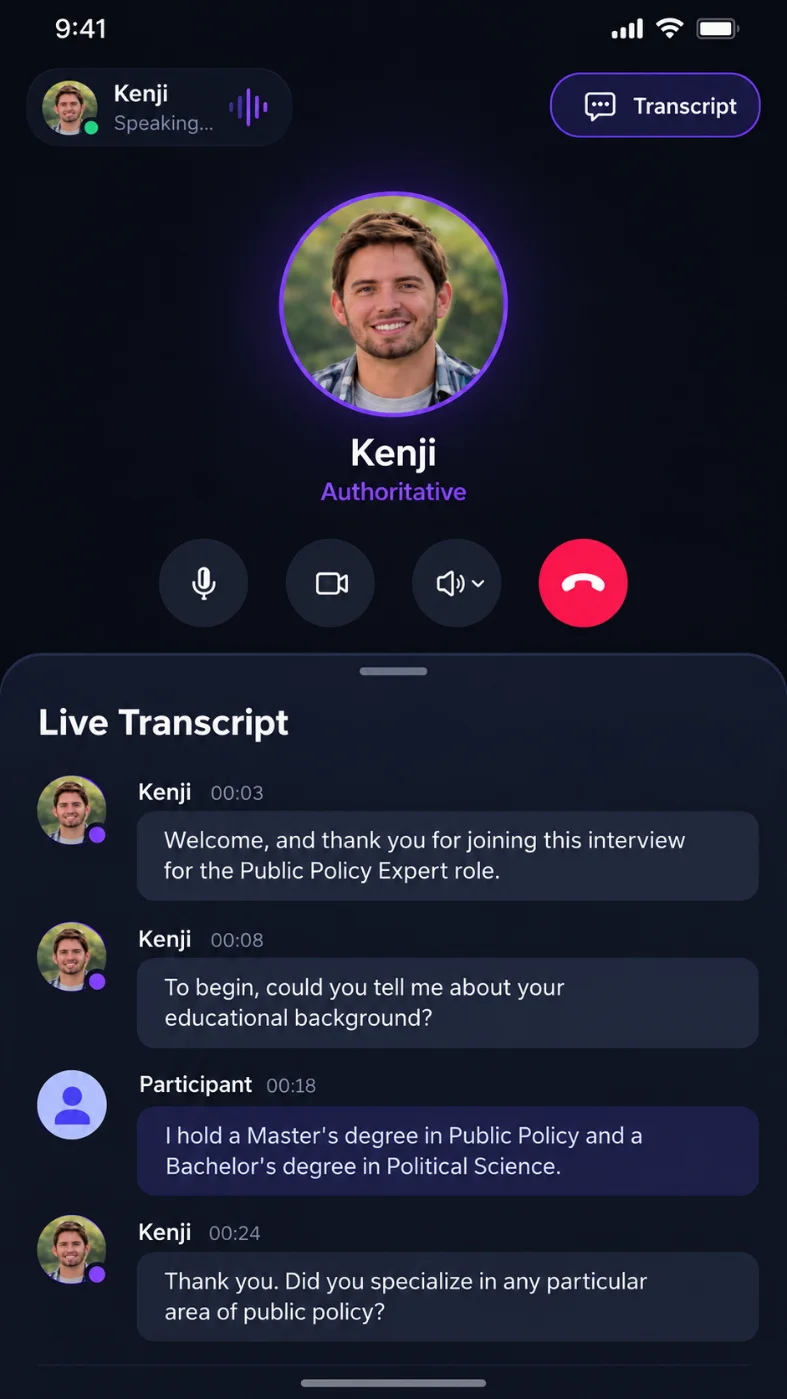
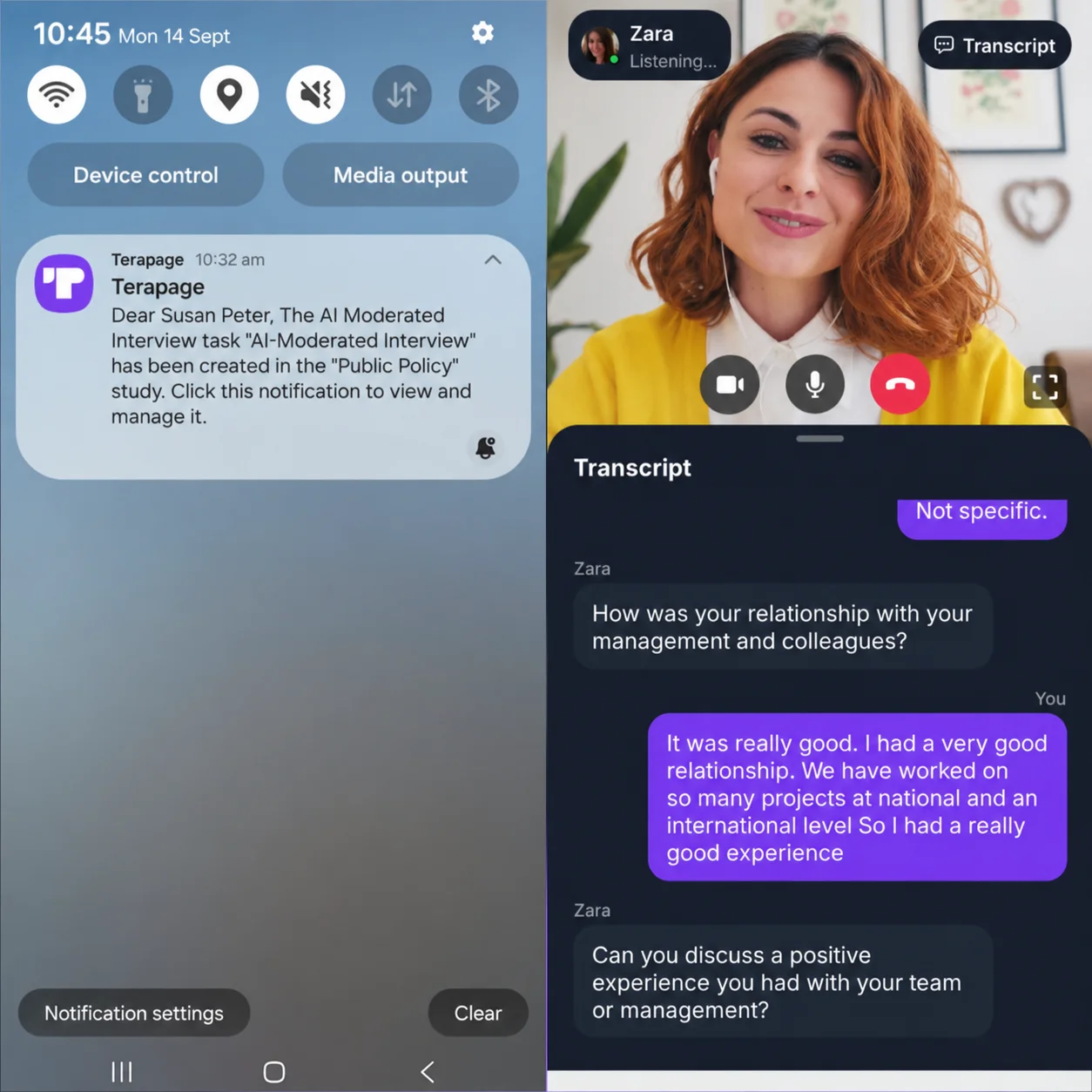
This interview format allows candidates to speak naturally with an AI voice interviewer.
Voice-based AI interviews are best when recruiters intend to:
- Probe for additional details
- Capture tone and confidence
- Transcribe conversations automatically
Voice interviews create a more conversational experience compared to forms or questionnaires.
3. Video-Based AI-Moderated Interviews
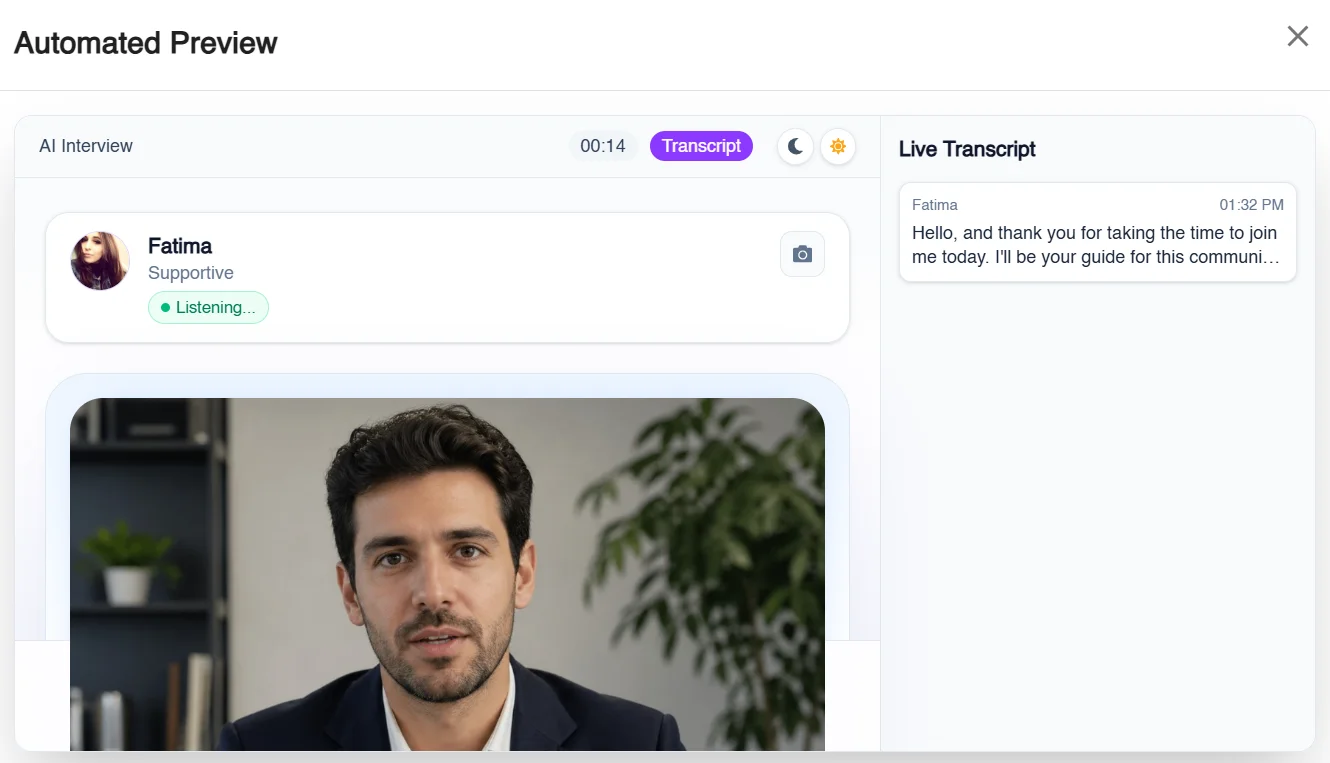
Video is the most widely used AI-moderated interview format for capturing on-screen confidence.
Recruiters can review:
- Verbal responses
- Communication skills
- Experience examples
- Behavioural competencies
Video interviews are often useful for leadership, sales, customer-facing, and communication-heavy roles.
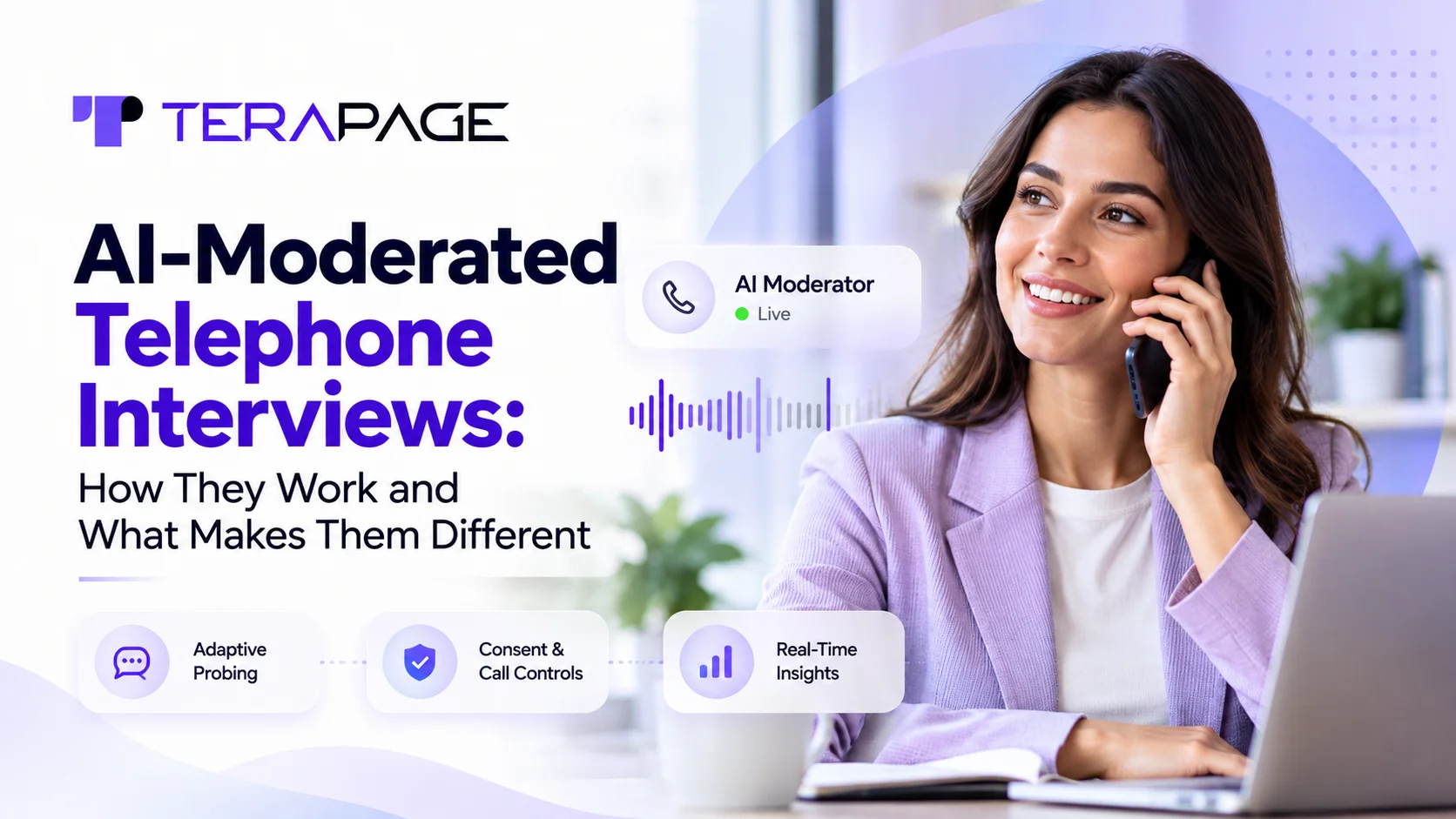
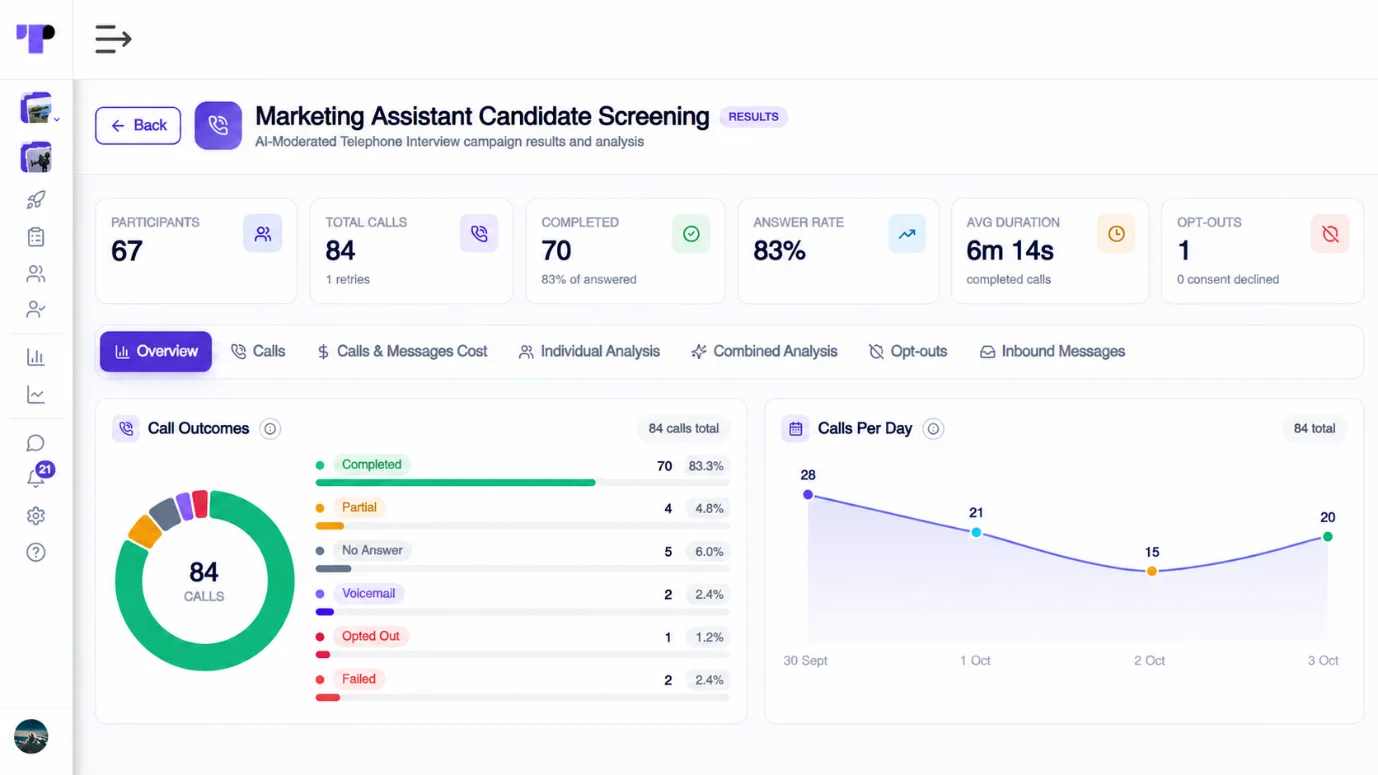
4. AI-Moderated Telephone Interviews
Telephone interviews combine conversational AI with traditional phone-based recruitment. Candidates receive scheduled calls in which AI conducts the interview naturally.
This is especially useful when:
- Candidates prefer phone communication
- Internet access is limited
- Large-scale recruitment is required
- Geographic reach is important
AI telephone interviews can conduct thousands of conversations while maintaining consistency.
AI-moderated interview formats for recruitment at a glance
Why Does Manual Screening Fall Short?
Three problems show up again and again:
- It eats time. Every phone screen takes a recruiter an hour, plus the back-and-forth of scheduling.
- It is inconsistent. Two recruiters ask different questions and weigh answers differently, so similar candidates get different outcomes.
- Candidates drop off. The longer people wait for a reply, the more likely they are to accept another job.
How Can AI-Moderated Interviews Make Candidate Screening Faster?
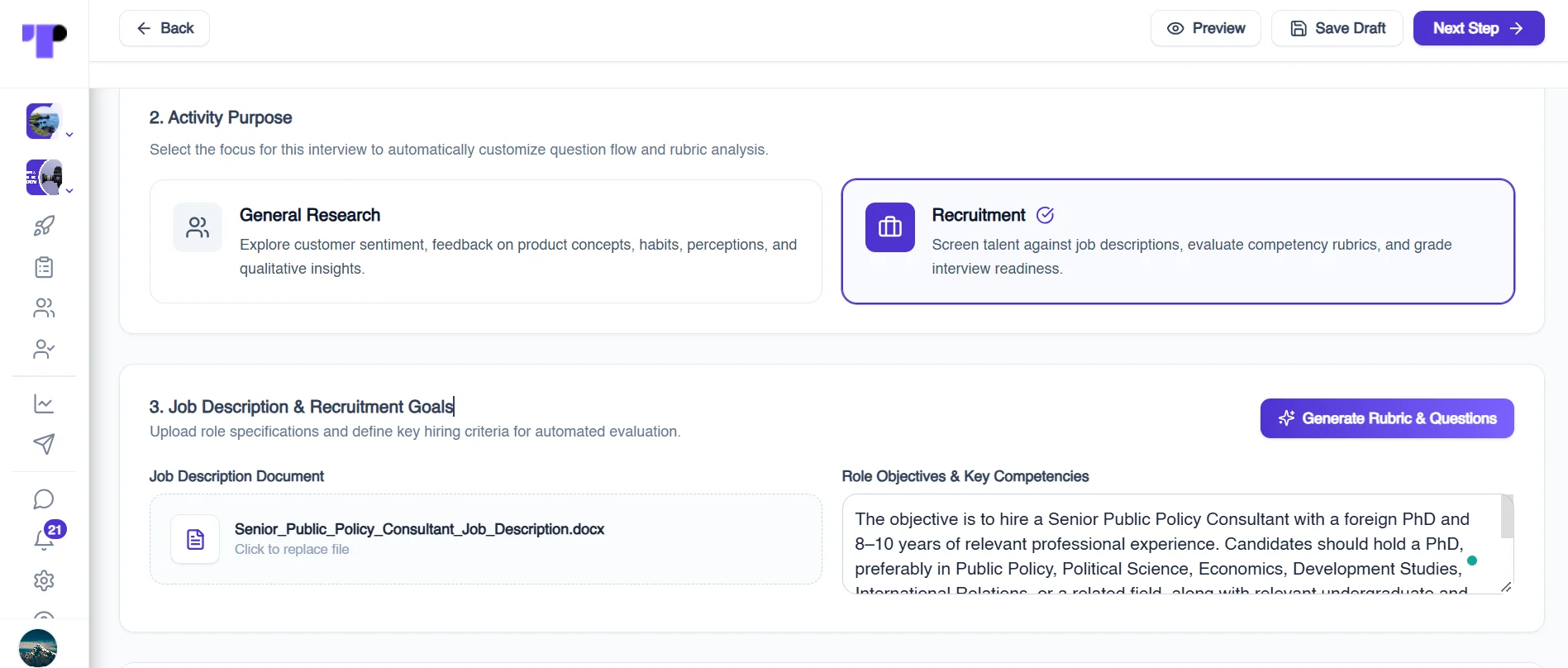
Step 1: Define Clearly What You Are Looking For
Good recruitment always starts with clear and concrete objectives. Before creating interview questions, recruiters need to be clear about what makes someone suitable for the role, such as:
- Demographics
- Required skills
- Experience level
- Behavioural competencies
- Education requirements
- Cultural fit indicators
- Language proficiency
- Technical capabilities
- Availability
For example, the objectives or job description for a customer support role may include:
- Strong communication skills
- Problem-solving ability
- Empathy
- Shift flexibility
- Previous support experience
These objectives become the foundation for AI-generated interviews.
Step 2: Let AI Help Create the Recruitment Questions
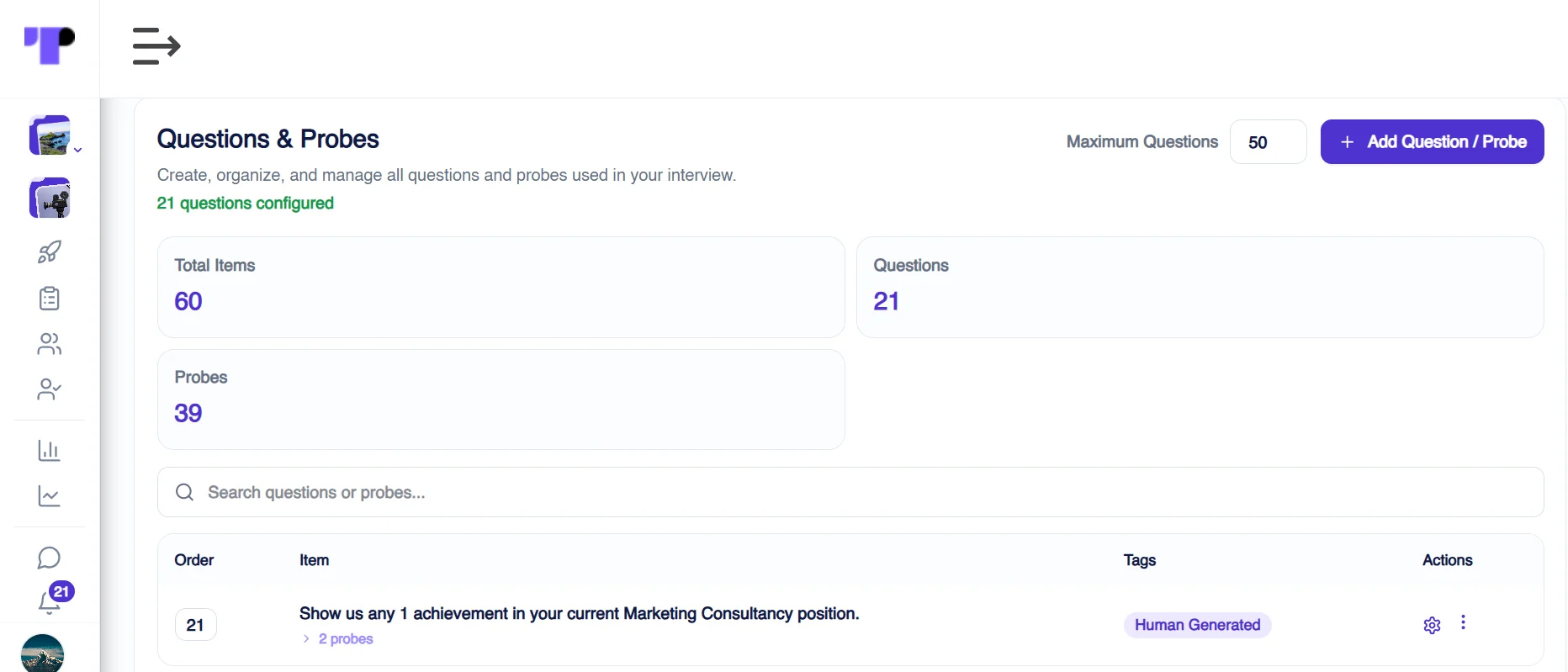
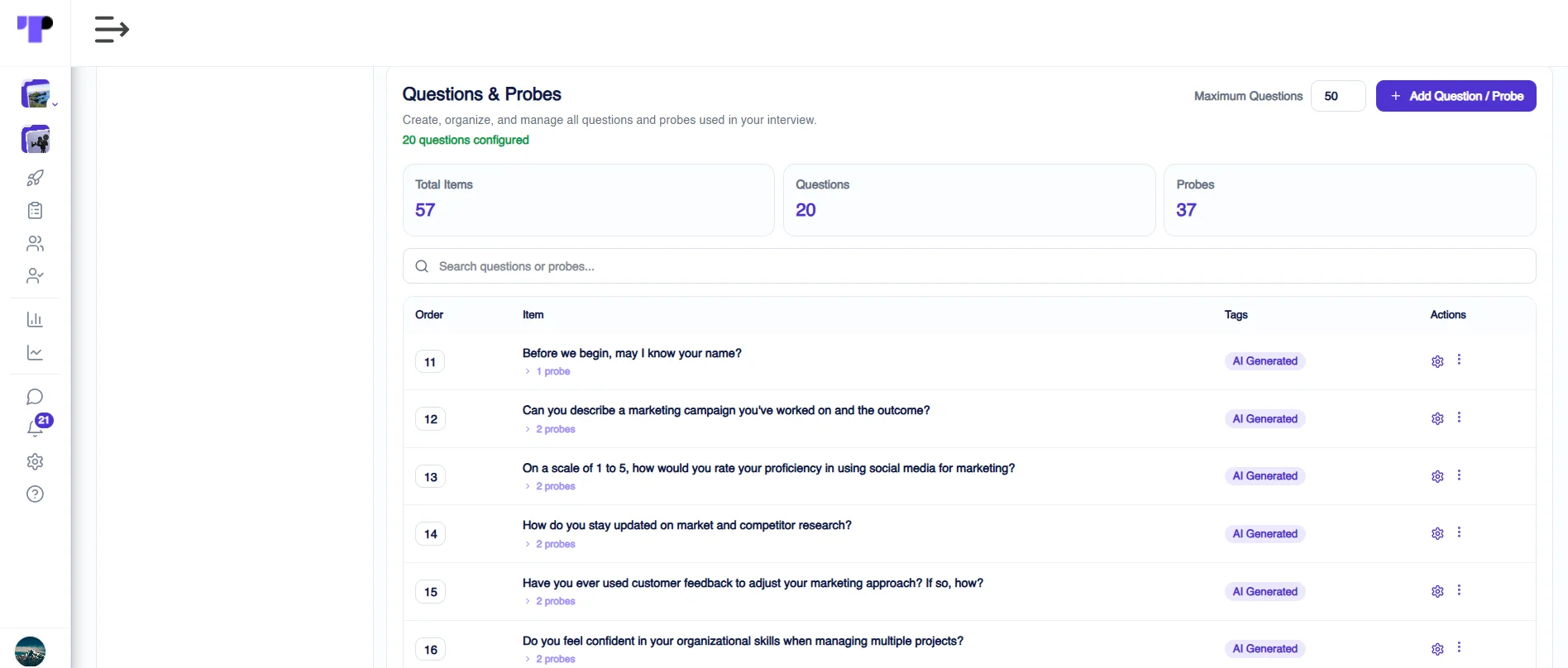
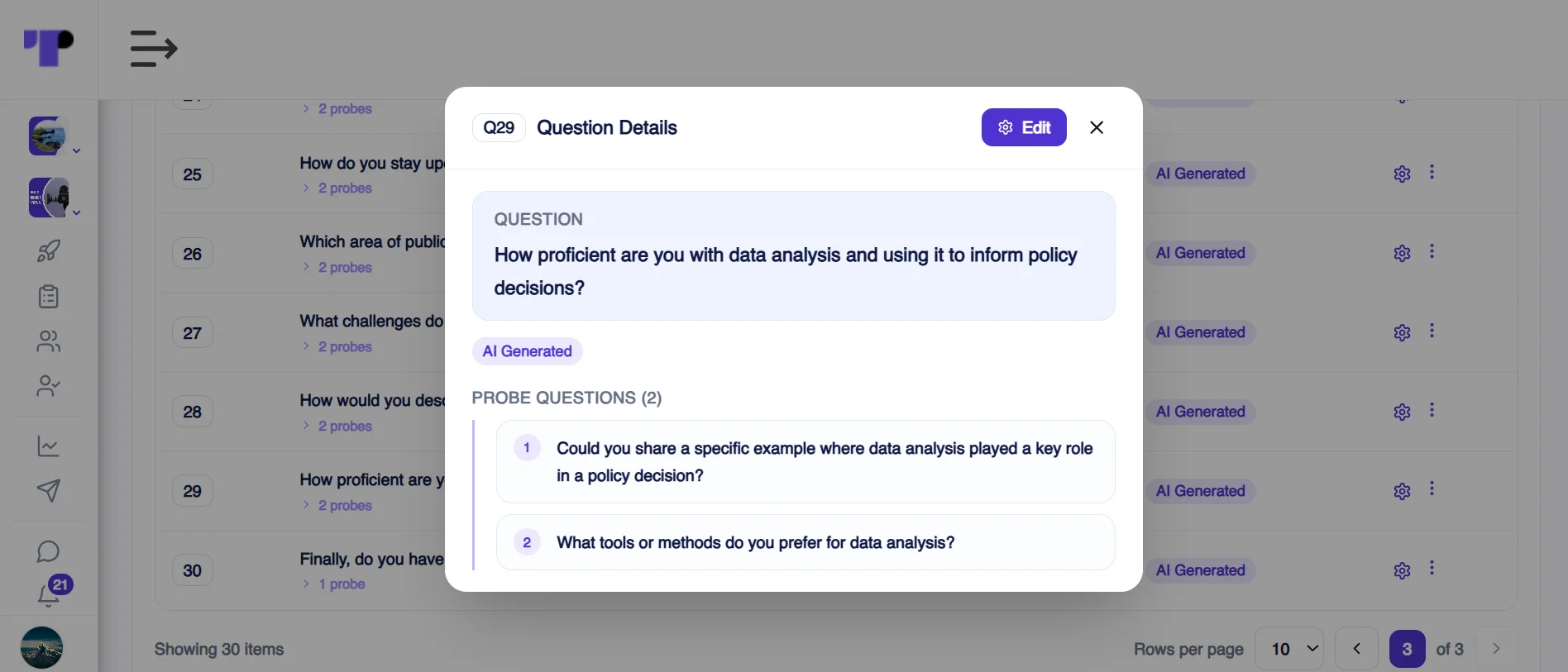
Creating screening questions for every new position can take time. AI can help recruiters generate questions based on the job description and recruitment objectives, or teams can start from ready-made research templates. For example, if the role requires strong problem-solving skills, the AI could generate a question such as:
“Tell us about a time when you had to solve a difficult customer problem.”
It could then suggest follow-up questions such as:
- What did you do first?
- Why did you choose that approach?
- What was the result?
- What would you do differently next time?
The recruiter can review these questions before the interview begins, keep the ones that are useful, remove anything unnecessary, and add their own questions.
Step 3: Create and Review the AI-Generated Recruitment Rubric Before Interviews
Recruitment rubric (noun): a scorecard of weighted requirements that the AI uses to rate each candidate after the interview. A must-have requirement can mark a candidate “not qualified” on its own, whatever the overall score.
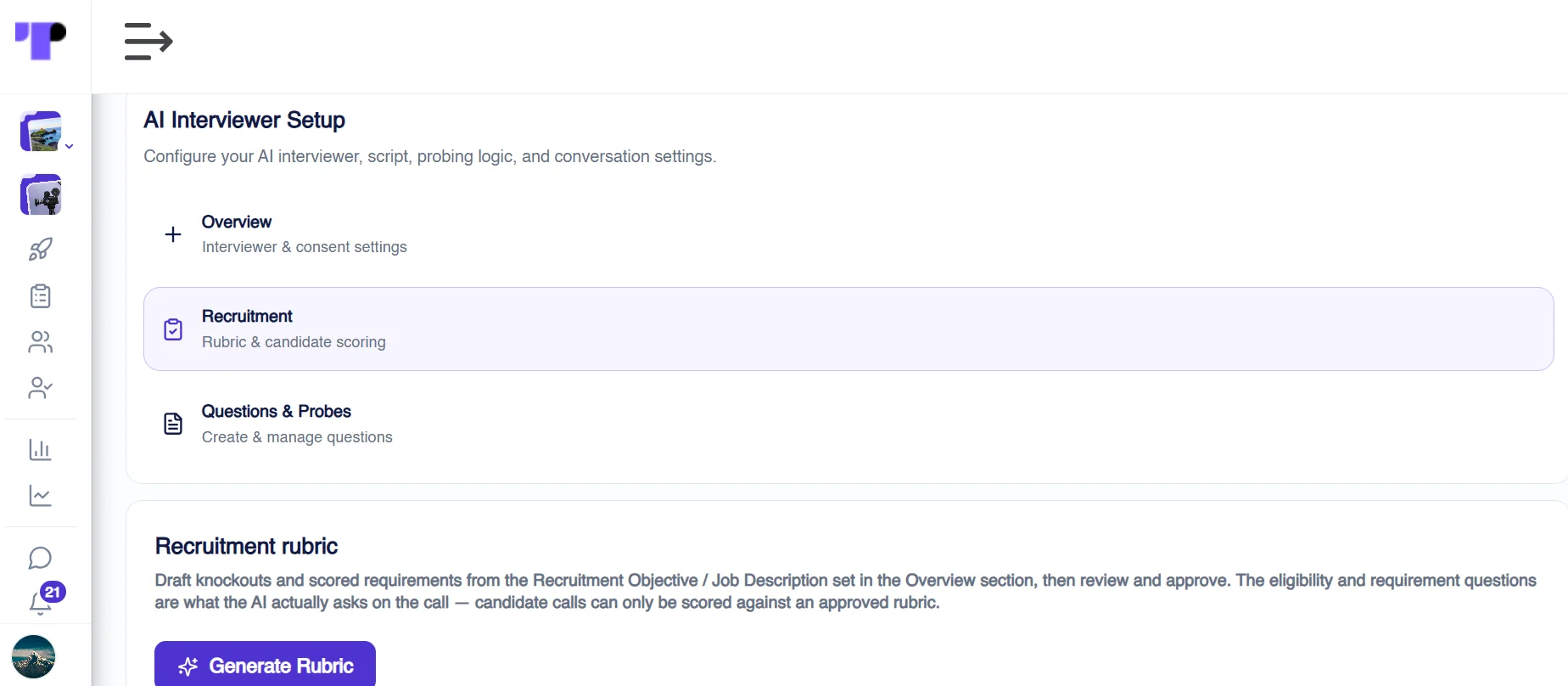
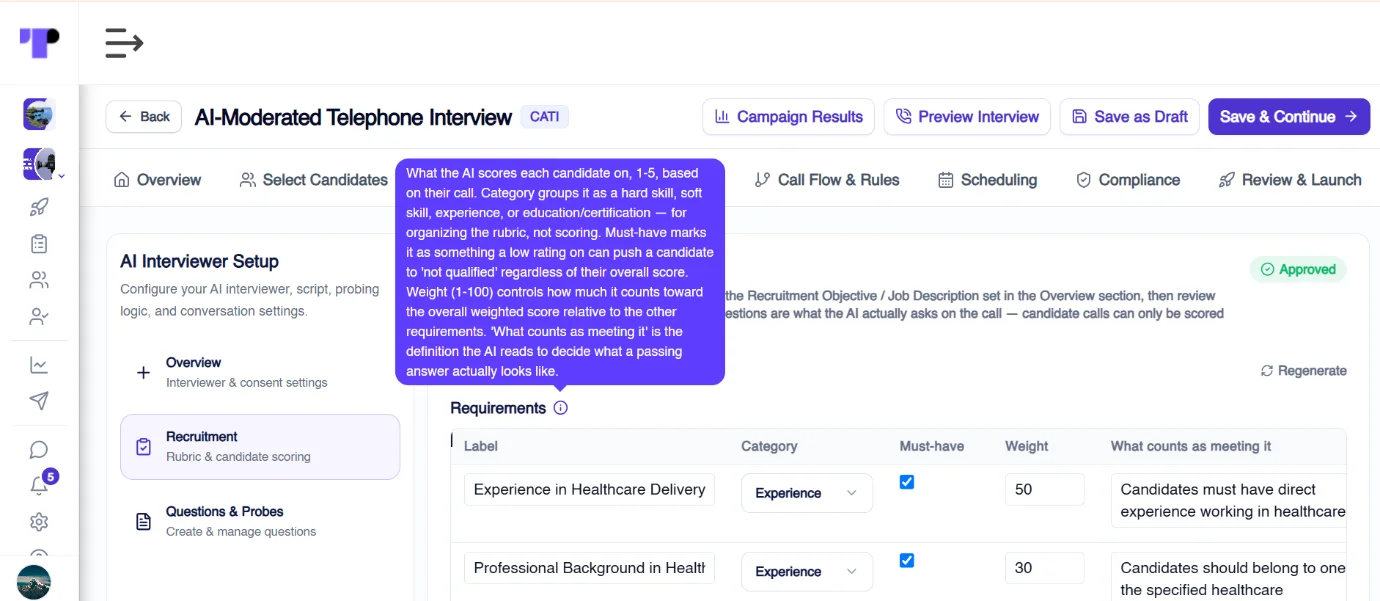
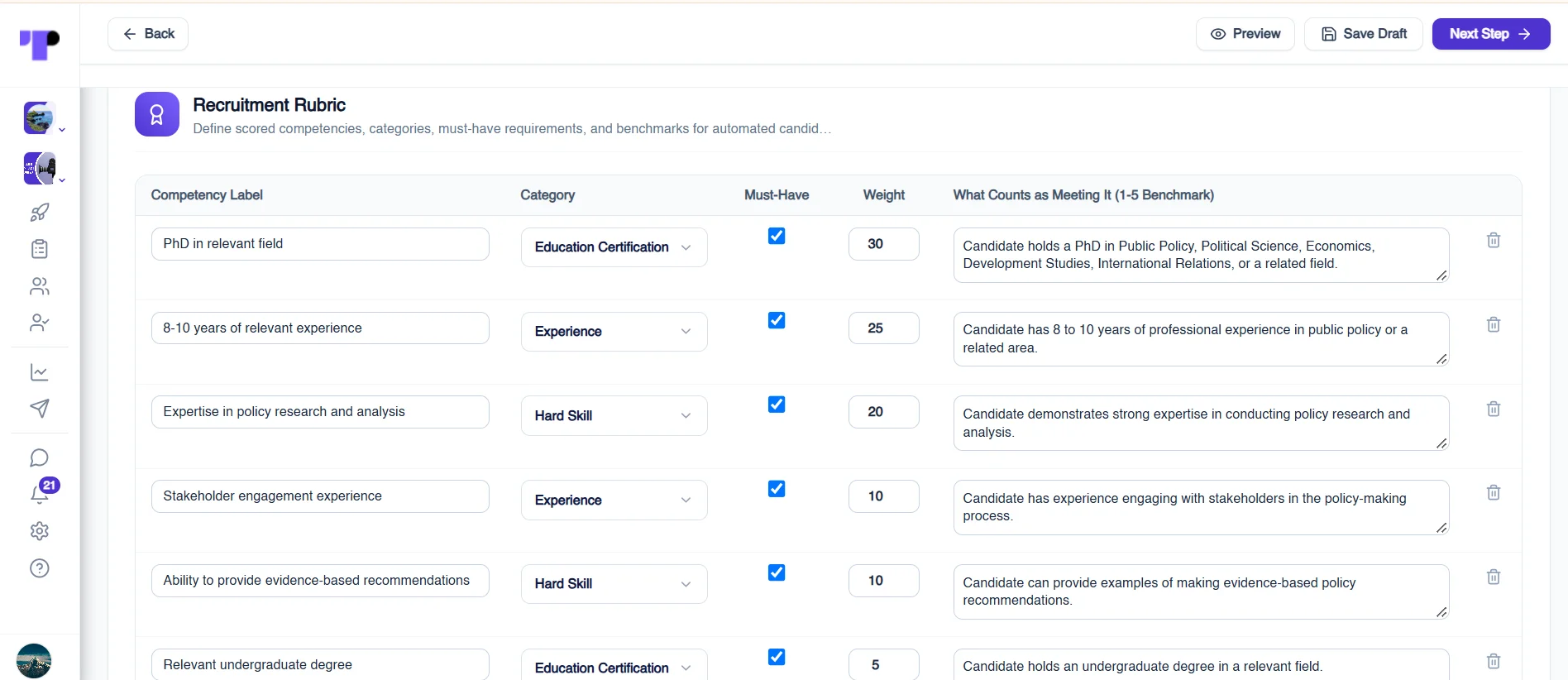
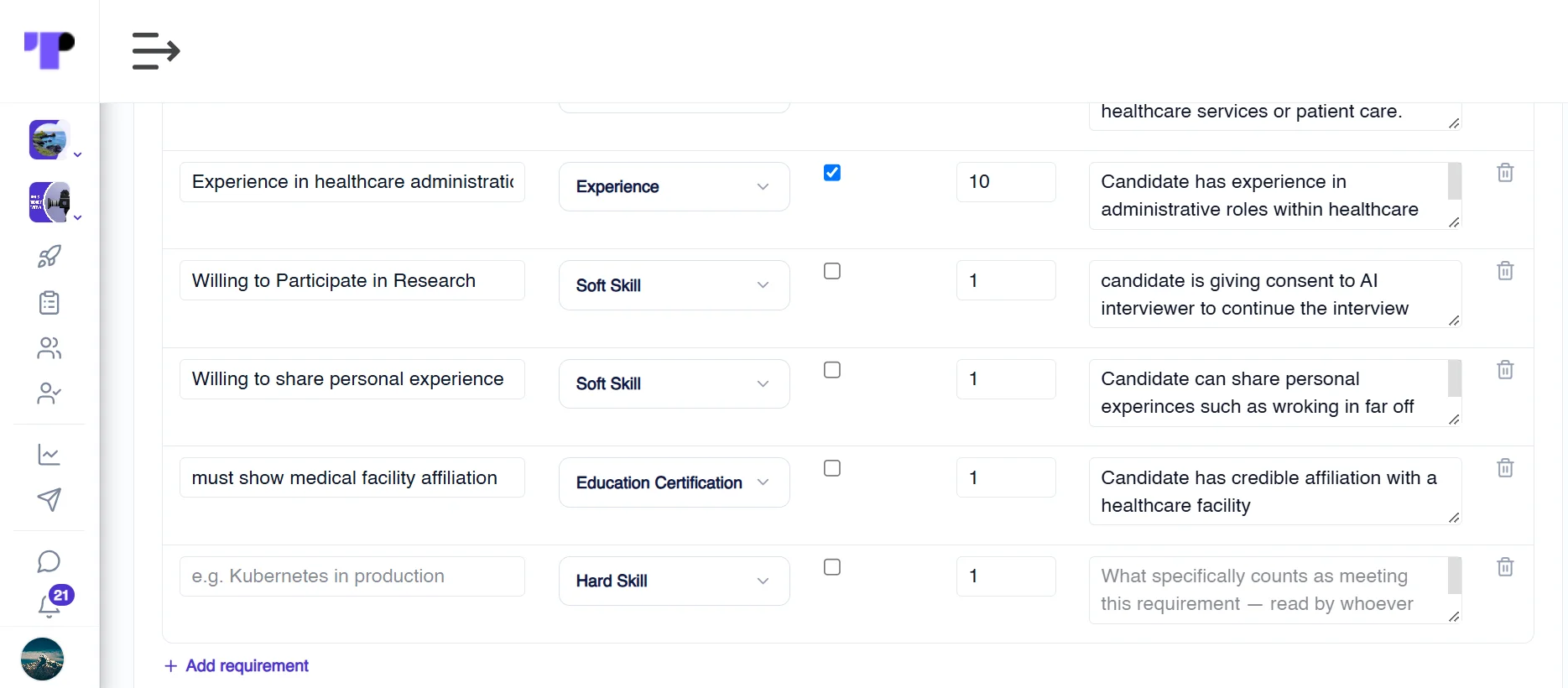
A rubric is simply a scorecard. The AI reads your objective and job description and drafts a list of requirements. Each requirement has:
- A label, for example “Professional experience in healthcare”.
- A category, such as experience, education and certification, leadership, communication, teamwork, or problem solving.
- A must-have flag, which means a low rating can mark a candidate “not qualified” regardless of their overall score.
- A weight from 1 to 100 that sets how much it counts toward the total score.
- A plain-language definition of what counts as meeting it, such as “2 to 10 years of experience”.
Take a real example. At Terapage, a recruiter hiring a sales executive might look for these areas:
Example screening areas for a sales executive role
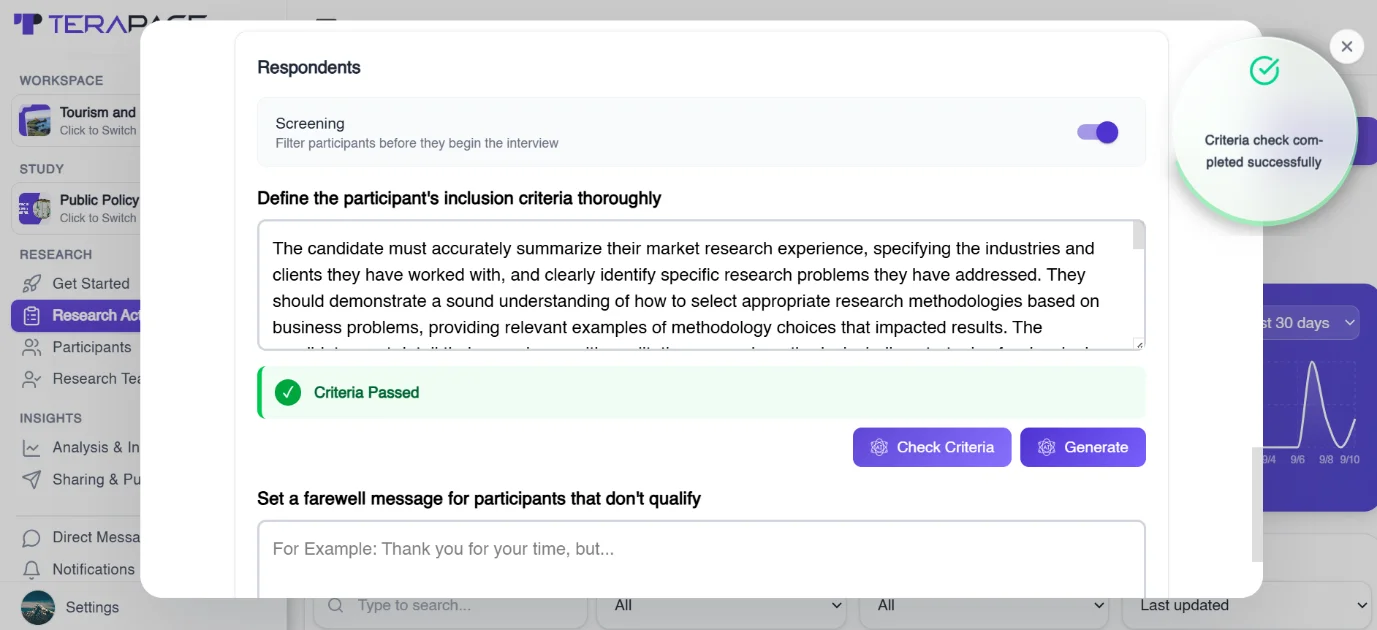
Terapage also helps recruiters and research teams build structured AI-moderated screening interviews with AI-generated questions, probes, and competency-based rubrics.
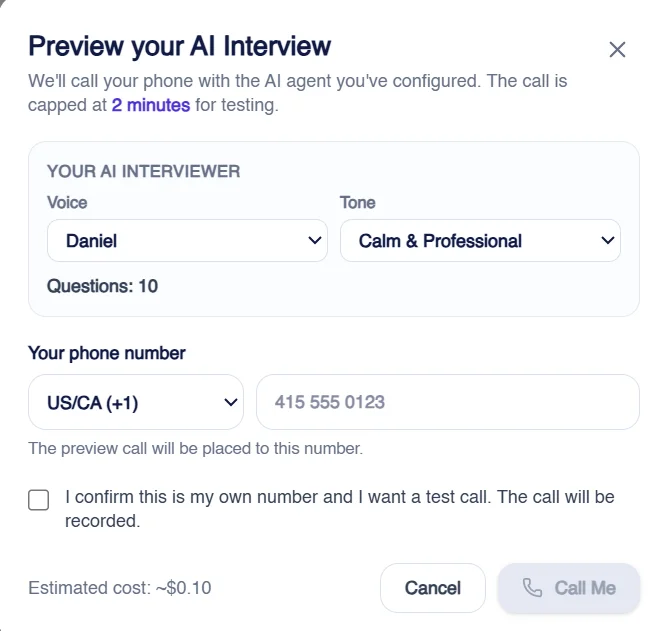
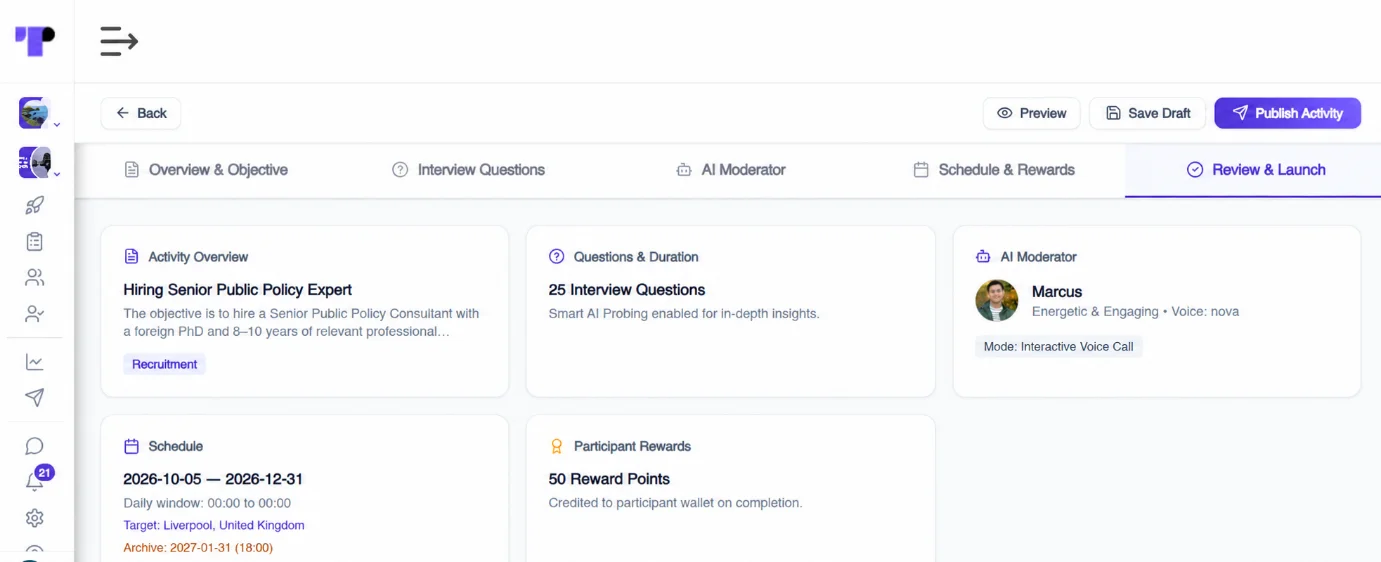
They can customise competency levels and preview the complete interview before launching it for candidate screening.
Step 4: Use Adaptive Probing to Understand the Candidate Better
This is one of the most powerful stages of AI-moderated interviews. A traditional screening questionnaire usually asks a question and then moves on. But candidates do not always give complete answers the first time.
For instance, a candidate says:
“I have expert-level skills in data analysis.”
That sounds positive, but there is still a lot the recruiter does not know.
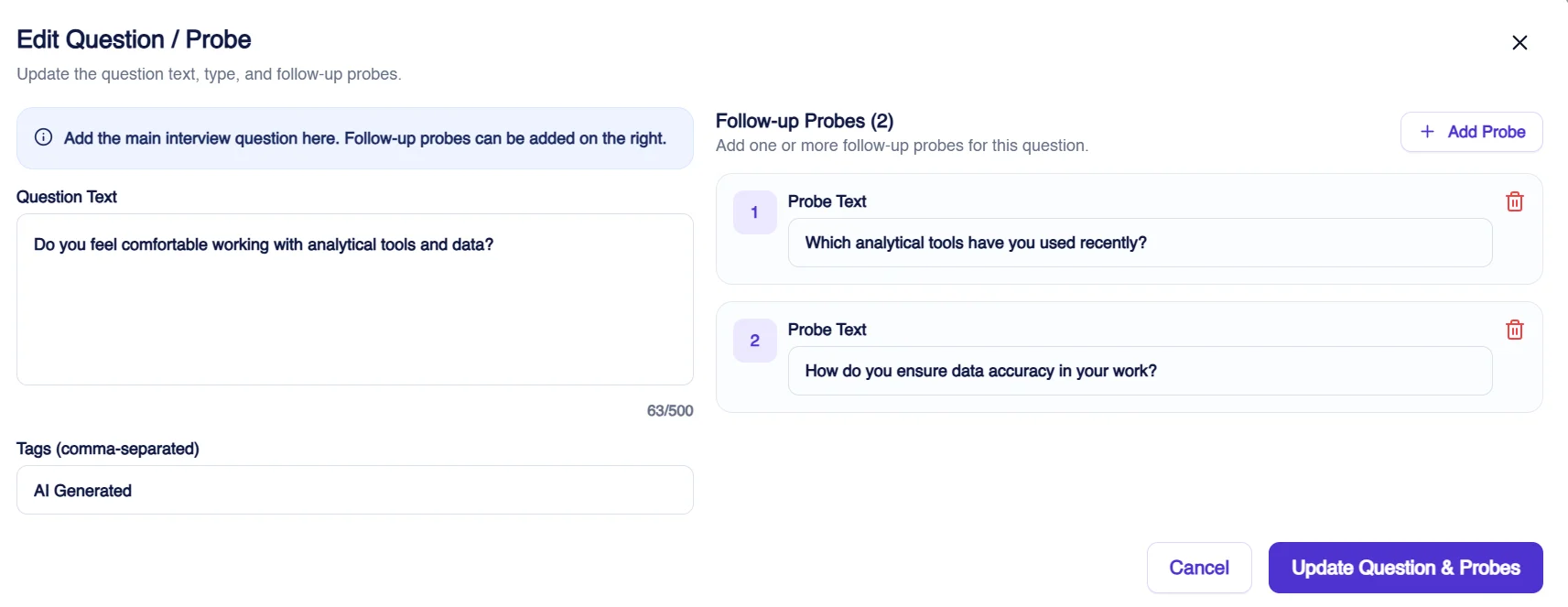
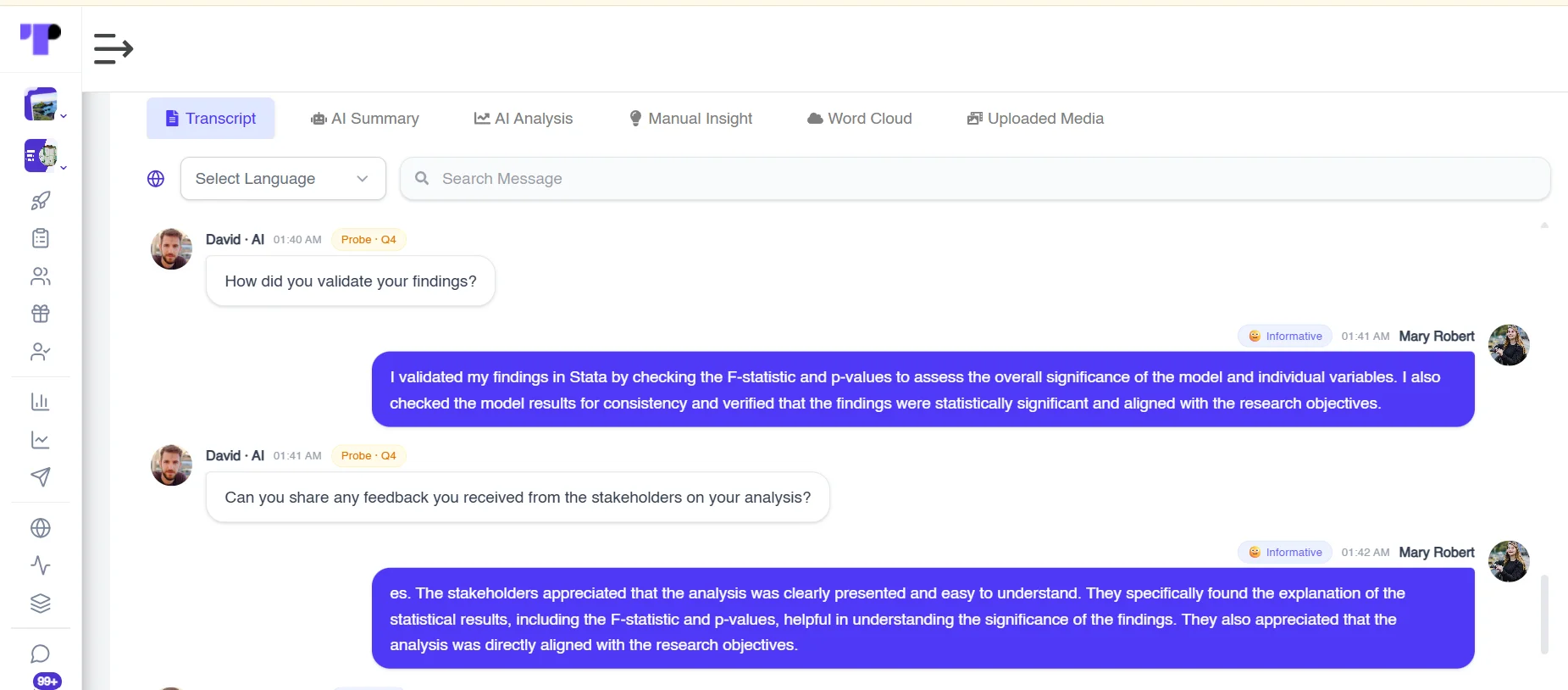
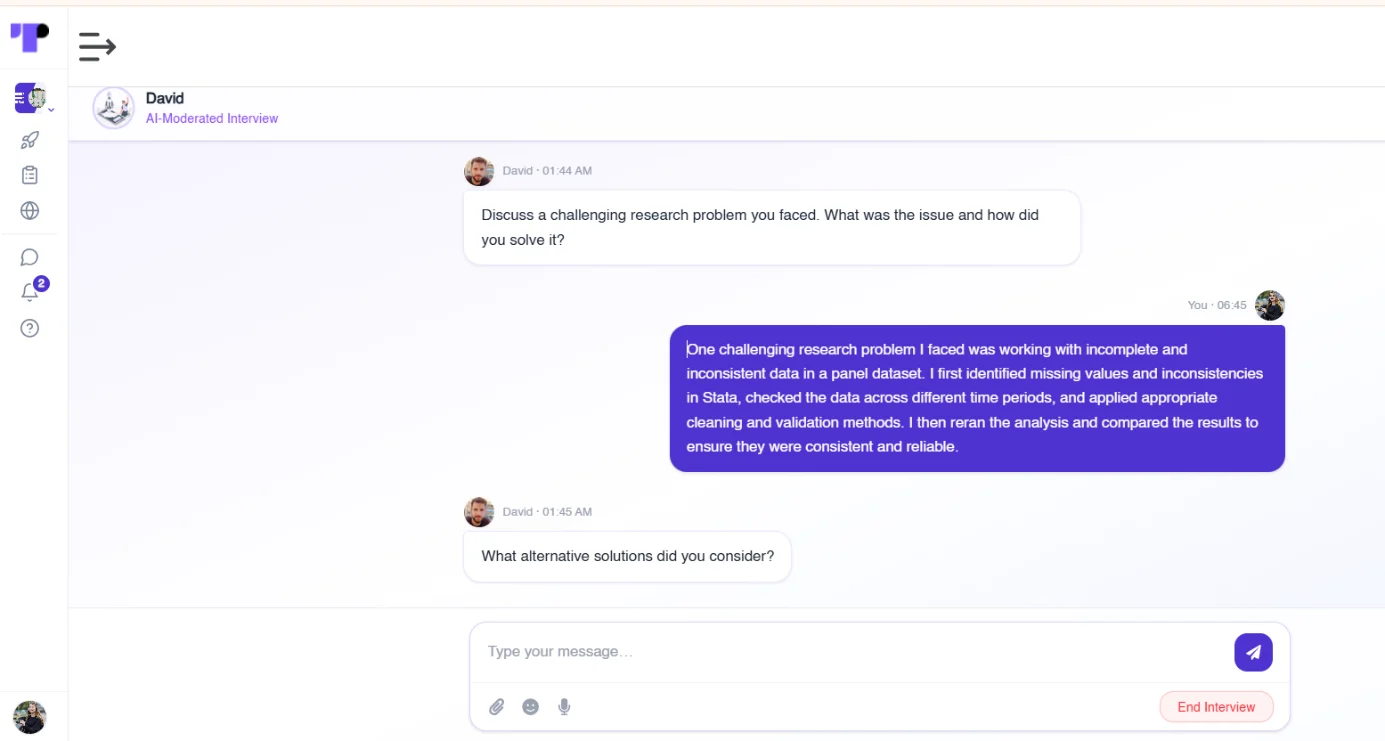
The AI moderator probes deeper and asks:
“Which data analysis tools are you an expert in?”
Or:
“How do you validate your findings?”
This type of adaptive probing at Terapage helps recruiters get beyond surface-level answers. It gives them more useful information about what candidates actually did, rather than simply what they claim to have done.
Step 5: Run a Real-Time AI Analysis of Interviews
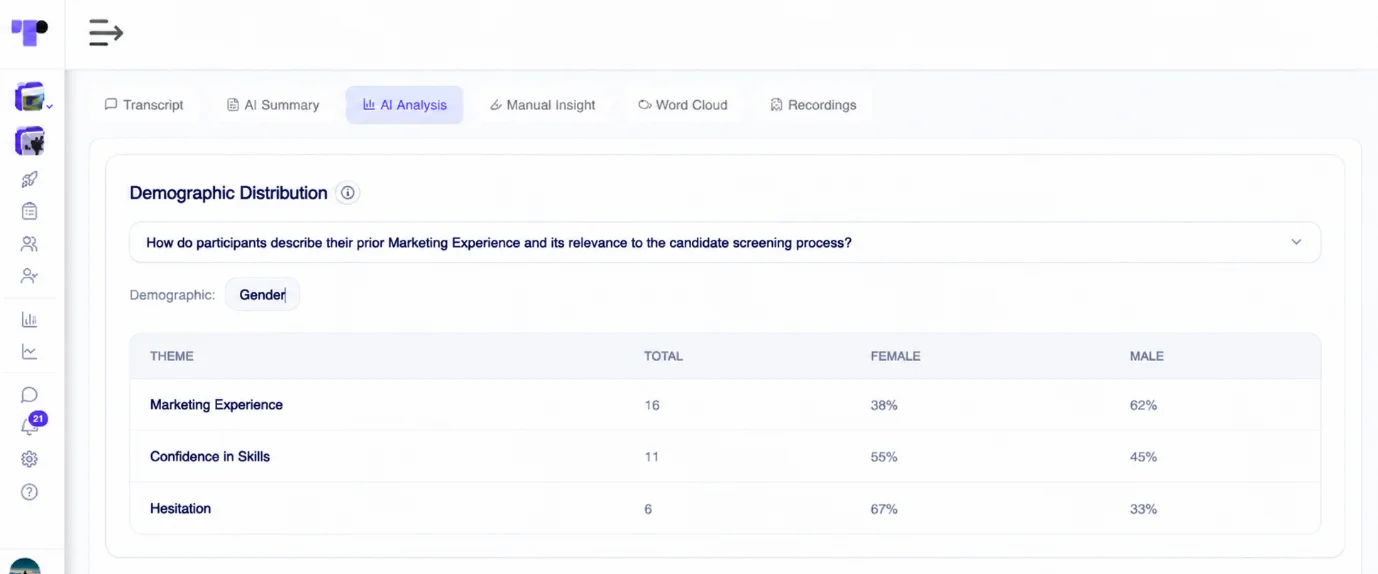
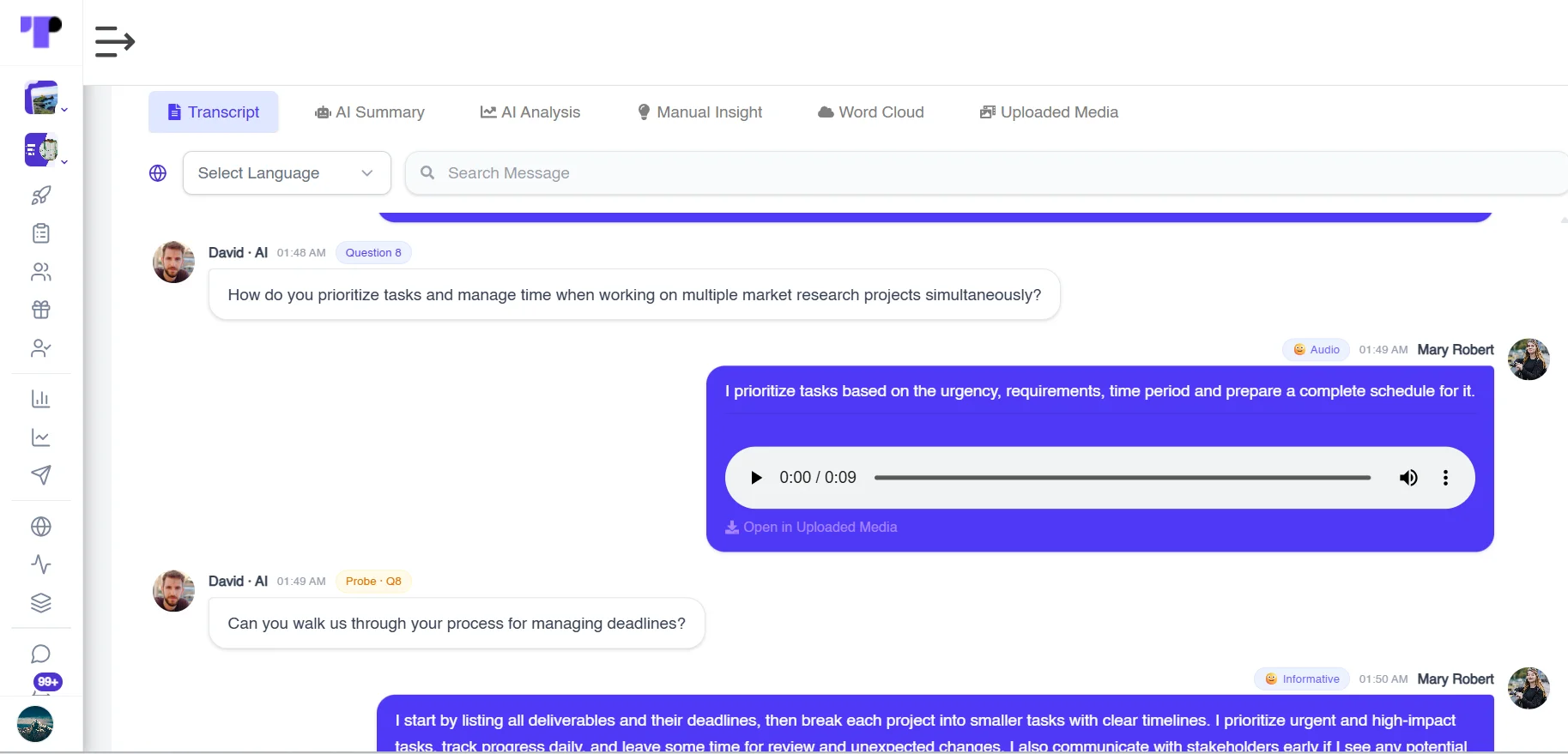
Once the interviews are finished, recruiters normally have another task: reviewing the conversations. If there are hundreds of candidates, this can become another major bottleneck. AI can analyse each interview in real time, with individual and combined analysis.
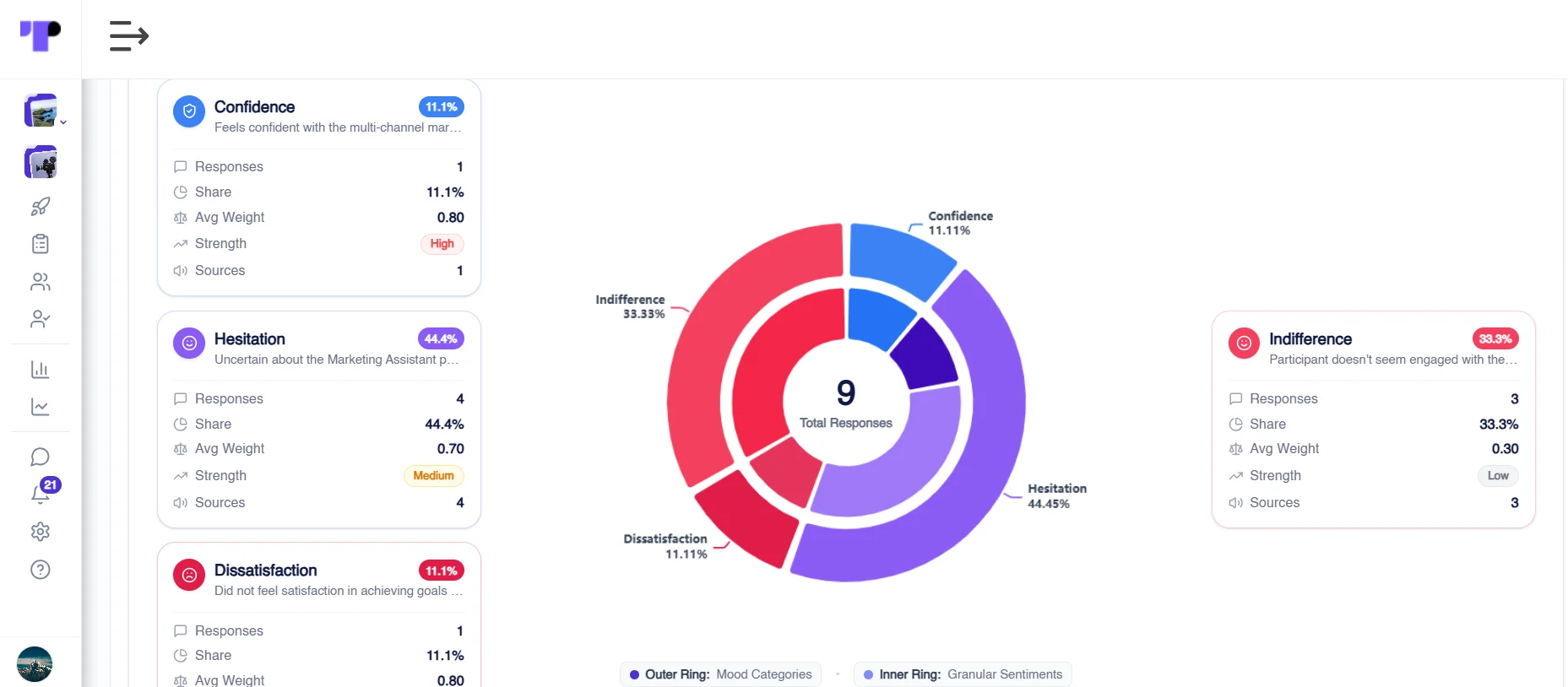
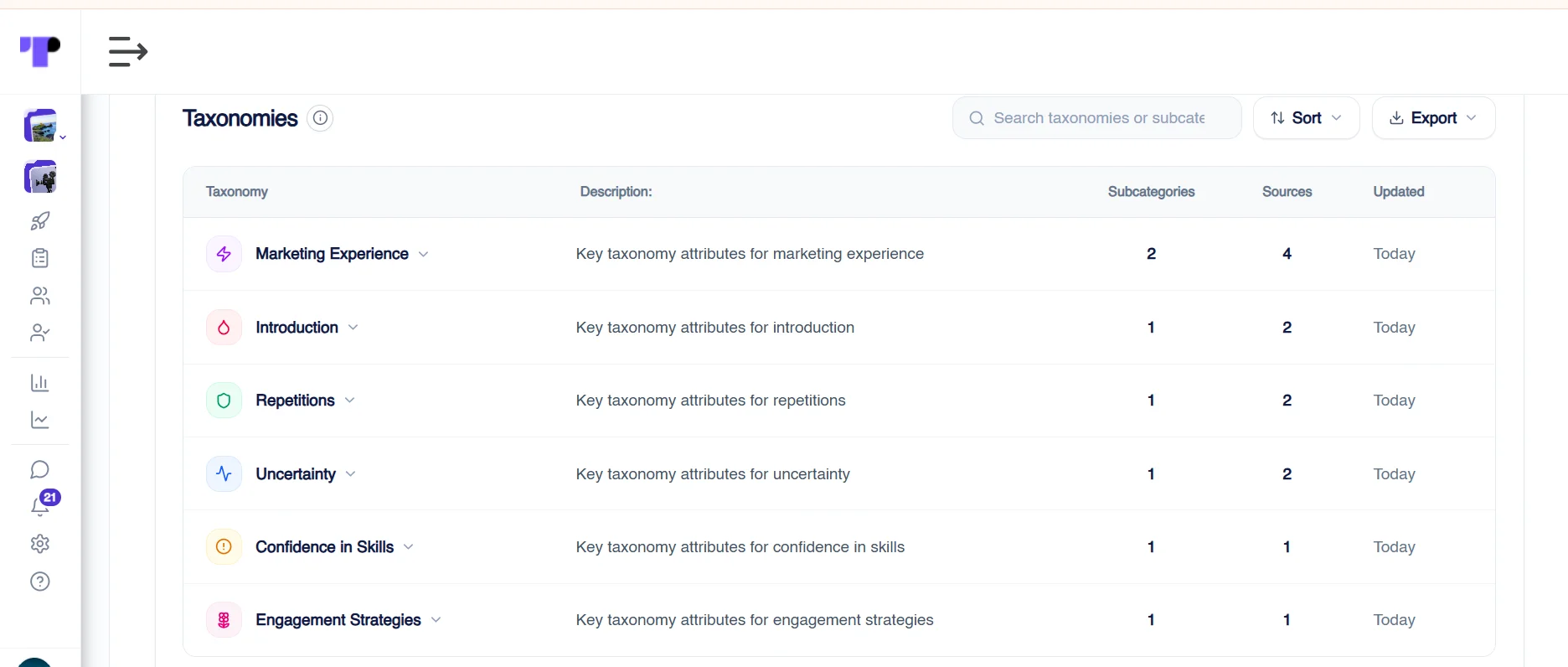
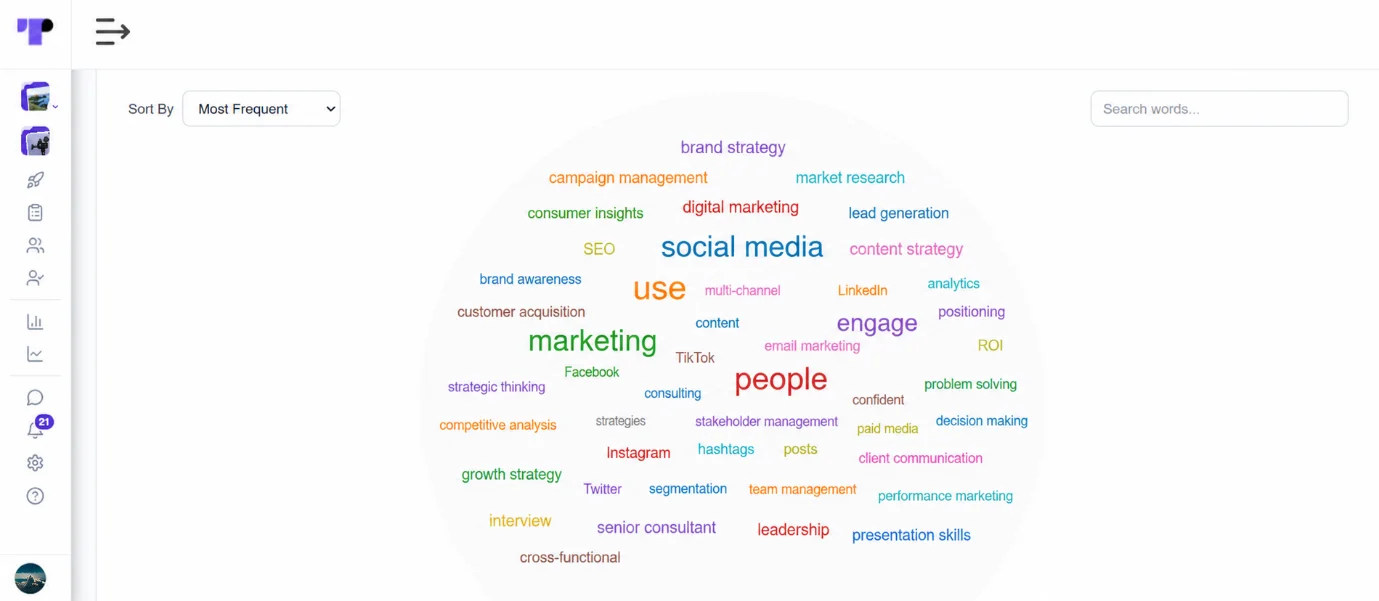
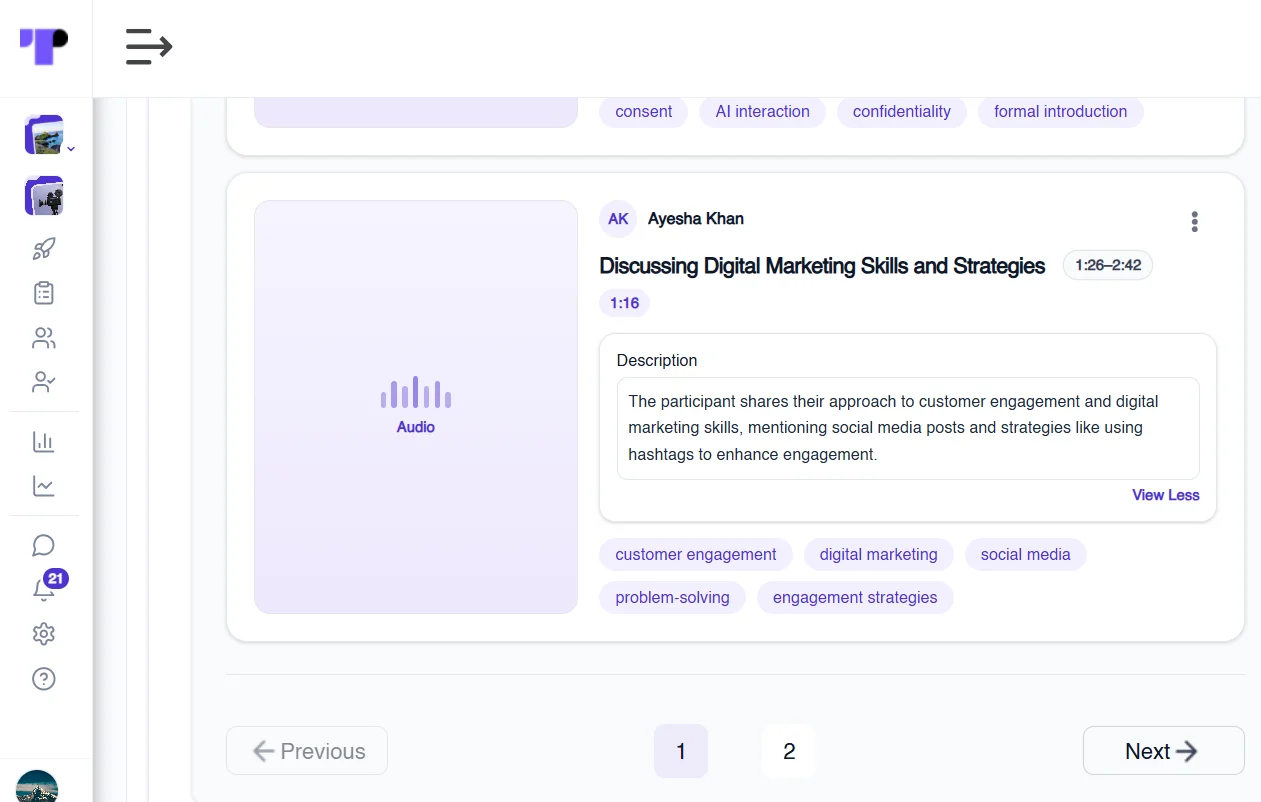
At Terapage, AI-powered analysis helps recruitment teams make sense of interview responses in real time. Instead of waiting until all interviews are completed to start reviewing the data, teams can quickly see emerging insights in the form of:
- Sentiment analysis
- Sentiment distributions
- AI-generated summaries
- Word clouds
- Theme clusters
- Rich taxonomies
- AI excerpts
- Highlight reels
- Quotes, etc.
Step 6: Identify Top Candidates for the Next Round
Next, the AI-moderated recruitment interviews screen hundreds of candidates. Instead of opening every interview one by one, a recruiter can first focus on candidates who meet the essential requirements. A candidate who does not have a required qualification can be identified early. A candidate who has strong experience but needs a closer look can be flagged for recruiter review.
For instance, Terapage makes the recruitment process seamless by clearly highlighting details such as:
Example AI screening summary for one candidate
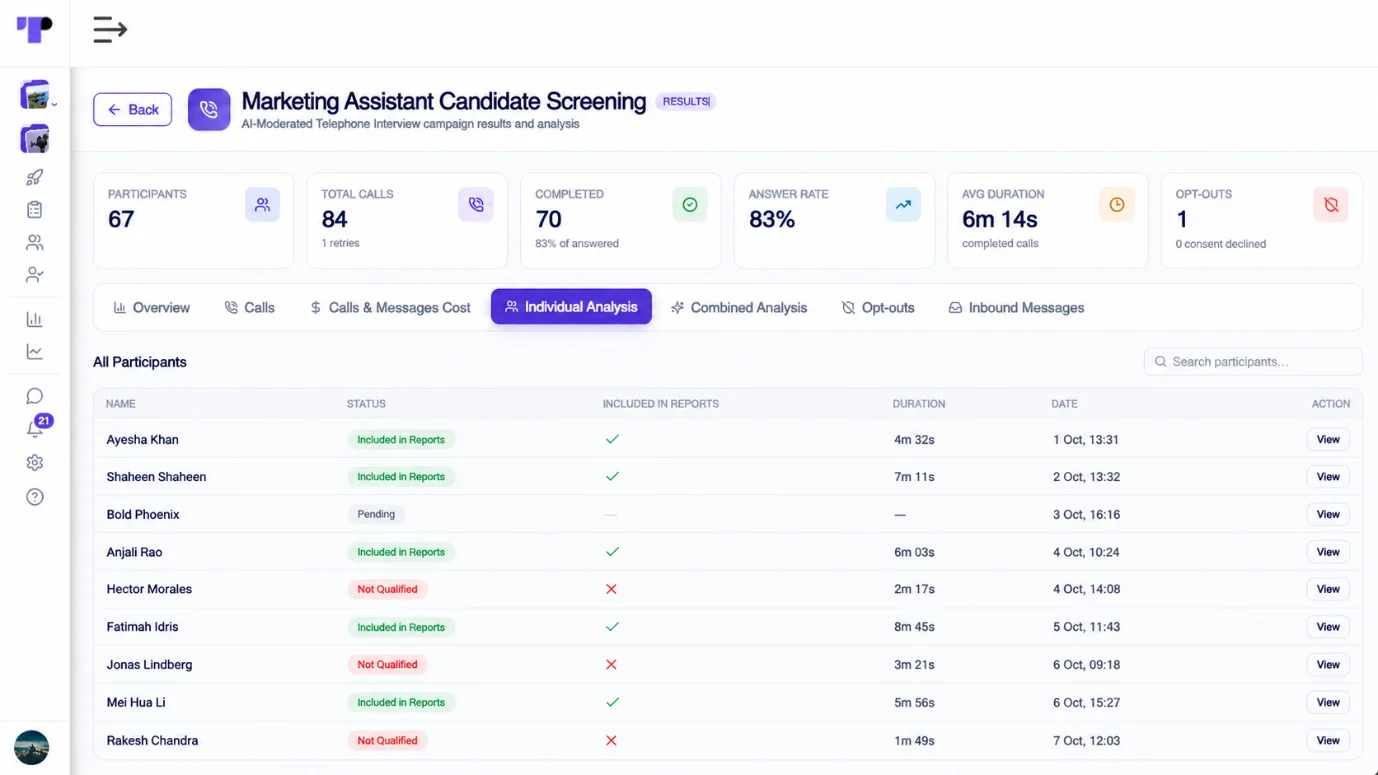
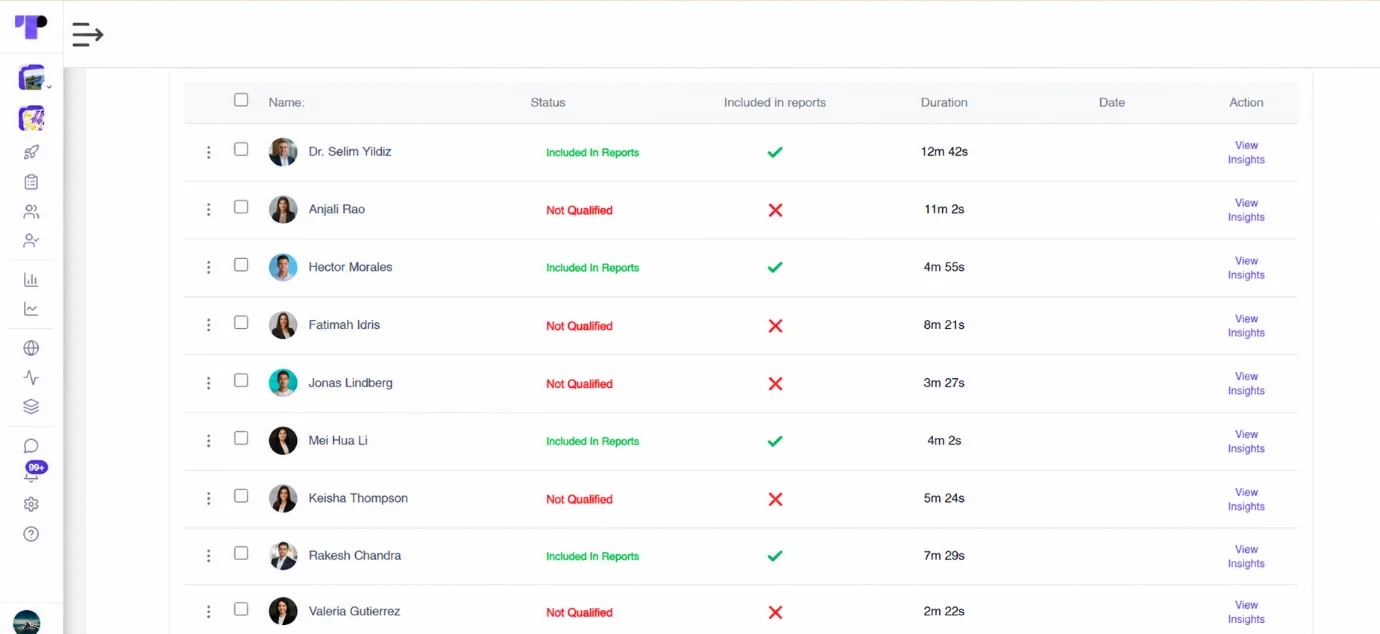
The recruiter also has access to the full transcript and the candidate's original responses. This is useful because the AI's summary does not replace the underlying interview data. It gives the recruiter a quicker way to understand it.
Step 7: Turn Interviews into Recruitment Reports
Recruiters also need to share their findings with hiring managers. Instead of manually creating reports from interview notes, AI can help organise the information into usable recruitment data.
This could include:
- Candidate summaries
- Interview transcripts
- Competency scores
- Qualification status
- Strengths and concerns
- Interview responses
- Screening statistics
The information can then be exported as reports or published for stakeholders. This is especially useful for recruitment teams that need to manage large numbers of candidates across multiple roles globally.
Who Gets the Most Value From AI Screening Interviews?
This approach works best for:
- High-volume hiring teams with more applicants than hours.
- Small HR teams who can't spend days on phone screens.
- Recruiters hiring across time zones, since candidates interview when it suits them.
- Research teams recruiting qualified experts or participants for studies, alongside participant recruitment services.
AI Supports Recruitment, It Does Not Replace Recruiters
There is an important difference between using AI to screen candidates and using AI to make hiring decisions.
Recruitment still requires human judgment.
A candidate may have an unusual career path but show strong potential. Another candidate may have an impressive CV but may not be the right fit for the role.
AI can only organise interview information, identify patterns, and help recruiters compare candidates more efficiently. Recruiters remain involved in important hiring decisions, in line with Terapage's AI transparency principles. The best approach is to use AI for the repetitive parts of candidate screening while keeping recruiters involved where experience, context, and human judgment matter most.
Final Takeaway
Screening hundreds of candidates does not have to mean spending hours on repetitive interviews, notes, and comparisons.
AI-moderated interviews can help recruiters structure the screening process, ask consistent questions, adapt to candidate responses, analyse interviews, and quickly identify candidates who are a better fit for the role.
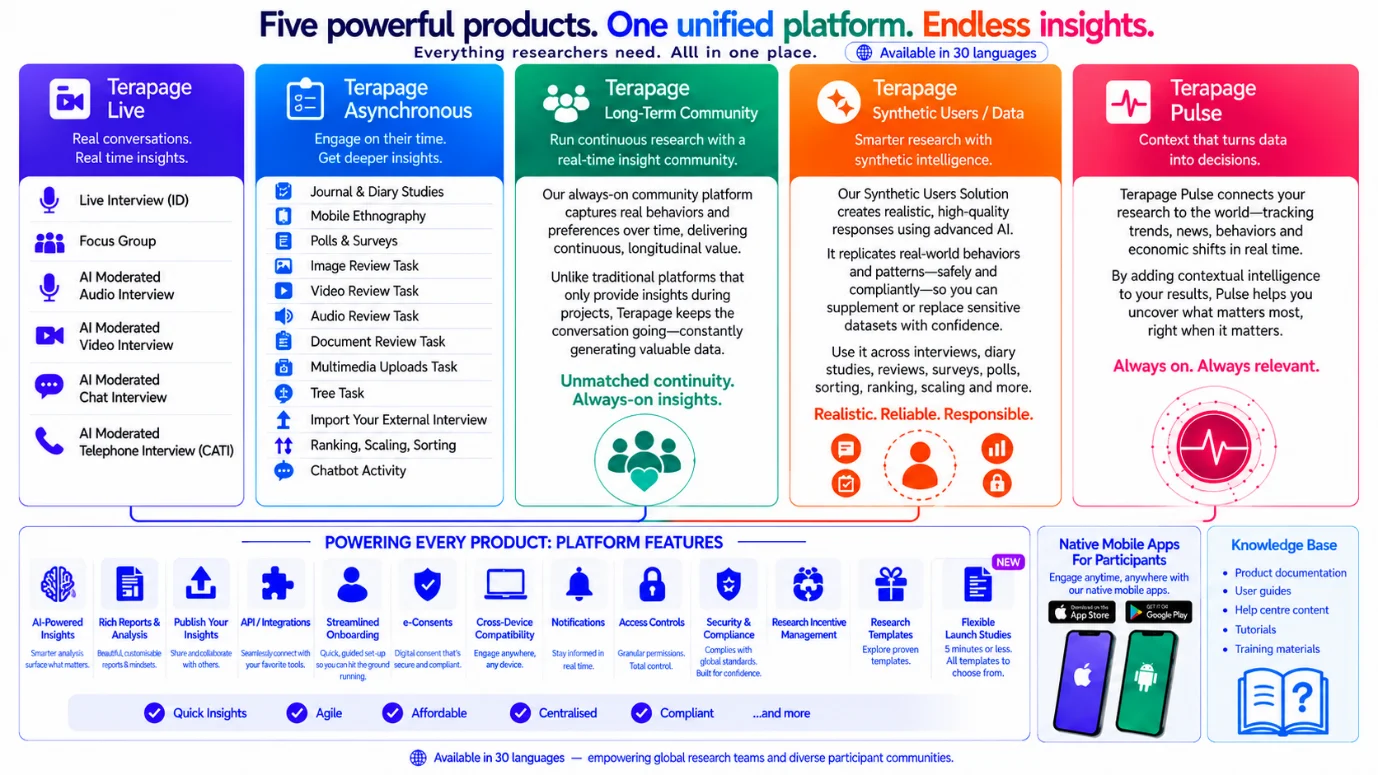
Terapage brings these steps together in one recruitment workflow on a single research platform, from creating interview questions and evaluation rubrics to conducting interviews by text, voice, video, or telephone and generating structured candidate data and reports.
The goal is not to replace recruiters. It is to help them spend less time on repetitive screening and more time making informed hiring decisions.
Ready to screen your next candidates with AI-moderated interviews?
Start your 7-day free trial Request a demo
No credit card required. Questions about rubrics, calling rules or setup? Our support services team can help.