Sign up with Google
 Sign in with Zoho

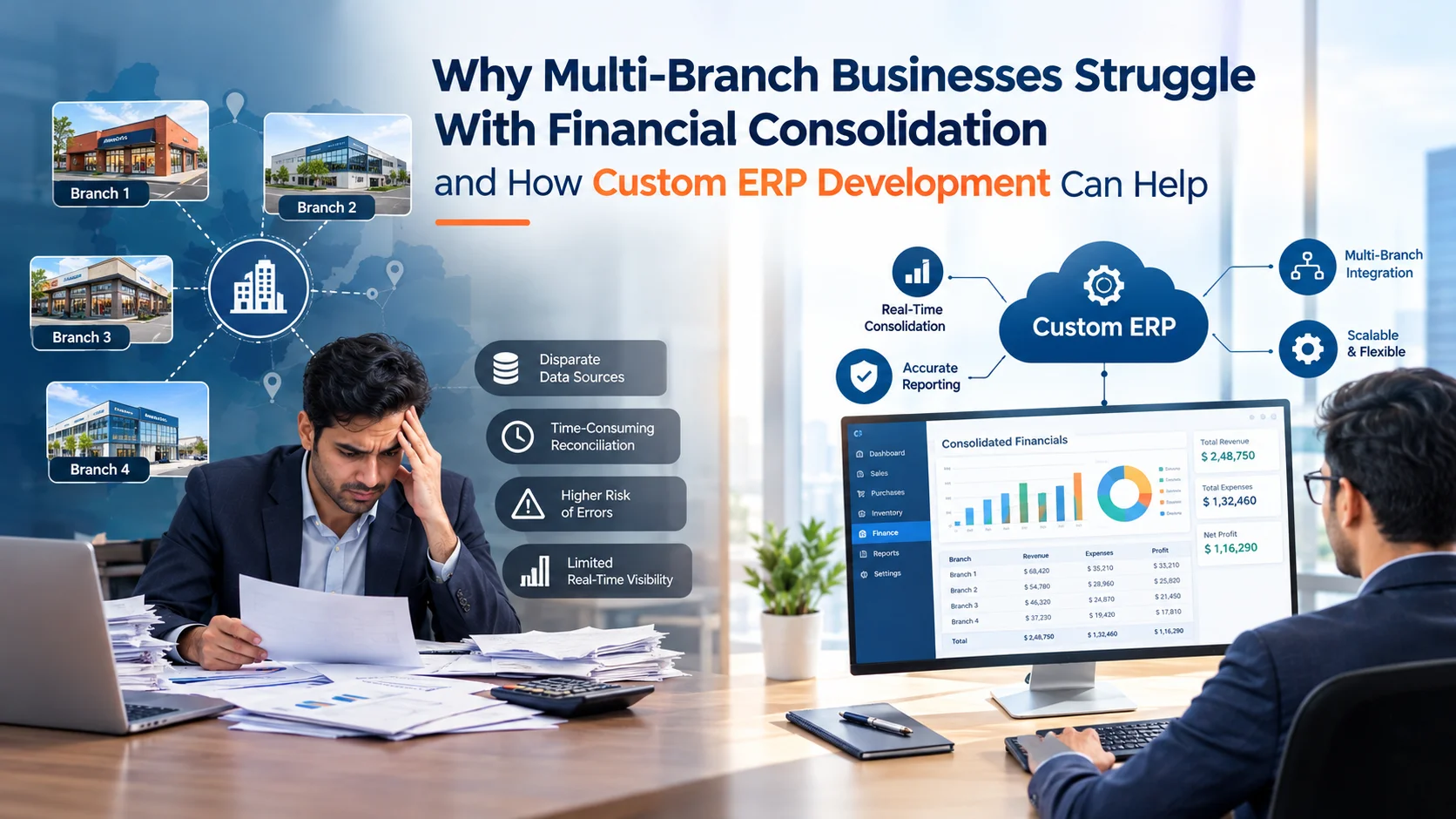
Close the books at a single-location business, and you’re reconciling one set of ledgers. Close the books at a 12-branch operation, and you’re reconciling twelve — each with its own quirks, its own local accountant’s habits, and its own silent assumptions about what counts as revenue versus a pass-through transaction.
Financial consolidation sounds like a reporting problem. It’s usually an architecture problem wearing a reporting problem’s clothes.
The Real Bottleneck Isn’t the Spreadsheet, It’s the Entity Structure
Most finance teams blame Excel for month-end pain. Excel isn’t the villain. The villain is a chart of accounts that drifted apart branch by branch over several years, with nobody noticing until consolidation forced the mismatch into view.
Branch A books marketing spend under “Operations.” Branch B has a separate GL code for it. Neither is wrong on its own terms — but stack them together and the consolidated P&L lies by omission. A controller then spends three days per close just mapping accounts before any actual reconciliation starts. That’s not a tooling gap. That’s a structural one, baked in from whenever each branch stood up its own books independently.
Generic ERP for multi-location businesses tends to assume a uniformity that rarely exists on the ground. Out-of-the-box modules expect every entity to share one chart of accounts, one currency, one tax regime. Real multi-branch businesses almost never look like that, especially once they’ve grown through acquisition or opened branches in different states or countries.
Intercompany Transactions Are Where Consolidation Actually Breaks
Ask any finance manager what eats the most time at close, and intercompany eliminations usually top the list. Branch A sells inventory to Branch B at a markup. Branch B books it as a purchase. Someone, somewhere, has to eliminate that markup before the consolidated numbers mean anything — and in most mid-market setups, that someone is doing it manually in a spreadsheet, every single month.
The audit trail suffers for it. When an auditor asks why an elimination entry was made, the honest answer is often “because the controller remembered to do it last quarter.” That’s not a sustainable control environment. It’s a liability waiting for the wrong auditor on the wrong year.
Multi-currency compounds the problem. A branch invoicing in local currency, translated at month-end spot rates, creates translation gains and losses that have to flow through equity correctly — not just get netted into retained earnings because nobody configured the translation logic properly in the first place.
Tax Jurisdictions Don’t Consolidate the Way Ledgers Do
Different states, different countries, different statutory filing formats. A branch under GST reporting requirements and a branch under a different VAT structure don’t just need different tax codes — they need fundamentally different reporting logic layered on top of the same underlying transactions.
Most off-the-shelf platforms handle this with bolt-on localization packs. These work until they don’t. The moment a business adds a branch in a new jurisdiction, someone’s configuring a new tax engine from scratch, hoping it talks correctly to the consolidation module everyone already relies on.
Compliance teams end up maintaining shadow spreadsheets just to reconcile what the system reports against what regulators actually require. That’s not an edge case. Talk to any finance manager at a company with branches across three or more jurisdictions, and this is simply Tuesday.
Why Standard ERP Configuration Hits a Ceiling
Here’s where most ERP implementations quietly stall. A vendor configures the standard consolidation module, maps a few accounts, sets up basic intercompany rules — and it works, for about six months. Then the business adds a branch, or enters a new tax jurisdiction, or acquires a competitor with an entirely different accounting structure. The configuration cracks.
Standard configuration assumes the business’s structure is static. It rarely is.
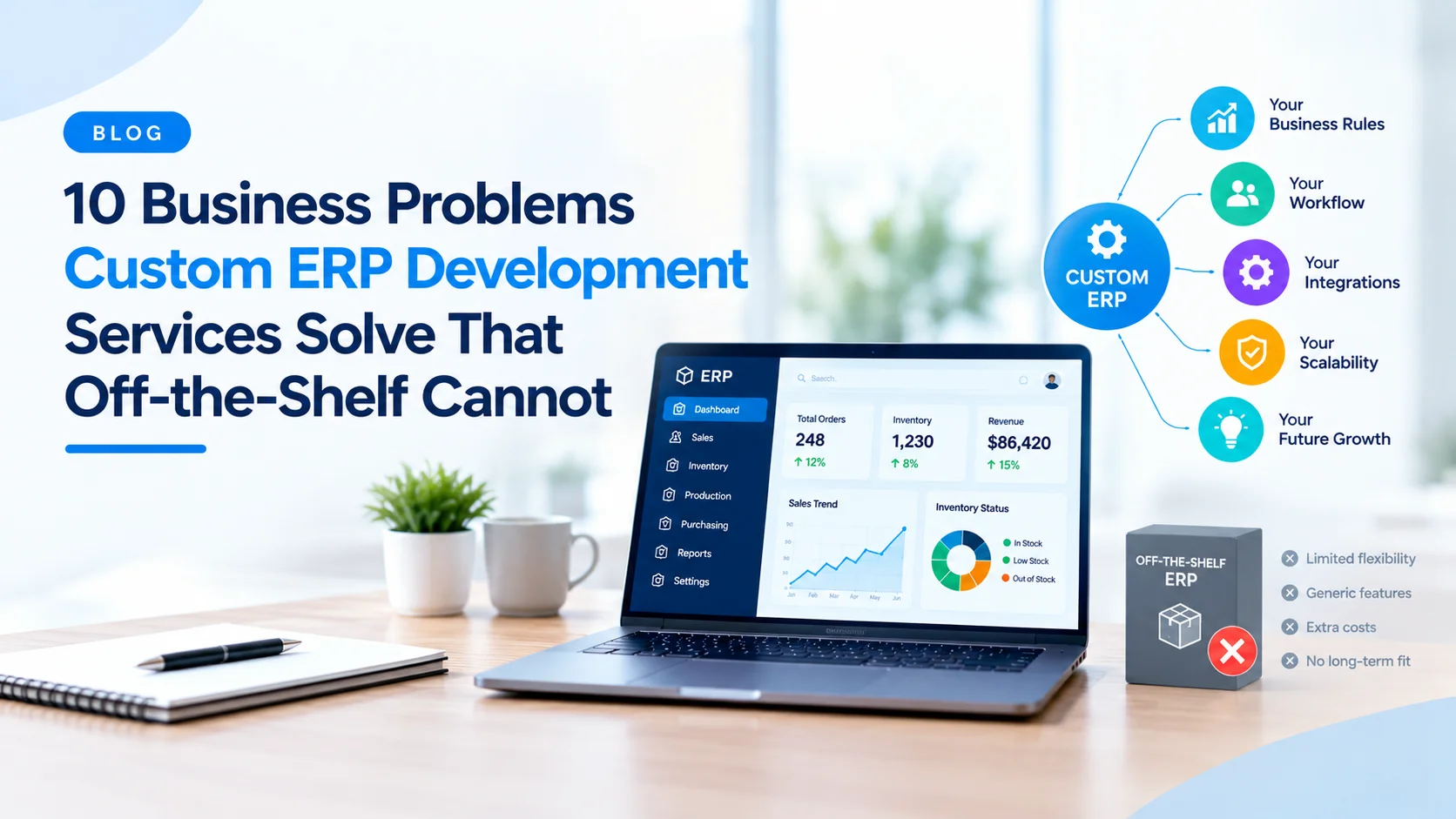
This is precisely the gap custom ERP development is meant to close — not by replacing every branch system wholesale, but by building a consolidation layer that actually understands the business’s real entity hierarchy, its intercompany flows, and its jurisdiction-specific tax logic, rather than forcing that complexity into a generic template built for a different kind of company.
Engineering teams that specialize in this kind of integration — Arobit is one example — spend most of their early discovery phase simply mapping how each branch currently closes its books before writing a single line of consolidation logic. That mapping work is unglamorous. It’s also where most of the actual value gets created, because you can’t automate a process nobody has fully documented.
What a Properly Architected Consolidation Layer Actually Does Differently
A few structural shifts separate a custom-built approach from a bolted-on module.
Chart of accounts mapping stops being a manual, branch-by-branch maintenance task and gets enforced centrally at the point of entry — so a transaction can’t even be booked into a non-standard code in the first place. Intercompany eliminations move out of spreadsheets entirely; markup and pass-through transactions get flagged and matched in near real time instead of being reconstructed during a four-day close crunch.
Multi-jurisdiction tax logic stops living in bolt-on localization packs and gets built into the core transaction flow, so a new branch in a new jurisdiction doesn’t mean reconfiguring a separate engine from scratch. New branch onboarding shifts from weeks of manual setup to something closer to templated provisioning — the entity structure, GL mapping, and tax rules already exist as a pattern the system can replicate. And the audit trail stops being reconstructed after the fact, because it’s generated automatically as part of every transaction, not assembled retroactively when an auditor asks an uncomfortable question.
None of this requires a platform swap. It requires rebuilding the logic layer that sits underneath whatever platform the business already runs — which is usually a smaller, less disruptive project than finance teams assume going in.
The Decision Point: Patch the Process or Rebuild the Logic
Most CFOs default to adding headcount when consolidation gets painful. Hire another accountant, add another reviewer, extend the close calendar by two days. It works for a year, maybe two.
Then the business opens another branch. Headcount again. Review cycle again. The pain compounds instead of resolving.
The alternative is less intuitive but more durable: invest once in rebuilding how the branches’ financial data actually connects, rather than repeatedly patching around a structure that was never designed for the business’s current complexity. Most ERP development services still default to configuring existing modules rather than rebuilding the consolidation logic from scratch — which is exactly why so many mid-market consolidation problems never actually get solved, just managed.
Final Thought
Financial consolidation pain is rarely a software problem in the way it first appears. It’s a signal that the business’s entity structure, intercompany flows, and reporting logic have outgrown whatever system was configured years ago for a simpler version of the company.
Firms like Arobit, which work specifically on ERP architecture for multi-entity operations, are typically brought in at this stage — not to sell a new platform, but to re-architect how the branches actually talk to each other financially, before another close cycle burns another week of the finance team’s time.
FAQs
- If our branches already run on the same ERP platform, do we still need custom consolidation logic?
Often, yes. Running the same platform doesn’t guarantee the same chart of accounts, the same intercompany workflow, or the same tax configuration per branch. Shared software doesn’t equal shared structure — the underlying logic still needs to be unified for consolidation to work cleanly.
- How long does a typical consolidation-layer rebuild take for a mid-sized multi-branch business?
It depends heavily on the number of entities and jurisdictions involved, but most mid-market projects run three to six months from discovery through go-live, with the discovery and account-mapping phase typically taking as long as the actual build.
- Can this be done incrementally, branch by branch, or does it require a full cutover?
Incremental rollout is usually the safer path. Most engineering teams build the consolidation layer to support a phased onboarding — starting with the two or three branches causing the most reconciliation pain — rather than forcing a simultaneous cutover across every entity at once.