Sign up with Google
 Sign in with Zoho

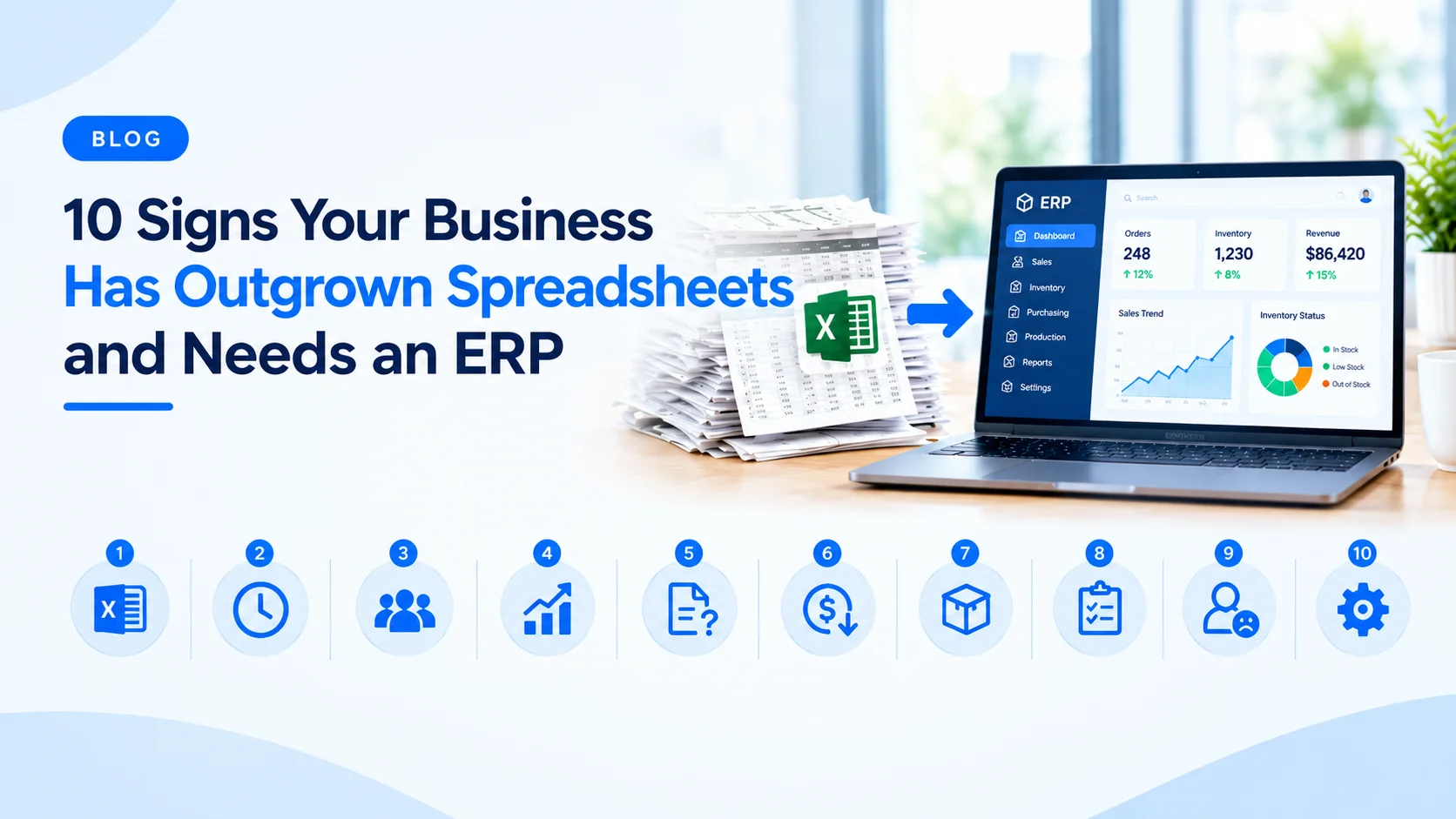
Spreadsheets work fine right up until they don't. Most businesses don't notice the shift — they just keep patching the same file with more tabs, more formulas, more version confusion, until one day nobody trusts the numbers anymore.
Here's how to tell if you're already past that point.
1. Multiple People Are Editing the Same File
If two people update inventory or sales numbers at the same time, someone's changes get overwritten. Nobody notices until a report doesn't match reality.
2. You Have "Final_v3_ACTUAL.xlsx"
If your file names look like this, you already know. Version control by filename is not version control.
3. Reports Take Hours to Pull Together
Someone spends half a day copying data from five different sheets into one summary before a meeting. That's not a reporting process — that's a part-time job nobody signed up for.
4. Departments Don't Trust Each Other's Numbers
Sales has one number. Finance has another. Both are technically "current," just not the same file. Meetings turn into arguments about whose spreadsheet is right instead of what to do next.
5. Growth Has Outpaced Manual Tracking
What worked at 20 employees breaks at 100. More transactions, more inventory, more locations — spreadsheets don't scale with headcount, but the mistakes do.
6. There's No Real Audit Trail
If someone asks who changed a number and when, "I think it was Priya, maybe last Tuesday" isn't an answer. Compliance and financial reviews need more than memory.
7. Integrations Don't Exist
Your accounting software, inventory system, and CRM don't talk to each other. Someone manually re-types data between them, which means someone eventually mistypes it too.
8. Formulas Break and Nobody Knows Why
One wrong cell reference, one accidentally deleted row, and a formula that worked for two years quietly starts returning garbage. Nobody catches it until the numbers look off.
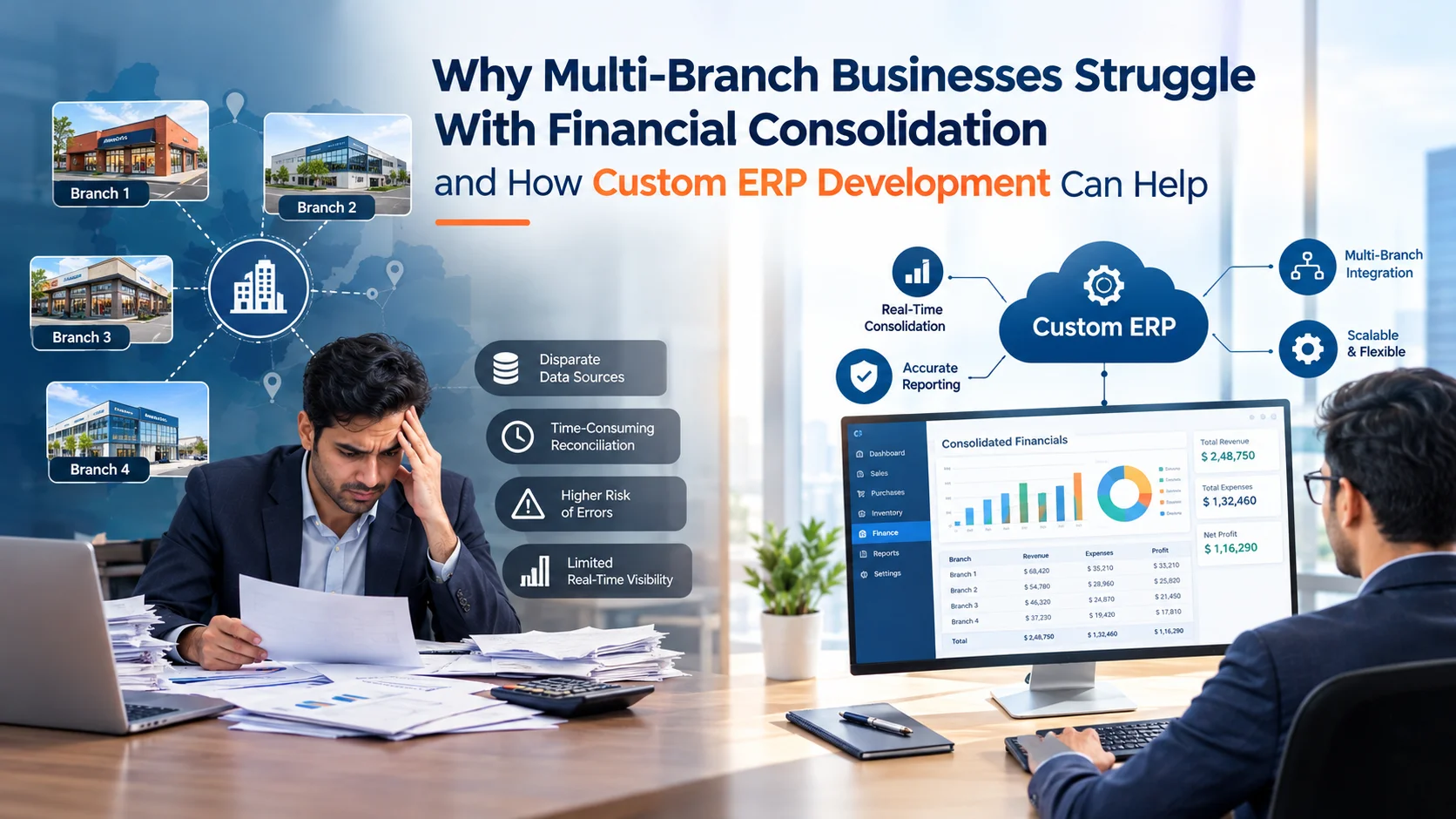
9. Remote or Multi-Location Teams Are Working Off Different Copies
Someone in another office has last week's version. Decisions get made on outdated data without anyone realizing it.
10. You're Making Big Decisions on Guesswork
When leadership can't get a straight, current answer on inventory levels or cash flow without a scramble, decisions slow down or get made on gut feeling instead of data.
What Comes After Spreadsheets
None of this means your team is doing something wrong — it means the tools stopped fitting the business. This is usually the point where companies start looking at a custom ERP software built around how they actually operate, instead of forcing every department into shared spreadsheet chaos.
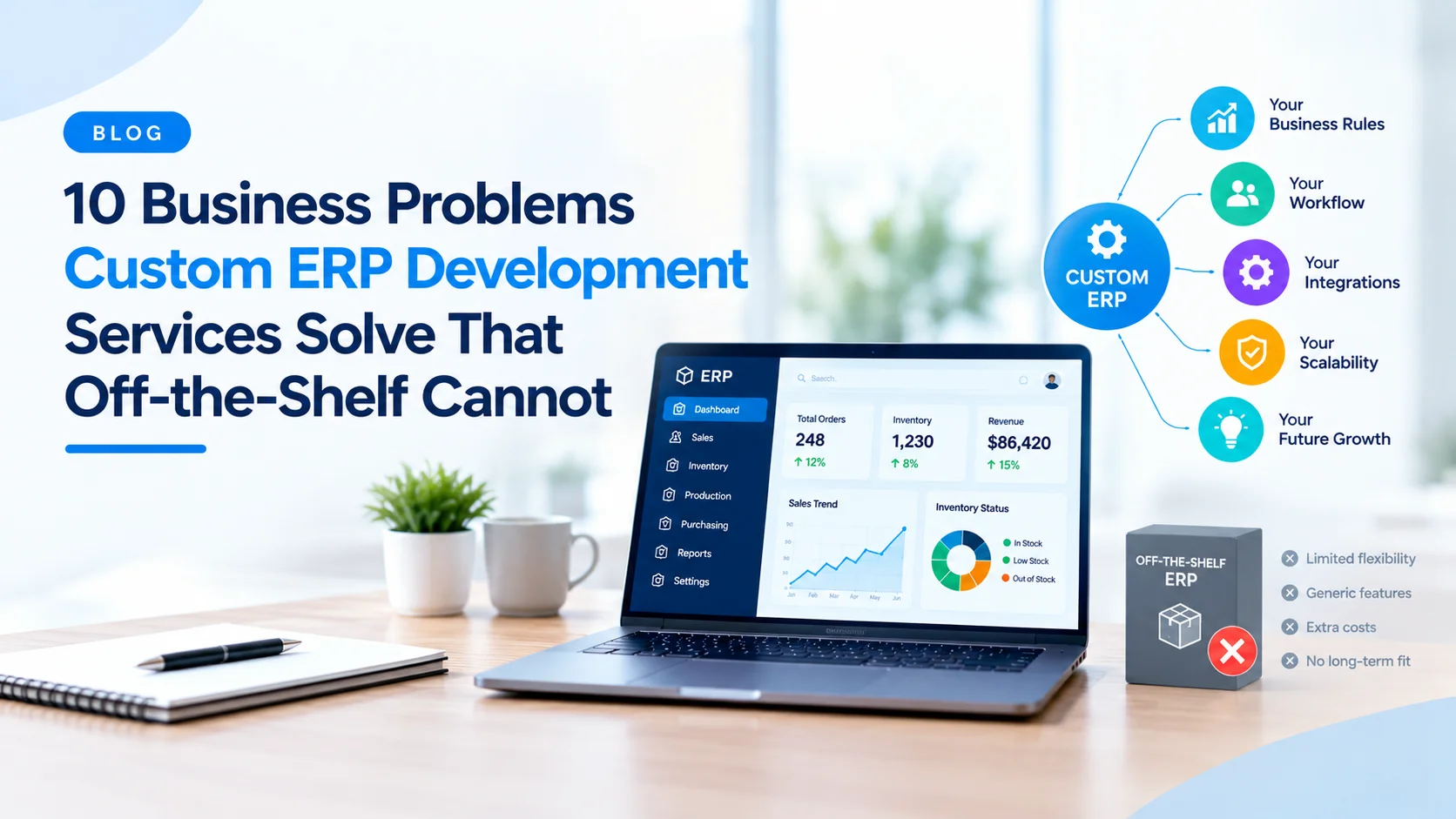
A generic, off-the-shelf system can help, but it often comes with the same problem in a different form: features you don't need, and gaps where your actual workflow doesn't fit the template.
Custom erp development services solve that by building around your existing processes — inventory rules, approval chains, reporting formats — instead of asking your team to change how they work to match the software.
Choosing the Right Partner
Not every erp development company approaches this the same way. Before committing, it's worth asking:
- Do they start with your workflows, or push a pre-built template?
- How do they handle migrating years of spreadsheet data without losing accuracy?
- What does support look like after launch, not just during the build?
- Can the system grow with you, or will you outgrow this too?
The right partner treats these questions as normal, not inconvenient.
Getting Off Spreadsheets for Good
If more than a few of these signs sound familiar, the spreadsheet system isn't failing because your team is careless. It's failing because it was never built to handle this much complexity.
Moving to a properly built ERP means fewer version conflicts, one shared source of truth, and decisions made on current numbers instead of last week's copy.
FAQs
How do I know if my business is ready for an ERP versus just better spreadsheet templates?
If the problems are mainly about formatting, better templates might help. If they're about data trust, multiple versions, or manual re-entry between systems, that's a structural problem templates can't fix.
Is a custom ERP more expensive than off-the-shelf software?
Often the upfront cost is higher, but off-the-shelf systems frequently need expensive workarounds or add-ons later to fit processes they weren't built for.
How long does it typically take to move from spreadsheets to a working ERP?
It depends on the complexity of your data and processes, but most mid-sized migrations run a few months from planning through go-live, including data cleanup and testing.