Sign up with Google
 Sign in with Zoho

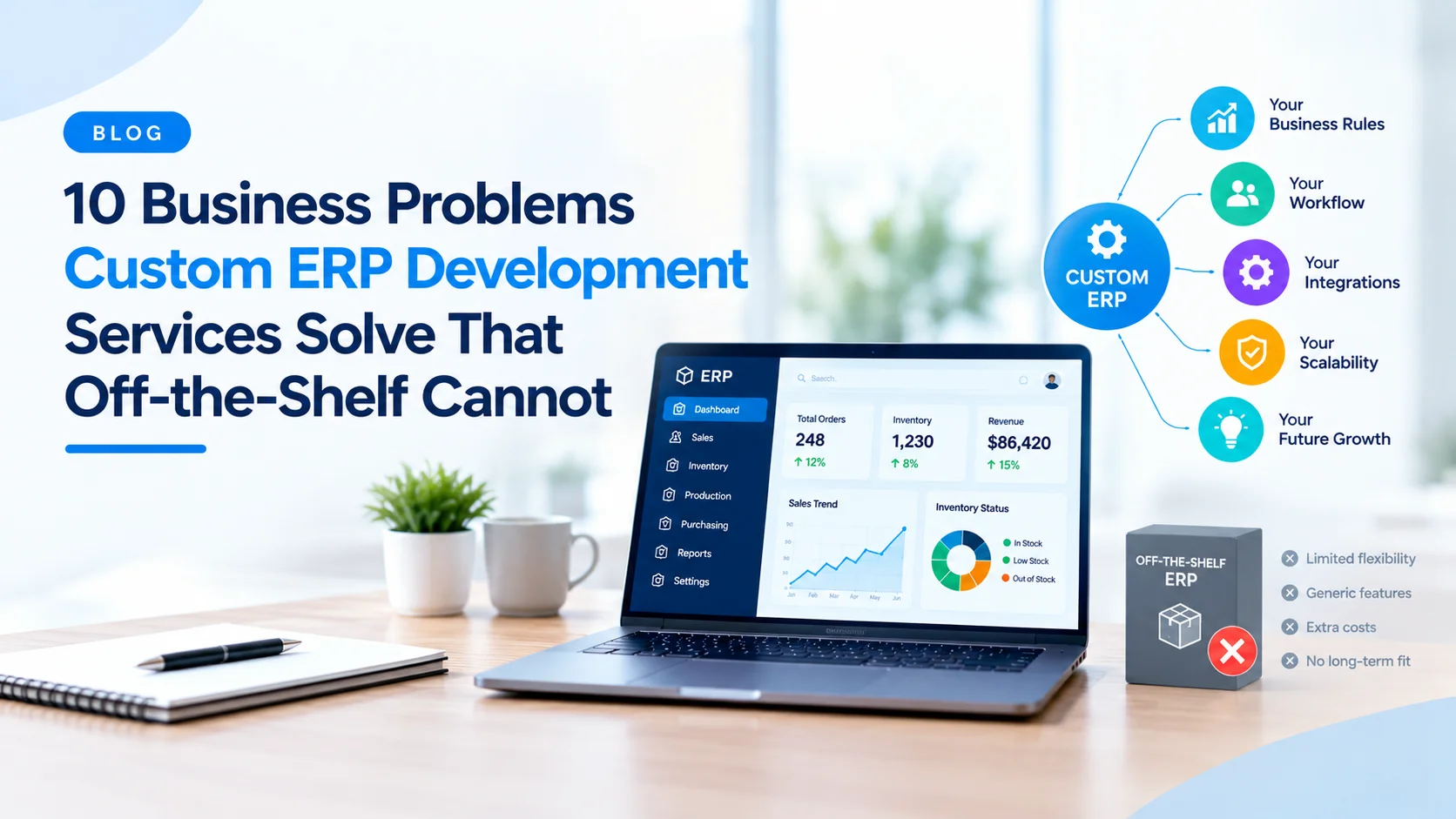
Off-the-shelf ERP works well until your business stops looking like the template. Then the workarounds begin: side spreadsheets, manual re-entry, and reports nobody fully trusts.
If that sounds familiar, the software probably isn't broken. It just doesn't fit. Here are ten problems where custom ERP software solves what packaged systems can't.
Ten Problems Packaged ERP Can't Fix
- Processes that don't match the template. Your approval chains, pricing rules, or production steps get bent to suit the software. It should work the other way around.
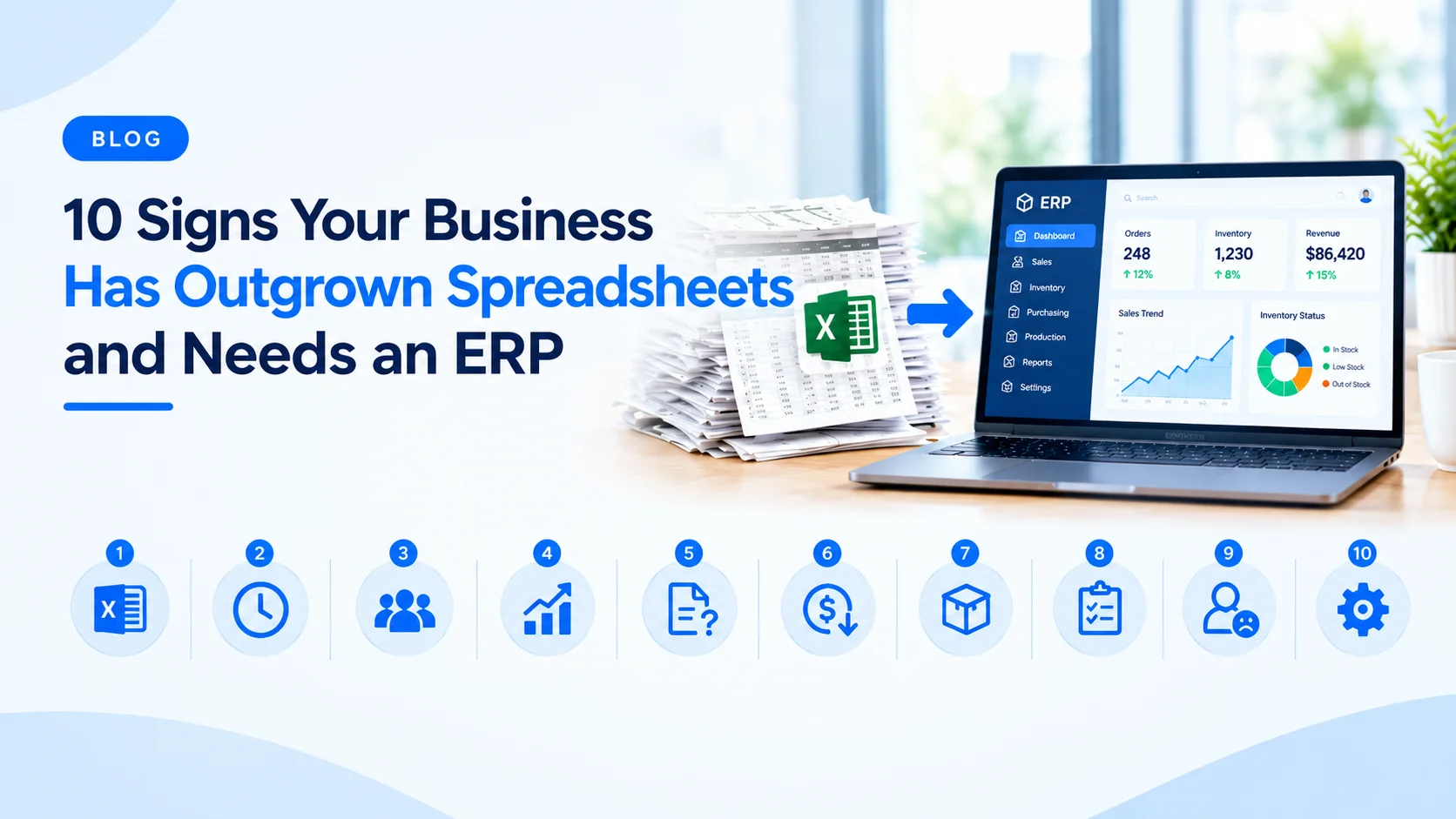
- Spreadsheet workarounds. When the system can't do something, people build side sheets. Data splits across files and errors creep in.
- Integration gaps. Connecting to a legacy tool, a niche logistics platform, or a customer portal often means fragile middleware or manual exports.
- Local compliance. Regional tax rules, audit trails, and sector regulations rarely come built in. A custom build can place them inside the workflow.
- Reports that miss the point. Standard dashboards show standard metrics. Custom reporting shows the numbers your leadership actually asks for.
- Costs that climb with headcount. Licence fees often rise with every added user. A custom build shifts spending to development and support.
- Someone else's roadmap. You wait for features you need, and updates can change workflows your team relies on.
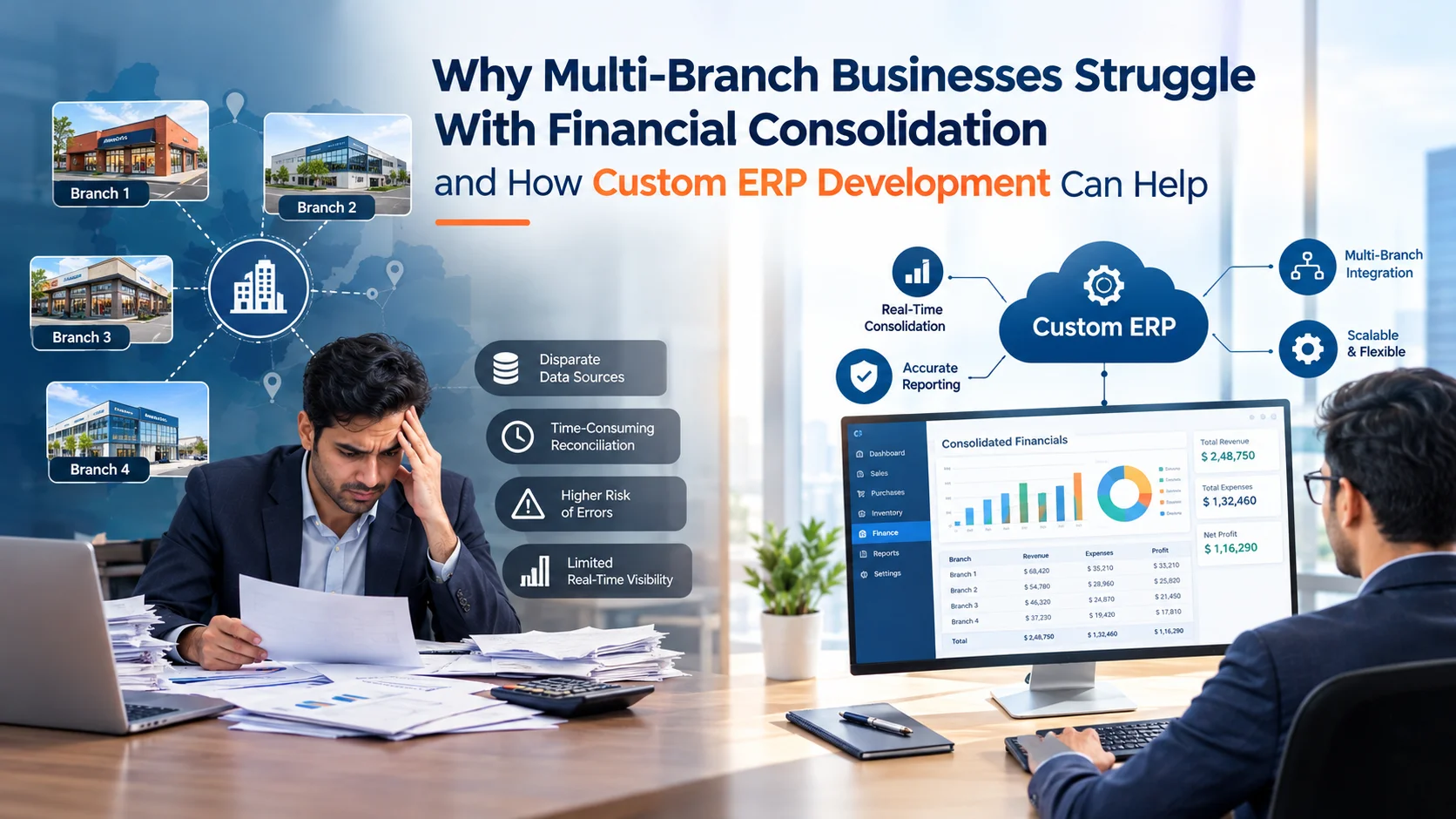
- Complex business structures. Multiple branches, currencies, or legal entities often hit hard limits in packaged tools. Custom logic follows your structure.
- Low user adoption. Cluttered screens full of unused fields slow people down. A tailored interface shows each role only what it needs.
- Data trapped in a vendor format. Moving out later is painful. With a custom build, you control the data model.
Each of these has a cost, even when it never shows up on an invoice: hours lost, decisions delayed, and a team that quietly stops trusting the system.
When Custom Makes Sense (and When It Doesn't)
Custom isn't always the answer. If your needs are standard finance, payroll, and inventory, a packaged system may be enough and cheaper to start with.
Custom usually earns its cost when:
- Your core process is a competitive advantage
- Your team already runs several workarounds
- Integration needs keep growing
- You plan to scale or enter new markets in the next few years
A simple test: count the hours your team spends each week working around the system. That number is often the clearest business case you'll get.
What to Look for in a Partner
A reliable ERP development company starts with your workflows, not a feature list. Before you commit, ask:
- How are requirements gathered and documented?
- How will existing data be migrated and verified?
- Who supports the system after go-live?
- Will you receive clean code and full documentation at handover?
Clear answers to these usually mean the team has seen where ERP projects go wrong and planned around it.
Conclusion
Packaged ERP suits businesses whose processes are standard. If yours aren't, the gap shows up as lost hours, patchy data, and slow decisions.
If you're weighing your options, custom ERP development services are worth a scoping conversation. Bring your workflows, integration list, and compliance needs, and ask for a clear view of scope, timeline, and cost before you decide.
FAQs
How much do custom ERP development services cost?
It depends on scope, number of modules, integrations, and users. A reliable figure only comes after a requirements discovery phase, so be cautious of quotes given without one.
How long does a custom ERP build take?
Most projects are delivered in phases, with core modules first and additional ones later. Timelines vary with complexity, and a phased rollout lowers risk compared with a single large launch.
Can a custom ERP connect to the software we already use?
Usually yes, through APIs and connectors, depending on what your existing tools support. Confirm this during discovery so integration effort is part of the estimate.