Sign up with Google
 Sign in with Zoho

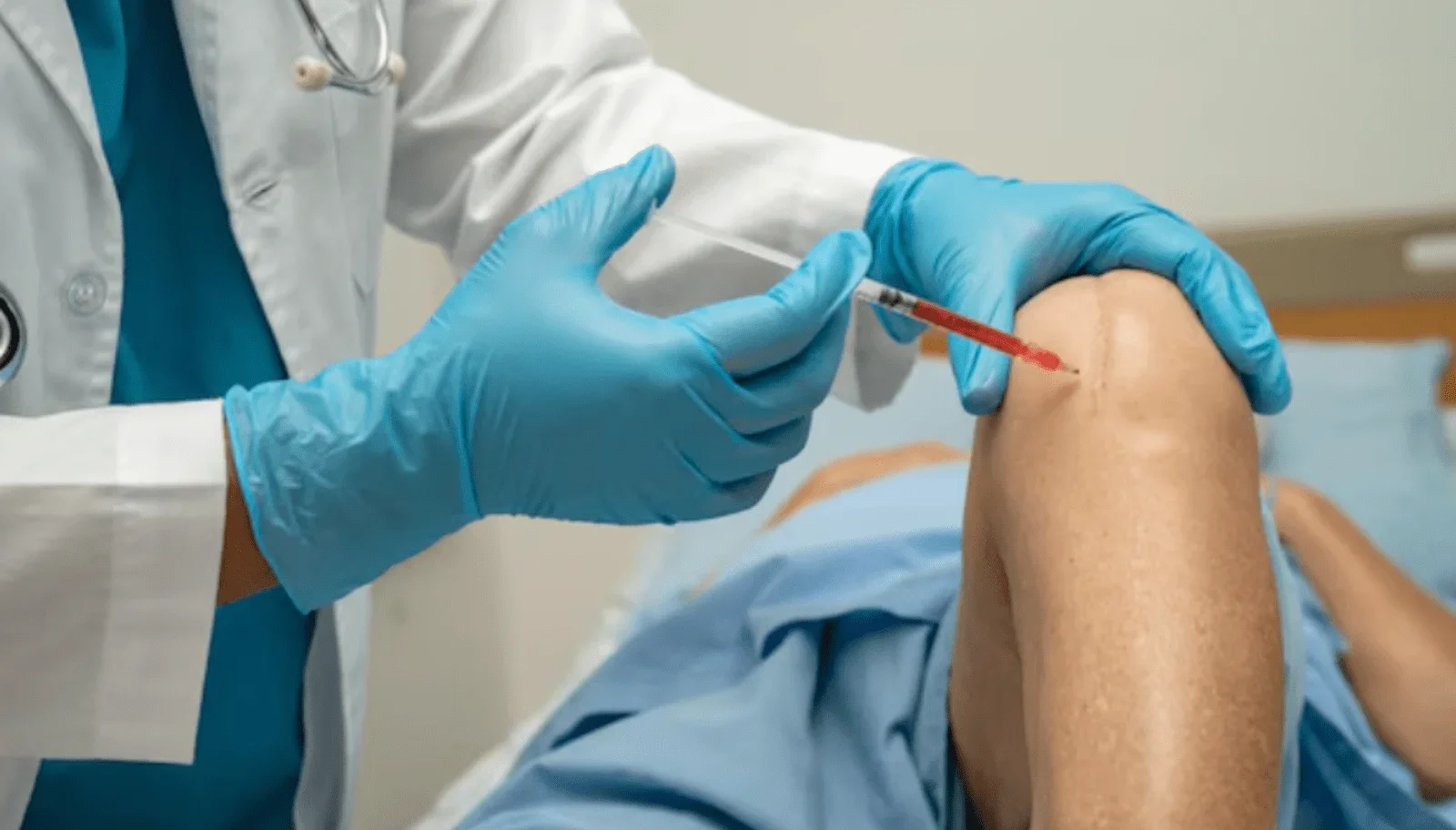
Knee pain that continues for months can gradually change how a person moves. Walking longer distances, getting up from a chair, climbing stairs or bending the knee may become increasingly uncomfortable. When these problems persist despite exercise, physiotherapy or other initial treatments, some people begin exploring platelet-rich plasma (PRP) injections.
PRP is prepared from a small sample of the person's own blood. The sample is processed to concentrate platelets in the plasma, which contains signalling molecules involved in the body's repair processes. The preparation is then injected into the affected area. PRP joint and soft tissue injection may be considered for selected musculoskeletal conditions, although its suitability depends on the diagnosis and the evidence supporting treatment.
Although PRP is often described as a regenerative treatment, its ability to improve knee symptoms depends on the underlying condition. It is important to distinguish knee osteoarthritis from tendon injuries, ligament damage and other causes of pain before deciding whether an injection is appropriate.
Why Does the Cause of Knee Pain Matter?
Knee pain does not always originate from the same structure. Osteoarthritis involves changes to the joint, including the cartilage and surrounding tissues. Tendon problems affect the structures connecting muscles to bones, while ligament injuries can affect joint stability.
These conditions require different management approaches. For example, a person with knee osteoarthritis may benefit from strengthening exercises, weight management where relevant, pain relief and other measures recommended following clinical assessment. A tendon injury may require a rehabilitation programme focused on gradually restoring strength and load tolerance.
PRP should not be considered simply because knee pain has lasted a long time. The first step is identifying the source of the symptoms and determining which treatments are supported by evidence for that particular diagnosis.
How Might PRP Help With Knee Symptoms?
Platelets release growth factors and other biological signals that researchers are investigating for their potential effects on tissue processes. PRP aims to deliver a concentrated preparation to the affected area.
Some clinical studies have reported improvements in pain and physical function among people with knee osteoarthritis after PRP injections. However, research findings are inconsistent, and studies differ in their preparation methods, injection schedules, comparison treatments and follow-up periods.
This makes it difficult to predict how much improvement an individual will experience or how long any benefit might last. PRP should not be presented as a proven way to rebuild worn cartilage or reverse osteoarthritis.
When Might an Injection Be Considered?
PRP may be discussed when knee symptoms persist and an appropriate assessment suggests that the treatment could be relevant to the diagnosed condition. The decision should take account of symptom severity, previous treatments, medical history, functional limitations and the evidence available for the proposed use.
It is also important to consider alternatives. Exercise-based rehabilitation remains central to managing knee osteoarthritis, while medication, other injections or surgical assessment may be appropriate in selected circumstances.
The procedure usually involves collecting a blood sample, processing it and injecting the prepared plasma into the target area. Ultrasound guidance may be used when appropriate to help position the needle. Temporary pain, swelling, bruising or tenderness can occur after an injection, and infection is a potential risk.
What Should You Expect After PRP Treatment?
PRP is not an immediate pain-relief solution. Symptoms may take time to assess, and some people experience limited improvement or no meaningful benefit. The recovery plan depends on the condition being treated and the clinician's instructions.
Returning to strenuous activity too quickly may be inappropriate, particularly if the knee also requires rehabilitation. A gradual return to activity, guided by symptoms and clinical advice, may help restore function without placing excessive stress on the joint.
Before proceeding, ask what outcome is realistic for your diagnosis, how progress will be measured and what the next step would be if the injection does not help. The number of injections and the need for further treatment should not be assumed in advance.
Ultimately, persistent knee pain deserves a diagnosis-led approach. PRP may be worth discussing for selected people, but the decision should rest on the cause of the pain and the quality of evidence for that condition, rather than the promise of a regenerative treatment.
Frequently Asked Questions
1. Is PRP suitable for knee osteoarthritis?
It may be considered in selected cases, but evidence remains mixed. The severity of symptoms, previous treatment and available alternatives should be discussed with a qualified clinician.
2. Does PRP rebuild knee cartilage?
There is not sufficient clinical evidence to promise that PRP rebuilds worn cartilage or reverses osteoarthritis. Potential symptom improvement should be distinguished from structural regeneration.
3. How long does knee PRP treatment take to work?
Any improvement generally needs to be assessed over weeks or longer. The timeframe differs between individuals, and some people may not experience meaningful relief.
4. Can I exercise after a PRP injection?
Activity recommendations depend on the condition treated and the injection protocol. Strenuous exercise may need to be restricted initially, followed by a gradual return guided by clinical advice.