Sign up with Google
 Sign in with Zoho

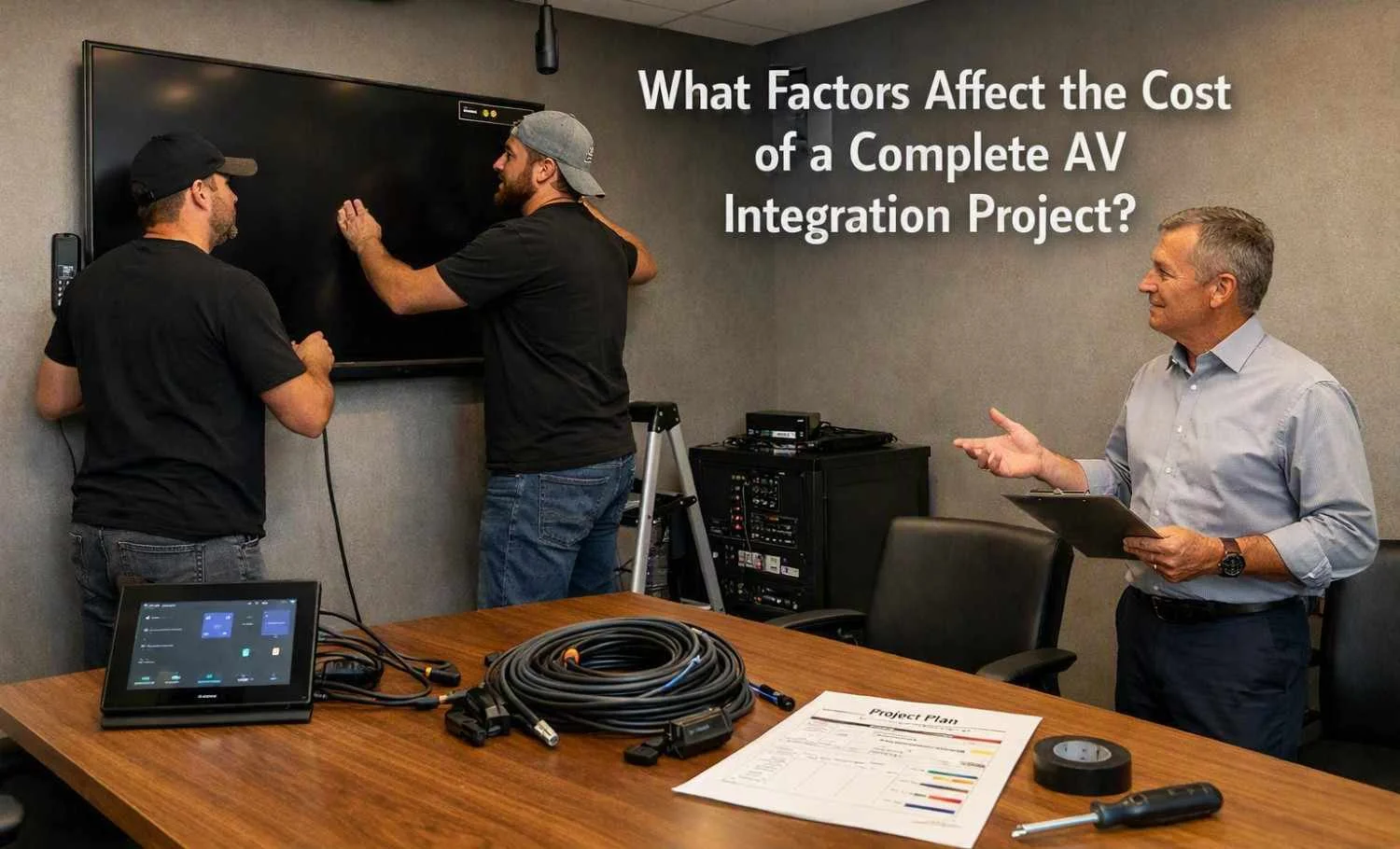
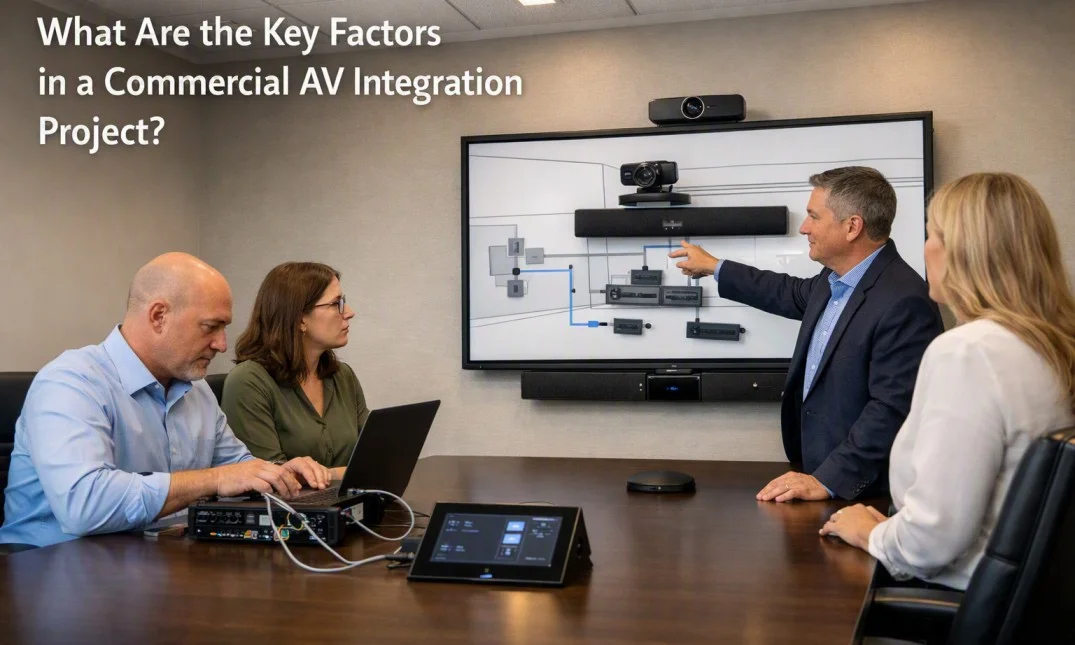
Best AV Integration Services can involve different equipment, system designs, installation needs, and room conditions. Because every project is different, the total cost can vary widely.
1. Type of AV Equipment
The equipment selected has a major effect on the total project cost. A basic meeting room may need a display, speakers, microphone, and simple control system. A larger space may require multiple displays, professional speakers, cameras, microphones, and advanced control equipment.
Equipment prices also differ based on features, performance, size, and reliability. Choosing equipment based only on price may create problems later if it does not meet the needs of the space.
2. Size and Layout of the Room
Room size and layout can change the amount of equipment and cabling required. A small conference room may need only a few devices, while a large meeting hall may need several speakers, microphones, displays, and signal connections.
The shape of the room also matters. Open spaces, high ceilings, partitions, and unusual layouts can make installation more complex.
3. System Design and Planning
A well-planned AV system needs proper design before installation. This may include deciding where displays, speakers, cameras, microphones, control panels, and other devices should be placed.
More complex systems require more planning and testing. Design work can therefore add to the overall project cost, but it also helps reduce installation problems.
4. Cabling and Connectivity
Cables are an important part of an AV system. The project may require power connections, audio cables, video cables, network connections, and other wiring.
Long cable runs, difficult access areas, walls, ceilings, and multiple rooms can increase installation time. Wireless technology may reduce some cabling, but it can also require additional network equipment and planning.
5. Installation Requirements
Installation costs depend on how difficult it is to place and connect the equipment. Ceiling-mounted speakers, wall-mounted displays, projectors, cameras, and other devices may require special mounting solutions.
Existing buildings can also create challenges. Limited access to ceilings or walls may increase the time needed for installation.
6. Control and Automation
Some AV systems use a central control system to manage displays, audio, lighting, cameras, and other devices. A simple setup may use basic controls, while a larger system may need programmed automation.
The number of devices and required control functions can affect both design and installation costs.
7. Acoustic Conditions
Sound quality depends on the room as well as the audio equipment. Rooms with hard surfaces may create echoes, while large open spaces may need careful speaker placement.
In some projects, acoustic treatment may be needed to improve speech clarity and sound quality. This can add another cost to the overall project.
8. Testing and System Setup
After installation, the system needs to be tested. Audio levels, video signals, microphones, cameras, control systems, and connections should work together correctly.
Complex systems usually require more testing and adjustment. Proper setup can help prevent performance issues after the project is completed.
9. Future Expansion
It is also useful to think about future needs. A business may want to add more displays, cameras, meeting rooms, or other equipment later.
Leaving enough network capacity, connection points, and system flexibility can make future changes easier. However, planning for expansion may increase the initial project cost.
10. Maintenance and Support Needs
The long-term cost of an AV system can include maintenance, equipment replacement, software updates, and technical support. Systems with many connected devices may require more regular attention.
Considering these costs during the planning stage gives a clearer picture of the total investment rather than focusing only on the initial installation price.
Final Consideration
The cost of an AV integration project depends on equipment, room conditions, system complexity, cabling, installation, control features, testing, and future requirements. Comparing these factors helps create a practical budget and makes it easier to select Best AV Integration Services that match the project's actual technical