Sign up with Google
 Sign in with Zoho

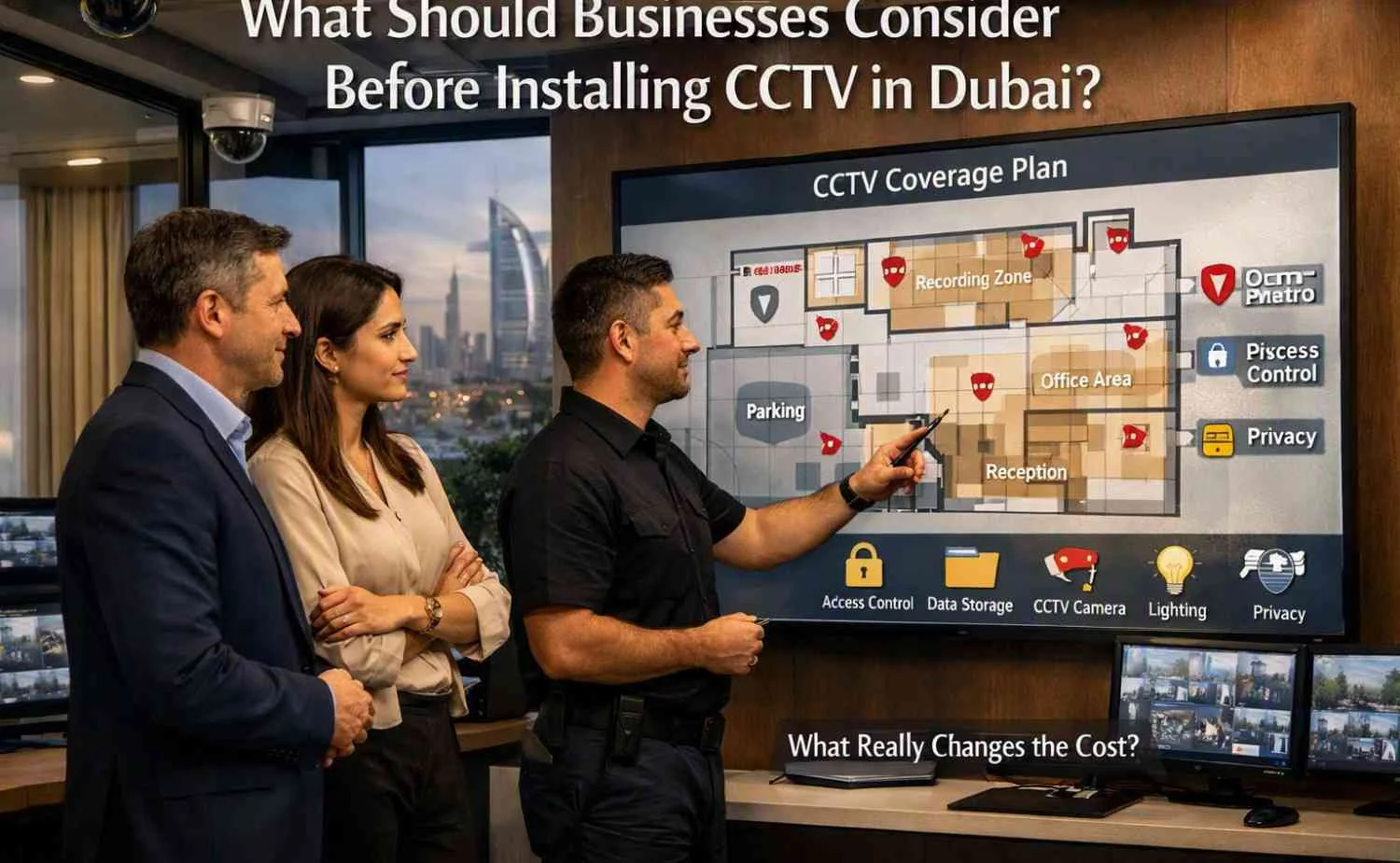
Some businesses need CCTV to monitor entrances, while others may need coverage for offices, parking areas, storage rooms, or customer spaces. Having a clear purpose helps businesses decide how many cameras are needed and where they should be placed. It also prevents unnecessary cameras from being installed in areas that do not need monitoring. Before choosing CCTV installation in Dubai, a business should first decide why it needs cameras.
Check the Areas That Need Coverage
Camera placement is one of the most important points to consider. Businesses should inspect the property and identify areas where security monitoring is useful.
Common areas may include:
- Main entrances and exits
- Reception areas
- Parking spaces
- Storage rooms
- Hallways
- Loading and delivery areas
- Cash handling areas
- Building access points
The camera should provide a clear view without being blocked by walls, furniture, signs, or other objects.
Consider Lighting Conditions
Lighting can affect CCTV image quality. A camera that works well during the day may produce poor images at night if the area is too dark.
Businesses should check lighting conditions at different times of the day. Areas with low light may require cameras designed for night monitoring. Strong light from windows or outdoor sources can also affect image quality.
The goal should be to capture useful images in normal operating conditions rather than simply installing cameras in every available location.
Decide Where Recordings Will Be Stored
CCTV systems normally record video for a certain period. Businesses should decide how long they need to keep recordings and how much storage will be required.
Storage needs depend on factors such as:
- Number of cameras
- Video resolution
- Recording hours
- Recording method
- Retention period
- Motion-based recording settings
Higher-resolution cameras generally require more storage. Businesses should select a storage setup that matches their actual monitoring needs.
Think About Who Can Access the System
CCTV recordings may contain sensitive information about employees, customers, visitors, and other people. Access should therefore be limited to authorized staff.
Businesses should decide who can view live footage, download recordings, or change system settings. Strong passwords and separate user accounts can help reduce unnecessary access.
Remote viewing should also be configured carefully. If cameras can be accessed through phones or computers, the business should use secure login methods and keep the system software updated.
Consider Privacy and Local Requirements
Businesses should consider privacy when deciding where cameras will be placed. CCTV should be used for a clear business purpose, and cameras should not be placed in areas where people have a reasonable expectation of privacy.
Clear internal rules can also help employees understand why cameras are being used, who can access recordings, and how footage is handled.
Before installing a system, businesses should check the applicable rules and requirements in Dubai and the UAE. This can help avoid problems caused by poor camera placement, improper access, or unsuitable recording practices.
Choose Cameras Based on the Environment
Different areas may need different types of cameras. A small indoor office may have different requirements from an outdoor parking area.
For example, outdoor locations may need cameras that can handle heat, dust, moisture, and changing light conditions. Indoor areas may focus more on viewing angles, image detail, and discreet placement.
Businesses should consider the environment instead of selecting cameras based only on resolution or appearance.
Plan for Future Expansion
A CCTV system should not only meet current needs. Businesses may add new offices, storage areas, entrances, or other facilities later.
Planning for expansion can make future changes easier. The recording system, network, cabling, and power requirements should have enough flexibility to support additional cameras if needed.
This can also reduce the need to replace major system components when the business grows.
Consider Network and Power Requirements
Modern CCTV systems may depend on a reliable network connection and suitable power supply. Businesses should check whether the existing network can handle the cameras and video traffic.
Cable routes should also be planned carefully. Poorly placed cables can create maintenance problems and may be exposed to accidental damage.
For larger properties, businesses may need a more detailed network and power plan before installation begins.
Plan Regular Maintenance
A CCTV system needs regular checks to remain useful. Dust, weather, cable problems, software issues, and changes in the surrounding environment can affect camera performance.
Businesses should regularly check whether cameras are recording properly and whether the images remain clear. Camera lenses should be cleaned when required, while storage capacity and system updates should also be reviewed.
Regular maintenance can help identify small problems before they affect important recordings.
Compare the Total Cost
The cost of a CCTV system is not limited to the cameras. Businesses should also consider recording equipment, storage, networking, cabling, power requirements, installation work, software, maintenance, and possible future upgrades.
Comparing these factors helps businesses understand the complete cost of operating the system. A suitable system should provide the required coverage without adding unnecessary equipment.
Careful planning before CCTV installation in Dubai can help businesses create a practical monitoring system that fits their property, operating needs, privacy considerations, storage requirements, and future plans.