Sign up with Google
 Sign in with Zoho

Introduction
The world of information technology is continuously evolving. Organizations are adopting cloud computing, containerization and automation to improve application delivery and infrastructure management. Traditional infrastructure management methods are increasingly being combined with modern platforms that support scalable and flexible application environments.
One important technology in this area is Red Hat OpenShift. Built around Kubernetes, OpenShift provides an enterprise platform for deploying, managing and scaling containerized applications.
For IT professionals who already understand Linux administration or want to develop skills in DevOps and cloud computing, learning OpenShift can provide valuable technical knowledge.
This article explores OpenShift, its important features, administration concepts, practical applications and the skills professionals should develop when learning this technology.
Understanding Red Hat OpenShift
Red Hat OpenShift is an enterprise Kubernetes platform designed to manage containerized applications. It provides an integrated environment where developers and administrators can work with application workloads, cluster resources, networking, storage and security.
Kubernetes provides the foundation for container orchestration. OpenShift builds on this foundation with additional enterprise-oriented capabilities and tools.
Organizations use OpenShift to support application deployment, improve consistency between environments and manage container workloads.
What Are Containers and Why Are They Important?
Containers package applications together with the dependencies required to run them. This makes it easier to move applications between supported environments without repeatedly configuring the entire application stack.
Containers are useful because they help organizations:
- Package applications consistently.
- Simplify application deployment.
- Improve resource utilization.
- Support scalable application environments.
- Separate application workloads.
- Integrate with automated development and deployment processes.
Understanding container fundamentals is an important starting point for anyone planning to learn Kubernetes or OpenShift.
The Role of Kubernetes in OpenShift
Kubernetes is an open-source container orchestration platform. It helps administrators manage containerized applications across clusters of machines.
Some important Kubernetes resources include:
Pods: The smallest deployable units in Kubernetes.
Nodes: Machines that provide resources for running application workloads.
Deployments: Resources used to manage application replicas and updates.
Services: Resources that provide network access to application workloads.
ConfigMaps and Secrets: Resources used to manage application configuration and sensitive information.
OpenShift uses Kubernetes concepts and provides additional platform capabilities to simplify enterprise administration.
Important OpenShift Administration Concepts
1. OpenShift Cluster Architecture
Understanding cluster architecture is essential for administrators. OpenShift environments include control-plane components, worker nodes, networking and storage resources.
Administrators should understand how these components work together and how application workloads are managed within a cluster.
2. Projects and Resource Management
Projects provide a way to organize resources and workloads in OpenShift.
Administrators can use projects to separate applications, manage access and organize resources according to organizational requirements.
3. Application Deployment
Application deployment is one of the most important OpenShift skills.
Administrators should understand how to create deployments, manage pods, configure services and expose applications through routes.
They should also understand how application updates and scaling are handled.
4. Networking and Routes
Applications running inside a cluster often need to communicate with other services or external users.
OpenShift provides networking resources that help manage application communication.
Learning services, routes and related networking concepts helps administrators understand application connectivity and troubleshoot communication problems.
5. Storage Management
Many applications need persistent storage to retain data.
OpenShift administrators should understand persistent volumes, persistent volume claims and storage configuration.
This knowledge is important when deploying applications that need reliable data storage.
6. Security and Access Management
Security is an essential part of enterprise infrastructure.
OpenShift provides role-based access control and security-related capabilities to help administrators manage permissions.
Important topics include users, groups, roles, service accounts and security configuration.
7. Helm, Kustomize and Operators
Modern Kubernetes environments often use additional tools to manage application configurations.
Helm helps package and manage Kubernetes applications. Kustomize supports configuration customization, while Operators help automate application and infrastructure operations.
Understanding these tools can help professionals work with more advanced OpenShift environments.
Why Should IT Professionals Learn OpenShift?
OpenShift combines container orchestration with enterprise application management capabilities.
Learning this platform can help professionals develop knowledge in several technical areas:
- Kubernetes administration
- Container management
- Cloud-native application deployment
- Linux infrastructure
- Networking and storage
- Security and access management
- DevOps practices
- Infrastructure automation
These skills are relevant to professionals working with modern application platforms and cloud infrastructure.
OpenShift DO280 Training and EX280 Certification
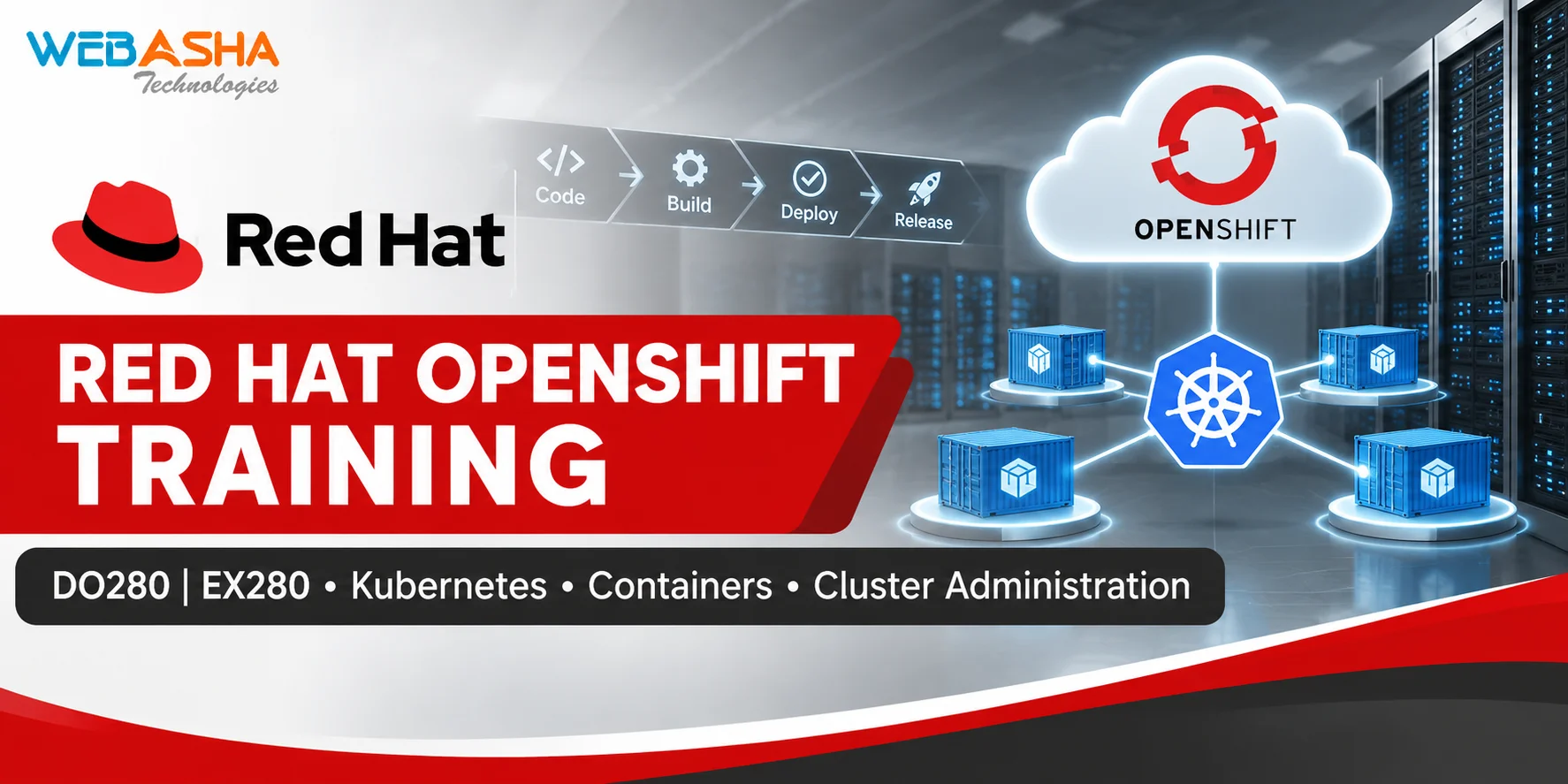
IT professionals interested in OpenShift administration can explore the Red Hat DO280 training course and the EX280 certification pathway.
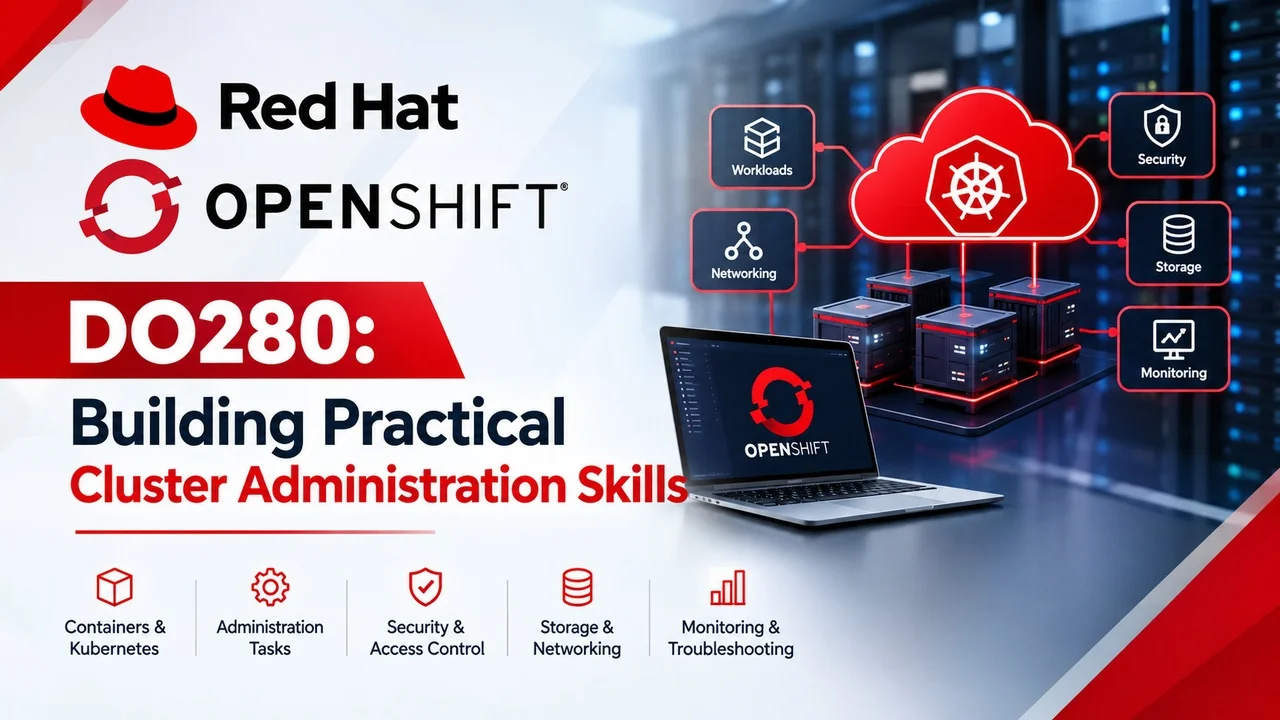
DO280 focuses on Red Hat OpenShift administration concepts and practical skills.
EX280 is associated with the Red Hat Certified Specialist in OpenShift Administration credential.
Certification preparation generally involves understanding cluster administration, application deployment, resource management, security and troubleshooting.
Candidates should review the latest official Red Hat exam objectives and requirements before beginning certification preparation.
Practical Skills to Develop
Reading about OpenShift is useful, but practical experience is important for understanding how the platform works.
Learners should focus on activities such as:
- Exploring the OpenShift web console.
- Working with projects and namespaces.
- Deploying containerized applications.
- Managing pods and deployments.
- Configuring services and routes.
- Understanding persistent storage.
- Managing user permissions.
- Investigating application and cluster issues.
- Exploring Helm charts and Operators.
Regular practice can improve understanding of the platform and help learners become more comfortable with administration tasks.
Career Opportunities in OpenShift and Kubernetes
Knowledge of OpenShift can be useful in different areas of enterprise IT.
Depending on experience and additional technical skills, professionals may explore roles such as:
- OpenShift Administrator
- Kubernetes Administrator
- DevOps Engineer
- Cloud Infrastructure Engineer
- Linux System Administrator
- Platform Engineer
- Site Reliability Engineer
Employers may also expect knowledge of Linux, networking, scripting, automation and cloud technologies.
Completing training or certification does not guarantee employment, but developing practical technical skills can support professional growth.
How to Choose the Right OpenShift Training
Before selecting an OpenShift training program, consider the following points:
Course coverage: Check whether the syllabus includes architecture, application deployment, cluster administration, networking, storage and security.
Practical learning: Look for opportunities to work with real or lab-based OpenShift environments.
Trainer experience: Understand the trainer's background and experience with Red Hat technologies.
Certification preparation: Check whether the course aligns with the current certification objectives.
Learning support: Review the available guidance, doubt-clearing sessions and practice resources.
A structured learning program can help students understand the platform step by step.
Explore Red Hat OpenShift Training with WebAsha Technologies
WebAsha Technologies provides professional IT training in areas such as Red Hat technologies, Linux administration, Kubernetes, DevOps, cloud computing and cybersecurity.
Students and IT professionals interested in OpenShift can explore its training program to understand the course syllabus, learning format and certification preparation options.
The program is relevant to learners who want to develop knowledge of Kubernetes-based application platforms and enterprise container administration.
Explore the course details:
https://www.webasha.com/courses/openshift-online-training-institute-certification-exam-center
Conclusion
Red Hat OpenShift plays an important role in modern enterprise infrastructure by combining Kubernetes-based orchestration with tools for application deployment and cluster administration.
Learning OpenShift helps IT professionals understand containers, Kubernetes, networking, storage, security and cloud-native application management.
Whether you are a Linux administrator, DevOps professional, cloud engineer or IT student, developing OpenShift knowledge can be a useful step toward understanding modern infrastructure technologies.
Related Topics: Red Hat OpenShift, Kubernetes Administration, DO280 Training, EX280 Certification, Container Management, DevOps, Linux Administration, Cloud Computing and Platform Engineering.