Sign up with Google
 Sign in with Zoho
Rooftop solar installations have become a practical solution, helping homeowners generate their own electricity while reducing dependence on the utility grid. As energy prices continue to rise across India, understanding a solar system for home is no longer just an environmental choice—it is becoming an essential part of smart home planning.
Why Every Homeowner Should Understand a Solar System for Home
A solar system for home is a renewable energy solution that converts sunlight into electricity using photovoltaic (PV) technology. It enables homeowners to generate clean power on-site, lower electricity bills, and improve energy independence.
Today's solar system is far more advanced than earlier generations. Intelligent inverters, cloud-based monitoring, efficient solar modules, and improved electrical safety have made residential solar installations more reliable, easier to manage, and capable of operating efficiently for over 25 years.
Understanding the Main Components
Every residential solar installation consists of several interconnected components designed to function as one integrated electrical system.
Essential Components of a Solar System for Home
Solar Panels: Photovoltaic panels absorb sunlight and convert it into direct current (DC) electricity through semiconductor cells.
Solar Inverter: The inverter converts DC electricity into alternating current (AC), allowing the generated power to operate household appliances safely.
Mounting Structures: Engineered support structures secure panels to rooftops while maintaining the correct tilt angle and orientation for optimal energy generation.
Electrical Protection Equipment: Circuit breakers, isolators, surge protection devices, earthing systems, and safety disconnects protect both the installation and occupants.
Monitoring Platform: Modern monitoring systems provide real-time performance tracking, fault alerts, and remote access through web portals or mobile applications.
Battery Storage: Hybrid and off-grid installations may include batteries that store surplus electricity for use during nighttime or utility power outages.
Types of Solar Panels and System Configurations
Choosing the best solar panels depends on roof space, energy requirements, climate conditions, and expected long-term performance.
The most widely used technologies include:
- Monocrystalline panels for maximum efficiency.
- Polycrystalline panels for balanced performance and affordability.
- Thin-film panels for selected commercial and industrial applications.
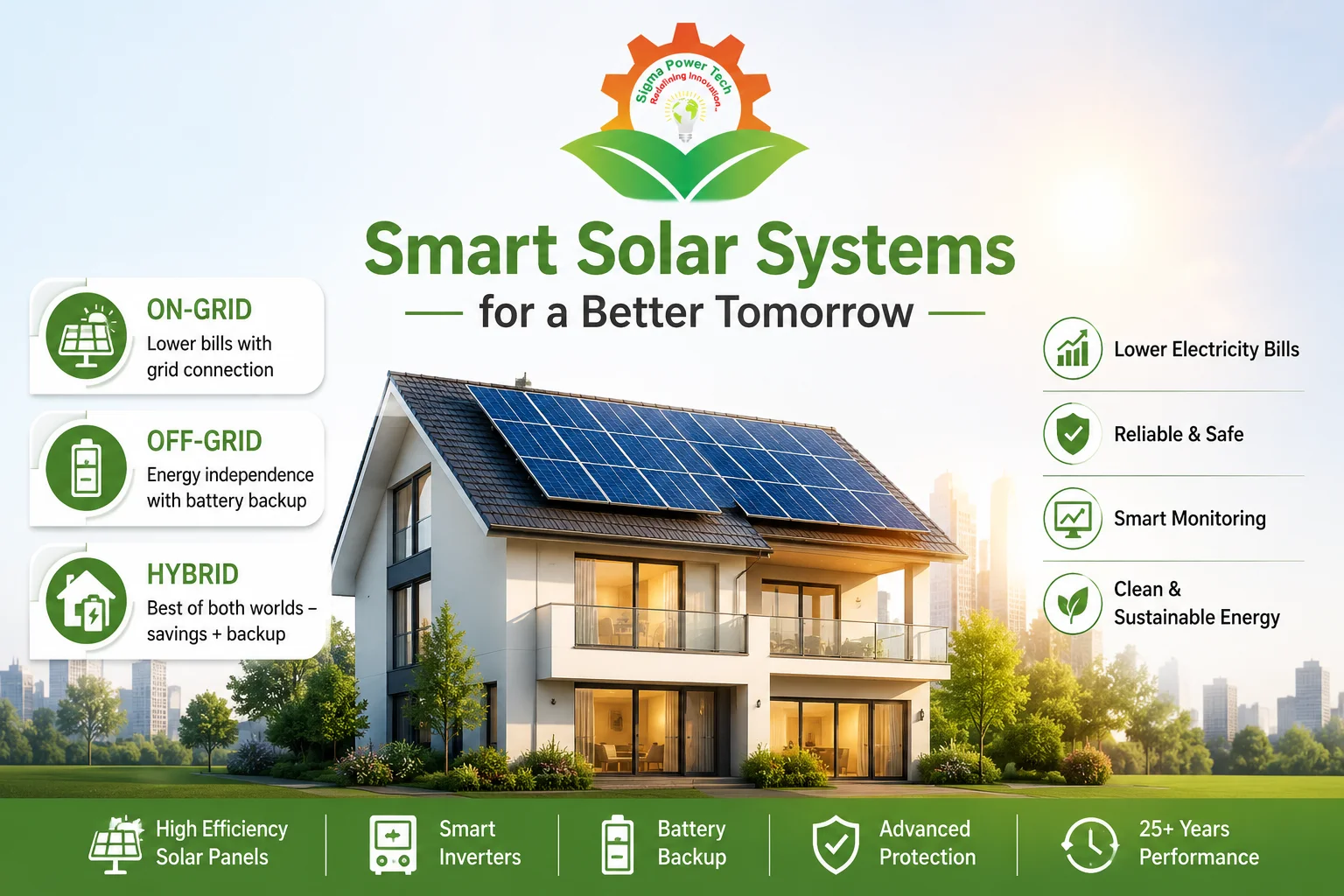
Residential systems are generally designed in one of three configurations:
- On-grid systems connected to the electricity network through net metering.
- Off-grid systems using battery storage without utility dependence.
- Hybrid systems combining battery backup with grid connectivity.
Proper system sizing ensures the installation delivers reliable performance while supporting future energy requirements.
Modern Features of Residential Solar Systems
Solar engineering has advanced considerably in recent years, making systems more intelligent and efficient.
Key features include:
- High-efficiency photovoltaic technology
- Modular system architecture
- Smart inverter technology
- Grid synchronization capability
- Remote monitoring through mobile applications
- Real-time energy generation tracking
- Automated performance alerts
- Predictive maintenance support
- Weather-resistant panel construction
- Low maintenance requirements
- Operational life exceeding 25 years
- Flexible expansion for future electricity demand
These features improve both operational efficiency and long-term reliability.
Applications Beyond Residential Homes
Although primarily associated with homeowners, solar technology now supports a broad range of infrastructure projects.
Common applications include:
- Residential rooftop solar system installations
- Apartment complexes
- Commercial office buildings
- Manufacturing facilities
- Hospitals and healthcare centres
- Hotels and hospitality properties
- Shopping malls
- Educational campuses
- Government buildings
- Agricultural irrigation systems
- Warehouses and logistics parks
- Smart city and rural electrification projects
Each project requires customized engineering based on electrical load, available installation space, and operational objectives.
What Determines Solar Panel System Cost?
Many homeowners focus on Solar panel system cost, but actual investment value depends on several engineering and lifecycle considerations.
These include:
- Available rooftop area
- Household energy consumption
- Solar panel technology
- Inverter capacity and efficiency
- Battery storage requirements
- Roof orientation and shading
- Installation and commissioning complexity
- Net metering approvals
- Monitoring platform capabilities
- Preventive maintenance planning
- Regulatory documentation
- Expected payback period
Similarly, solar system for home price varies according to project capacity, component quality, installation conditions, and local regulatory requirements rather than following a standard pricing structure.
How to Choose the Right Installation Partner
Selecting an experienced engineering company is one of the most important decisions in a solar project.
Homeowners should evaluate:
- Industry experience
- Engineering and EPC capability
- Residential project portfolio
- Compliance with MNRE and BIS standards
- Equipment quality validation
- Product warranties
- Design customization
- Technical support availability
- Installation and commissioning procedures
- Solar panel maintenance services
- AMC options
- Documentation and subsidy assistance
Providers offering integrated renewable energy solutions, including a Sigma Power Tech solar panel system, generally prioritize engineering quality, compliance, and operational reliability throughout the entire project lifecycle.
Common Mistakes Homeowners Should Avoid
Several planning mistakes can reduce system efficiency and increase long-term operating costs.
Common issues include:
- Skipping detailed site and load assessments
- Ignoring future electricity requirements
- Choosing panels based only on upfront price
- Underestimating shading and roof orientation
- Selecting incompatible inverters
- Delaying routine maintenance
- Ignoring grounding and electrical protection
- Overlooking net metering approvals
- Setting unrealistic energy-saving expectations
- Poor installation and commissioning practices
Educational demonstrations such as a solar system model or a classroom solar system project introduce the basic concepts of photovoltaic technology, but residential installations require professional engineering, regulatory compliance, and electrical safety standards to achieve dependable long-term performance.
Conclusion
Installing a solar system for home is a long-term infrastructure investment that combines renewable energy generation with modern electrical engineering. Understanding system components, panel technologies, configuration options, monitoring capabilities, and installation requirements allows homeowners to make informed decisions based on lifecycle value rather than initial cost alone. By selecting quality equipment, experienced engineering professionals, and reliable maintenance support, homeowners can reduce electricity expenses, improve energy independence, and contribute to a cleaner, more sustainable energy future while ensuring dependable power generation for decades.