Sign up with Google
 Sign in with Zoho

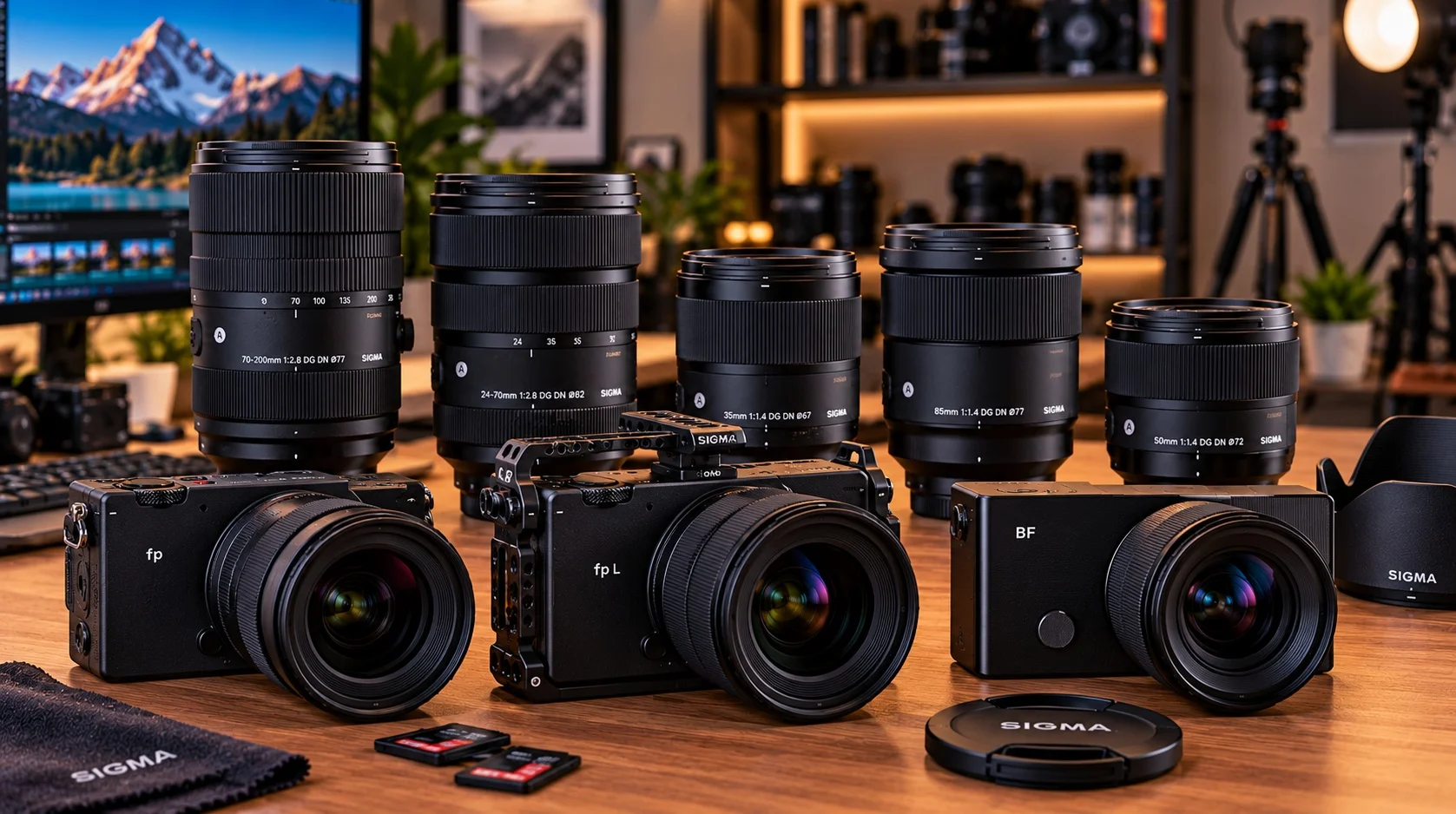
Photography and filmmaking in Pakistan continue to grow as more people invest in professional cameras, mirrorless systems, and high-quality lenses. From wedding photographers and filmmakers to YouTubers, studio professionals, and travel creators, choosing the right equipment can make a significant difference. Sigma Pakistan provides photographers and filmmakers with access to Sigma cameras, lenses, and imaging solutions designed for different creative needs.
Whether you are buying your first camera, moving beyond a kit lens, or upgrading a professional setup, this guide explains the key things you should know about Sigma cameras and lenses in 2026.
Understanding Sigma Cameras and Lenses
Sigma is a Japanese imaging brand known globally for cameras and interchangeable lenses. Its lens ecosystem covers multiple focal lengths, sensor formats, and photography styles, while Sigma cameras offer distinctive options for photographers and filmmakers looking for compact and flexible systems.
Understanding Sigma equipment becomes easier when you know what specifications such as focal length, aperture, sensor format, and lens mount actually mean.
For example, Sigma uses several abbreviations across its lens lineup. Photographers unfamiliar with them can learn about DG, DC, DN, OS, HSM, HLA and other Sigma lens letters before choosing a lens.
Sigma Cameras to Know in 2026
Although Sigma is particularly well known for lenses, its camera lineup offers interesting choices for photographers and filmmakers.
Sigma fp
The Sigma fp is a compact full-frame mirrorless camera built around a modular concept. Its small body allows creators to build their setup according to the shoot instead of carrying an unnecessarily large system.
Its compact design can be particularly useful for filmmaking, travel, video production, and creators who want flexibility when building rigs.
Those interested in video production can explore the detailed guide to the Sigma fp camera for filmmakers.
Sigma fp L
The Sigma fp L follows the compact fp concept while offering a higher-resolution approach. This can appeal to photographers who need greater detail for commercial photography, landscapes, portraits, or large output.
However, resolution should not be the only buying factor. Storage requirements, lens quality, processing power, autofocus needs, and intended use should also be considered.
A detailed overview of Sigma fp L features, specifications and uses can help photographers understand whether it fits their workflow.
Sigma BF
The Sigma BF takes a simplified approach to modern camera design. Instead of focusing only on adding more physical controls, its design emphasizes a streamlined photography experience.
Before choosing any camera, compare its capabilities with your actual shooting requirements rather than purchasing based solely on specifications.
How to Choose the Right Camera
The best camera is not necessarily the most expensive one. Your photography style should determine which features matter most.
Consider Sensor Size
Sensor size influences field of view, depth-of-field possibilities, and other aspects of image-making. Full-frame and smaller sensor formats can both be useful depending on the photographer's requirements.
Understanding camera sensor size and image quality can make camera comparisons easier.
Photography vs Videography
Still photographers may prioritize resolution, ergonomics, autofocus, and image quality. Filmmakers may focus more heavily on recording formats, monitoring, heat management, storage, and rigging.
Hybrid creators should look for a balance that supports both.
Think About the Entire System
Do not spend your complete budget on a camera body. Your setup may also require lenses, batteries, memory cards, storage, a tripod, audio equipment, filters, and protective accessories.
Most importantly, check the available lens ecosystem before selecting a camera.
Understanding Sigma Lens Categories
Choosing the correct camera lens can influence your images as much as choosing the camera itself.
Focal length determines framing and field of view, while aperture affects light gathering and depth of field. Autofocus, optical design, weight, and compatibility also vary between lenses.
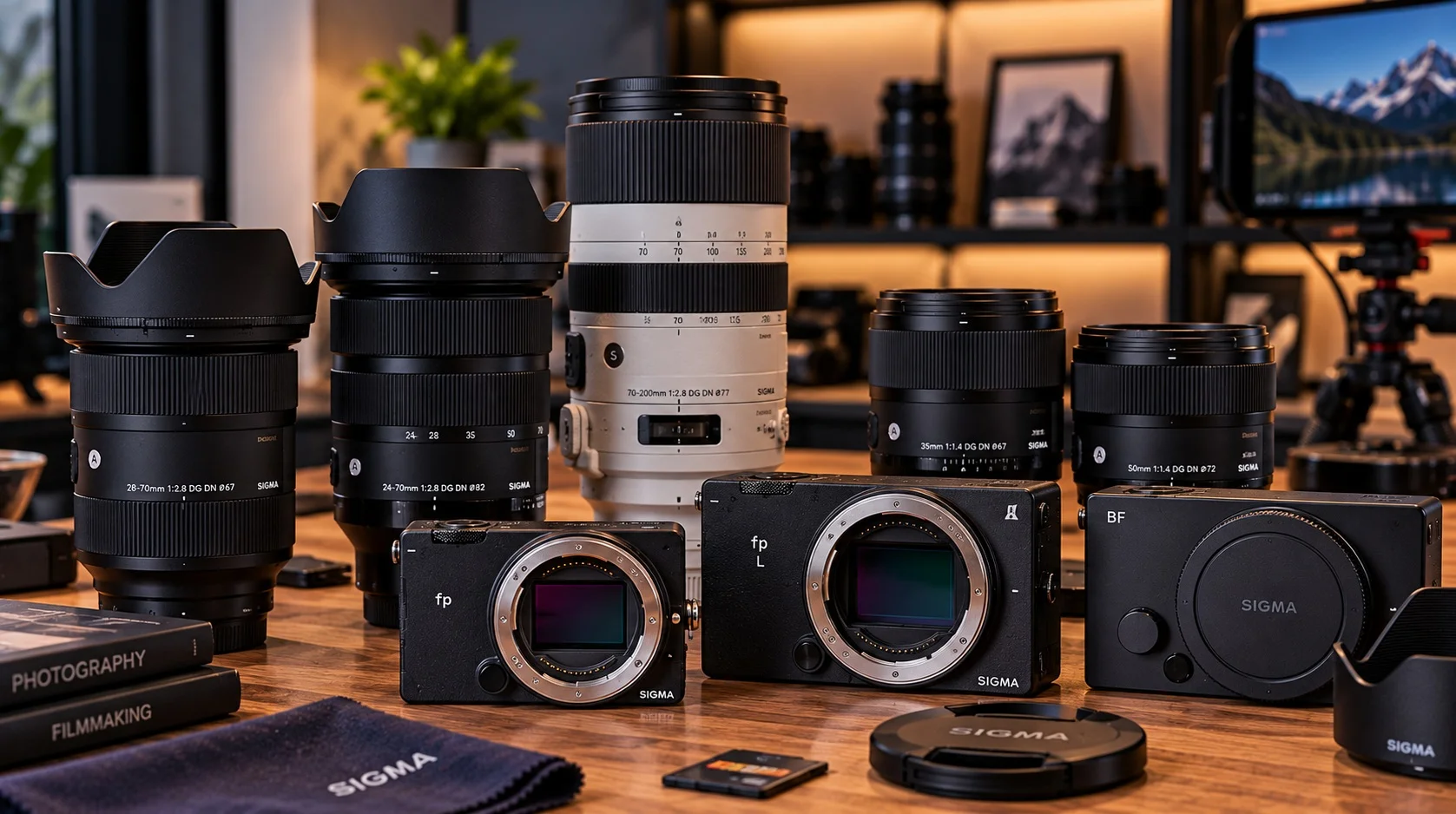
Sigma organizes many of its lenses into Art, Contemporary, and Sports lines.
Sigma Art Lenses
Art lenses generally emphasize optical performance and creative image-making. They are commonly considered for portraits, weddings, commercial photography, studio work, landscapes, and other applications where image rendering is important.
Photographers comparing product families can read about Sigma Art vs Contemporary lenses.
Sigma Contemporary Lenses
Contemporary lenses typically aim to balance image quality, portability, and practical everyday use.
They can be attractive for travel photographers, content creators, street photographers, and people who prefer carrying a lighter setup.
Sigma Sports Lenses
Sports lenses focus on demanding applications where reach, handling, and performance matter. They are particularly relevant for sports, wildlife, and action photography.
The comparison of Sigma Contemporary vs Sports lenses explains how their intended uses differ.
Prime Lens vs Zoom Lens
One of the most common decisions photographers face is choosing between a prime and zoom lens.
What Is a Prime Lens?
A prime lens uses a fixed focal length. The photographer cannot zoom between different focal lengths and instead adjusts position or composition.
Prime lenses are often selected for their aperture options, optical characteristics, and ability to encourage deliberate composition.
They are popular for portraits, street photography, low-light shooting, weddings, and cinematic work.
What Is a Zoom Lens?
A zoom lens covers a range of focal lengths within one lens.
This flexibility can be valuable for weddings, travel, events, documentary photography, sports, and video production, especially when changing lenses frequently is inconvenient.
Neither type is automatically better. The right option depends on how and where you shoot.
For a detailed comparison, see this guide to prime lens vs zoom lens.
Choosing the Right Focal Length
Focal length is one of the most important specifications to understand before buying lenses.
Wide-Angle Lenses
Wide-angle lenses capture a broader field of view and can work well for landscapes, architecture, interiors, travel, environmental portraits, and certain video shots.
Photographers considering this category can explore the wide-angle lens guide for additional guidance.
Standard Lenses
Standard focal lengths provide versatile framing suitable for everyday photography, portraits, street scenes, events, and travel.
They can be particularly useful for photographers who want a natural-looking perspective and an adaptable everyday setup.
Telephoto Lenses
Telephoto lenses allow photographers to frame distant subjects more tightly. They are widely used for wildlife, sports, events, and certain portrait styles.
The guide explaining telephoto lens uses and types provides more detail.
Macro Lenses
Macro lenses are designed for close-up photography and detailed subjects such as products, jewelry, plants, textures, and small objects.
For specialized close-up work, understanding macro lens uses and features can help determine whether you need a dedicated macro lens.
Why Aperture Matters
Aperture controls the amount of light passing through the lens at a particular setting and contributes to depth of field.
Common maximum apertures include F1.2, F1.4, F1.8, F2.8, and F4.
A wider maximum aperture can help when shooting in low light and when photographers want shallow depth of field. However, aperture alone should not determine a purchase.
Focal length, optical characteristics, autofocus, size, weight, and price should also be considered.
Beginners can learn more from the guide explaining aperture and F-stops.
Sigma Lenses for Portrait and Wedding Photography
Portrait photographers commonly look for lenses that provide suitable subject framing and control over background separation.
There is no single focal length that works for every portrait. Wider focal lengths can include more environment, while longer focal lengths provide tighter framing from greater working distances.
Wedding photographers have even broader requirements. Pakistani weddings can involve group photographs, portraits, stage coverage, low-light indoor events, and outdoor sessions.
A wedding kit therefore often benefits from both flexibility and low-light capability. Photographers building such a setup can explore Sigma lenses for wedding photography in Pakistan.
Sigma Lenses for Video and Content Creation
Video creators should consider more than image sharpness when choosing a lens.
Focal length, aperture, autofocus behavior, handling, size, and weight can all affect video production. A travel vlogger may need a compact wide lens, while a filmmaker working with a controlled rig may have very different priorities.
Creators aiming for a cinematic look can read about choosing the right lens for cinematic videos.
Check Lens Mount Compatibility Before Buying
One of the most important steps before purchasing a lens is confirming compatibility.
Check:
- Camera model
- Camera mount
- Sensor format
- Lens mount
- Lens format designation
- Autofocus and feature compatibility
A lens having the correct focal length does not automatically mean it will fit your camera.
The Sigma lens mount guide can help photographers understand mount compatibility.
Sigma terminology such as DG, DC, and DN also provides information about intended camera and sensor formats. Understanding these designations reduces the chance of purchasing an unsuitable lens.
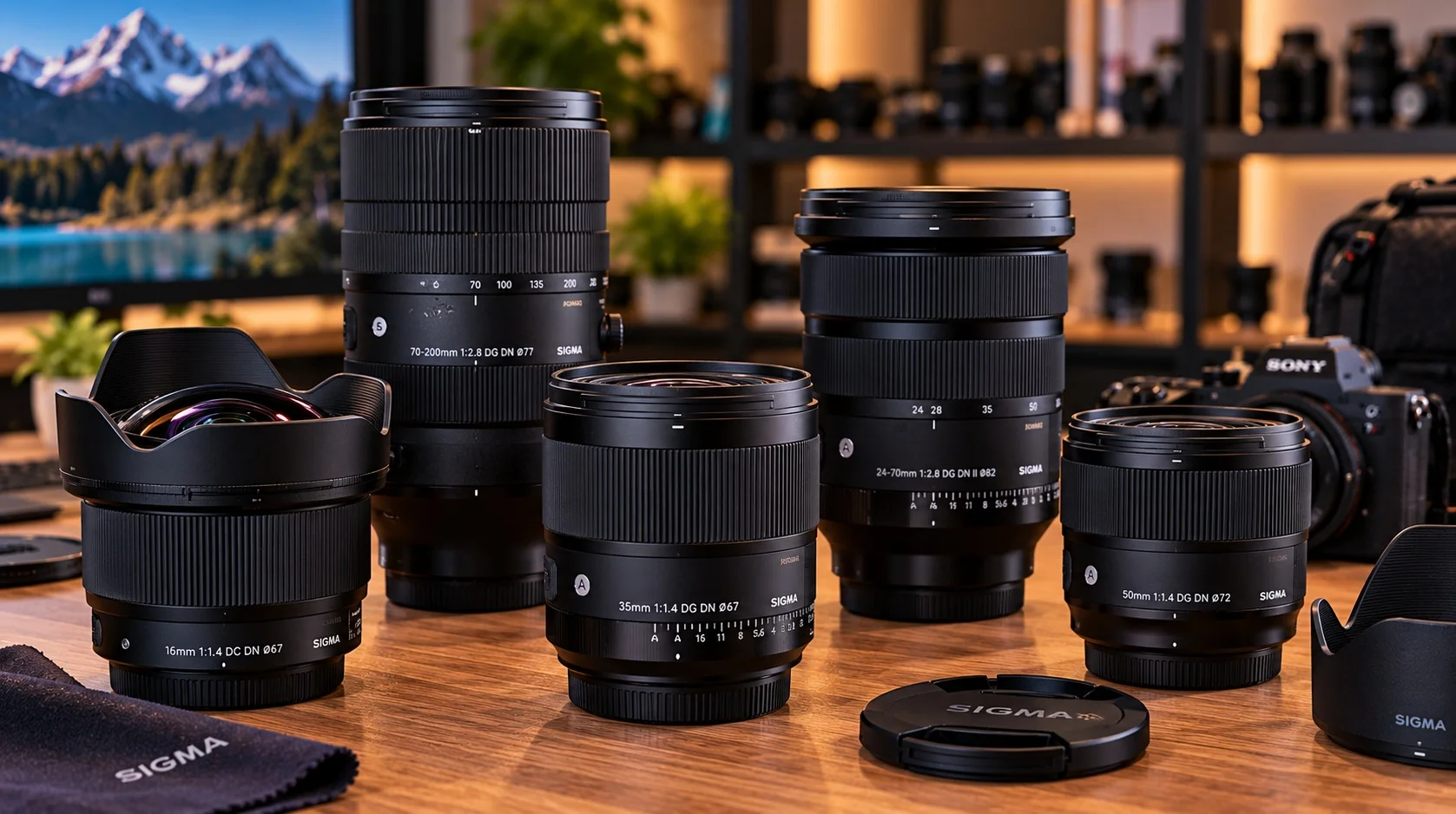
How to Choose Your First Sigma Lens
If you are upgrading from a kit lens, identify the limitation you want to solve first.
If you need better low-light performance, consider a suitable lens with a wider maximum aperture. If distant subjects are your priority, explore telephoto options. For landscapes, interiors, or vlogging, a wider focal length may be more appropriate.
Photographers who need flexibility may prefer a zoom, while someone who regularly shoots at one focal length may benefit from a prime.
Instead of asking, "Which lens is best?" ask, "Which lens solves the problem my current setup cannot?"
The guide to Sigma lenses after a kit lens can help photographers narrow their options.
Buying Original Sigma Cameras and Lenses in Pakistan
Authenticity and warranty support should be considered alongside price when investing in photography equipment.
Before buying, verify the seller, exact model, lens mount, product documentation, and applicable warranty terms. Extremely low pricing should not automatically be treated as better value if the product's origin or support cannot be confirmed.
Buyers can also review how to verify genuine Sigma products and dealers in Pakistan before purchasing expensive equipment.
Taking Care of Your Sigma Equipment
Proper storage and cleaning can extend the usable life of cameras and lenses.
Pakistan's dust, humidity, and monsoon conditions make storage particularly important. Keep lens caps attached when equipment is not in use, avoid storing gear in persistently humid environments, and clean optical surfaces correctly.
Lens fungus can become a serious issue in humid conditions. Photographers can learn how to identify and prevent camera lens fungus before damage becomes more difficult to manage.
Final Thoughts
Choosing cameras and lenses in 2026 should begin with your actual creative requirements rather than specifications alone. Wedding photographers, filmmakers, wildlife shooters, studio professionals, travelers, and content creators each need different combinations of focal length, aperture, portability, autofocus, and camera features.
Sigma offers cameras alongside Art, Contemporary, and Sports lenses covering prime, zoom, wide-angle, standard, macro, and telephoto applications. Understanding your camera mount, sensor format, shooting style, and budget will make it easier to build a system that can grow with your photography or filmmaking.
FAQs
Are Sigma lenses suitable for professional photography?
Sigma produces lenses for professional and enthusiast applications across multiple focal lengths and product lines. The correct option depends on camera compatibility and the type of work being produced.
Is a prime lens better than a zoom lens?
Neither is universally better. Prime lenses provide a fixed focal length, while zoom lenses provide variable focal lengths. The choice depends on whether you prioritize a particular focal length and aperture characteristics or greater framing flexibility.
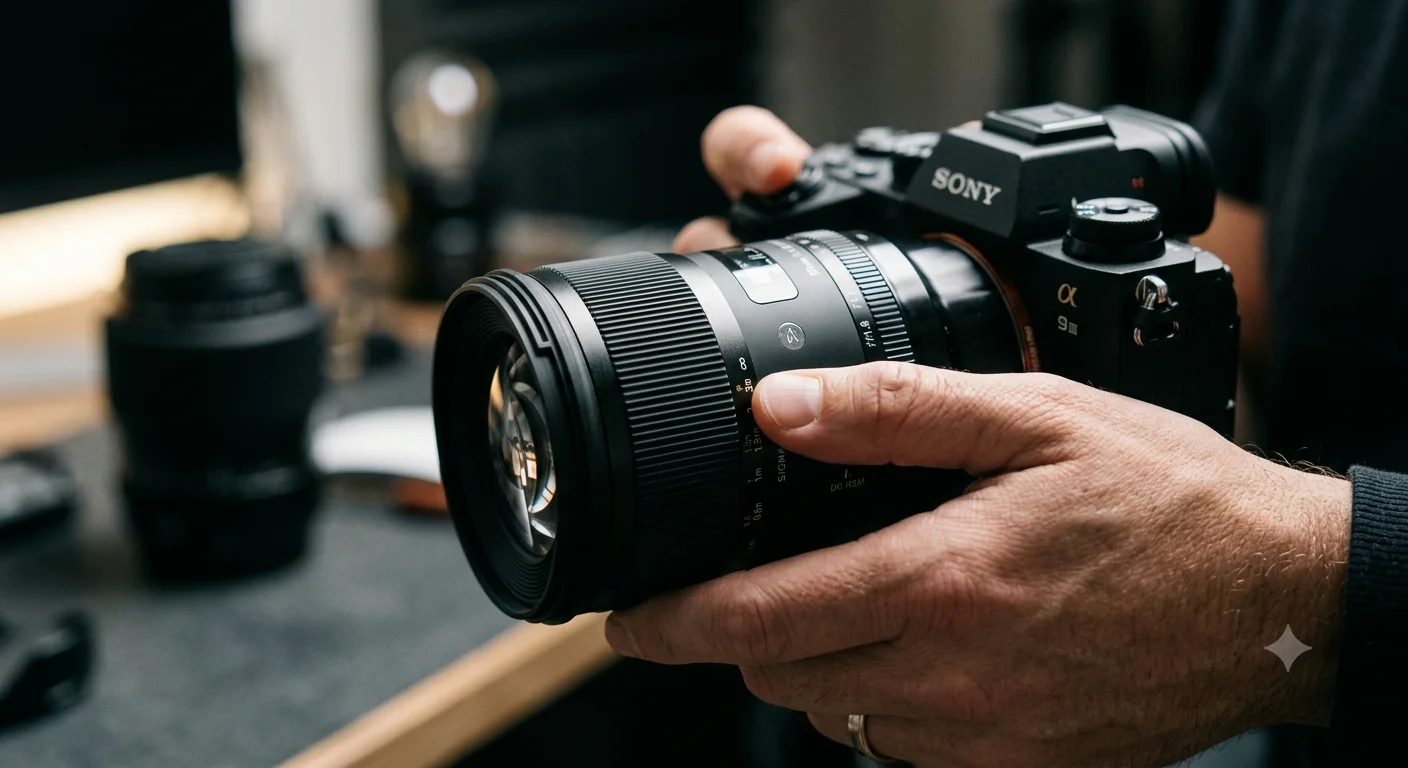
Can Sigma lenses work with Sony cameras?
Sigma produces lenses for Sony E-mount. Buyers should still verify the exact mount, sensor format, and compatibility of the individual lens before purchasing.
Which lens should a beginner buy first?
Start by identifying what your current lens cannot do. Portraits, wildlife, landscapes, video, and low-light photography all require different lens characteristics.
What should I check before buying a Sigma lens in Pakistan?
Confirm the lens mount, sensor compatibility, focal length, aperture, intended use, seller authenticity, and applicable warranty before purchasing.