Sign up with Google
 Sign in with Zoho

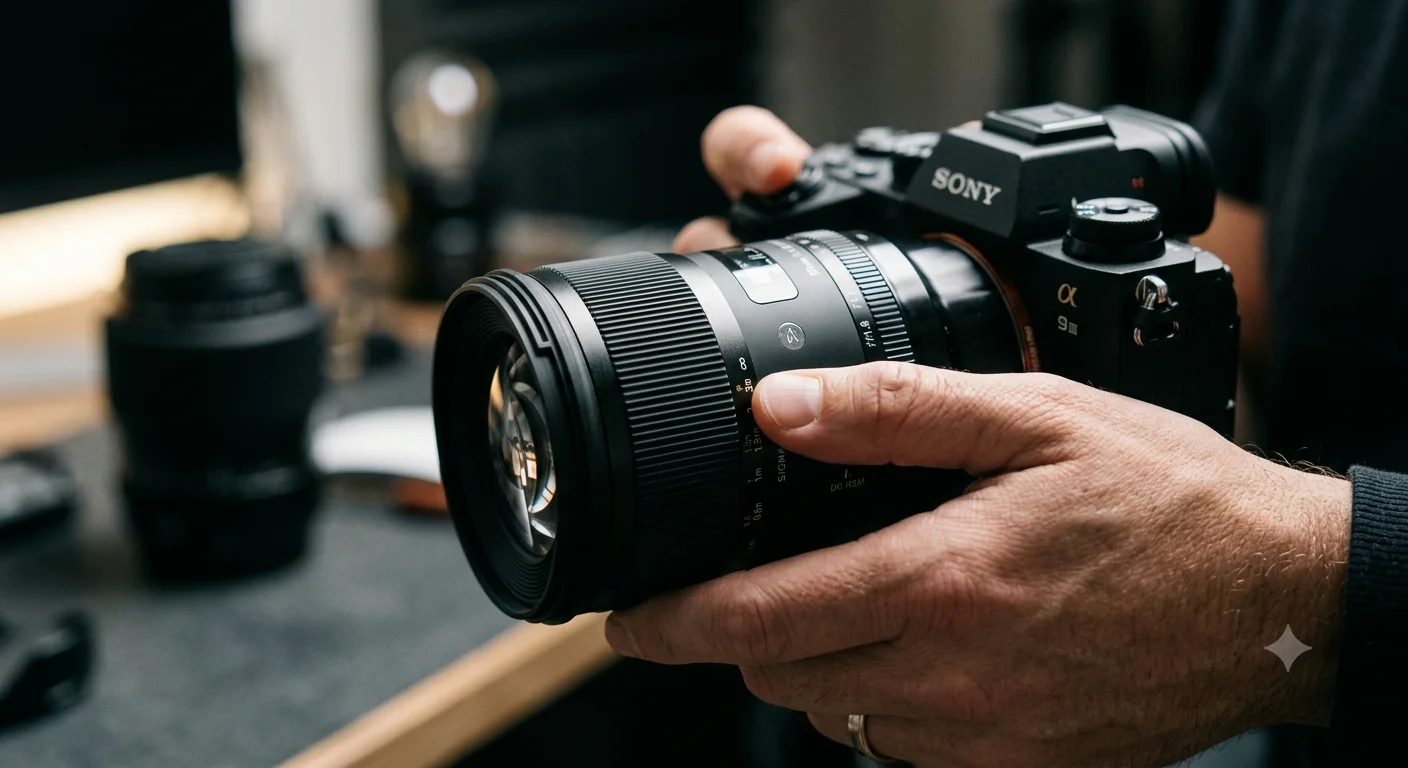
Autofocus is the right default for the vast majority of real shooting situations, especially anything involving movement, changing light, or working quickly, and modern autofocus systems on mirrorless cameras are genuinely excellent at tracking eyes, faces, and fast subjects. Manual focus earns its place in specific, narrower situations: macro work, low-contrast or very low-light scenes where autofocus hunts, certain video work where you need controlled, deliberate focus pulls, and shooting through obstructions like fences or glass where autofocus tends to lock onto the wrong plane.
The mistake many photographers make isn't picking the wrong mode overall, it's applying the same mode habitually across every situation instead of matching the tool to the moment. Someone who never touches manual focus misses out on control in scenarios where autofocus genuinely struggles, while someone who insists on manual focus everywhere loses speed and consistency in fast-paced settings like weddings or events where split-second timing matters more than fine manual precision.
This guide breaks down exactly when each mode makes practical sense, what's actually happening technically when autofocus fails, and how to build the judgment to switch between them without hesitating mid-shoot.
When Does Autofocus Actually Outperform Manual Focus?
Autofocus wins clearly in any situation involving movement or unpredictability, which covers most everyday and professional shooting scenarios. Modern autofocus systems, particularly on mirrorless bodies with on-sensor phase detection and subject tracking, can lock onto and follow a moving eye or face far more reliably and quickly than a human can manually adjust focus in real time.
Event photography is the clearest case. A wedding photographer working a nikkah ceremony or a walima reception simply doesn't have time to manually rack focus between a bride's veil catching light and a guest laughing in the background — subjects move, the photographer moves, and lighting shifts constantly. Autofocus, especially eye-detect tracking on a fast prime like a 50mm F1.4 DG DN Art, handles this kind of unpredictable, rapid subject change far better than manual focus ever could in the moment.
Real scenario: A photographer covering a baraat procession in Lahore relied on continuous autofocus with subject tracking on a 35mm F1.4 DG DN Art to capture the groom on horseback moving through a crowd, with people constantly crossing between the camera and subject. Manual focus in that scenario would have meant losing several usable frames while trying to keep the groom in focus by hand; autofocus tracking held focus reliably even as bystanders briefly blocked the frame, recovering focus on the subject the moment the view cleared.
When Does Manual Focus Actually Work Better Than Autofocus?
Manual focus becomes the better tool specifically when autofocus systems struggle to find reliable contrast or a clear subject to lock onto, or when precision matters more than speed.
Macro photography is a strong example. At very close focusing distances with a shallow depth of field measured in millimeters, autofocus often hunts back and forth without settling, since the tiny focus plane and often low-contrast subject (a flower petal, an insect, a textured surface) don't give the autofocus system enough to grab onto confidently. Manual focus, ideally combined with focus peaking or magnified live view on a mirrorless body, lets you place the focus plane exactly where you want it rather than hoping the camera guesses correctly.
Low-light and low-contrast scenes create a similar problem. Photographing under dim ambient lighting, such as an indoor mehndi function lit mainly by string lights and candles, can push autofocus systems past their reliable working range, causing visible hunting or false confirmation on the wrong plane. Switching to manual focus with focus peaking enabled often gets a more reliably sharp result than fighting an autofocus system struggling in the dark.
Shooting through obstructions, like a fence at a sports event or through a window, is another case where autofocus tends to lock onto the obstruction itself rather than the subject behind it, since it's naturally drawn to the highest-contrast element in the frame. Manual focus lets you deliberately place focus on the subject regardless of what's technically closer to the lens.
Real scenario: A macro photographer shooting insect close-ups in a garden in Islamabad using a Sigma 105mm F2.8 DG DN Macro found autofocus repeatedly hunting and missing focus on a small bee's compound eyes due to the extremely shallow depth of field at that magnification. Switching to manual focus with focus peaking highlighted exactly where the sharpest plane fell, letting him nail focus on the eyes consistently in a way continuous autofocus simply couldn't manage at that working distance.
How Do Autofocus Systems Actually Decide Where to Focus?
Understanding what's happening technically helps explain why autofocus fails in certain conditions rather than it feeling random. Most modern mirrorless cameras use phase-detect autofocus points built directly onto the image sensor, which measure the phase difference between light rays entering from different parts of the lens aperture to calculate focus distance almost instantly. Subject-detection algorithms layer on top of this, using machine learning to identify eyes, faces, or specific subject types (animals, vehicles) and prioritize focus there.
This system needs sufficient contrast and light to work reliably. In low light, phase-detect accuracy drops and the camera may fall back to slower contrast-detection methods, which is part of why autofocus visibly hunts in dim conditions. At extreme close focusing distances, the depth of field becomes so shallow that even small focus errors are highly visible, and the system has less margin for error than at normal shooting distances, which is part of why macro work is a manual focus stronghold even on cameras with otherwise excellent autofocus.
Can You Combine Autofocus and Manual Focus in the Same Session?
Yes, and most experienced photographers do exactly this rather than committing to one mode for an entire shoot. Many Sigma lenses, along with most current mirrorless-mount lenses generally, support full-time manual override, meaning you can nudge focus manually even while the lens is set to autofocus mode, without needing to physically switch a focus mode switch mid-shot.
A practical workflow many event photographers use is shooting primarily in continuous autofocus with subject tracking for the bulk of coverage, then switching to manual focus for a handful of deliberate, composed shots, a posed couple portrait during a lull in a wedding reception, or a still-life detail shot of jewelry and rings, where precision matters more than reaction speed.
Real scenario: A portrait photographer shooting a family session in a park in Karachi used continuous autofocus with eye tracking for candid moments of children running around, then switched to manual focus for a static, carefully composed group portrait against a shaded background, adjusting focus by hand to guarantee the front row of faces was tack sharp rather than trusting the camera to pick the right face among several close together. Both modes served the same session, just for different moments within it.
Conclusion
Neither autofocus nor manual focus is the universally correct choice, they're tools suited to different conditions, and the skill worth building is recognizing which situation you're in rather than defaulting to habit. Lean on autofocus for anything moving unpredictably or happening quickly, and switch to manual focus deliberately for macro work, low-light hunting, obstructed shots, or moments where you want full control over exactly where focus falls. Next time autofocus starts hunting or locking onto the wrong thing, check whether you're in one of the classic manual-focus situations, extreme close-up, low contrast, or an obstruction in frame, rather than assuming the camera or lens is at fault.
Is manual focus more accurate than autofocus?
Not universally — in good light with a clear subject, modern autofocus is typically faster and just as accurate, often more consistent than a human eye judging focus through a viewfinder. Manual focus becomes more accurate specifically in situations like macro work or low-contrast scenes where autofocus systems struggle to find a reliable point to lock onto.
Why does my autofocus keep hunting in low light?
Autofocus relies on sufficient contrast and light to calculate focus quickly and confidently, and in dim conditions the camera often falls back to a slower, less reliable focusing method, causing the visible back-and-forth hunting. Switching to manual focus with a focus-assist tool like peaking usually gets a more consistent result than repeatedly trying to force autofocus to lock in low light.
Do I need a special lens to use manual focus effectively?
No, most modern autofocus lenses, including current Sigma DG DN and DC DN lenses, support smooth manual focus override without needing a dedicated manual-only lens. What helps more than the lens itself is a camera body with good manual focus aids, like focus peaking or magnified live view, which make precise manual adjustment much easier.
Is manual focus better for video than autofocus?
For deliberate, cinematic focus pulls where you want smooth, predictable, controlled movement between focus points, manual focus generally gives more consistent results than relying on autofocus to interpret intent. For run-and-gun or documentary-style video where subjects move unpredictably, autofocus with reliable subject tracking is usually the more practical choice.
How do I get better at manual focus if I've mainly used autofocus?
Start in situations where autofocus already struggles, like macro shots or dim indoor scenes, since that's where manual focus's advantage is most obvious and the practice feels immediately useful rather than academic. Use available focus aids like peaking or magnification, and practice on static subjects first before attempting manual focus on anything moving.







.webp)