Sign up with Google
 Sign in with Zoho
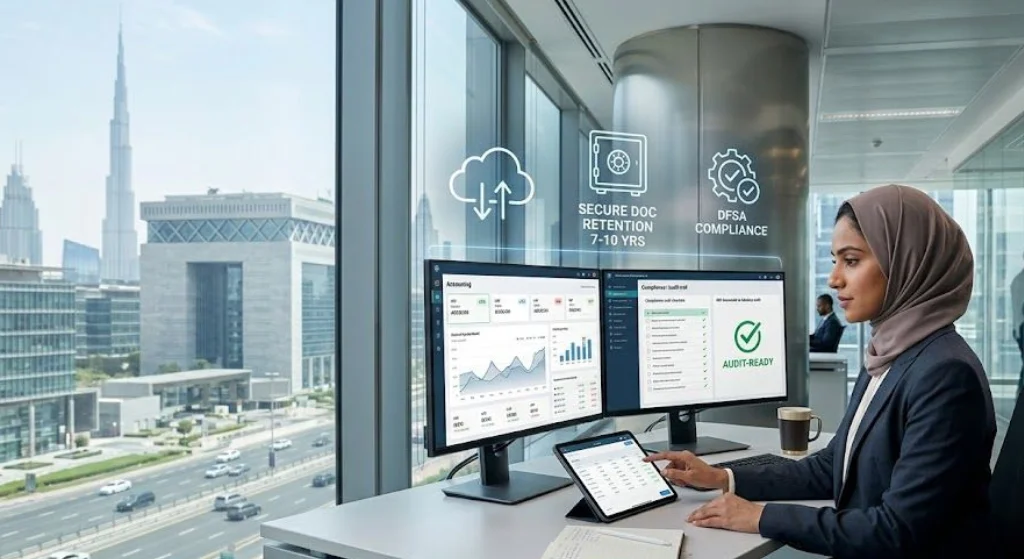
If you operate inside the Dubai International Financial Centre, you already know it works differently from the rest of the UAE. The regulatory environment is distinct, the clients are often international, and the standards for record keeping are high. At Risians Accounting & Tax Consultancy, we work with DIFC-based businesses that want tidy, dependable books without managing a finance team on site.
Many of them ask us whether bookkeeping can really be handled remotely without losing accuracy or control. In most cases it can, and that is why online bookkeeping services in DIFC have become a popular choice for consultancies, fintech startups, funds and professional services firms.
The right bookkeeping service keeps every entry accurate and traceable from day one, so that when it is time to file, apply for financing or face an audit, your information is already in order.
Why DIFC businesses have different bookkeeping needs
DIFC entities operate under their own legal framework and often deal with multiple currencies, cross-border payments and detailed reporting requirements. Your records need to be clean enough to satisfy regulators, banks and international stakeholders at any time. That is a lot to ask of an in-house employee who is also handling admin, HR and invoicing.
How online bookkeeping works day to day
The process is simpler than most people expect:
- You share bank feeds, invoices, receipts and payroll data through a secure cloud platform.
- The team categorises and reconciles every transaction.
- Your books are updated regularly rather than once a year in a panic.
- You receive clear monthly reports covering income, expenses, cash position and outstanding payments.
- Any unusual entries are flagged and discussed with you directly.
There are no office visits, no paper piles and no waiting for someone to be available.
What good bookkeeping protects you from
Poor records rarely cause problems immediately. They cause them later, at the worst possible moment. Missing invoices make VAT returns stressful. Unreconciled accounts hide cash flow problems. Messy files slow down audits and raise questions from banks or investors.
Online versus in-house
An in-house bookkeeper means paying a salary, visa costs and benefits, buying software, and depending on one person's skills and availability. When they are on leave or leave the company, your books stall. An online team charges a predictable monthly fee, includes the technology, offers a range of expertise, and adjusts easily as your business grows. For small and mid-sized DIFC companies, this is often the more practical and economical route.
Questions to ask before you choose a provider
- Do they have genuine experience with DIFC-registered entities?
- Which accounting software do they use, and will you have access?
- How is your financial data stored and protected?
- How often will you receive reports?
- Are VAT and corporate tax support included or charged separately?
A provider who answers these clearly and without hesitation is usually one worth trusting.
Final thoughts
Good bookkeeping is not glamorous, but it supports almost every financial decision you make. For DIFC businesses, where expectations are high and time is short, a remote, specialist-led approach keeps your records accurate while you focus on clients and growth. Choose a partner who understands your environment, communicates openly and treats your numbers with care.