Sign up with Google
 Sign in with Zoho

Data is everywhere. Businesses use it to understand customers, track performance, manage costs, improve products, and make everyday decisions. As more companies depend on data, people who can turn raw information into useful insights are becoming increasingly valuable.
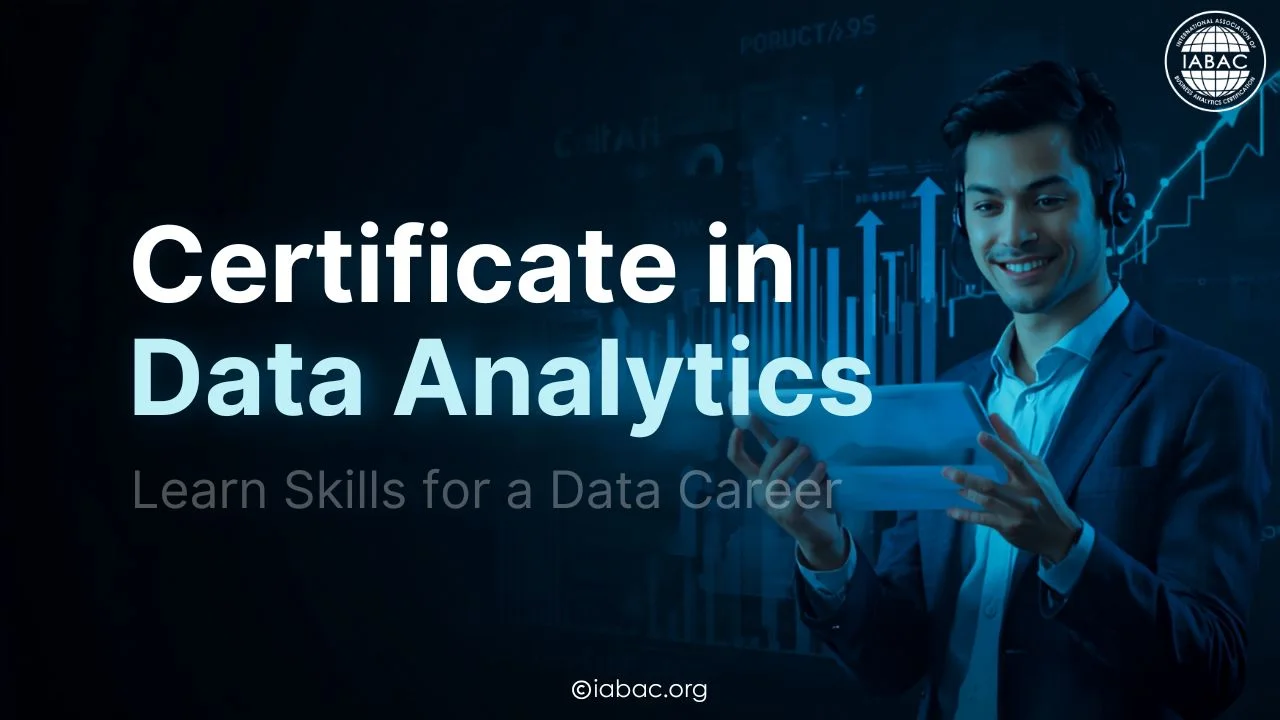
If you are thinking about starting a career in this field, a certificate in data analytics can be a practical way to build the skills you need.
You do not necessarily need years of experience to begin learning data analytics. What matters is developing a good understanding of how data works and learning how to use the right tools to find meaningful information.
What Is a Certificate in Data Analytics?
A certificate in data analytics is a professional credential that demonstrates your understanding of important data analytics concepts and skills.
Depending on the certification program, you may learn areas such as:
- Data collection and preparation
- Data cleaning
- Exploratory data analysis
- Statistical concepts
- Data visualization
- Business reporting
- SQL and database fundamentals
- Spreadsheet-based analysis
- Data analytics tools
- Interpreting business data
The goal is not simply to learn software. Good data analytics training should help you understand how to approach a business problem, work with relevant data, identify patterns, and communicate your findings clearly.
Why Learn Data Analytics?
One of the biggest reasons people choose data analytics is the wide range of industries that use data.
Technology companies, banks, healthcare organizations, retailers, manufacturing businesses, marketing teams, logistics companies, and many other organizations rely on data to support their decisions.
For example, a retail company might analyze customer purchases to understand which products are selling well. A marketing team may study campaign data to determine which channels are generating results. A finance team can use data to monitor expenses and identify unusual patterns.
In each case, the ability to understand data can help teams make more informed decisions.
Is a Certificate in Data Analytics Useful for Beginners?
Yes, a certificate can be useful for someone who is beginning their journey into data analytics, particularly when it provides a structured way to learn the fundamentals.
Starting from scratch can sometimes feel confusing because there are many tools, technologies, and concepts to learn. A structured certification path can give you a clearer direction.
Instead of jumping between random tutorials, you can gradually build your knowledge around key areas such as data preparation, analysis, visualization, and reporting.
However, a certificate alone does not replace practical experience. Applying what you learn through projects, exercises, or real-world datasets is equally important.
Skills You Can Build Through Data Analytics
A good data analytics learning path should help you develop both technical and analytical skills.
1. Data Cleaning
Real-world data is rarely perfect. It may contain duplicate records, missing values, inconsistent formats, or incorrect entries.
Learning how to clean and organize data is one of the basic skills every aspiring analyst should develop.
2. Data Analysis
Data analysis involves examining information to identify patterns, trends, relationships, and useful insights.
You may work with sales figures, customer information, website traffic, financial records, or other datasets depending on the business problem.
3. SQL
SQL is commonly used to work with data stored in relational databases.
Understanding SQL can help you retrieve specific information, filter records, combine tables, and prepare datasets for analysis.
4. Data Visualization
Numbers can be difficult to understand when presented as large tables.
Data visualization helps turn information into charts, graphs, and dashboards that are easier to interpret. A good visualization should make an important finding easier to see rather than simply making a report look attractive.
5. Business Understanding
Technical skills are only one part of analytics.
An analyst also needs to understand the business question behind the data. For example, instead of simply reporting that sales decreased, an analyst may need to investigate when the decline happened, which products were affected, and what factors could explain the change.
What Jobs Can You Explore After Learning Data Analytics?
Learning data analytics can open the door to several career paths. Depending on your skills, experience, and interests, you may explore roles such as:
- Data Analyst
- Business Analyst
- Reporting Analyst
- Marketing Analyst
- Operations Analyst
- Business Intelligence Analyst
- Junior Data Analyst
- Financial Data Analyst
The exact responsibilities can vary from one organization to another.
For example, a marketing analyst may spend more time working with campaign and customer data, while an operations analyst may focus on processes, costs, and performance metrics.
This variety is one reason data analytics attracts people from different educational and professional backgrounds.
How to Start a Career in Data Analytics
Getting started does not have to be complicated. A simple step-by-step approach can make the process easier.
Start With the Fundamentals
First, understand basic concepts such as data types, averages, percentages, trends, and simple statistics.
You do not need to become a mathematician. You need enough statistical understanding to interpret data correctly and avoid misleading conclusions.
Learn Common Tools
Build familiarity with tools that are commonly used in analytics. Depending on your career goals, this could include Excel, SQL, Power BI, Tableau, Python, or other analytics platforms.
You do not have to master everything at once.
Start with a small set of tools and gradually expand your skills.
Work on Practical Projects
Projects are one of the best ways to turn theoretical knowledge into practical ability.
For example, you could analyze:
- Retail sales data
- Customer purchase patterns
- Website traffic
- Employee data
- Marketing campaign results
- Product performance
Try to answer a specific question with each project rather than simply creating charts.
Build a Portfolio
A portfolio gives potential employers a better idea of how you approach data problems.
Your projects can include the original business question, the dataset, the steps you followed, your analysis, visualizations, and the key findings.
Even a few well-explained projects can demonstrate more than a long list of tools on a resume.
Consider a Professional Certification
Once you have built some foundational knowledge, earning a certificate in data analytics can help demonstrate your understanding of the field.
When comparing certification options, look beyond the certificate itself. Check what topics are covered, whether practical skills are included, how the assessment works, and whether the certification aligns with the type of analytics role you want to pursue.
Who Should Consider a Certificate in Data Analytics?
A data analytics certificate can be relevant to several types of learners.
Students and graduates:It can help you develop practical skills alongside your academic education.
Career changers:If you are moving from another field, analytics skills can provide a foundation for exploring data-focused roles.
Working professionals:People already working in finance, marketing, operations, HR, sales, or other departments can use analytics skills to make better use of the data they work with.
Business professionals:Understanding analytics can help professionals communicate more effectively with data teams and make more informed decisions.
What Should You Look for in a Data Analytics Certificate?
Not every certification program is structured in the same way. Before choosing one, consider a few important factors.
Relevant Curriculum
Look for coverage of essential topics such as data analysis, visualization, data preparation, statistics, and business problem-solving.
Practical Learning
A program that includes hands-on exercises or projects can help you understand how analytics is applied beyond theory.
Assessment
Check how your knowledge and skills are evaluated. A meaningful assessment can provide a better indication of what you have actually learned.
Industry Relevance
The skills you develop should be relevant to current workplace requirements and the type of role you want to pursue.
Recognition
Consider who provides the certification and how it is positioned within the professional or industry community.
Certificate vs. Degree in Data Analytics
A common question is whether someone should pursue a certificate or a degree.
The answer depends on your career goals, existing education, available time, and budget.
A degree typically involves a broader and longer academic program. It may cover mathematics, statistics, programming, business, and other related subjects in greater depth.
A certificate is generally more focused and can be useful for developing specific professional skills or adding analytics knowledge to an existing background.
For someone who wants to build targeted skills without committing to a full degree program, a certificate may be an option worth considering.
Common Mistakes Beginners Should Avoid
Starting a data analytics career can be exciting, but beginners often make a few avoidable mistakes.
Trying to learn every tool at once:You do not need to know every analytics platform. Build a strong foundation first.
Focusing only on certificates:Credentials can demonstrate learning, but practical skills and projects matter too.
Ignoring business context:Analytics is not just about creating charts. You need to understand what the business is trying to solve.
Building complicated dashboards:A simple dashboard that answers the right question is usually more useful than one filled with unnecessary visuals.
Skipping communication skills:Analysts need to explain their findings to people who may not have a technical background. Clear communication is an important part of the job.
Build Your Data Analytics Career Step by Step
A career in data analytics does not have to begin with knowing everything.
Start with the basics. Learn how data is collected and prepared. Practice analyzing datasets. Become comfortable with tools such as SQL and spreadsheets. Explore visualization platforms. Work on practical projects and gradually build a portfolio.
A certificate in data analytics can fit into this journey by giving you a structured way to develop and validate your knowledge.
Most importantly, keep practicing. Data analytics is a skill that becomes stronger when you use it to solve real problems.
If you are serious about starting a data-focused career, focus less on collecting certificates and more on becoming someone who can look at a dataset, ask the right questions, find useful insights, and explain what those insights mean.
That combination of technical knowledge, analytical thinking, and practical experience can give you a strong foundation for your next step in data analytics.