Sign up with Google
 Sign in with Zoho

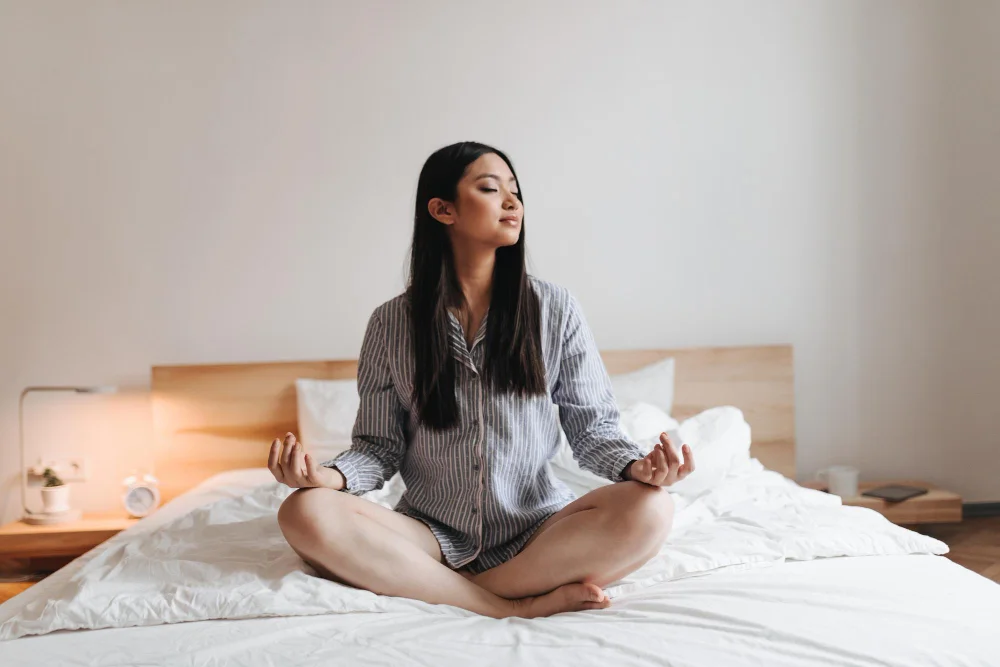
Have you ever gone to bed feeling physically tired but found that your mind simply would not slow down? Racing thoughts, worries about tomorrow, screen time, irregular routines, and everyday stress can all make it difficult to settle into restful sleep.
Guided sleep meditation offers a simple way to create a calmer transition between being awake and preparing for bed. Instead of trying to force yourself to fall asleep, you follow a calm voice through breathing, body awareness, visualization, or relaxation.
For people exploring mindful wellness in India, practices connected with breath, awareness, and natural daily rhythms can become part of a thoughtful evening routine. PRANA’s approach to wellness is rooted in Ayurvedic principles, mindful living, breath, balance, and natural alignment.
What Is Guided Sleep Meditation and How Does It Work?
Guided sleep meditation is a relaxation practice in which a person follows spoken instructions designed to encourage physical and mental calm before or during bedtime. The guidance may focus on breathing, relaxing different parts of the body, observing thoughts, or imagining a peaceful setting.
The purpose is not necessarily to make every thought disappear. Instead, the practice gives your attention something gentle to follow, which can make it easier to step away from repetitive thinking and shift toward a quieter state.
A typical session may include:
- Slow, comfortable breathing
- Progressive relaxation of the body
- Awareness of physical sensations
- Gentle visualization
- Mindful observation of thoughts
- Quiet pauses between instructions
The practice can be especially useful when your body is ready for bed but your mind still feels active. Rather than watching the clock or becoming frustrated about not sleeping, you can focus on the process of relaxing.
Can Meditation Help With a Busy Mind at Night?
One of the biggest challenges at bedtime is mental activity. You may replay conversations, think about unfinished work, plan the next day, or worry about things outside your control.
A guided practice can provide a structured alternative to this cycle. By bringing attention back to the voice, breath, or body, you can spend less time deliberately engaging with those thoughts.
This does not mean meditation guarantees sleep or replaces professional care for persistent sleep problems. It is better understood as a supportive relaxation habit that can be incorporated into a broader approach to healthy sleep.
How Should You Practice Guided Sleep Meditation?
There is no single correct length for a bedtime meditation. Beginners can start with around 5 to 10 minutes and gradually choose longer sessions if they find them comfortable and useful.
A simple bedtime routine can look like this:
- Prepare your environment. Dim the lights and reduce unnecessary noise or distractions.
- Get comfortable. Lie down or sit in a position that allows your body to relax without strain.
- Begin with natural breathing. Avoid forcing deep breaths or holding your breath unnecessarily.
- Follow the guidance. Let your attention rest on the speaker's instructions instead of trying to control every thought.
- Relax gradually. Notice areas such as your jaw, shoulders, hands, abdomen, and legs.
- Allow yourself to become still. If sleep arrives, there is no need to continue concentrating on the meditation.
The important part is consistency rather than duration. A short practice that becomes part of your regular evening routine may be easier to maintain than an occasional long session.
What About Breathing Exercises Before Bed?
Breathing exercises for sleep can be included as part of a relaxing bedtime routine. Simple, comfortable breathing with a gentle emphasis on slowing down can help you shift attention away from external distractions and toward the present moment.
There is no need to use complicated breathing patterns when preparing for sleep. If a technique makes you feel uncomfortable, light-headed, or anxious, stop and return to normal breathing.
What Are the Benefits of Guided Sleep Meditation?
The main benefit of guided sleep meditation is that it can create a calm transition from the activity of the day into your nighttime routine.
Potential benefits include:
- Creating a consistent wind-down ritual
- Encouraging awareness of physical tension
- Giving the mind a peaceful point of focus
- Supporting relaxation before bedtime
- Reducing the habit of repeatedly checking the time
- Helping create separation between daytime responsibilities and rest
- Encouraging a more mindful relationship with bedtime
It is also useful for people who find silent meditation difficult. Having someone provide instructions can make it easier for beginners to know where to place their attention.
Can It Help With Stress and Anxiety?
Stress and sleep often influence each other. A stressful day can make it harder to settle down, while poor sleep can make the following day feel more demanding.
Yoga for stress and anxiety can complement a wider mindful-living routine by combining movement, breath awareness, and relaxation. Gentle practices may be particularly suitable in the evening when the goal is to gradually reduce stimulation rather than engage in intense physical activity.
However, persistent anxiety or significant sleep difficulties deserve appropriate professional attention. Meditation and yoga can be supportive wellness practices, but they should not be presented as substitutes for medical or mental-health care.
A Simple Bedtime Meditation Routine
You do not need a complicated setup to begin. The most useful routine is one that feels comfortable enough to repeat.
Try this simple sequence:
First, settle your body. Lie comfortably and allow your hands and shoulders to become loose. Notice the points where your body is supported by the bed.
Next, notice your breathing. Do not try to make each breath perfect. Simply observe the natural movement of inhalation and exhalation.
Then, move your attention through the body. Slowly notice your forehead, jaw, neck, shoulders, arms, chest, abdomen, hips, legs, and feet. If you notice tension, allow yourself to soften rather than forcing the area to relax.
Finally, let thoughts come and go. You do not need to solve problems while lying in bed. When a thought appears, acknowledge it and gently return your attention to the meditation.
This is where guided sleep meditation can become more approachable. You are not being asked to empty your mind. You are simply practicing returning your attention to something calm.
How to Make the Practice More Effective
Meditation tends to work better as part of a consistent sleep routine rather than as a last-minute solution after a difficult night.
Consider these practical habits:
- Keep your bedtime and wake-up times reasonably consistent.
- Reduce bright screens close to bedtime when possible.
- Keep your bedroom comfortable, quiet, and suitable for sleep.
- Avoid turning meditation into another task you must perform perfectly.
- Choose a comfortable position that does not create physical strain.
- Give the practice enough time to become familiar.
- If your mind wanders, return gently instead of judging yourself.
It can also help to separate relaxation from performance. The goal is not to achieve a particular feeling every night. Some evenings may feel peaceful, while others may involve more thoughts or physical restlessness.
How PRANA Supports a Mindful Approach to Rest
Why Choose PRANA Natural Alignment in India?
For people in India who are interested in Ayurveda, mindful living, breath awareness, and natural approaches to daily balance, PRANA Natural Alignment provides educational resources centered on these themes. Its philosophy connects breath, balance, rejuvenation, and natural alignment rather than treating wellness as a quick fix.
The platform also explores traditional Ayurvedic ideas in an accessible way, helping readers understand concepts related to daily routines, breath, rest, and mindful living. Its approach emphasizes learning and awareness while making clear that its educational content is not a replacement for medical diagnosis or treatment.
This makes a mindful bedtime practice part of a broader conversation about how daily habits, rest, breath, and awareness can fit together.
Conclusion
A useful bedtime meditation does not need to be complicated. The most important takeaway is that relaxation can become a gradual transition rather than something you try to force the moment your head touches the pillow.
Guided sleep meditation can give your attention a calm direction through breathing, body awareness, and gentle instructions. When combined with consistent sleep habits and a mindful evening routine, it can become a simple way to create more space between the demands of the day and the quiet of night.
If you want to explore meditation, breath awareness, Ayurveda, and mindful living as part of a broader wellness routine, PRANA Natural Alignment offers educational guidance and resources rooted in these principles. Explore the available resources or get in touch to learn more about incorporating mindful practices into your daily routine.
FAQs
What is guided sleep meditation?
Guided sleep meditation is a relaxation practice that uses spoken instructions to help you focus on breathing, body awareness, visualization, or calming thoughts before or during bedtime. It can be practiced while sitting or lying comfortably.
How long should a sleep meditation session be?
Beginners can start with approximately 5 to 10 minutes and increase the duration if they find longer sessions comfortable. Consistency is generally more practical than forcing yourself to meditate for a long period.
Can I find guided sleep meditation near me?
You can look for meditation, yoga, and wellness providers offering guided practices near you, as well as online resources that can be accessed from home. Choose guidance that explains the practice clearly and avoids unrealistic promises about health outcomes.
How much does guided sleep meditation cost?
The cost varies depending on whether you use a free recording, an online program, a group class, or one-to-one guidance. Some basic meditation practices can be learned without paying for a session, while structured programs may have their own fees.
Is guided sleep meditation suitable for beginners?
Yes. Guided sessions can be particularly approachable for beginners because you do not have to decide what to focus on throughout the entire practice. Following simple instructions can make it easier to develop familiarity with meditation.