Sign up with Google
 Sign in with Zoho

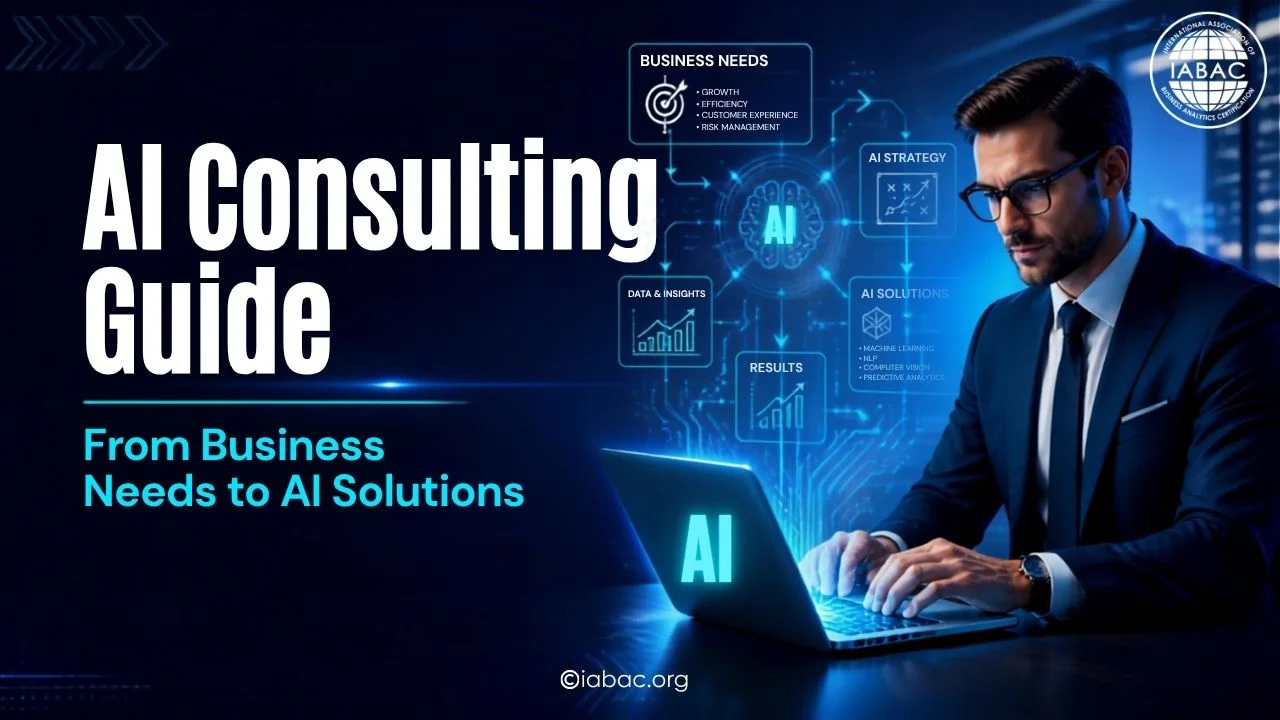
Artificial intelligence is no longer something only large technology companies talk about. Businesses of all sizes are exploring how AI can help them save time, understand customers better, reduce manual work, and make smarter decisions.
But adopting AI is not as simple as buying a tool and expecting results.
Every business has different goals, processes, customers, and challenges. What works for one company may not work for another. This is where AI consulting can make a real difference.
AI consulting helps businesses understand where AI can actually add value, choose suitable solutions, and introduce them in a practical way.
What Is AI Consulting?
AI consulting is a professional service that helps businesses identify opportunities to use artificial intelligence in their day-to-day operations.
An AI consultant first looks at the business problem rather than immediately recommending a technology. They study existing processes, understand what the company wants to achieve, and then suggest practical ways AI can support those goals.
For example, a company may spend several hours every week answering common customer questions. Instead of simply recommending an AI chatbot, a consultant may first examine the customer service process, identify the questions that can be handled automatically, and determine where human support is still necessary.
The goal is simple: use AI where it makes business sense.
Why Are Businesses Looking for AI Consulting?
Many companies know they need to explore AI but are unsure where to begin.
There are thousands of AI tools available today, and new ones appear regularly. Choosing the right option can quickly become confusing.
Businesses may also have questions such as:
- Where can AI actually help our business?
- Which processes should we improve first?
- Will the investment be worthwhile?
- How should our employees use the new tools?
- What information can safely be used?
- How do we measure whether the project is successful?
An AI consultant can help answer these questions before a business spends significant time or money on a solution.
How AI Consulting Works
A good AI consulting process usually starts with the business, not the technology.
1. Understand the Business
The first step is to understand how the company currently works.
A consultant may look at:
- Business goals
- Existing processes
- Customer interactions
- Data sources
- Employee workflows
- Current software and tools
- Areas where employees spend significant time
This helps create a clear picture of where improvements may be possible.
2. Identify Business Problems
The next step is to identify specific problems that need attention.
For example, a business might have:
- Slow customer response times
- Too much manual data entry
- Difficulty forecasting demand
- Large amounts of information to review
- Repetitive administrative tasks
- Problems identifying trends in business data
Instead of trying to introduce AI everywhere, the consultant focuses on problems where it could provide measurable value.
3. Find Suitable AI Opportunities
Once the business challenges are clear, the consultant identifies areas where AI may help.
For example, a retail business could use AI to understand buying patterns and improve inventory planning.
A financial services company could use it to review large volumes of documents.
A marketing team could use AI-assisted tools to understand customer behaviour and organize campaign information.
The important point is that the solution should fit the business need.
4. Evaluate the Available Options
There may be several ways to solve the same problem.
An AI consultant can compare different approaches based on factors such as:
- Cost
- Business requirements
- Ease of use
- Existing systems
- Data availability
- Security
- Scalability
- Expected business value
This prevents businesses from choosing a solution simply because it is popular or new.
5. Create an Implementation Plan
After choosing an approach, the next step is planning.
A practical implementation plan may include:
- Project goals
- Required resources
- Timeline
- Responsibilities
- Expected costs
- Employee training
- Testing process
- Success measures
Starting with a manageable project is often better than attempting a major transformation all at once.
Common Areas Where AI Consulting Can Help
AI can support many areas of a business, but its usefulness depends on the company's specific needs.
Customer Service
Businesses receive many repetitive questions from customers.
AI-powered systems can help organize and respond to common enquiries, allowing customer service teams to spend more time on complex issues.
Marketing
Marketing teams work with large amounts of customer and campaign information.
AI can help identify patterns, organize customer data, support content planning, and provide insights that help marketers make better decisions.
Finance
Finance teams often spend considerable time working with reports, transactions, and documents.
AI can help reduce repetitive work, identify unusual patterns, and support financial analysis.
However, important financial decisions should still involve qualified professionals.
Human Resources
HR teams can use AI-based tools to support tasks such as sorting applications, organizing employee information, and answering common internal questions.
Human judgment remains important, particularly when decisions affect employees.
Sales
Sales teams can use AI to understand customer behaviour, organize leads, summarize interactions, and identify potential opportunities.
This can help sales professionals spend more time building relationships rather than handling repetitive administrative work.
Operations
Businesses often have processes that involve repetitive steps.
AI can help identify inefficiencies, predict demand, support planning, and improve how teams manage everyday operations.
Benefits of Working With an AI Consultant
Better Understanding of AI
Businesses don't need to become technology experts before exploring AI.
A consultant can explain the options in straightforward business terms and connect them to real business needs.
Less Trial and Error
Trying different tools without a clear plan can become expensive and time-consuming.
Consulting helps businesses evaluate their needs before committing to a particular solution.
Clearer Business Goals
AI projects work better when they have a clear purpose.
Instead of saying, "We need AI," a business can define a specific goal such as reducing customer response time or improving demand forecasting.
Improved Efficiency
When repetitive work is handled more efficiently, employees can focus on tasks that require communication, creativity, judgment, and problem-solving.
Better Decision-Making
AI can help businesses find useful patterns in their information. When combined with human experience, these insights can support better business decisions.
What Should Businesses Consider Before Starting?
AI consulting can be valuable, but businesses should still prepare before beginning a project.
Know the Problem You Want to Solve
Don't start with the question, "How can we use AI?"
Start with:
"What business problem are we trying to solve?"
This simple change in thinking can make the entire project more focused.
Check Your Data
AI solutions often depend on business data.
Before starting, companies should understand what information they have, where it is stored, whether it is accurate, and who can access it.
Poor-quality or incomplete information can limit the usefulness of a solution.
Consider Your Employees
Introducing a new technology can change how people work.
Employees should understand why the change is happening and how it will affect their daily responsibilities.
Training and communication can make adoption much easier.
Think About Security
Business information should be handled carefully.
Companies should consider who can access information, how it is stored, and what security measures are needed before introducing an AI solution.
Define Success
A project should have measurable goals.
For example, success could mean:
- Reducing processing time by a certain percentage
- Improving customer response times
- Reducing repetitive manual work
- Increasing sales productivity
- Improving forecasting accuracy
Clear measures make it easier to determine whether the investment is delivering value.
How to Choose the Right AI Consulting Partner
Choosing a consulting partner is an important decision.
Look for a provider that takes time to understand your business instead of immediately recommending a technology.
A good consulting partner should be able to:
- Understand your business goals
- Explain solutions clearly
- Identify realistic AI opportunities
- Consider your existing systems
- Discuss costs and limitations openly
- Provide an implementation plan
- Consider security and responsible use
- Measure business results
Experience is useful, but the ability to understand your specific business problem is equally important.
AI Consulting Is About More Than Technology
One common mistake businesses make is thinking AI consulting is only about selecting software.
In reality, successful AI adoption involves people, processes, information, and business goals.
A technically impressive solution may still fail if employees don't use it, if the underlying information is unreliable, or if it doesn't solve an important business problem.
That's why a practical approach matters.
The right solution is not necessarily the most advanced one. It is the one that solves a genuine problem and fits naturally into the way the business operates.
The Future of AI Consulting
AI will continue to become part of everyday business operations. As more companies explore its potential, the focus will gradually move away from simply trying new tools and toward finding meaningful business applications.
Businesses will need to ask better questions:
- Where can we save time?
- Where can we improve customer experiences?
- Which decisions could benefit from better information?
- Which tasks are unnecessarily repetitive?
- How can our employees work more effectively?
AI consulting can help businesses answer these questions and create a realistic path forward.
Final Thoughts
AI adoption doesn't have to begin with a huge investment or a complicated transformation.
It can start with one business problem.
By understanding the current process, identifying where AI could help, choosing an appropriate solution, and measuring the results, businesses can take a more practical approach to AI.
The real value of AI consulting is not simply bringing AI into a company. It is helping businesses understand where AI makes sense, where it doesn't, and how to use it responsibly to achieve meaningful results.
For businesses looking to build the right skills and understanding around AI and analytics, IABAC offers certification and learning pathways that can help professionals develop practical knowledge for today's changing business environment.