Sign up with Google
 Sign in with Zoho
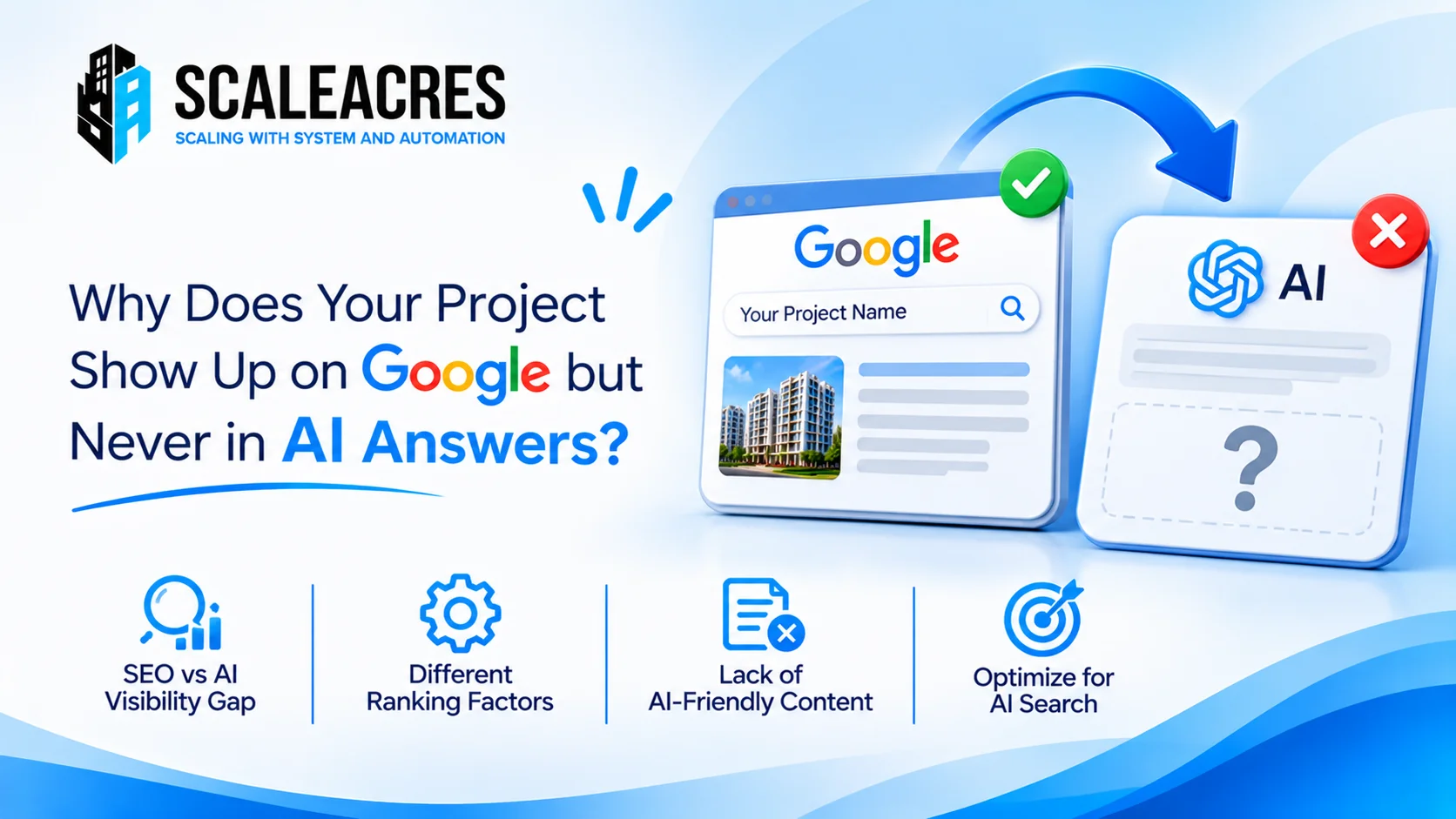
Your project shows up on Google but not in AI answers because ranking and being cited are judged differently. Google ranks pages. AI tools pick facts and brands they can understand, verify and repeat with confidence.
This article explains the gap, the most common reasons AI skips well-ranked projects, a table of mistakes and fixes, and a simple plan to close the gap.
Ranking is not the same as being cited
A search engine looks at a page and decides where it belongs in a list. A buyer then chooses which link to open. An AI tool works differently. It reads many sources, forms a short answer and names only the brands it trusts enough to mention.
So a page can rank well and still be left out. The page may be clear enough to earn a position, but too vague, too inconsistent or too thinly supported to be quoted as an answer.
Closing this gap is the job of generative engine optimization: shaping your content, facts and mentions so that AI tools find your project, understand it and are willing to name it. It builds on SEO and does not replace it.
Why AI skips projects that rank well
There are usually several reasons working together:
- Key facts are vague or buried. Price range, configurations, possession date and RERA details are missing, or hidden far down the page.
- Details disagree across sites. The project name, address or pricing differs between your website, listings and profiles, so an AI tool cannot tell which version is correct.
- Facts live in images, PDFs or pop-ups. Tools may not read this content reliably, so the page looks thinner than it is.
- Pages target keywords, not questions. A page stuffed with phrases but short on direct answers gives an AI tool little to quote.
- Few outside sources back you up. Without reviews, press coverage or credible listings, there is little to confirm what your own site says.
- Technical settings get in the way. Slow pages, broken links or crawler restrictions can stop tools from reading your content at all.
Try the 10-question test. Write ten questions a buyer might ask about your area, price range and builder. Ask them in ChatGPT, Perplexity and Google's AI answers. Our estimate, which is not exact, is that a project with strong rankings but little AI preparation may be named in only two or three of the ten. Your own result is the number that matters.
Common mistakes and how to fix them
Most projects that rank but are never cited make the same few mistakes.
How to close the gap
Work through these steps in order.
- Run the 10-question test and record what AI tools say about you and your competitors.
- Fix the facts first. Make your project details complete, current and identical across your website, Google Business Profile and listings.
- Rewrite key pages around questions. Give each project and location its own page, with a direct answer at the top and an FAQ below.
- Add structured data. Use schema markup for projects and FAQs, so machines can read the page clearly.
- Build outside proof. Collect reviews, buyer stories and press coverage on credible sites.
- Check technical health. Fix slow pages and broken links, and make sure nothing blocks tools from reading your content.
- Repeat monthly. Re-run the test and track whether you appear more often.
Be patient. Scaleacres notes that real estate SEO in low-competition markets usually starts showing results within 4 to 6 months. AI visibility draws on the same foundations, so expect progress to be gradual.
FAQs
Why does my project rank on Google but not appear in ChatGPT or other AI answers?
Google ranks pages, while AI tools name brands they can understand and verify. Vague pages, inconsistent details and a lack of outside mentions can keep a well-ranked project out of AI answers.
Does good SEO guarantee AI visibility?
No. Good SEO is the foundation, but AI tools also look for clear answers, consistent facts and credible outside sources.
What should I fix first?
Fix your facts. Make sure the project name, address, price range and possession details are complete and identical across your website, listings and profiles.
How can I check whether AI mentions my project?
Ask AI tools the questions your buyers would ask, record which builders and projects are named, and repeat monthly.
How long will it take to appear in AI answers?
It varies. Scaleacres notes SEO in low-competition markets typically shows results in 4 to 6 months. Our estimate, not exact, is that AI visibility moves on a similar timeline.
Conclusion
Showing up on Google proves your pages are good enough to rank. Showing up in AI answers proves your project is clear, consistent and trusted enough to name. The two are linked, but they are not the same.
Start with the 10-question test, fix your facts, and build outside proof. A structured approach to generative engine optimization turns a project that is only found into one that is recommended.