Sign up with Google
 Sign in with Zoho

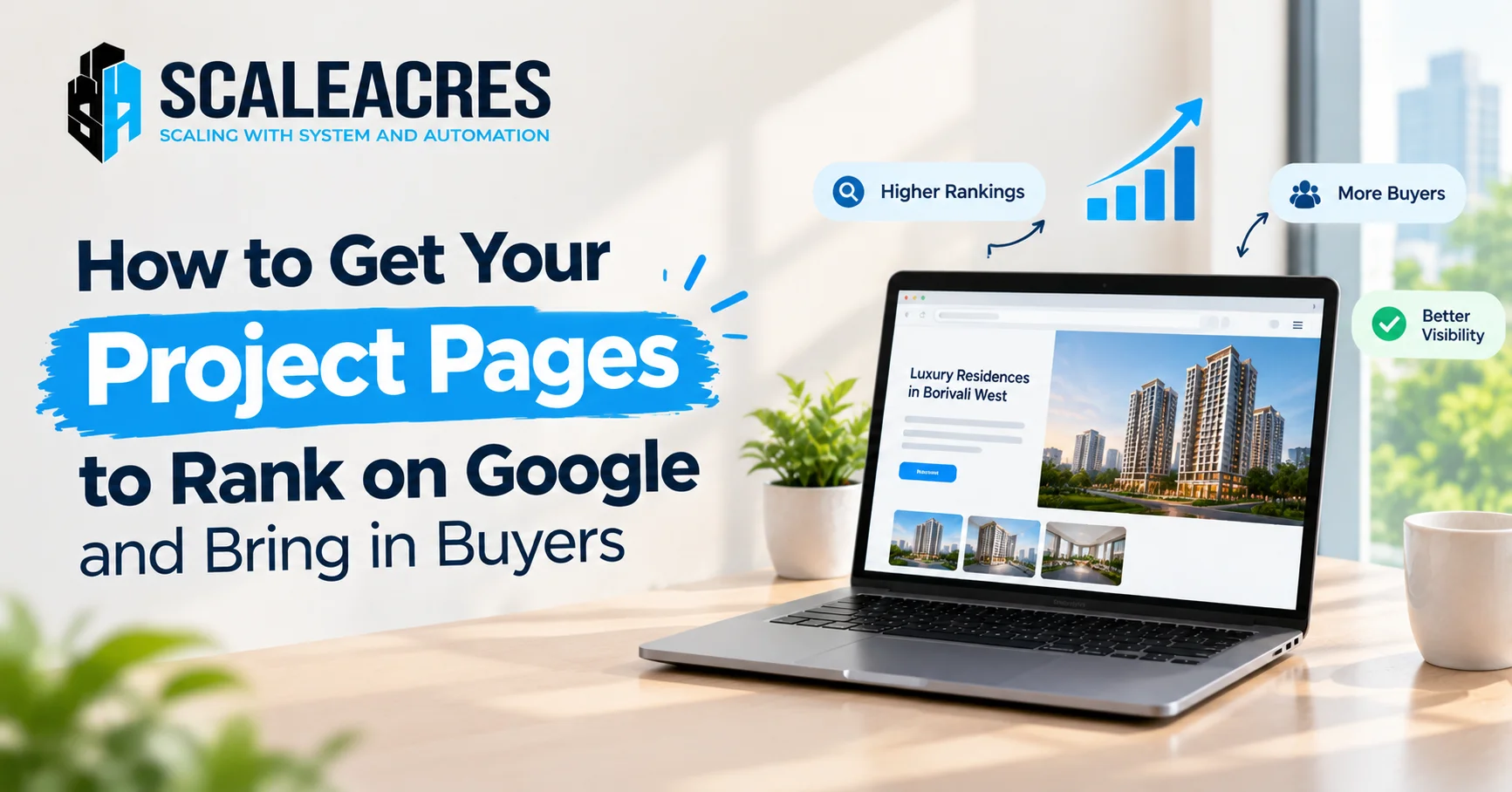
To rank your project pages on Google, give each project its own fast, well-structured page that matches what buyers search for, shows verifiable trust signals, and answers their questions clearly. Working with an experienced real estate website development agency helps you get the technical foundation, content structure, and conversion path right from the start.
Many builders launch a project and expect the website to bring leads automatically. In reality, Google ranks pages that are useful, trustworthy, and easy to use. Here is how to build project pages that do exactly that.
1. Give Every Project a Dedicated Page
Do not bundle all your projects on one page. Each project needs its own URL with a clear title, such as “3 BHK Apartments in Sector 150, Noida.” This lets Google understand what the page is about and match it to specific searches.
2. Target Buyer Intent, Not Just Keywords
Buyers search in patterns: configuration, location, budget, and possession status. Build your page around those. Use phrases like “ready to move 2 BHK in Pune” or “under construction villas near Gurgaon” in your headings and opening lines, naturally and without stuffing.
3. Answer Questions Directly (AEO)
Google’s AI Overviews and answer engines pull short, clear answers. Add a short summary at the top of each page covering location, configuration, price range, and possession date. Follow it with an FAQ section answering real buyer questions in two to three sentences each.
4. Show Experience and Credibility (E-E-A-T)
Property is a high-value decision, so Google looks for trust. Display your RERA registration number, delivered projects, years in business, team details, and genuine customer testimonials. Add real site photos and construction updates rather than only artist renders. These signals show first-hand experience and make your page more reliable for both users and search engines.
5. Write Content That AI Engines Can Cite (GEO)
Generative search tools prefer clear, factual, well-organised content. Use short paragraphs, descriptive subheadings, and specific facts such as land parcel size, number of towers, and nearby landmarks with approximate distances. Keep details consistent across your website, Google Business Profile, and listing portals.
6. Improve Page Speed and Mobile Experience
Most property searches happen on mobile. Compress images, use modern formats like WebP, avoid heavy scripts, and make sure buttons and forms work smoothly on small screens. A slow page loses buyers before they read a single line.
7. Use Schema Markup
Structured data helps search engines understand your content. Add schema for your organisation, local business, FAQs, and breadcrumbs. This can improve how your pages appear in search results, though it does not guarantee rankings.
8. Optimise Titles, Meta Descriptions, and URLs
Keep your title tag clear and under about 60 characters, with the project name and location. Write a meta description that tells buyers what they will find and encourages the click. Use clean URLs like /project-name-location instead of long strings of numbers.
9. Build Local Signals
Property is a local business, so claim and complete your Google Business Profile, add your sales office address, upload fresh photos, and encourage genuine reviews. Mention neighbourhood details, connectivity, schools, hospitals, and transport on the page. This helps your project appear for “near me” and area-based searches.
10. Add a Clear Path to Enquiry
Ranking brings visitors, but conversion brings buyers. Place a visible “Book a Site Visit” button, keep forms short, and add WhatsApp and click-to-call options. Without this, even high rankings will not turn into leads.
Quick Checklist
- Separate, keyword-aligned page for every project
- Summary and FAQ at the top and bottom of the page
- RERA number and real project photos visible
- Mobile load time under 3 seconds
- Schema markup added
- Google Business Profile updated
- Short form with WhatsApp and call buttons
Frequently Asked Questions
How long does it take for a project page to rank on Google? It depends on competition, content quality, and site authority. Most pages need a few months of consistent optimisation before showing stable results.
Do I need a separate website for each project? Not usually. A single strong website with dedicated pages for each project is easier to manage and builds authority faster.
Does content really matter for real estate SEO? Yes. Detailed, honest content on location, pricing, and amenities builds trust and helps your page match buyer searches.
What is the biggest ranking mistake builders make? Copying the same brochure text across multiple pages or portals. Unique, helpful content performs far better.