Sign up with Google
 Sign in with Zoho

Quick Answer
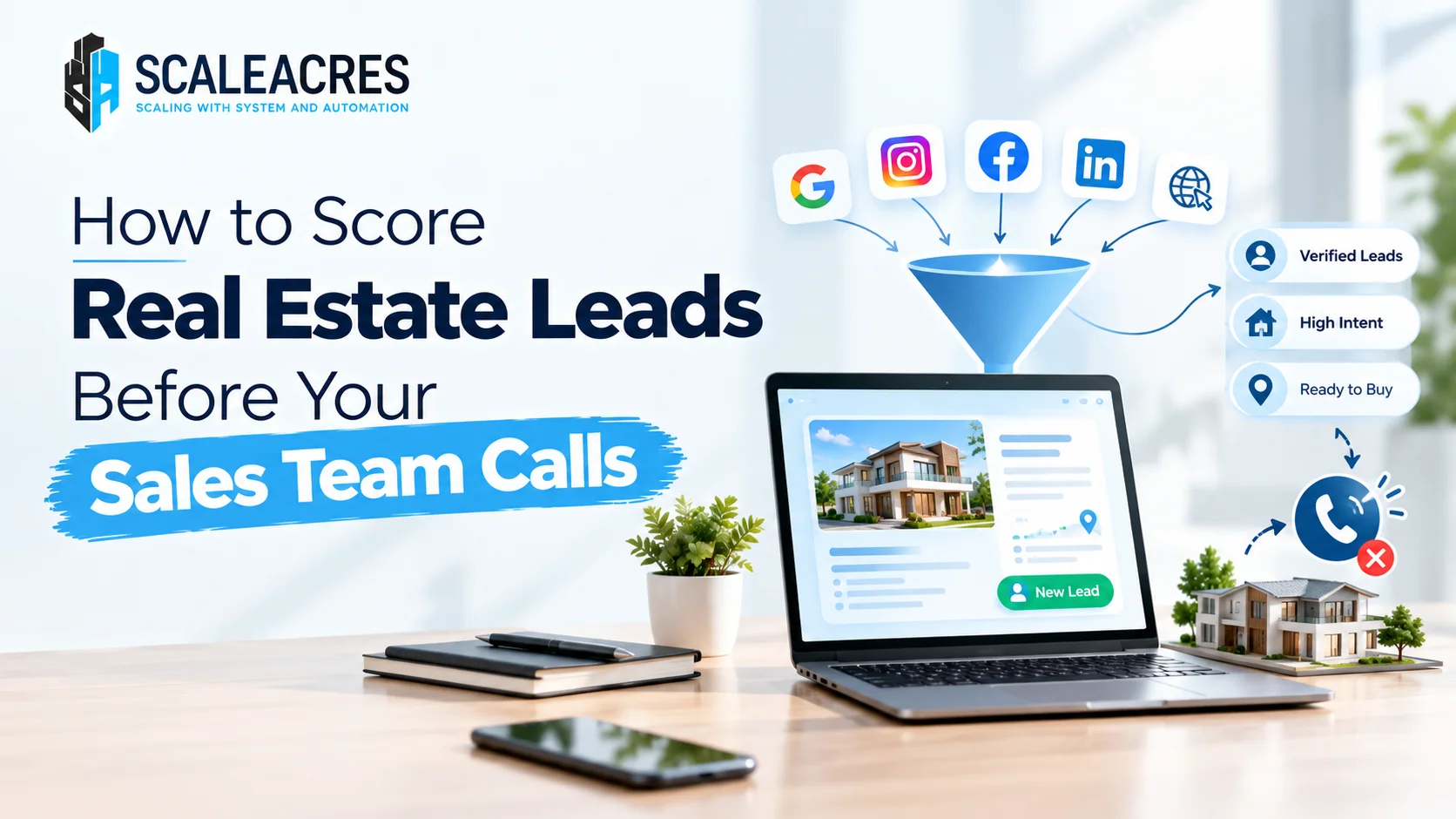
Real estate lead scoring means giving every enquiry a numerical score based on who the buyer is and how they behave, so your sales team calls the most serious prospects first. Score leads on fit (budget, location, timeline, purpose) and engagement (pages viewed, brochure downloads, replies, site visit requests). A well-run real estate lead generation agency builds this scoring into the lead flow so your team spends time on buyers, not browsers.
Why Scoring Leads Matters
Sales teams usually call leads in the order they arrive. That feels fair, but it wastes time. A serious buyer who enquired at 9 pm may wait until the next afternoon, while the team spends the morning on someone who was only checking prices.
Scoring fixes this by answering one question before the first call: who is most likely to buy, and how soon?
Benefits include:
- Faster response to high-intent buyers
- Less time lost on low-quality enquiries
- Clearer feedback for marketing on which campaigns bring real buyers
- Better use of a limited sales team
The Two Parts of a Lead Score
1. Fit Score: Are they the right buyer?
Fit measures how closely the lead matches your ideal customer. Collect these details through a short form or first message:
- Budget compared with your price range
- Location or preferred area
- Timeline for purchase
- Purpose (self-use or investment)
- Property type (for example 3BHK vs 4BHK)
- Financing status (self-funded, loan pre-approved, not yet started)
2. Engagement Score: Are they acting like a buyer?
Engagement measures behavior after the enquiry:
- Visited pricing or floor plan pages
- Downloaded the brochure
- Opened or replied to WhatsApp or email
- Returned to the website more than once
- Requested a call or site visit
- Attended a webinar or virtual tour
A Simple Scoring Model You Can Start With
Assign points, then add them up. Adjust values to suit your project.
Example tiers
- Hot (60+): call immediately and offer a site visit
- Warm (30 to 59): call same day, then nurture
- Cold (below 30): send automated content and revisit later
These numbers are a starting framework, not a standard. Test and adjust them against your real booking data.
How to Put Scoring Into Practice
- Define a qualified lead with your sales team, so marketing and sales agree on what "good" means.
- Capture the right data with a short form, ideally 3 to 5 fields, plus a quick qualifying question over WhatsApp.
- Track behavior using your website analytics, CRM and messaging tools.
- Set score rules in your CRM so points add up automatically.
- Route hot leads instantly with an alert to the sales team.
- Nurture the rest with automated follow-ups instead of ignoring them.
- Review monthly. Compare scores with actual site visits and bookings, then refine the points.
Common Mistakes to Avoid
- Making the form too long in pursuit of data, which reduces enquiries
- Scoring on demographics alone and ignoring behavior
- Never validating the score against actual bookings
- Discarding cold leads instead of nurturing them, since some buy later
- Not agreeing definitions between marketing and sales
- Overcomplicating the model before you have enough data
Fair Caveats
Scoring is a guide, not a guarantee. A low-scoring lead can still become a buyer, and a high-scoring one can drop out. It also depends on data quality: if forms are incomplete or your CRM isn't tracking behavior, scores will be unreliable. Start simple and improve as you collect more results.
Ready to Send Your Team Only the Best Leads?
Begin with the point table above and test it for a month against your booking data. If you'd like a partner to set up scoring, tracking and lead qualification end to end, explore a specialist real estate lead generation agency and let your sales team focus on buyers who are ready to move.
FAQs
What is lead scoring in real estate? It is a method of ranking enquiries with points based on buyer fit and behavior, so sales teams prioritize the most likely buyers.
What information should I collect to qualify a real estate lead? Budget, preferred location, purchase timeline, purpose of purchase, property type and financing status are the most useful details.
How fast should I call a hot lead? As soon as possible. Responding within minutes is a common best-practice target, though it is a guideline rather than a fixed rule.
Should I ignore low-scoring leads? No. Nurture them with automated follow-ups, since some will become ready to buy later.
How do I know if my lead scoring works? Compare scores against real site visits and bookings. If high scorers convert more often, the model is working.