Sign up with Google
 Sign in with Zoho

A customer clicks on a product three times but never buys it. Another adds an item to the cart, reaches checkout, and suddenly disappears. Someone else searches for the same product every few days before finally making a purchase.
For a retailer, these moments can easily become just another number in a dashboard. But look closer, and each one tells a story.
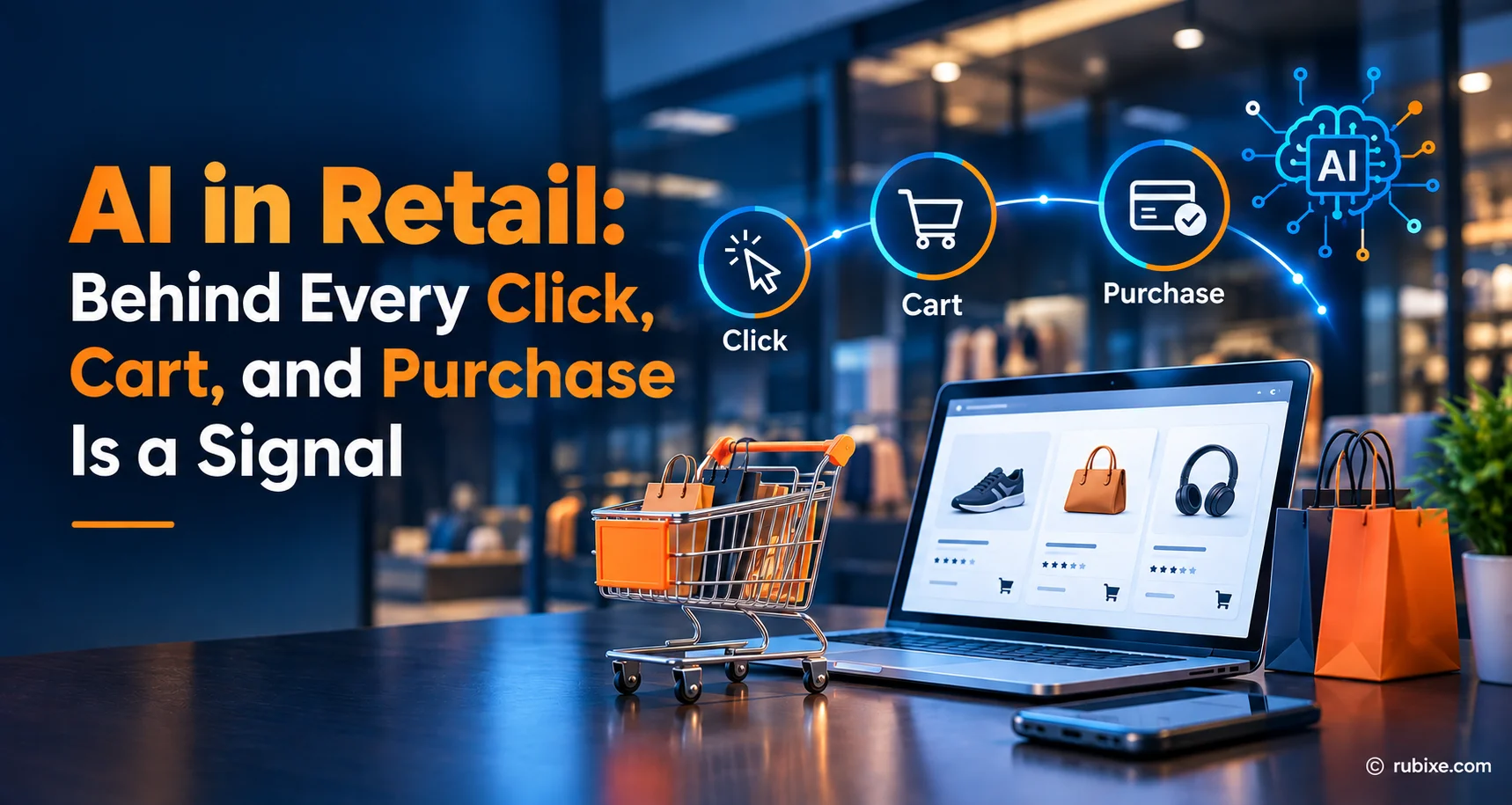
The click signals interest. The cart signals intent. The purchase signals a decision.
The real opportunity is connecting these signals before they become isolated data points. That is where AI in Retail is changing how businesses understand customers, uncover hidden patterns, and turn everyday interactions into smarter decisions.
The Click Is the First Signal
A customer rarely clicks on a product for no reason.
They may be comparing prices, researching features, checking availability, or simply deciding whether the product is worth buying. One click may reveal very little. Thousands of clicks across different customers can reveal much more.
AI-powered systems can analyze browsing behavior, searches, product views, and interaction patterns to identify what customers are showing interest in.
For retailers, this creates a shift from simply asking “What are customers buying?” to asking “What are customers interested in before they buy?”
That difference can uncover opportunities much earlier.
The Cart Reveals Intent
Adding a product to a cart is a stronger signal than simply viewing it. The customer has moved from curiosity toward consideration.
But what happens when they leave?
Instead of treating every abandoned cart as a lost sale, retailers can look for patterns. Are customers abandoning certain products? Does it happen after shipping costs appear? Are customers comparing alternatives? Is a particular checkout step causing friction?
When these patterns are analyzed together, an abandoned cart becomes more than a missed transaction. It becomes a clue.
That clue can help businesses investigate what is preventing customers from completing their journey.
The Purchase Completes the Story—But Doesn't End It
A purchase tells retailers what a customer ultimately chose. But the real insight may lie in everything that happened before that purchase.
What did the customer search for? Which products did they compare? How many times did they return? What other products were viewed? What did they eventually purchase together?
Connecting these signals can help retailers understand purchasing journeys rather than looking at transactions in isolation.
This can support more relevant recommendations, customer segmentation, promotions, and product strategies.
When Signals Start Working Together
The real power does not come from analyzing a click, cart, or purchase separately.
It comes from connecting them.
A customer searching for running shoes, repeatedly viewing one brand, adding a pair to the cart, and finally purchasing them creates a behavioral sequence. Multiply that sequence across thousands of customers, and patterns begin to emerge.
AI in Retail can help analyze these large volumes of information and identify relationships that may be difficult to detect manually.
Those insights can support demand forecasting, inventory planning, personalization, product recommendations, and faster business decisions.
The goal is not to predict every customer perfectly. It is to understand customer behavior well enough to make better-informed decisions.
What If the Next Signal Comes Before the Sale?
Imagine a retailer notices that searches for a particular product category are rising while purchases have not yet increased.
That gap could be important.
It might indicate growing interest, limited availability, pricing concerns, or another barrier between interest and purchase. If a business identifies the pattern early, it has an opportunity to investigate and respond before the trend becomes obvious in sales figures.
This is where AI can move retail intelligence from looking backward at what happened toward identifying patterns that can inform what businesses should examine next.
The Signal Is Everywhere
These signals do not exist only on e-commerce websites.
Loyalty activity, customer service interactions, inventory movement, promotions, purchase histories, and in-store behavior can all contribute to the bigger picture.
When retailers connect relevant sources of information, they can develop a more complete understanding of the customer journey.
Instead of seeing separate events, they can start seeing a sequence:
Interest → Consideration → Intent → Decision → Opportunity.
That sequence is where data becomes useful.
Turning Customer Signals Into Business Action
Collecting data is not the same as understanding it.
Retailers need reliable information, suitable technology, clear objectives, and responsible data practices to turn customer signals into meaningful insights.
With AI in Retail, businesses can process large volumes of behavioral and operational data, uncover patterns, and use those insights to support decisions across customer experience, marketing, inventory, and operations.
For businesses looking to explore practical AI applications, Rubixe offers AI-focused solutions and expertise across areas such as automation, analytics, and intelligent business applications.
FAQs
1. Why are clicks important to retailers?
Clicks can provide early indicators of customer interest. When analyzed with other interactions, they can reveal broader patterns in customer behavior.
2. What does an abandoned cart tell a retailer?
An abandoned cart can indicate customer intent while also highlighting possible barriers such as pricing, shipping costs, availability, or checkout friction.
3. Can AI help retailers understand customer behavior?
Yes. AI can analyze large volumes of behavioral data and identify patterns across searches, browsing activity, purchases, and other customer interactions.
4. How can retailers use these signals?
Retailers can use behavioral insights to support personalization, recommendations, demand forecasting, inventory planning, marketing strategies, and customer-experience improvements.
A click can signal curiosity. A cart can signal intent. A purchase can signal a decision.But the biggest insight often comes from connecting all three. Retailers no longer have to look at customer actions as disconnected events. By recognizing the patterns hidden behind those actions, businesses can better understand what customers want, where they hesitate, and what opportunities may be waiting next.
That is the real promise of AI in Retail: not simply collecting more data, but learning how to listen to the signals customers are already leaving behind.