Sign up with Google
 Sign in with Zoho

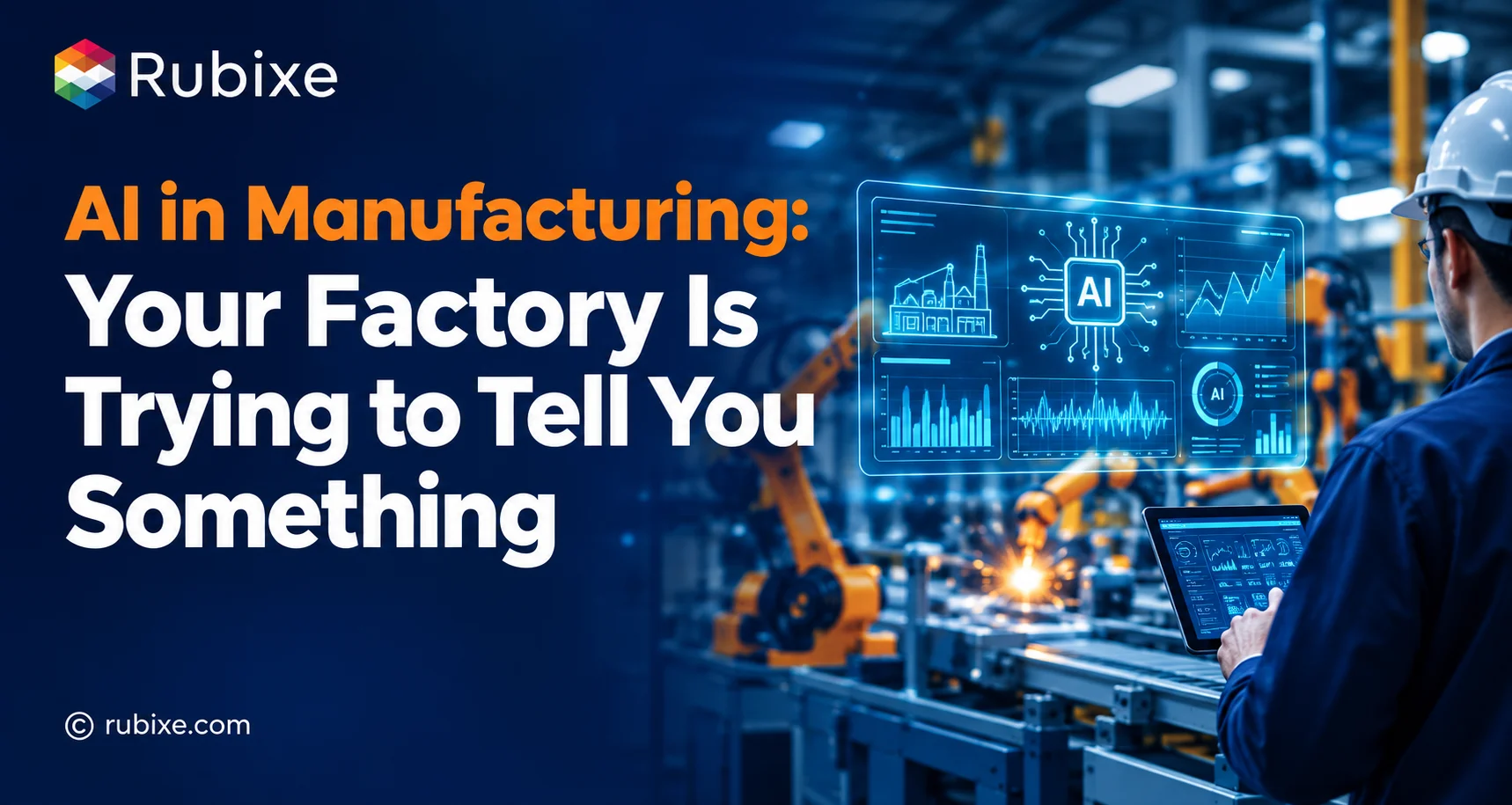
Imagine walking onto your factory floor and seeing everything running normally. Machines are operating, orders are moving, and production looks fine. But somewhere in the background, a machine is vibrating slightly more than usual. Energy consumption has changed. Output has dipped by a small percentage. None of these signals looks serious on its own. Together, they could be telling you something important. This is where AI in Manufacturing changes the way businesses listen to their operations. Instead of relying only on manual checks or waiting for an obvious problem, AI can examine thousands of data points and uncover patterns that are easy to miss. Your factory may already have the answers. The real question is whether you're listening.
Your Factory Is Already Talking Through Data
Every production floor generates information.
Machine temperatures, operating speeds, sensor readings, production volumes, error logs, energy consumption, and quality results are constantly creating a picture of what's happening inside your facility.
The problem isn't always a lack of data. It's knowing what that data means.
When information is spread across different machines and systems, important patterns can easily get buried. AI can bring those signals together, analyze them at scale, and highlight unusual changes that deserve attention.
In other words, your factory doesn't necessarily need more data. It may need a smarter way to understand the data it already has.
A Small Change Can Be a Big Warning
Think about a machine that has been operating normally for months. Suddenly, its vibration level begins to increase slightly.
A person checking the machine occasionally might not consider the change significant. An AI system continuously analyzing equipment data may identify the deviation as part of a pattern associated with previous equipment issues.
That difference matters.
AI can help teams detect anomalies earlier, investigate potential causes, and decide where maintenance attention may be required. Instead of discovering a problem after a breakdown, manufacturers can have more information available before the situation escalates.
Your Production Problems Leave Clues
Not every manufacturing problem starts with a dramatic machine failure.
Maybe a particular process repeatedly produces inconsistent results. Perhaps production slows during certain operating conditions. Maybe the same type of error appears more frequently at particular times.
These events can look unrelated when viewed individually.
AI can analyze historical and real-time operational information to find connections between them. By recognizing recurring patterns, manufacturers can gain a clearer understanding of what may be influencing production performance.
That means teams aren't simply asking, “What went wrong?”
They can start asking, “What was the factory trying to tell us before it went wrong?”
The Real Value Is in Acting on the Signal
Identifying a pattern is only the beginning.
The real value comes when production, maintenance, and management teams can use those insights to make better decisions. AI-generated alerts can help prioritize equipment checks, investigate unusual production behavior, and focus human attention where it matters most.
This doesn't mean handing the factory over to machines. People still provide the experience, judgment, and context needed to decide what action makes sense.
AI simply helps them see more of the picture.
Are You Listening to Your Factory?
For many manufacturers, the opportunity isn't about completely rebuilding their operations. It starts with understanding where existing data can provide better answers.
AI in Manufacturing can help transform raw operational information into useful insights, making it easier to recognize anomalies, uncover patterns, and respond before small signals become larger problems.
The factories of tomorrow won't necessarily be defined by having the most machines. They may be defined by how intelligently they understand what those machines are already telling them.
And if your factory is generating signals every second, the bigger question isn't whether it's talking.
It's whether you're listening.
Frequently Asked Questions
How can AI identify problems in manufacturing?
AI can analyze machine, production, sensor, and operational data to identify unusual patterns or deviations that may indicate an emerging issue.
Can AI help reduce unexpected downtime?
AI can support early detection of unusual equipment behavior, giving maintenance teams more information to investigate potential problems before they result in unexpected interruptions.
Does AI replace manufacturing employees?
No. AI can support employees by providing data-driven insights and alerts, while human teams remain responsible for context, judgment, and action.
Where should a manufacturer start with AI?
A practical starting point is identifying a specific operational challenge and assessing whether existing data can be used to address it. This helps businesses focus on measurable use cases rather than adopting AI simply for the sake of technology.
Conclusion
Your factory is producing more than products. Every machine cycle, sensor reading, production change, and operational variation can create a signal.
The challenge is recognizing those signals before they become costly problems.
With AI in Manufacturing, businesses can turn those hidden patterns into actionable insights and give their teams a clearer view of what is happening across the factory floor. The goal isn't to make machines replace people. It's to help people understand their machines better.
Because sometimes, your factory has already given you the warning.
You just need the right technology to hear it.











.webp)