Sign up with Google
 Sign in with Zoho

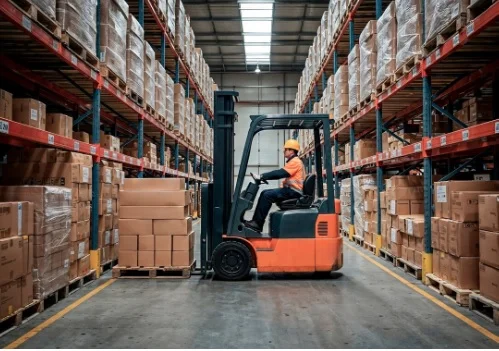
The exponential rise in e-commerce, omnichannel retailing, and customer demands for quick deliveries has led to changes in how fulfilment centres work. Organisations are always trying to handle more order quantities in an accurate and cost-effective manner. Consequently, fulfilment centre owners have started to think differently about the concept of expansion and look for better means to increase efficiency.
One of the major changes that have taken place over the last few years is the use of automated material handling systems. Companies are not looking only towards building bigger facilities and hiring more people; instead, they are using technology to optimise the flow of goods in the warehouse.
The Limitations of Manual Expansion
For many years, warehouse expansion has been synonymous with physical growth. As demands increased, most organisations would add more square footage, more labour and increase their operational space. Although this could offer a quick fix to meet demands, there were some challenges introduced.
Manual expansion might result in:
- Increase in labour costs and difficulties in labour management
- Training needs
- Operational risks
- Higher travel distance within the warehouse
- Challenge in sustaining high productivity especially at peak times
With the increasing demand for orders, it is becoming difficult to rely on the addition of personnel and space as a way of expanding. This is because many organisations have realised that operational efficiency is more important than just warehouse expansion.
Why Automation Is Becoming a Strategic Priority
Today's fulfilment centres aim for high throughput within the same facilities. With automation, organisations can maximise their space usage and improve process efficiency.
Some benefits of automation include:
- Increased speed of order processing
- Higher level of accuracy in inventory tracking
- Less reliance on human resources
- Improved use of warehouse space
- Better scalability amid seasonal fluctuations
Using automation technology in warehouses can help to make processes faster and more predictable for teams.
Meeting Growing Customer Expectations
The demands placed on consumers have drastically transformed over the past decade. The provision of same-day and next-day deliveries is increasingly becoming the norm in a variety of industries. The fulfilment centres will thus be required to process orders faster without affecting the levels of accuracy.
Manual systems usually find it difficult to perform well when there is high demand since they may experience some bottlenecks when handling orders at a high volume.
The use of automation systems helps get rid of such bottlenecks, allowing the efficient movement of goods within the warehouse. There are advanced systems that help synchronise the movement of goods.
Such capability has proven to be an essential competitive advantage for companies.
The Role of Data-Driven Warehouse Operations
Modern fulfilment centres are not just places for storing goods anymore; they operate as highly integrated facilities where information is an integral part of the process.
Some useful information is collected by the automation systems, such as:
- Patterns of inventory movements
- Utilisation of equipment
- Throughput
- Accuracy of picking
- Forecasts for capacity
The presence of information allows managers to notice weak spots and improve the operation. It is possible to act beforehand and make changes in order to achieve some objectives in the future rather than react to something.
Automation and data analytics work together to create a more flexible warehouse environment that can adjust to shifting market demands.
How Warehouse Robotics Are Transforming Fulfilment
The utilisation of warehouse robots is one of the most evident changes that have happened to modern warehousing practices. It is possible to use robotic technologies for different purposes including inventory transportation and helping with picking and sorting operations.
There are some advantages associated with the use of warehouse robots:
- Time savings for people
- Order accuracy improvement
- Higher efficiency
- More safety in the working environment
- Proper use of the warehouse space
Robotic systems do not replace people at all but rather work alongside them. Workers have the chance to concentrate on decision-making processes, while robots perform routine and physically challenging tasks.
This approach allows fulfilment centres to increase their efficiency without having to expand their teams.
Addverb's Role in Advancing Warehouse Automation
Addverb designs automation technologies aimed at assisting fulfilment centres in improving efficiency and scalability. Some of the solutions offered by Addverb include technologies that help to streamline the process of moving, storing, and fulfilling orders in different sectors.
Using its experience in warehousing automation, Addverb supplies systems that help organisations increase their productivity without making operations complicated. Some of the solutions include robotics, intelligent software platforms, and others that match the increasing need for automation in material handling.
As the needs of organisations regarding automation in fulfilling orders become more complex, Addverb technology plays an important role in improving productivity, precision, and resource usage without depending only on growth through expansion strategies.
Conclusion
The future of warehousing is becoming more concerned with operational intelligence and not just the size of the warehouse facility. Companies are realising that efficiency, flexibility, and scalability are key, not just creating more storage space in the warehouse.
Automation helps in dealing with increased order volumes without compromising the quality of service delivery and cost control. By enhancing the movement of goods and eliminating any process inefficiencies, companies will be able to create extra capacity through automation and optimisation of processes.
With the evolution of technology, the future of warehousing requires that more money be pumped into automated material handling systems and robotic technology in the warehouse. These will ensure that the warehouse facilities of tomorrow meet the demands placed on them. Addverb is one of the companies providing solutions for warehouse growth and efficiency.