Sign up with Google
 Sign in with Zoho

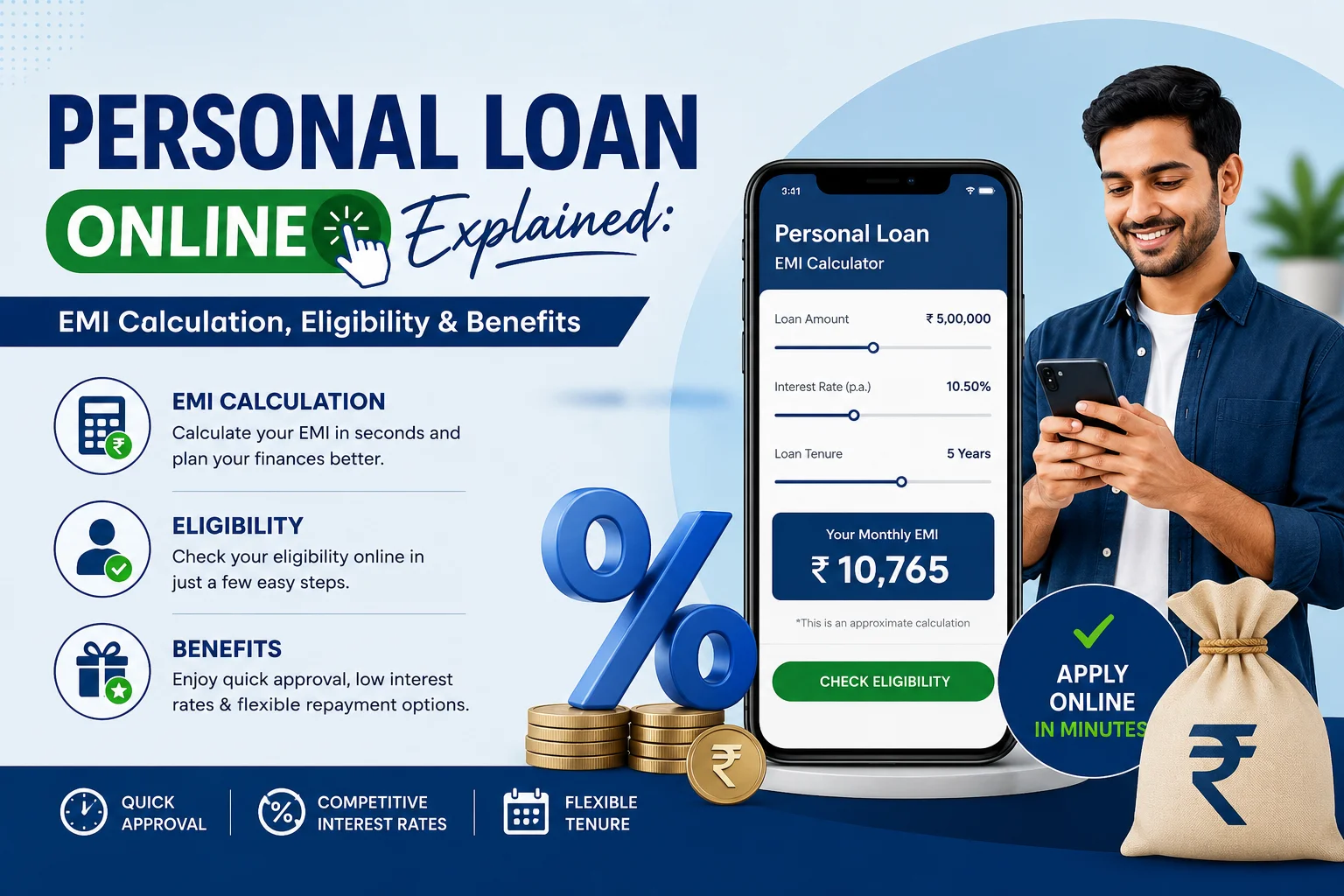
If you've ever needed money fast and didn't want to put up your car or your house as security, you've probably come across personal loans. They're unsecured, which just means the lender is trusting your income and credit history rather than an asset and these days, applying for a personal loan online is usually quicker than a trip to the bank ever was.
But before you fill out any form, it helps to actually understand what you're signing up for: how repayments work, what lenders look at, and how to figure out your EMI before it becomes a monthly surprise.
How Personal Loans Actually Work?
At its core, a personal loan is simple. You get a lump sum upfront, and you pay it back in equal monthly chunks (EMIs) over an agreed period. What's less obvious is how the interest works underneath the hood: it's calculated on a reducing balance, so as you chip away at the principal, the interest portion of each EMI gets smaller too, even though the total payment stays the same.
A few things worth keeping in mind:
- No collateral needed. Approval comes down to your credit profile and how stable your income looks, not what you own.
- Predictable EMIs. Every instalment blends principal and interest, so you always know what's coming out of your account.
- No restrictions on use. Wedding, medical bill, home renovation, debt consolidation lenders generally don't ask what the money's for.
How Personal Loan EMI Is Calculated?
Most people want to know one thing before they apply: what will this actually cost me every month?
To calculate personal loan EMI, lenders (and most online calculators) use a formula built around three inputs: how much you're borrowing, the interest rate, and the tenure you choose.
A couple of things shift the number more than people expect:
- A higher interest rate doesn't just raise your EMI; it raises the total amount you end up repaying over the life of the loan.
- Stretching the tenure out lowers your monthly payment, but you'll pay more interest overall by the time you're done. It's a trade-off, not a free lunch.
Running the numbers before you commit isn't just a formality; it's genuinely useful for figuring out whether the EMI fits comfortably into your monthly budget or whether you're stretching yourself thin.
Eligibility Criteria for Personal Loans
Eligibility rules aren't identical across lenders, but they tend to circle the same handful of factors:
- Steady income. Lenders want proof you can keep up with payments month after month, not just that you have money right now.
- Your credit score. This is basically a report card on how you've handled debt before, and it has a real impact on whether you get approved and at what rate.
- Employment or business stability. Whether you're salaried or self-employed, consistency matters more than the size of a single paycheck.
Why Applying Online Is Usually the Better Route?
Digital lending has changed the experience quite a bit. Instead of queuing at a branch with a folder of paperwork, most of it now happens from your phone or laptop.
- You can apply from anywhere; no need to plan your day around a branch visit.
- Processing tends to move faster since a lot of the verification is automated.
- You can see the interest rate, fees, and repayment terms clearly before you commit to anything, which makes comparing offers a lot easier.
What Affects Your EMI and Your Chances of Approval
A few variables tend to swing both your approval odds and your final EMI:
- Your repayment track record. A history of paying on time works in your favour, both for approval and for the rate you're offered.
- Existing debts. If you're already paying EMIs on something else, that eats into your disposable income and can lower how much a lender is willing to sanction.
- How much you borrow. Bigger loan amounts naturally mean bigger EMIs and more interest paid over time; worth borrowing only what you actually need.
Documents Required for Personal Loan Application
The paperwork is fairly standardised across lenders, though the exact list can vary slightly:
1. Identity verification documents
- PAN card
- Aadhaar card
- Passport
2. Income proof submission
- Salary slips
- Bank statements
- Tax returns
3. Address proof requirement
- Utility bills
- Official records
From Application to Disbursal
Borrowers often estimate repayment before application to ensure affordability using tools to calculate personal loan EMI.
- Application submission stage: Fill online forms with personal, financial, and employment details accurately.
- Verification and approval process: Lenders review submitted details, documents, and credit data before approving the loan.
- Disbursal and repayment start: Approved loan amounts are credited, and EMI repayment begins as per the agreed schedule.
Understanding this application flow helps in navigating the process efficiently from submission to disbursal.
Conclusion
Before you commit to anything, it's worth taking a few minutes to calculate personal loan EMI for different amounts and tenures. Small changes in either can shift your monthly outgo more than you'd expect. Combine that with a clear-eyed look at the eligibility criteria, and applying for a personal loan online becomes a lot less stressful and a lot more predictable.personal loan online