Sign up with Google
 Sign in with Zoho

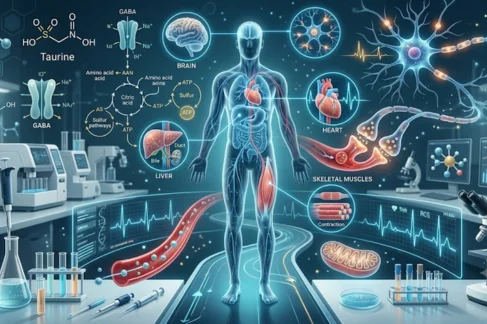
Taurine is one of the most abundant free amino acid-like compounds found in the human body. Although it is often grouped with amino acids, taurine differs because it is not used to build proteins. Instead, it plays a vital role in numerous physiological processes, including energy metabolism, nervous system function, cardiovascular health, and cellular protection.
Naturally present in the brain, heart, retina, skeletal muscles, and other tissues, taurine helps maintain normal cellular function and supports the body's ability to respond to physiological stress. Because of its wide-ranging biological activities, taurine has become an important area of research in nutrition, neuroscience, cardiovascular medicine, and metabolic health.
This article explores the role of taurine in metabolism, neurological function, and cardiovascular health while highlighting why it remains a valuable biomarker in biomedical research.
What Is Taurine?
Taurine is a sulfur-containing organic compound synthesized primarily from the amino acids methionine and cysteine. While the body can produce taurine, dietary intake also contributes to maintaining adequate levels. Foods such as seafood, meat, and dairy products are common sources, whereas individuals following plant-based diets may consume lower amounts.
Unlike many amino acids, taurine exists freely within cells rather than being incorporated into proteins. It participates in several biological functions, including:
- Maintaining electrolyte balance
- Supporting bile salt formation
- Regulating calcium signaling
- Protecting cells from oxidative stress
- Stabilizing cell membranes
- Supporting nervous system development
These diverse functions explain why taurine is present in high concentrations throughout the body.
Taurine's Role in Metabolism
Metabolism involves a complex network of biochemical reactions that convert nutrients into energy while supporting growth, repair, and normal physiological function. Taurine contributes to several of these metabolic processes.
Supporting Mitochondrial Function
Mitochondria are responsible for producing most of the energy required by cells. Taurine helps maintain mitochondrial health by supporting normal enzyme activity and protecting mitochondrial structures from oxidative damage.
Healthy mitochondrial function is essential for tissues with high energy demands, including the heart, muscles, and brain.
Regulating Glucose Metabolism
Researchers continue to investigate taurine's role in glucose regulation and insulin sensitivity. Experimental studies suggest that taurine may influence glucose utilization and help maintain metabolic balance under certain physiological conditions.
These findings have generated interest in taurine's potential relevance to metabolic disorders, including obesity and diabetes.
Fat Metabolism and Liver Function
Taurine contributes to the formation of bile salts, which are necessary for digesting and absorbing dietary fats. Efficient bile acid production supports lipid metabolism and helps maintain normal digestive function.
Researchers are also studying taurine's potential role in protecting liver cells from oxidative stress associated with metabolic diseases.
Cellular Osmoregulation
Cells must carefully regulate water and electrolyte balance to function properly. Taurine acts as an osmolyte, helping cells maintain appropriate fluid balance under changing physiological conditions.
This function is particularly important in organs such as the brain and kidneys, where disruptions in fluid regulation can affect cellular performance.
Taurine in Neurological Health
The nervous system relies on precise communication between billions of neurons. Taurine contributes to several mechanisms that help maintain healthy brain function.
Supporting Neurotransmission
Taurine functions as a neuromodulator, influencing communication between nerve cells. It interacts with inhibitory neurotransmitter systems that help regulate neuronal activity and maintain balanced signaling within the brain.
This regulatory role supports normal nervous system function and helps prevent excessive neuronal excitation.
Promoting Brain Development
Taurine is present in high concentrations during fetal and early postnatal development. Research suggests it contributes to the development of the central nervous system by supporting neuronal growth, differentiation, and migration.
Because of its involvement in brain development, taurine remains an important subject of developmental neuroscience research.
Protecting Against Oxidative Stress
The brain consumes significant amounts of oxygen, making it particularly vulnerable to oxidative damage. Taurine exhibits antioxidant properties that help reduce oxidative stress and support neuronal survival.
Researchers continue to investigate how these protective effects may contribute to studies of age-related cognitive decline and neurodegenerative diseases.
Calcium Homeostasis
Calcium ions regulate numerous cellular processes within neurons. Taurine helps maintain calcium balance, reducing the risk of abnormal calcium accumulation that may impair cellular function.
Maintaining calcium homeostasis is essential for healthy neurotransmission and neuronal survival.
Taurine and Cardiovascular Health
The heart contains relatively high concentrations of taurine, reflecting its importance in cardiovascular physiology.
Supporting Cardiac Muscle Function
Cardiac muscle cells depend on coordinated calcium movement to generate normal contractions. Taurine helps regulate calcium handling within these cells, supporting efficient cardiac performance.
This role has made taurine an area of interest in cardiovascular research.
Maintaining Blood Pressure Balance
Several experimental studies have explored taurine's influence on vascular function. Researchers believe taurine may contribute to maintaining normal blood vessel function by supporting endothelial health and regulating vascular tone.
Although ongoing research continues to investigate these mechanisms, taurine remains an important biomolecule in cardiovascular studies.
Reducing Oxidative Stress in the Heart
Oxidative stress contributes to the progression of many cardiovascular conditions. Taurine helps protect cardiac cells by limiting oxidative damage and supporting cellular antioxidant defenses.
Understanding these protective mechanisms may improve knowledge of cardiovascular disease progression.
Supporting Lipid Metabolism
Researchers have also examined taurine's relationship with lipid metabolism. Studies suggest it may influence cholesterol and triglyceride regulation through its involvement in bile acid synthesis and lipid processing.
These findings continue to be explored in metabolic and cardiovascular research settings.
Taurine in Exercise and Muscle Physiology
Skeletal muscles contain substantial amounts of taurine. Researchers studying exercise physiology have investigated its potential role in supporting muscle function during physical activity.
Areas of ongoing research include:
- Muscle contraction efficiency
- Fatigue resistance
- Recovery after exercise
- Cellular hydration
- Oxidative stress management
Although the exact mechanisms continue to be studied, taurine remains an important molecule in sports science research.
Taurine as a Biomarker in Biomedical Research
Because taurine participates in numerous physiological pathways, researchers frequently measure its levels in biological samples to better understand health and disease.
Taurine measurements are commonly included in studies involving:
- Metabolic disorders
- Diabetes research
- Cardiovascular diseases
- Kidney disorders
- Liver diseases
- Neurological disorders
- Aging research
- Nutritional assessments
Reliable quantification allows scientists to investigate how changes in taurine concentrations relate to physiological function and disease mechanisms.
Measuring Taurine in Research
Accurate measurement is essential for generating reliable research data. Various analytical techniques are used to quantify taurine, depending on study objectives and laboratory resources.
One commonly used approach is a taurine assay kit, which enables researchers to quantify taurine concentrations in biological samples with high sensitivity and reproducibility. These kits support applications in nutrition, metabolism, neuroscience, cardiovascular research, and pharmaceutical development by providing standardized methods for taurine analysis.
When selecting a taurine assay kit, researchers should consider factors such as sample compatibility, assay sensitivity, detection range, precision, and validation data to ensure consistent and reliable results.
Future Directions in Taurine Research
Interest in taurine continues to expand as scientists uncover new insights into its biological functions. Emerging research is exploring its involvement in immune regulation, mitochondrial biology, healthy aging, gut microbiota interactions, and chronic disease mechanisms.
Advances in analytical technologies and biomarker research are expected to further clarify taurine's role in maintaining physiological balance and supporting overall health. As precision nutrition and personalized medicine evolve, taurine will likely remain an important focus of biomedical investigation.
Conclusion
Taurine is far more than a simple amino acid-like compound. It plays an integral role in metabolism, neurological function, cardiovascular physiology, and cellular homeostasis. From supporting mitochondrial energy production and bile acid synthesis to regulating neurotransmission and protecting cardiac cells, taurine contributes to multiple biological systems essential for human health.
Its broad physiological significance has made taurine an important biomarker in nutritional, metabolic, neurological, and cardiovascular research. Accurate measurement using validated taurine assay kits enables researchers to better understand its involvement in health and disease, supporting ongoing discoveries that may improve diagnostics, therapeutic strategies, and our understanding of human physiology.
FAQs
1. What is taurine, and why is it important?
Taurine is a sulfur-containing organic compound that supports many physiological processes, including metabolism, nervous system function, cardiovascular health, bile acid formation, and cellular protection.
2. How does taurine support metabolism?
Taurine contributes to mitochondrial function, bile acid synthesis, glucose metabolism, fat digestion, and cellular fluid balance, making it an important molecule in metabolic research.
3. Why is taurine significant in neurological research?
Taurine helps regulate neurotransmission, supports brain development, maintains calcium balance, and protects nerve cells from oxidative stress, making it a key focus in neuroscience studies.
4. How are taurine levels measured in research?
Researchers commonly use validated taurine assay kits and other analytical methods to accurately quantify taurine concentrations in biological samples for nutritional, metabolic, neurological, and cardiovascular research.