Sign up with Google
 Sign in with Zoho

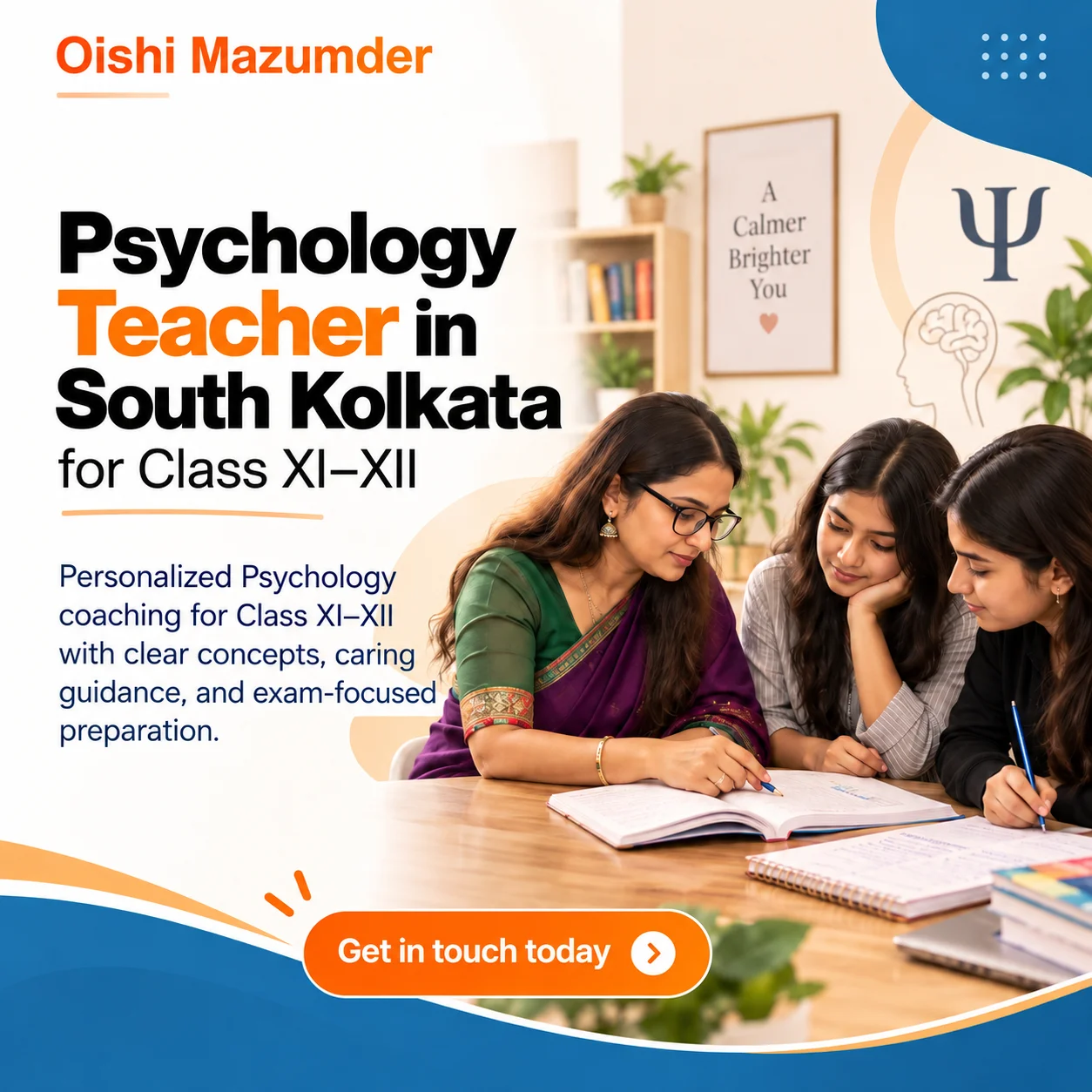
Psychology is one of the few subjects students enjoy on the first day and find confusing by the third month. The topics feel familiar, because everyone has emotions, habits and opinions about people. But the exam asks for something different. It wants precise terms, named theories, correct application and clear answers.
That gap between "I get the idea" and "I can write it for 5 marks" is where a good psychology teacher matters most. This guide explains what to look for in a teacher, how a psychology coaching center differs from one-to-one tuition, and how to tell whether your child (or you) is actually learning.
Why Psychology Needs a Specialist Teacher
Many students move to psychology from subjects where answers are fixed. Psychology works differently. It contains theories that compete with each other, research studies, case examples and terms that sound alike but mean different things. Think of classical versus operant conditioning, or Piaget versus Vygotsky.
A general tutor can read the textbook aloud. A dedicated psychology teacher does more:
- Explains why a theory exists and what problem it tried to solve
- Connects concepts to everyday situations students recognise
- Shows how the same concept appears in short answers, long answers and case-based questions
- Corrects the habit of writing everything they know instead of what the question asks
The last point costs more marks than any other. Students often know the content but lose marks on structure and relevance.
What to Look for in a Psychology Teacher
1. Real subject knowledge, not just exam tricks
Ask about the teacher's academic background in psychology and their teaching experience. Someone who has studied the subject in depth can answer the "but why?" questions that students inevitably ask. Memorised notes can't do that.
2. Clear explanation in plain language
Psychology has a lot of jargon. A good teacher introduces a term, explains it in simple words, gives an example, and only then expects the student to use it. If a student leaves a class still unable to explain the concept to a friend, the teaching hasn't finished.
3. Attention to your board and syllabus
CBSE, ISC and the West Bengal Council syllabi differ in emphasis, in question patterns and in marking style. Your teacher should know which one you follow and teach to it, rather than using one generic set of notes for everyone.
4. Regular practice and honest feedback
Learning improves when students write answers and get specific feedback. "Good effort" does not help. "Your definition is correct, but you skipped the example, which is why the marks dropped" does.
5. Patience with different learning speeds
Some students need a topic explained three ways. Others want to go deeper. A teacher who adjusts is worth far more than one who rushes the syllabus.
Psychology Coaching Center vs. One-to-One Tuition
Families often ask which is better. Neither wins every time. It depends on the student.
A psychology coaching center suits students who:
- Learn well alongside peers and enjoy discussion
- Need a structured schedule and a steady pace through the syllabus
- Benefit from regular tests, revision cycles and group doubt-clearing
One-to-one teaching suits students who:
- Feel shy about asking questions in a group
- Have specific weak areas, such as research methods or statistics
- Need a flexible timetable or extra attention before exams
A good psychology coaching center should still feel personal. If a batch is so large that the teacher doesn't know each student's weak spots, the structure helps nobody.
Questions to ask before you join a coaching center
- How many students are in a batch?
- Is the same teacher taking all the classes, or does it change?
- How often are tests held, and does the teacher review each answer?
- How are doubts handled outside class time?
- Does the course cover both theory and answer-writing practice?
- Can I attend a trial class first?
Any reputable teacher or center will answer these openly. If the answers feel evasive, treat that as information.
Signs That Learning Is Actually Happening
Good results show up before the exam. Watch for these in the first two or three months:
- The student explains concepts in their own words, without reading from notes
- They spot psychology in daily life: a classmate's reaction, a family habit, a news story
- Answers become shorter, more focused and better organised
- They ask better questions, moving from "what is this?" to "how is this different from that?"
- Fear of the subject fades
If none of this is changing, discuss it with the teacher. Sometimes a small adjustment in method makes the difference.
How Students Can Get More From Any Psychology Class
Even the best psychology teacher can only do half the work. Here is what students can do on their side:
- Read the topic once before class. Even a quick skim makes the lesson stick.
- Keep a running glossary. Write each term with a one-line meaning and one real-life example.
- Practise writing, not just reading. Take ten minutes after each class to write a short answer from memory.
- Revise in small bursts. Reviewing a topic after one day, one week and one month beats a single long cramming session.
- Link theories to each other. Make a simple chart of who proposed what, and where the theories agree or disagree.
Beyond Marks: Why Psychology Is Worth Learning Well
Exams matter, but psychology offers something more lasting. Students begin to understand stress, motivation, memory, relationships and behaviour, both their own and other people's. For those considering careers in counselling, clinical psychology, education, HR or research, a strong school foundation makes college-level study much smoother.
A thoughtful psychology teacher keeps that bigger picture in view. They teach for understanding first, and good marks tend to follow.
A Note on Choosing With Care
Be cautious about any teacher or center that guarantees marks or ranks. No one can honestly promise a specific score, because results depend on the student's effort, consistency and starting point. Instead, look for transparency, a clear teaching method and a willingness to show you how progress will be tracked.
Learn Psychology With Oishi Mazumder
At oishimazumder.in, the focus is on helping students truly understand psychology, with clear explanations, regular answer-writing practice and personal attention to each learner's needs. Whether you are preparing for Class 11 and 12 exams or building a base for higher studies, you can reach out to discuss your goals and find the format that fits you best.