Sign up with Google
 Sign in with Zoho

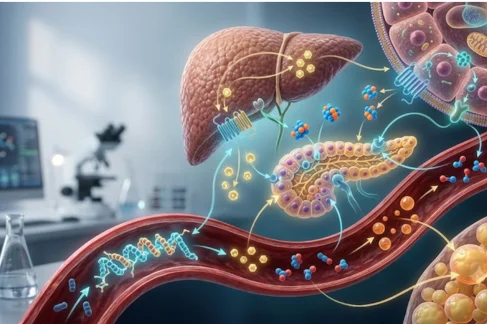
Metabolic disorders are a group of conditions that affect how the body processes and uses nutrients such as glucose, fats, and proteins. Diabetes, obesity, insulin resistance, and metabolic dysfunction-associated steatotic liver disease (MASLD) are examples of disorders involving disruptions in normal metabolic regulation. Research into hormone signaling is therefore important for understanding how these conditions develop and identifying potential therapeutic targets.
One term that can create confusion in this area is glucagon-like peptide-3 (GLP-3). Unlike GLP-1 and GLP-2, GLP-3 is not a recognized human incretin hormone. However, a naturally occurring GLP-3 has been identified in certain cartilaginous fish, including chondrichthyans, where researchers are investigating its metabolic functions.
In other contexts, "GLP-3" is sometimes used informally to describe experimental multi-receptor agonists. Therefore, researchers should carefully define which molecule they are studying.
What Is Glucagon-Like Peptide-3?
Glucagon-like peptides are derived from the proglucagon precursor and are involved in regulating physiological processes such as metabolism and gastrointestinal function. In humans, the best-characterized members include GLP-1 and GLP-2. These peptides have distinct biological activities and receptors.
Interestingly, chondrichthyans—such as sharks, rays, and related species—possess an additional peptide known as GLP-3. Researchers have proposed that studying this peptide may provide insight into the evolution of metabolic regulation and the diversification of proglucagon-derived hormones.
This makes GLP-3 research particularly useful for comparative physiology. Rather than assuming that GLP-3 behaves like human GLP-1, scientists can investigate its specific effects on glucose, lipid, and ketone metabolism.
Understanding Glucose Metabolism
Glucose metabolism is central to the study of metabolic disorders. When glucose regulation becomes impaired, persistent elevations in blood glucose can contribute to diabetes and other metabolic complications.
Research on proglucagon-derived peptides has demonstrated how peptide hormones can influence glucose homeostasis. GLP-1, for example, enhances glucose-dependent insulin secretion and has become an important target in diabetes research.
Although GLP-3 should not be treated as equivalent to human GLP-1, investigating its metabolic activity can help researchers understand how related peptides influence nutrient handling across species. Such studies can reveal whether particular metabolic effects are evolutionarily conserved or have developed differently in different organisms.
GLP-3 and Hepatic Metabolism
One of the most interesting findings from GLP-3 research involves the liver. The liver plays a major role in maintaining metabolic balance by regulating glucose production, fatty-acid metabolism, and ketone-body production.
A 2024 study of Pacific spiny dogfish found that GLP-3 affected hepatic ketone metabolism. Following GLP-3 exposure, ketone flux in the perfused liver shifted from net production toward consumption. Researchers also observed changes in the expression of putative ketone transporters and increased activity of β-hydroxybutyrate dehydrogenase, an enzyme involved in ketone metabolism.
These findings are important because they demonstrate that the metabolic effects of GLP-3 may extend beyond glucose regulation. They also highlight how hormonal signaling can influence the way the liver uses alternative energy substrates.
Studying Ketone and Lipid Metabolism
Metabolic disorders frequently involve abnormal lipid and energy metabolism. Obesity, insulin resistance, and metabolic liver disease can be associated with excessive lipid accumulation and impaired handling of fatty acids.
The dogfish study is particularly interesting because chondrichthyans rely more heavily on ketone bodies as metabolic fuels than mammals. Researchers therefore examined whether GLP-3 could influence metabolic pathways associated with ketone utilization. The study found effects on hepatic ketone metabolism but did not observe comparable effects on glucose acquisition or glycolysis in the liver.
Such findings demonstrate why comparative research can be valuable. Studying metabolic hormones in organisms with different metabolic strategies can help scientists identify the specific pathways regulated by peptide hormones.
Connecting Hormonal Signaling With Metabolic Disorders
Modern metabolic research increasingly recognizes that obesity, diabetes, cardiovascular disease, kidney disease, and metabolic liver disorders can interact rather than occur as completely independent conditions. This interconnectedness is reflected in the emerging concept of cardiovascular-kidney-metabolic syndrome.
Research into proglucagon-derived peptides can contribute to this broader understanding by examining how hormonal signaling influences multiple metabolic processes. GLP-1-based therapies, for example, have demonstrated effects on glucose control, appetite, and body weight, while newer approaches are investigating combinations of hormonal pathways.
GLP-3 research can complement these investigations by providing additional information about the evolution, structure, and metabolic actions of related peptides.
Role of Laboratory Research
Laboratory assays are essential for investigating peptide hormones and their biological effects. Researchers may measure peptide concentrations, receptor expression, enzyme activity, metabolic intermediates, gene expression, and downstream signaling molecules.
Immunoassays such as ELISA can be useful research tools when validated for the specific analyte, species, sample type, and experimental application. They can help researchers quantify target proteins or peptides and compare levels between experimental groups.
For GLP-related metabolic research, laboratory measurements can be combined with glucose tolerance testing, lipid profiling, ketone analysis, gene-expression studies, and tissue-based experiments to build a more comprehensive picture of metabolic regulation.
Potential Relevance to Metabolic Disease Research
Research involving GLP-related pathways may ultimately contribute to a better understanding of disorders such as obesity, type 2 diabetes, insulin resistance, and metabolic liver disease. Current research on human proglucagon-derived peptides has already demonstrated the importance of these pathways in metabolic and gastrointestinal physiology.
However, GLP-3 findings from non-human species should not be directly interpreted as evidence of a human therapeutic effect. Much more research is required to determine the physiological significance of naturally occurring GLP-3 and whether its mechanisms can inform human metabolic research.
Conclusion
Glucagon-like peptide-3 research offers a valuable perspective on the evolution and regulation of metabolism, particularly through studies of chondrichthyan species. Evidence that GLP-3 can influence hepatic ketone metabolism demonstrates that this peptide has distinct metabolic activity in the organisms where it occurs.
For metabolic research, these findings can help scientists investigate relationships between hormonal signaling, energy utilization, liver function, glucose handling, and ketone metabolism. When combined with biochemical assays, molecular studies, and metabolic measurements, GLP-related research can contribute to a broader understanding of how metabolic pathways are regulated and how their disruption may contribute to disease.
Note: In scientific and commercial literature, the term “GLP-3” can refer to different concepts. Researchers should verify the exact target, species, peptide sequence, and biological context before selecting an assay or interpreting experimental findings.