Sign up with Google
 Sign in with Zoho

Introduction: The Importance of Efficient Communication in Modern Electronics
The evolution of electronic technology has created a growing need for reliable communication between different devices. Modern systems often contain multiple controllers, sensors, processors, and modules that must exchange information continuously to achieve accurate operation. Without an efficient communication method, even advanced electronic systems can experience delays, errors, and reduced performance.
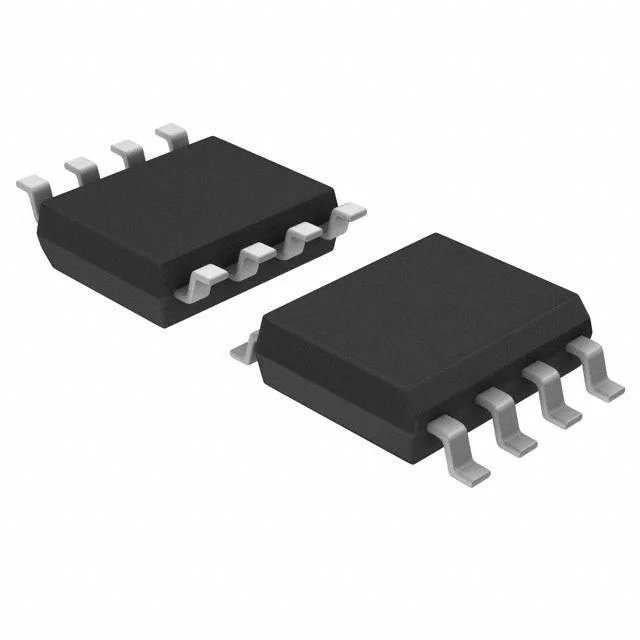
CAN Interface ICs provide a dependable solution for connecting electronic components through Controller Area Network technology. These integrated circuits are responsible for managing communication between digital controllers and the physical network, allowing devices to exchange information with high accuracy and stability.
Due to their excellent reliability, strong noise immunity, and ability to support multiple devices on a single network, CAN Interface ICs are widely used in automotive electronics, industrial control systems, medical equipment, and embedded applications.
How Do CAN Interface ICs Create Reliable Communication Between Devices?
A CAN network requires a component that can translate information between the internal logic of a device and the physical communication lines. CAN Interface ICs perform this essential task by acting as a communication bridge.
The microcontroller generates and processes digital information, but these signals cannot directly travel across a CAN bus. The CAN Interface IC converts these signals into suitable electrical levels for transmission and converts received signals back into digital data.
The communication process involves:
- Receiving transmit signals from the CAN controller
- Driving data onto the CAN High and CAN Low communication lines
- Detecting incoming messages from other network nodes
- Converting electrical signals into readable digital information
- Maintaining stable communication during continuous operation
This process allows different electronic modules to communicate effectively without requiring complex wiring systems.
Why Are CAN Interface ICs Important for Embedded System Development?
Embedded systems are found in countless modern products, including smart devices, industrial controllers, vehicles, and automated equipment. These systems require compact and efficient communication solutions that can deliver consistent performance.
CAN Interface ICs are valuable in embedded designs because they simplify communication architecture while maintaining high reliability.
Benefits for embedded applications include:
- Easy connection between multiple electronic modules
- Reduced hardware complexity
- Improved system scalability
- Efficient data transfer between controllers
- Better performance in electrically noisy environments
By reducing communication challenges, CAN Interface ICs allow engineers to design smarter and more efficient electronic products.
How Do CAN Interface ICs Handle Challenging Operating Conditions?
Electronic systems used in industrial and automotive environments often face difficult conditions, including electrical interference, temperature fluctuations, and mechanical stress. Communication components must be capable of maintaining performance despite these challenges.
CAN Interface ICs are designed with advanced protection technologies that help them operate reliably in demanding environments.
Important durability features include:
- Protection against electrical overload conditions
- Resistance to electromagnetic interference
- Stable performance across wide temperature ranges
- Improved signal integrity during transmission
- Protection against accidental wiring faults
These features make CAN Interface ICs suitable for applications where communication reliability directly affects system performance.
What Role Do CAN Interface ICs Play in Automotive Technology?
Automotive electronics have become increasingly complex as vehicles include more intelligent systems and electronic control units. Every control module requires communication to coordinate vehicle functions effectively.
CAN Interface ICs provide the communication foundation that allows these systems to exchange information quickly and reliably.
Common automotive applications include:
- Engine control communication
- Electronic stability systems
- Vehicle safety modules
- Infotainment networks
- Battery management systems
- Driver assistance technologies
The automotive industry continues to depend on CAN communication because it provides a proven method for connecting multiple systems while maintaining safety and efficiency.
How Are CAN Interface ICs Supporting Industrial Automation?
Industrial automation requires communication networks that can operate continuously while maintaining accuracy. Manufacturing equipment, sensors, and controllers must exchange information in real time to improve productivity and reduce operational errors.
CAN Interface ICs are commonly used in industrial automation because they provide reliable communication without requiring expensive networking infrastructure.
Industrial uses include:
- Automated machinery control
- Factory monitoring systems
- Robotic applications
- Industrial sensor networks
- Process control equipment
Their ability to handle interference and maintain communication accuracy makes them suitable for modern industrial environments.
What Are the Advantages of Using CAN Interface ICs Over Traditional Communication Methods?
Traditional communication methods often require dedicated connections between individual devices, which can increase system complexity and installation costs. CAN technology provides a more efficient alternative by allowing multiple devices to share the same communication network.
Advantages of CAN Interface ICs include:
- Lower wiring requirements
- Reduced installation complexity
- Reliable communication between multiple devices
- Built-in error detection capabilities
- Cost-effective network expansion
These benefits help designers create systems that are easier to maintain and upgrade.
How Do Engineers Select the Best CAN Interface IC for Applications?
Choosing the correct CAN Interface IC is an important step in electronic system design. Different applications require different communication speeds, power characteristics, and protection levels.
Engineers should evaluate:
- Required communication speed
- Operating voltage compatibility
- Environmental conditions
- Power consumption requirements
- Network size and communication distance
- Safety and protection features
Selecting a suitable CAN Interface IC ensures that the final system achieves reliable operation and long-term performance.
How Will CAN Interface ICs Influence Future Connected Systems?
The demand for connected electronic systems continues to increase as industries adopt automation, smart technologies, and intelligent devices. Reliable communication remains a major requirement for these developments.
CAN Interface ICs will continue supporting future innovations by providing stable and efficient connectivity between electronic components. Developments such as CAN FD have expanded the capabilities of CAN technology by improving data transmission performance while maintaining network reliability.
Future applications may include:
- Advanced electric vehicle platforms
- Smart manufacturing systems
- Intelligent transportation networks
- Connected industrial devices
- Automated control solutions
The continued improvement of CAN Interface IC technology will help engineers develop more powerful and reliable electronic systems.
Conclusion
CAN Interface ICs have become an essential part of modern electronic communication by providing a reliable connection between controllers and network devices. Their ability to support multiple communication nodes, resist electrical interference, and operate in challenging environments makes them suitable for a wide range of applications.
From automotive systems to industrial automation and embedded technology, CAN Interface ICs continue to improve the way electronic devices exchange information. As the demand for connected solutions grows, these components will remain a key technology for developing efficient, intelligent, and dependable communication networks.