Sign up with Google
 Sign in with Zoho


Selection of a suitable measurement tool is critical where dimensional accuracy becomes a significant factor in the manufacturing, machining, inspection, and maintenance process. In the case of Dimensional Vernier Caliper, the measurement is provided electronically through a digital screen, whereas a traditional measuring tool needs manual reading from graduated scales. Either type of measuring tools can be employed to measure external dimensions, internal dimensions, depth, and step.
Which tool would suit the situation better depends on the application rather than solely the technology. Consideration should be made regarding the issues such as the accuracy of the measurement, the ease of using the tool, the environment of operation, the maintenance of the tool, frequency of the inspection, etc., before making the selection.
How Does a Digital Vernier Caliper Work?
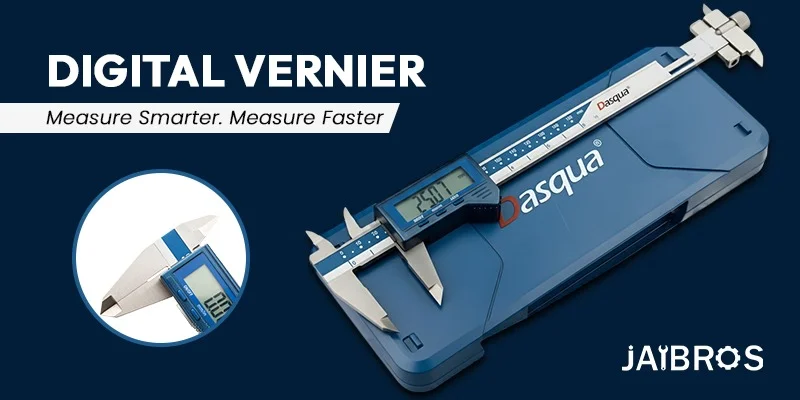
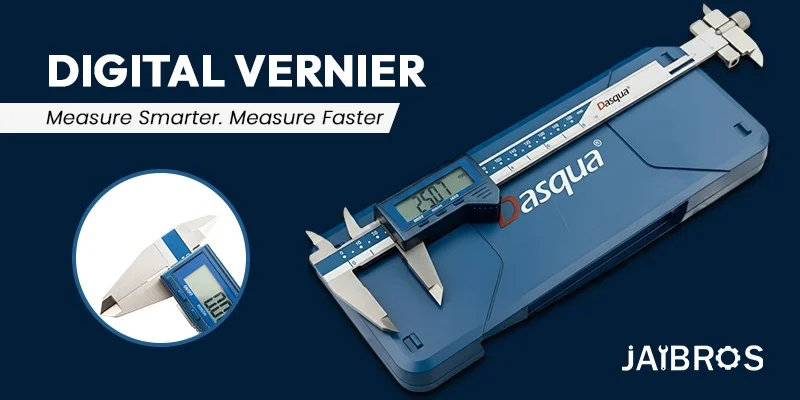
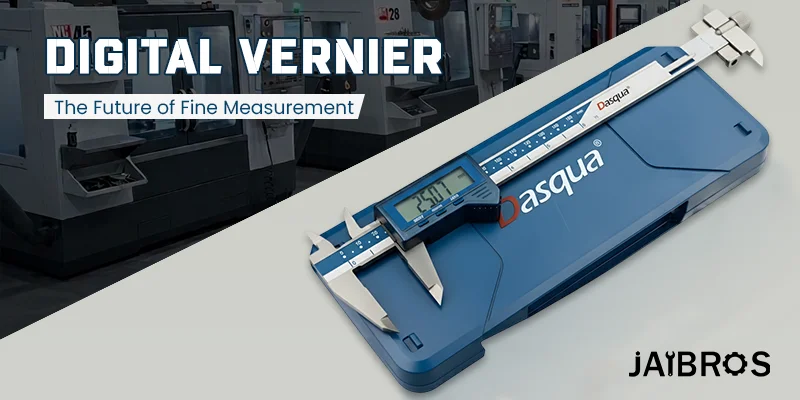
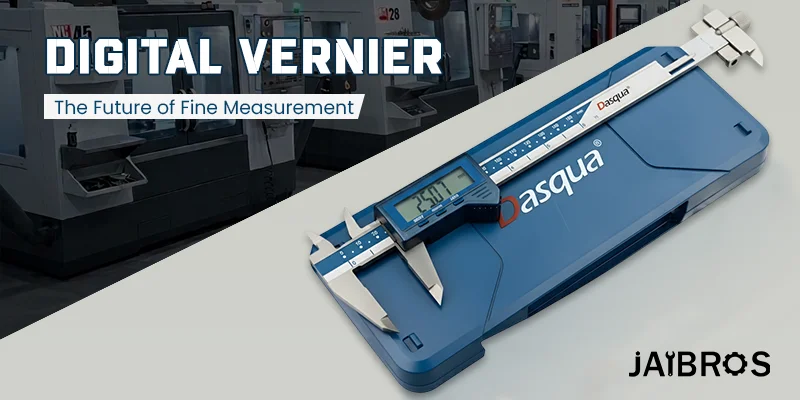
A Digital Vernier Caliper uses an electronic measurement system to detect the movement of its sliding jaw and display the result on an LCD screen. The direct reading makes measurements easier to understand, particularly when several components need to be inspected within a short period.
Common features include:
- Direct measurement display
- Metric and inch conversion
- Zero-setting function
- Easy-to-read LCD screen
- Quick measurement during repetitive inspection
- Ability to measure internal and external dimensions
The electronic display can reduce mistakes caused by incorrectly interpreting scale markings. However, users still need to apply the correct measuring technique and ensure that the instrument is properly calibrated.
How Does a Manual Vernier Caliper Work?
A traditional Vernier caliper operates through a main scale and a sliding vernier scale. The operator needs to align the markings and interpret the measurement manually. This design has been widely used because of its simple mechanical construction and dependable operation.
A manual instrument offers several practical benefits:
- Does not require a battery
- Simple mechanical operation
- Easy to maintain
- Suitable for routine dimensional checks
- Useful for learning fundamental measurement techniques
However, reading the scale accurately requires practice. Poor alignment, incorrect positioning, or viewing the markings from an unsuitable angle can lead to measurement errors.
Accuracy and Least Count Comparison
The digital vernier caliper least count indicates the smallest measurement increment that the instrument can display. Many digital models are available with a resolution of 0.01 mm, although specifications can vary between manufacturers and models. Users should always check the stated accuracy and resolution before selecting an instrument for precision work.
It is important to understand that resolution and accuracy are not the same. A smaller displayed increment does not automatically guarantee higher measurement accuracy. Calibration, measuring pressure, jaw condition, temperature, cleanliness, and operator technique can all influence the final result.
When comparing instruments, consider:
- Stated accuracy
- Resolution
- Measuring range
- Calibration requirements
- Condition of measuring surfaces
- Application tolerance
Speed and Ease of Measurement
One of the most noticeable differences is the speed at which readings can be obtained. A digital caliper provides the measurement directly on its display, allowing users to read the result without interpreting multiple scale markings. This can be helpful in production environments where numerous components require inspection.
Manual measurement can also be fast when performed by an experienced operator. However, beginners may need more time to interpret the scale correctly. Therefore, ease of reading becomes particularly important when different operators are responsible for dimensional inspection.
For repetitive measurement tasks, a clear electronic display can improve workflow. For occasional measurements, a traditional design may provide all the functionality required without additional electronic features.
Durability and Maintenance Requirements
The durability of either instrument depends heavily on construction quality, handling, storage, and maintenance. A manual model has fewer components that can be affected by battery failure or electronic problems. This makes it convenient for applications where simple mechanical operation is preferred.
Electronic models require some additional care. Batteries should be replaced when necessary, measuring surfaces should remain clean, and the instrument should be protected from excessive moisture, dust, and impact.
Good maintenance practices include:
- Cleaning the jaws after use
- Avoiding excessive measuring pressure
- Storing the instrument in a protective case
- Checking zero position before measurement
- Keeping measuring surfaces free from dirt
- Following recommended calibration intervals
Proper care is essential because even a high-quality measuring instrument can produce unreliable results when it is damaged, contaminated, or incorrectly calibrated.
Understanding the Digital Vernier Caliper Least Count
The digital vernier caliper least count is an important specification when comparing different models. It tells users the smallest change that can normally be displayed by the instrument. However, selecting equipment solely based on this number can be misleading.
For example, an instrument with a finer resolution may display more decimal places, but the actual accuracy may depend on the manufacturer's specifications and calibration. Therefore, professionals should evaluate resolution together with accuracy, repeatability, measuring range, and application requirements.
This distinction is particularly important in engineering and quality-control environments where measurement results are compared against specific component tolerances.
Cost and Practical Value
Price should not be the only consideration when choosing between electronic and manual measurement equipment. A traditional model can be cost-effective for basic inspection tasks because it does not require batteries or electronic components.
A digital model may provide greater convenience when measurements are performed frequently. The ability to read values directly and switch measurement units can save time during repeated inspections.
Before making a decision, evaluate:
- Frequency of measurement
- Required accuracy
- Working environment
- Operator skill
- Maintenance requirements
- Calibration needs
- Measuring range
- Long-term usage
The right choice is the one that provides reliable measurements while fitting the practical requirements of the workplace.
Which One Is Better for Your Application?
The choice of which type to use does not have a definitive answer since both types can be used depending on the requirements. The Digital Vernier Caliper is an ideal choice in situations where speed of measurement, ease of use, and easy reading are critical factors.
Manual Vernier calipers are ideal choices in situations where batteryless operation, mechanical simplicity, and maintenance are required. They are also ideal in settings where there is a need to learn conventional measuring principles.
The final decision should depend on the needs of the application rather than opting for the newer technology.
Conclusion
Each system has its own strengths and weaknesses. A Digital Vernier Caliper will offer easy reading capabilities that could save time for repeating inspections; meanwhile, a manual version will ensure easy usage without any need for power sources or electronic parts. Accuracy of both systems depends on calibration, condition of the device itself, inspection methods, and right application.
The information can be helpful in choosing the equipment in such fields as workshops, manufacturing, inspection departments, and engineering in general. jaibros could also be regarded as a valuable resource when it comes to precision inspection devices in industry.
FAQs
1. Is a digital model more accurate than a manual model?
Not necessarily. Accuracy depends on the instrument's specifications, calibration, condition, and measurement technique. A properly calibrated manual instrument can provide reliable results for many applications.
2. What is the main advantage of an electronic measuring instrument?
The main advantage is convenience. The measurement appears directly on the display, reducing the need to manually interpret scale markings and making repetitive inspection faster.
3. Does a manual measuring instrument require calibration?
Yes. Precision measuring equipment should be checked and calibrated at suitable intervals. The frequency depends on usage, environmental conditions, accuracy requirements, and the manufacturer's recommendations.
4. Can both types measure internal and external dimensions?
Yes. Most standard models can measure external dimensions, internal dimensions, depth, and step dimensions. The exact measuring range depends on the specific instrument.
5. What factors should be considered before choosing one?
Users should consider measuring range, accuracy, resolution, operating environment, frequency of use, maintenance requirements, calibration needs, construction quality, and operator experience before making a selection.